About
Published on
Tuesday, 19 August 2025
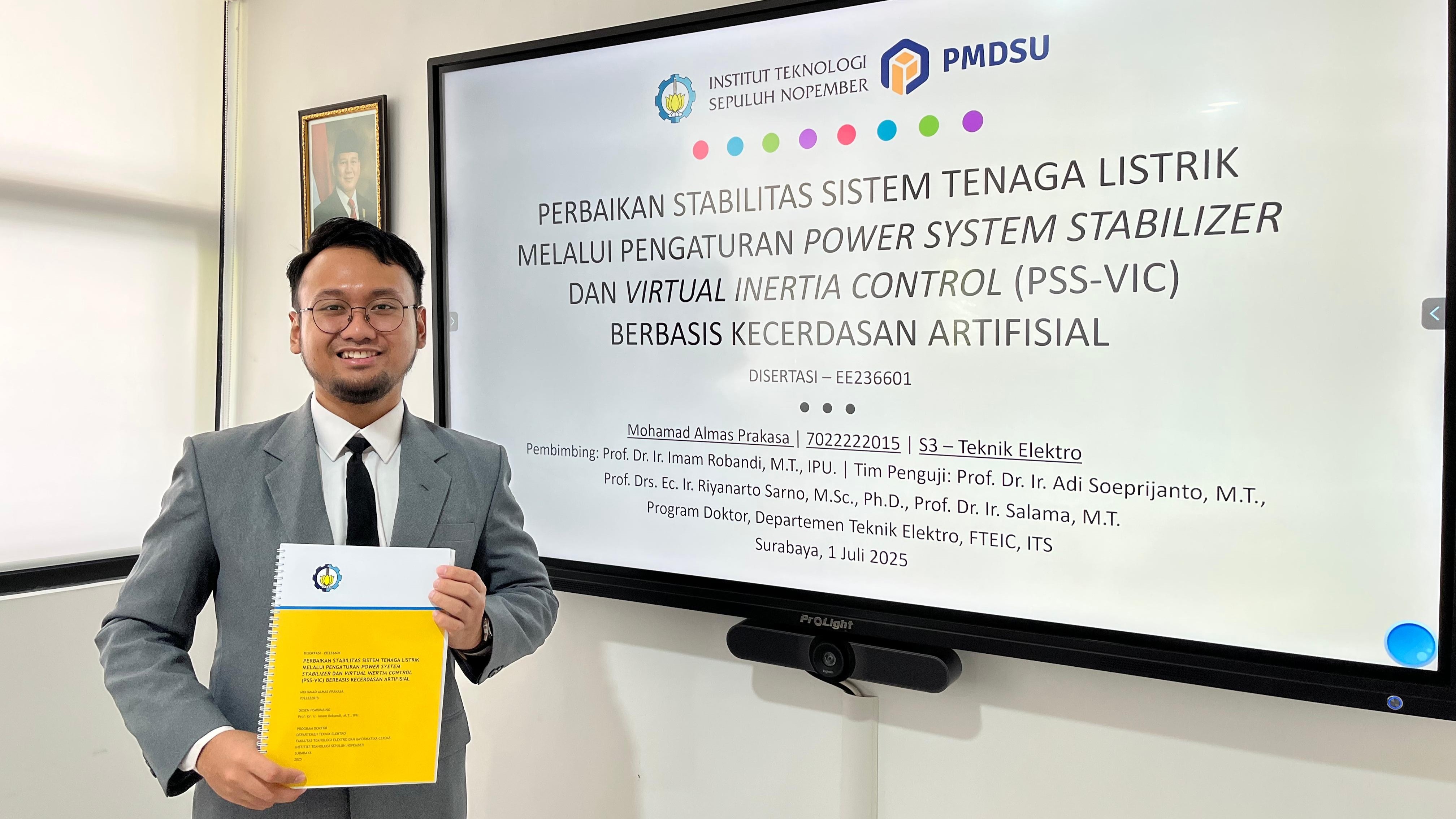
Surabaya, ELECTICS ITS – At the age of 25, Mohamad Almas Prakasa has achieved an extraordinary milestone. Almas officially earned his doctoral degree through the Master’s to Doctorate Program for Outstanding Undergraduate Students (PMDSU) at the Department of Electrical Engineering, Faculty of Intelligent Electrical and Informatics Technology (ELECTICS) ITS, under the supervision of Prof. Dr. Ir. Imam Robandi, MT. This accomplishment marks the culmination of his long journey filled with dedication to the academic and research world.
Since childhood, Almas’s interest in technology was already evident. His inspiration came from a comic book given by his mother, which introduced him to world figures such as Nikola Tesla, Thomas Alva Edison, and the Wright brothers. His drive to keep learning grew stronger when his father gifted him a laptop during elementary school. “That was when I was motivated to learn English so I could tinker with the laptop. Eventually, I became more interested in reading articles about technological developments,” recalled Almas.
His love for physics and curiosity about how electronic devices work led him to participate in Physics and Mathematics Olympiads from elementary to high school. This interest later focused on renewable energy, which eventually led him to study Electrical Engineering at Universitas Negeri Semarang, graduating in just three and a half years. Driven by his ambition to become a scientist, Almas earned the Kemendikbud’s Outstanding Student Scholarship during his bachelor’s degree and continued to PMDSU batch 6 in the Saintek category to pursue his doctorate at ITS.
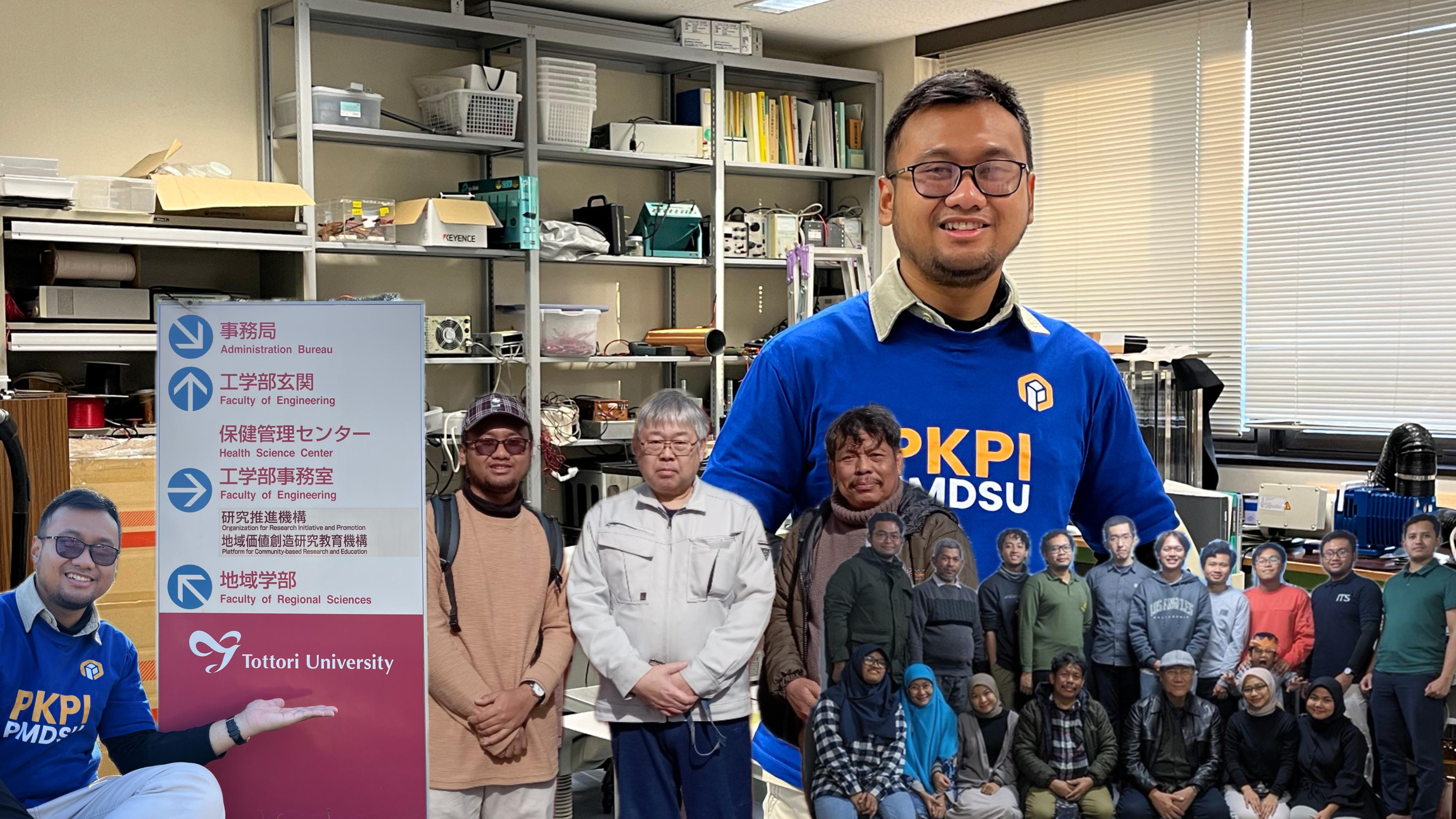
One of Almas’s most memorable moments was when he had the opportunity to conduct research at Tottori University, Japan, for four months through the International Publication Quality Improvement (PKPI) scholarship. There, he not only studied and conducted research but also integrated himself into the local community. “Prof. Imam always said, if you go to Japan, don’t just come back with a Scopus article. You also have to engage with the community and understand the culture. I even had the chance to introduce the Maumere Dance at an international cultural event,” he shared.
In his research, Almas developed a new concept to improve the stability of power systems. He integrated the control of a power system stabilizer on conventional generators with a virtual inertia controller on renewable energy systems in a coordinated manner, aided by modified artificial intelligence. This approach proved capable of enhancing stability effects without causing conflicts between control devices.
However, the research process was not without challenges. For Almas, advanced study is all about strategy and consistency. “Time is limited, so you have to be smart in balancing idealism with reality and set clear targets. Consistency is important even if progress is small, what matters is to keep moving forward,” he emphasized.
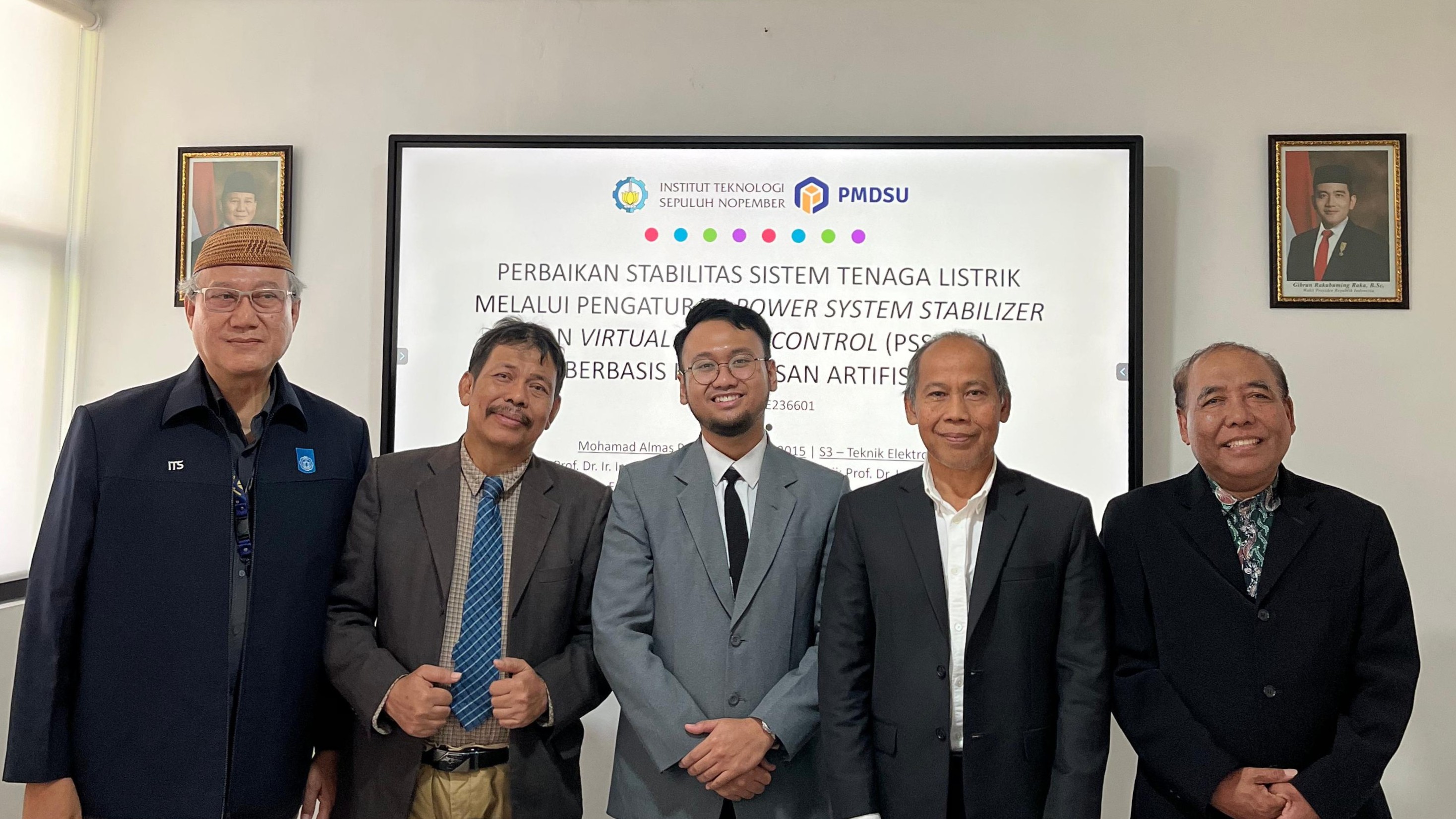
Encouragement from Prof. Imam to experience an international academic atmosphere brought him into networks with many overseas professors, from Tottori University, Osaka University, Bologna University, to Luxembourg. For Almas, collaboration is the key to broadening perspectives and creating more comprehensive solutions.
Almas shared three keys to success for students who want to follow in his footsteps: strategy, consistency, and collaboration. He stressed that achievements in the laboratory are not the result of individual effort alone but rather teamwork across study levels. “In our lab, PhD students help master’s students, and master’s students help undergraduates. Mutual support is important, there should be no competition within the same lab,” he said.
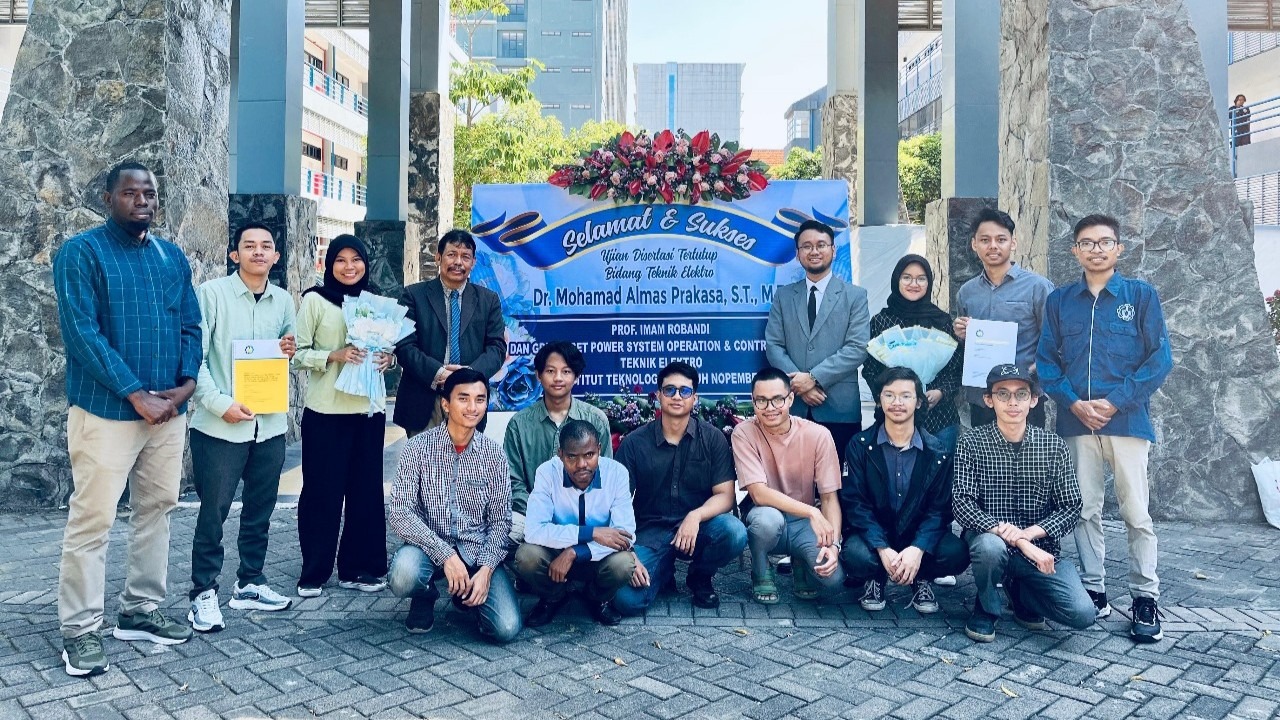
For Almas, earning a doctoral degree is not the end but the beginning of a new journey. He is currently undertaking a postdoctoral program at ITS, collaborating with Prof. Goro Fujita from Shibaura Institute of Technology, Japan. In the future, he aspires to commercialize his research into software that can bridge academia and industry in the power systems sector, eventually to be implemented on a real-world scale.
He also hopes that the positive academic atmosphere at ELECTICS ITS will continue to thrive. “The close relationship between lecturers and students in our lab makes discussions more comfortable and knowledge transfer more effective. With such support, I believe that the intellectuals of ITS can contribute on the world stage,” he concluded.