Study Program
Academic
Facilities
Research and Collaboration
The Department of Information Systems is part of the Faculty of Intelligent Electrical and Informatics Technology at Institut Teknologi Sepuluh Nopember (ITS). The department envisions becoming a center of excellence in Information Systems education, particularly in the application and development of information systems, decision support systems, and business intelligence.
Information Systems students are prepared to become professionals with the expertise to analyze organizational information system requirements and design comprehensive information system development projects. The curriculum integrates various aspects of IT infrastructure, including hardware, software, networks, and data, while also considering organizational structures, business processes and procedures, human resources, organizational culture, as well as relevant policies and regulations.
In addition, students are equipped with both fundamental and advanced skills in software development, network infrastructure implementation, and the maintenance and management of organizational information systems, enabling them to effectively support digital transformation and business innovation.
The Professional Profile of Graduates (PPG) represents the expected quality and characteristics of graduates who apply their professional expertise in careers across companies, organizations, government institutions, and society. The PPG reflects the competencies and achievements that graduates are expected to demonstrate within three to five years after completing their studies.
The Professional Profile of Graduates for the Bachelor’s Program in Information Systems has been developed by considering the intended learning outcomes and competencies that characterize national standards, faculty and university distinctions, as well as the core competencies of the Information Systems undergraduate program. These competencies are aligned with the outcomes outlined in the Basic Individual Competency Framework and the specific disciplinary competencies described in the 2023–2028 Curriculum Document of the Bachelor’s Program in Information SystemsThe Bachelor’s Program in Information Systems is designed to prepare students to achieve the following Graduate Professional Profiles

To become an ethical and integrity-driven professional who is capable of developing oneself in utilizing science and technology, both individually and collaboratively. To becoe a professional who makes meaningful contributions, embraces lifelong learning, and demonstrates critical and innovative thinking in the field of Information Systems. To become a professional who is capable of applying Information Systems techniques and knowledge to solve business and organizational problems.
According to the Curriculum Document of the Bachelor’s Program in Information Systems, the graduate profile is developed based on fundamental individual competencies that reflect national characteristics, as well as the distinctive attributes of the faculty and university, while also encompassing the core competencies of the Information Systems discipline.
Taking into account these foundational competencies and disciplinary strengths, the graduate profile of the Information Systems program is categorized into four (4) professional profiles, namely:The Department of Information Systems at ITS is one of Indonesia’s leading academic programs in Information Systems, recognized through prestigious national and international accreditations. In addition, the program previously received an A (Excellent) accreditation rating from the National Accreditation Board (BAN-PT) in 2006.
These achievements reflect the department’s strong commitment to delivering high-quality education, research, and community engagement that are recognized at both national and international levels. Supported by a curriculum that is aligned with industry needs and driven by continuous innovation in digital technologies, the department prepares graduates to become highly competitive professionals capable of addressing the challenges of the global industry.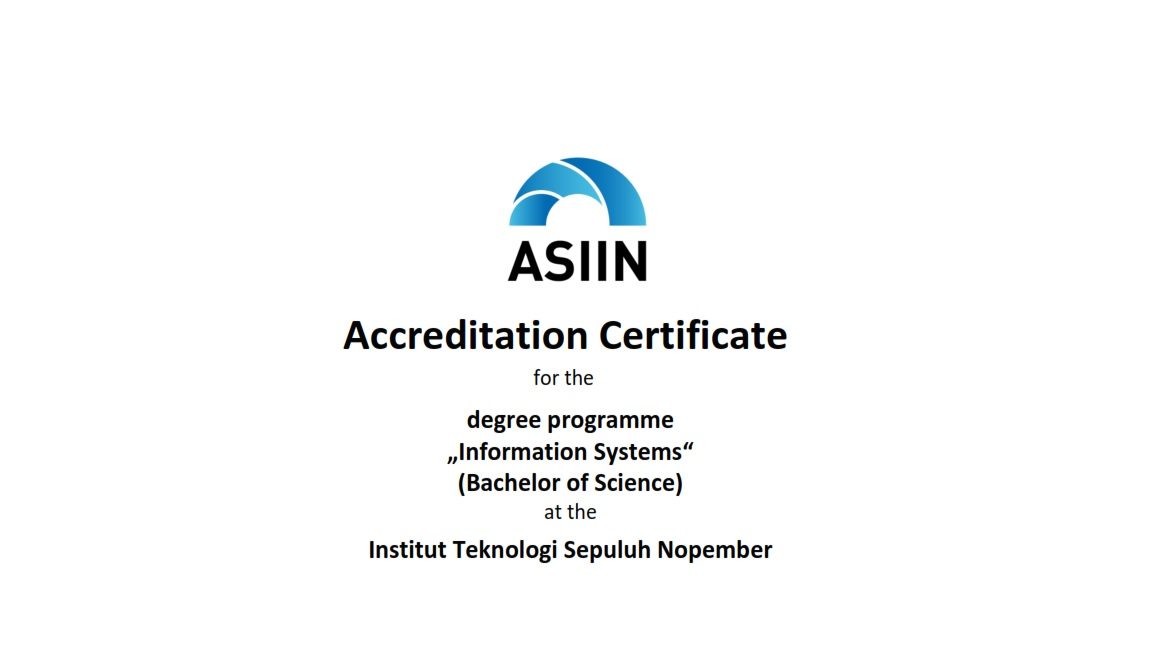
Institution: ASIIN (Accreditation Agency for Degree Programs in Engineering, Informatics, Natural Sciences and Mathematics)
Level: International Accreditation
Status: Accredited
Validity Period: December 7, 2021 – September 30, 2027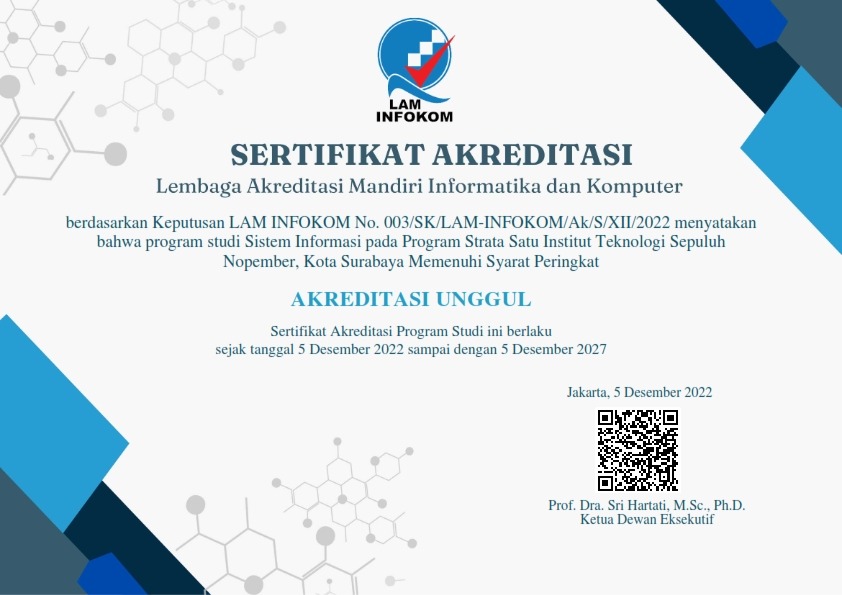
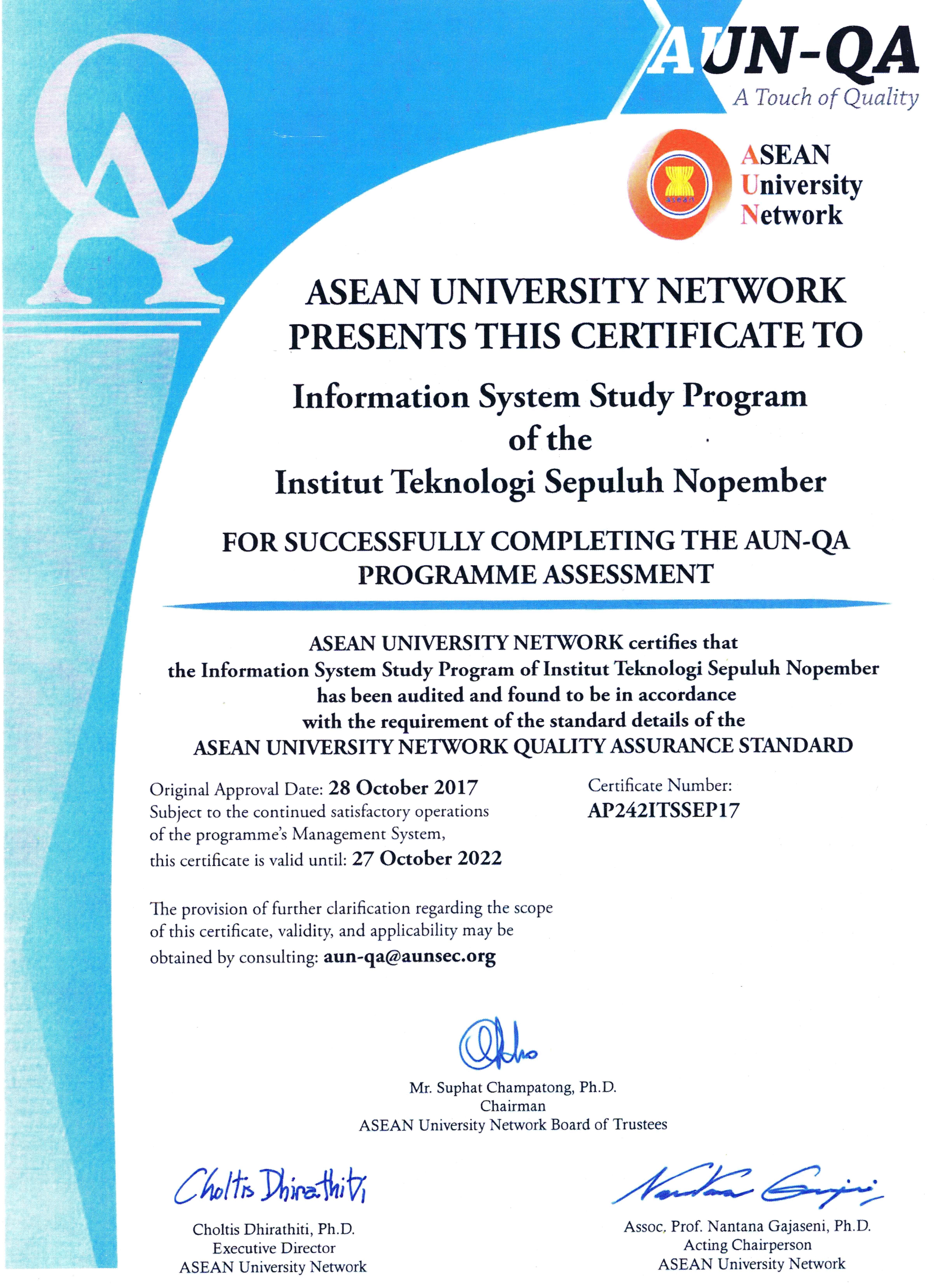
Institution: ASEAN University Network (AUN)
Level: International Assessment
Status: Audited
Validity Period: October 28, 2017 – October 27, 2022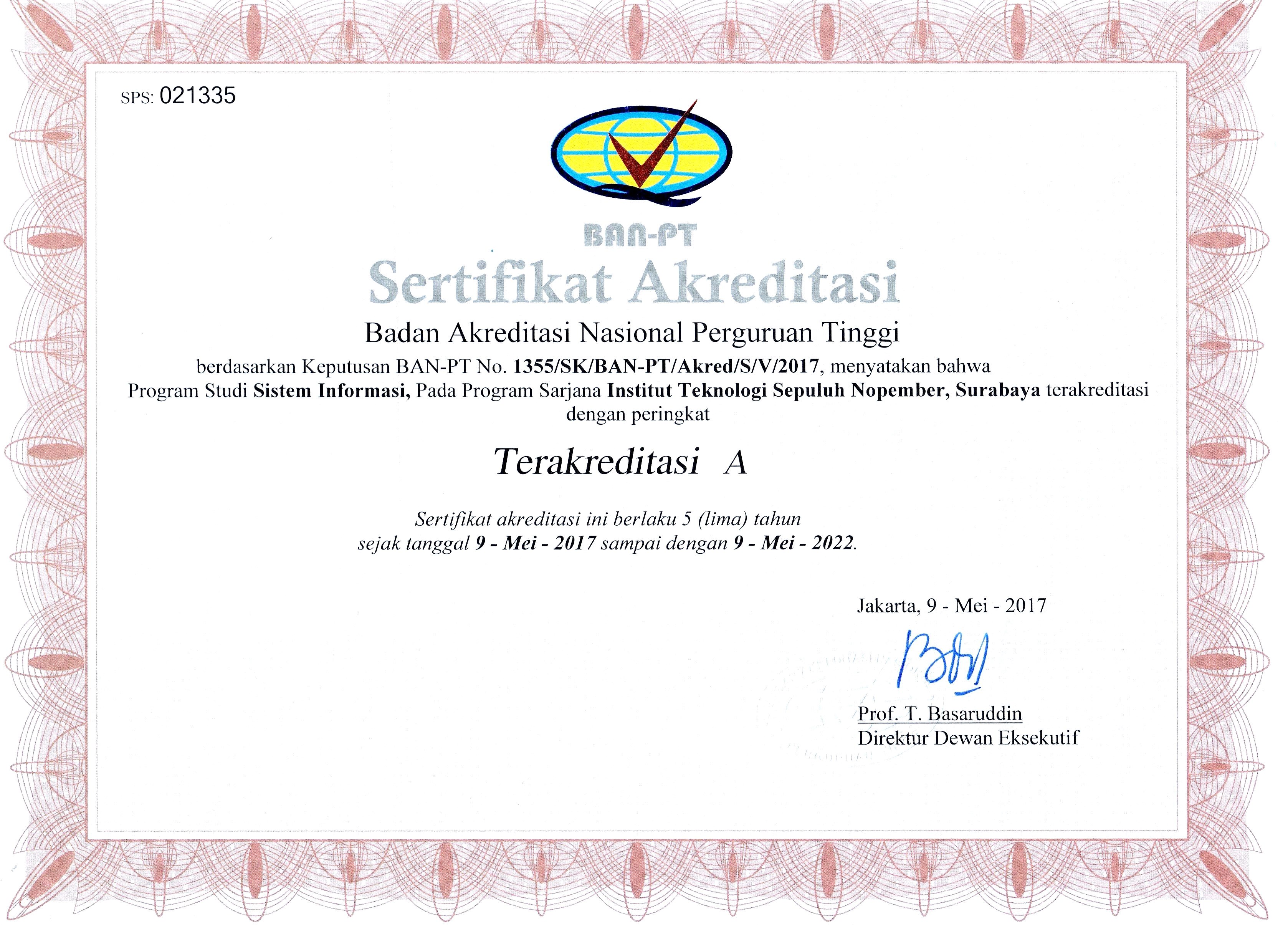
Institution: National Accreditation Board for Higher Education of the Republic of Indonesia (BAN-PT)
Level: National Accreditation
Status: Grade A (Excellent)
Validity Period: May 9, 2017 – May 9, 2022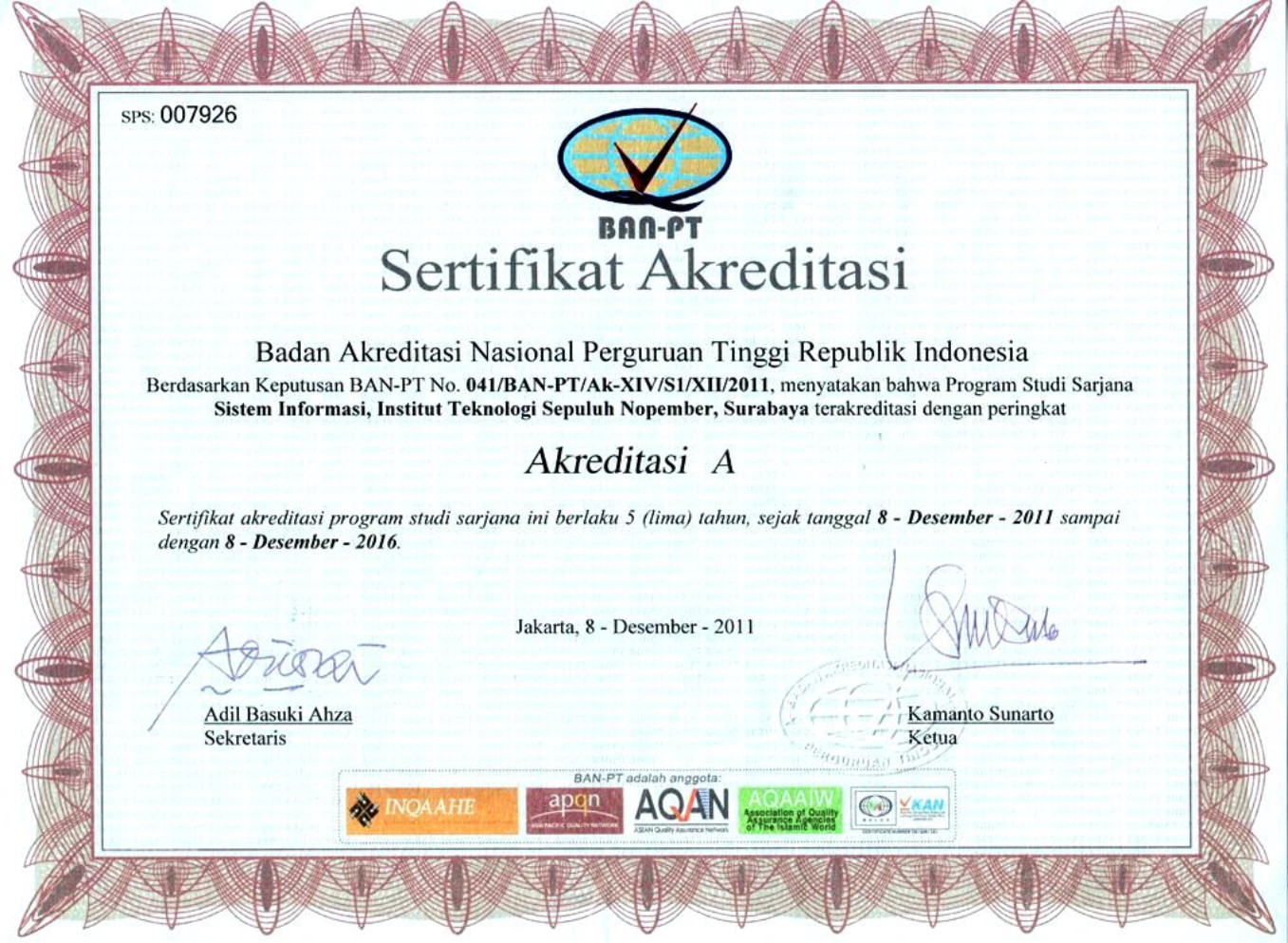
Institution: National Accreditation Board for Higher Education of the Republic of Indonesia (BAN-PT)
Level: National Accreditation
Status: Grade A (Excellent)
Validity Period: December 8, 2011 – December 8, 2016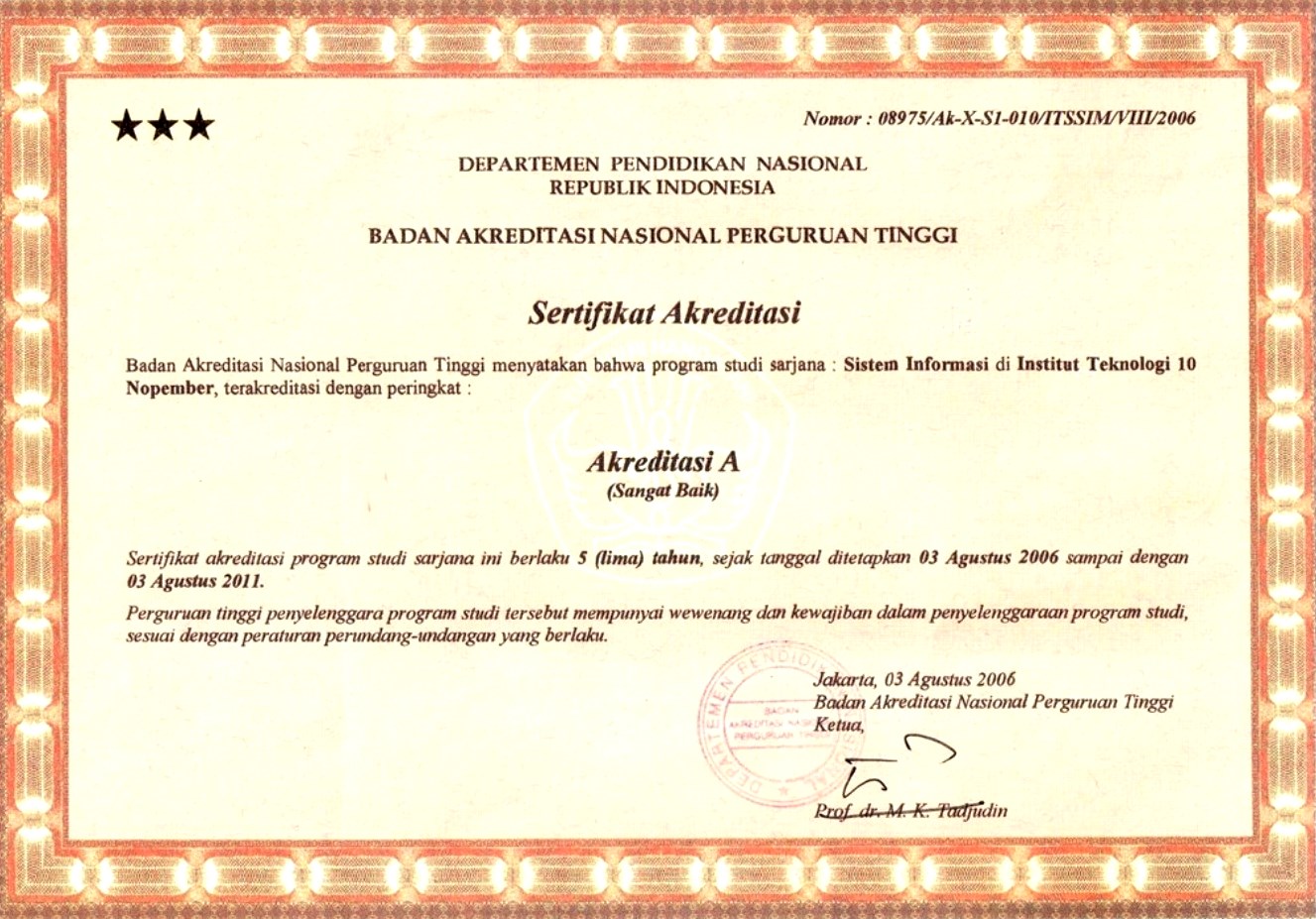
Institution: National Accreditation Board for Higher Education (BAN-PT)
Level: National Accreditation
Status: Grade A (Excellent)
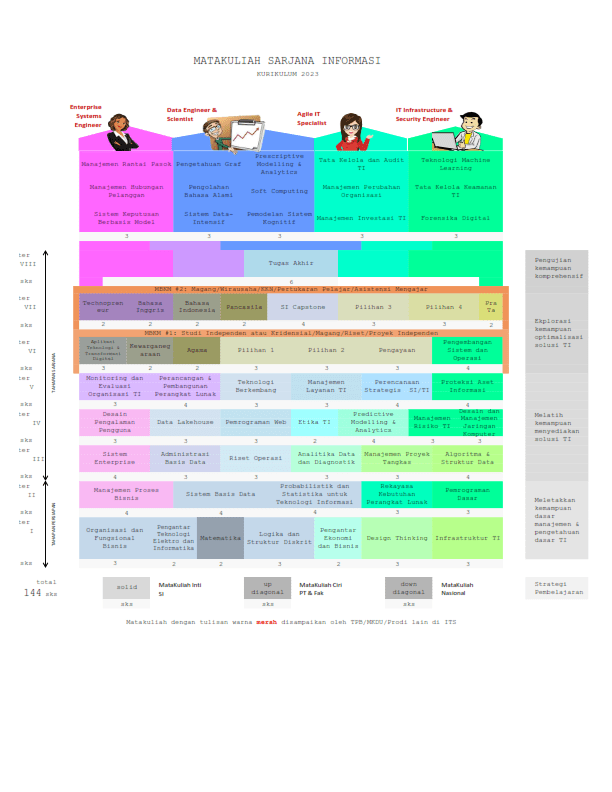
Validity Period: August 3, 2006 – August 3, 2011Struktur kurikulum Program Sarjana Sistem Informasi dirancang untuk menghasilkan lulusan yang memiliki kompetensi unggul di bidang bisnis, teknologi informasi, dan transformasi digital. Kurikulum ini disusun secara bertahap mulai dari penguasaan dasar-dasar ilmu pengetahuan, kemampuan analitis, serta pemahaman teknologi informasi pada semester awal, kemudian dilanjutkan dengan pengembangan kompetensi inti di bidang sistem informasi, pengelolaan proses bisnis, rekayasa perangkat lunak, basis data, jaringan komputer, keamanan informasi, dan analitika data pada semester menengah.
Pada tahap lanjutan, mahasiswa dibekali kemampuan strategis dan profesional melalui mata kuliah seperti tata kelola TI, manajemen layanan TI, manajemen risiko TI, machine learning, data engineering, hingga transformasi digital. Selain itu, kurikulum juga mendukung pembelajaran berbasis pengalaman melalui program MBKM seperti magang, studi independen, riset, proyek independen, kewirausahaan, dan pertukaran pelajar.
Sebagai penutup, mahasiswa akan menempuh capstone project, pra tugas akhir, dan tugas akhir sebagai bentuk pengujian kemampuan komprehensif dalam menyelesaikan permasalahan nyata. Dengan struktur kurikulum ini, lulusan dipersiapkan untuk berkarier sebagai Enterprise Systems Engineer, Data Engineer & Scientist, Agile IT Specialist, maupun IT Infrastructure & Security Engineer, serta profesi strategis lainnya di era digital.


Name: Professor Caroline Chan
Affiliation: University of Newcastle, Singapore
Current Position: Pro Vice-Chancellor and Chief Executive Officer (UON Singapore)
Academic Rank: Professor
Previous Leadership Roles:
Professional Leadership:

Name: Professor Caroline Chan
Affiliation: University of Newcastle, Singapore
Current Position: Pro Vice-Chancellor and Chief Executive Officer (UON Singapore)
Academic Rank: Professor
Previous Leadership Roles:
Professional Leadership:
Kurikulum Program Studi Sarjana Sistem Informasi - ITS 2023
Silabus Kurikulum 2023 Program Studi Sarjana Sistem Informasi - ITS
Course Syllabus of Curriculum 2023 Undergraduate Program of Information Systems Department of Information Systems (S1)
Course Syllabus of Curriculum 2023 Master program of Information Systems (S2)
Kerangka Kualifikasi Nasional Indonesia Level 6 Program Sarjana (S1) KURIKULUM & SILABUS Program Studi Sistem Informasi Disiapkan oleh: Tim Kurikulum Prodi SI ITS 2018
Undergraduate Program Bachelor of Information Systems Staff Handbook Prepared By Curriculum Team Department of Information Systems Faculty of Intelligent Electrical and Informatic Technology Institut Teknologi Sepuluh Nopember 2018
Kurikukum 2014 - 2019 Program Studi S1 Sistem Informasi
Kurikukum 2009-2014 Program Studi S1 Sistem Informasi