Information Systems International Undergraduate Program

Information Systems International Undergraduate Program

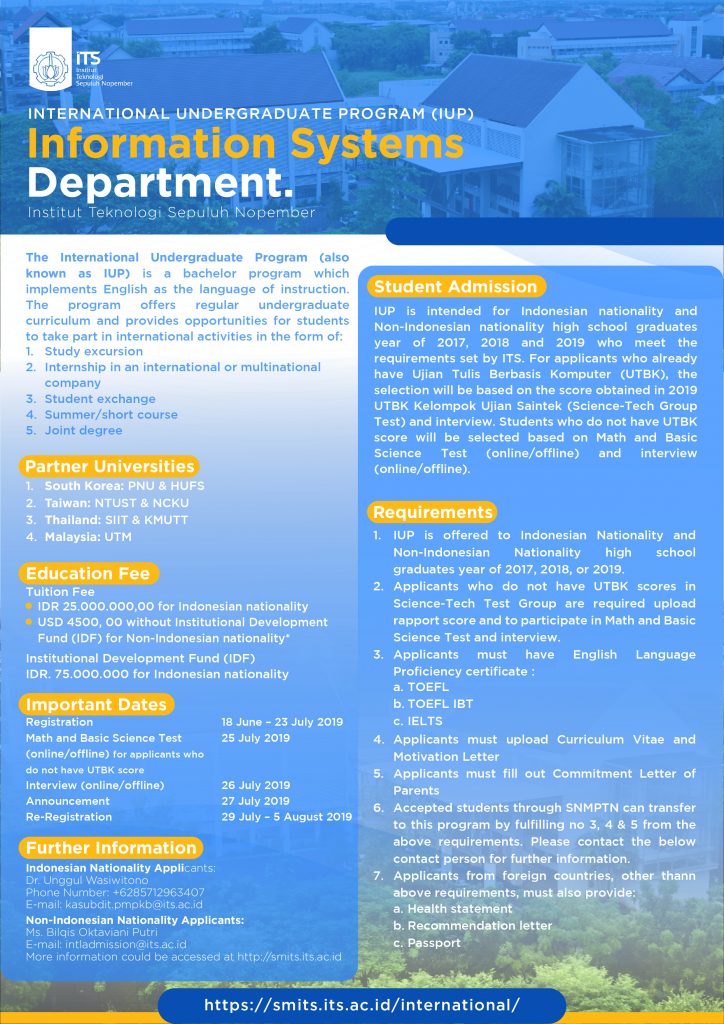
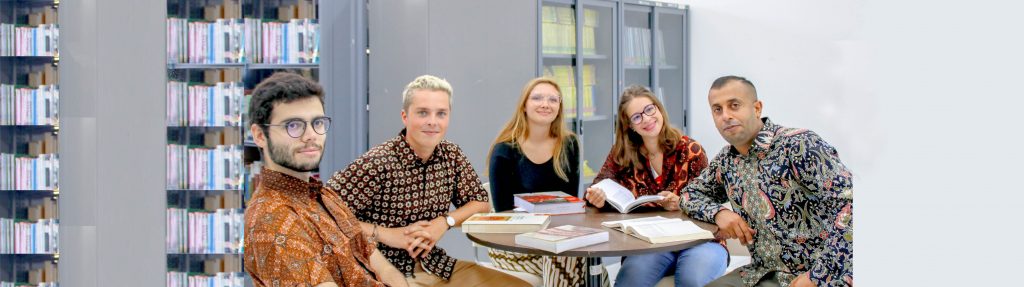
The Department of Information Systems under the Faculty of Intelligent Electrical and Informatics Technology, the Sepuluh November Technology Institute (ITS) Surabaya has an International Bachelor Program (also known as an IUP) is a bachelor program that applies English as the language of instruction. The program offers a regular undergraduate curriculum and provides opportunities for students to participate in international activities in the form of:

  1. Excursion study,
  2. Internship in international or multinational companies,
  3. Student Exchange
  4. Summer / short course,
  5. Joint degree.

Partner Universities

South Korea : PNU & HUFS

Taiwan : NTUST & NCKU

Thailand : SIIT & KMUTT

Malaysia : UTM & UTP

Education Fee

Tuition Fee

  • IDR 25.000.000,00 for Indonesian nationality
  • USD 4500,00 without Institutional Development Fund (IDF) For Non Indonesia nationality

Institutional Development Fund IDR 75.000.000,00 for Indonesian nationality

Student Admission

IUP is intended for Indonesian nationality and Non-Indonesian nationality high school graduates who meet the requirements set by ITS. for application who already have Ujian Tulis Berbasis Komputer (UTBK), will be based one the score obtained the score obtained on same year. Student who do not have UTBK score will be selected based on math and basic science test (online/offline) and interview (online/offline).

Independent Professional Profiles

Students of the Bachelor of Information Systems Program are prepared to develop the following Independent Professional Profiles (IPP):

a) To become professionals who apply expertise in information systems ethically.

b) To become innovative and adaptive individuals, while continuously pursuing relevant self-development in the field of information systems expertise.

c) To become individuals with strong verbal and written communication skills, enabling them to demonstrate the creativity of their work and achievements at national and international levels.

Graduate Profile

Based on the curriculum document of the Bachelor of Information Systems Program, graduates are expected to possess fundamental individual competencies that reflect national characteristics, faculty and university values, as well as core competencies in the main field of the Bachelor of Information Systems Program (page 16). Considering these foundational and major-field competencies, the graduate profile of the Information Systems Program is divided into four (4) categories, namely:

a) Enterprise System Engineer

This profession focuses on the design, implementation, and management of complex systems within business organizations (business enterprises). The role of this profession is essential in ensuring that organizational Information Systems/Information Technology (IS/IT) are aligned with organizational goals and operational needs.

The required competencies include an understanding of both business and IT aspects of organizations, requiring knowledge and skills in business architecture, integration, and process optimization. The main focus of this profession is the ability to translate business needs into IS/IT solutions that improve organizational efficiency, scalability, and security.

b) Data Scientist & Data Engineer

Both professions, Data Scientist and Data Engineer, focus on data management. The role of a Data Scientist is to uncover insights from data and information that can support decision-making, while the role of a Data Engineer is to enable data acquisition through IS/IT systems.

The competencies required for a Data Scientist include knowledge in mathematics and statistics, programming, advanced analytics, and information extraction using machine learning and artificial intelligence (AI). Meanwhile, the competencies required for a Data Engineer include understanding IT infrastructure, IS/IT architecture, programming, and big data technologies.

The main focus of these professions is to develop and analyze complex business needs involving big data.

c) Agile IT Business Specialist

An Agile IT Business Specialist is a profession that focuses on adaptive planning, faster delivery of results, and sustainable improvement. The competencies required include an understanding of agile methods that can be used to solve problems related to the implementation of IS/IT in business organizations, as well as knowledge of IS/IT project management.

The main focus of this profession is the ability to respond quickly to change, including understanding business problems and translating them efficiently into development team requirements so that IS/IT solutions can be delivered in a shorter timeframe.

d) IT Infrastructure & Security Engineer

This profession focuses on the design, operation, and supervision of IS/IT infrastructure and its security. The required competencies include IT asset management and protection, capacity planning, network infrastructure planning, and cybersecurity management.

The main focus of this profession is to ensure that all IT infrastructure and security systems operate effectively and efficiently.

Graduate Learning Outcomes

The Graduate Learning Outcomes (GLOs) of the Bachelor of Information Systems Program are described as follows:

A. Attitudes
  1. GLO1: Demonstrate attitudes and character that reflect devotion to Almighty God, noble morals, sensitivity and concern for social and environmental issues, respect for cultural diversity and pluralism, uphold the rule of law, and prioritize the interests of the nation and wider society through innovation, creativity, and other personal potentials.
B. General Skills
  1. GLO2: Be able to study and utilize science and technology in order to apply them in specific fields of expertise, and make appropriate decisions based on individual or group work through logical, critical, systematic, and innovative thinking.
  2. GLO3: Be able to manage self-learning and develop oneself as a lifelong learner to compete at national and international levels, in order to make meaningful contributions to solving problems while considering sustainability principles.
  3. GLO4: Be able to perform as an ethical Information Systems/Information Technology (IS/IT) professional, and recommend and apply information management techniques for decision-making by implementing appropriate methodologies, applications, and innovations to solve computing problems and Information Systems projects in an agile manner.
C. Specific Skills
  1. GLO5: Be able to create Information Systems value within organizations through the alignment of IS/IT and business strategies, enterprise architecture development, and IS/IT governance.
  2. GLO6: Be able to develop models, applications, security systems, and organizational systems using system development methods and techniques as IS/IT solutions to business problems.
  3. GLO7: Be able to develop and utilize data and information for effective decision-making, as well as evaluate and audit IS/IT within organizations based on specific Information Systems standards.
D. Knowledge
  1. GLO8: Possess knowledge of business and organizations, economics, mathematics, statistics, business processes, data analysis and visualization, rapid development and design thinking, agile software development, IS/IT management, information security, IS/IT best practices, as well as emerging IS/IT technologies such as the Internet of Things (IoT) and Digital Forensics, enabling graduates to produce scientific work or outstanding innovations in the IS/IT field that are competitive in national and global markets.

Curriculum

The curriculum structure of the Bachelor of Information Systems Program is designed to produce graduates with outstanding competencies in business, information technology, and digital transformation. The curriculum is arranged progressively, beginning with the mastery of fundamental knowledge, analytical skills, and an understanding of information technology in the early semesters. It is then followed by the development of core competencies in information systems, business process management, software engineering, databases, computer networks, information security, and data analytics in the intermediate semesters.

At the advanced stage, students are equipped with strategic and professional capabilities through courses such as IT governance, IT service management, IT risk management, machine learning, data engineering, and digital transformation. In addition, the curriculum also supports experiential learning through the MBKM program, including internships, independent study, research, independent projects, entrepreneurship, and student exchange programs.

As a final stage, students will undertake a capstone project, pre-thesis, and final thesis as a comprehensive assessment of their ability to solve real-world problems. Through this curriculum structure, graduates are prepared for careers as Enterprise Systems Engineers, Data Engineers & Scientists, Agile IT Specialists, IT Infrastructure & Security Engineers, as well as other strategic professions in the digital era.

Pelajari Lebih Lanjut di :
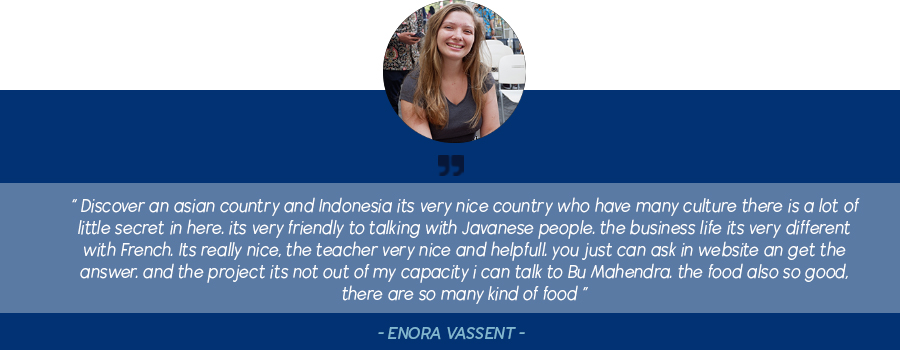
Discover an asian country and indonesia its very nice country who have many culture there is a lot of little secret in here. its very friendly to talking with javanese people. the business life its very different with french. Its really nice, the teacher very nice and helpfull. you just can ask in website an get the answer. and the project its not out of my capacity i can talk to Bu Mahendra. the food also so good, there are so many kind of food

- Enora Vassent

But man is not made for defeat. A man can be destroyed but not defeated.

- Ernest Hemingway

I have not failed. I've just found 10,000 ways that won't work.

- Thomas A. Edison