About
Published on
Thursday, 5 February 2026
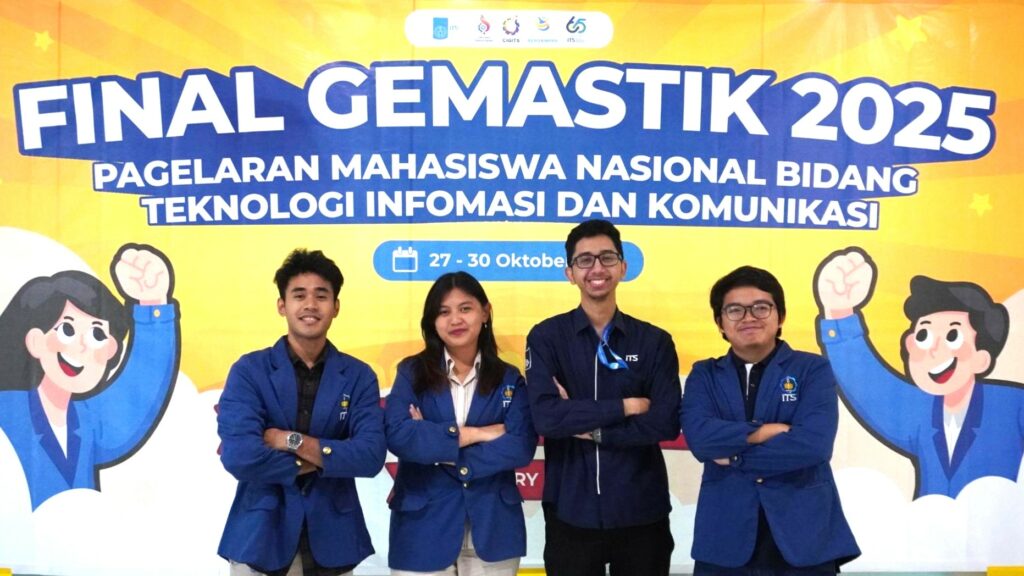
Surabaya, F-ELECTICS ITS – As Indonesia enters the aging population phase, the country faces serious challenges in maintaining the safety and quality of life of older adults. Addressing this issue, a team of students from the Department of Biomedical Engineering, Faculty of Electrical Technology and Intelligent Informatics (F-ELECTICS), Institut Teknologi Sepuluh Nopember (ITS), has introduced an innovation called SAFE (Smart Assistive Fall-detection Equipment) a smart vest based on Internet of Things (IoT) and Deep Learning, designed to detect fall risks and monitor elderly activities in real time.
The innovation was developed by M. Faris Akbar, Katherina Agatha Fecilia, and Ahmad Farhat, under the supervision of Mr. Muhammad Adib Syamlan from the Department of Biomedical Engineering, ITS.
According to Faris, the development of SAFE was motivated by the increasing elderly population in Indonesia, which reached 12 percent of the total population in 2024. This condition presents significant challenges, as falls are among the most frequent and potentially fatal incidents experienced by older adults, especially those with chronic medical conditions.
“Delayed treatment after a fall can significantly increase the risk of serious complications. Meanwhile, conventional supervision by family members is often limited by time and availability,” explained Faris.
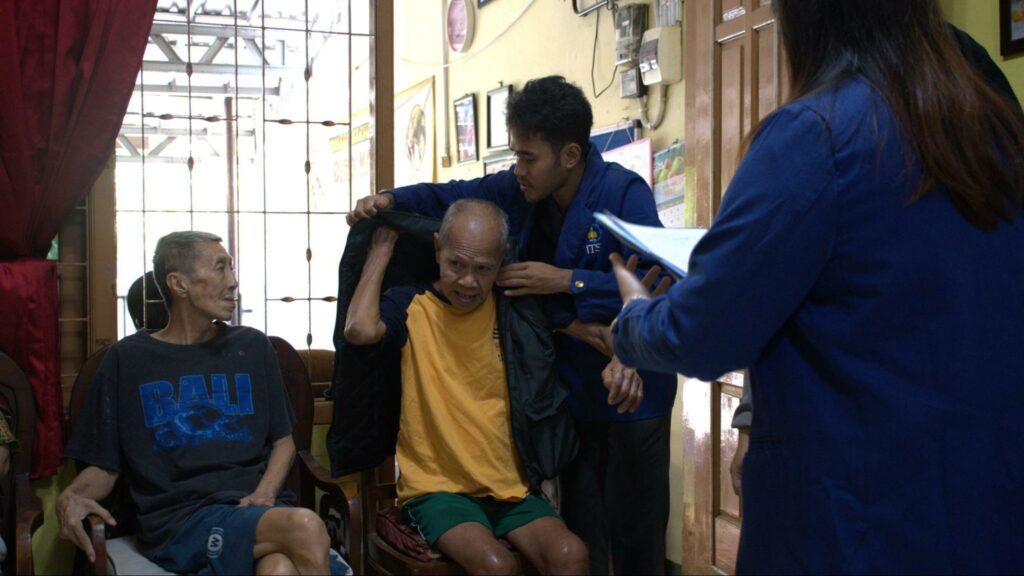
SAFE is designed as a smart and human-centered wearable solution. In simple terms, SAFE is a smart vest that integrates IoT and artificial intelligence with three main features:
The focus on elderly users was chosen because this age group is highly vulnerable to declines in physical and cognitive functions, which increase the risk of accidents during independent activities. Through SAFE, the team aims to reduce the fear of falling, enhance independence, and preserve the dignity of elderly users in their daily lives. This innovation also aligns with the Sustainable Development Goals (SDGs), particularly those related to healthy living and the creation of safe and inclusive environments.
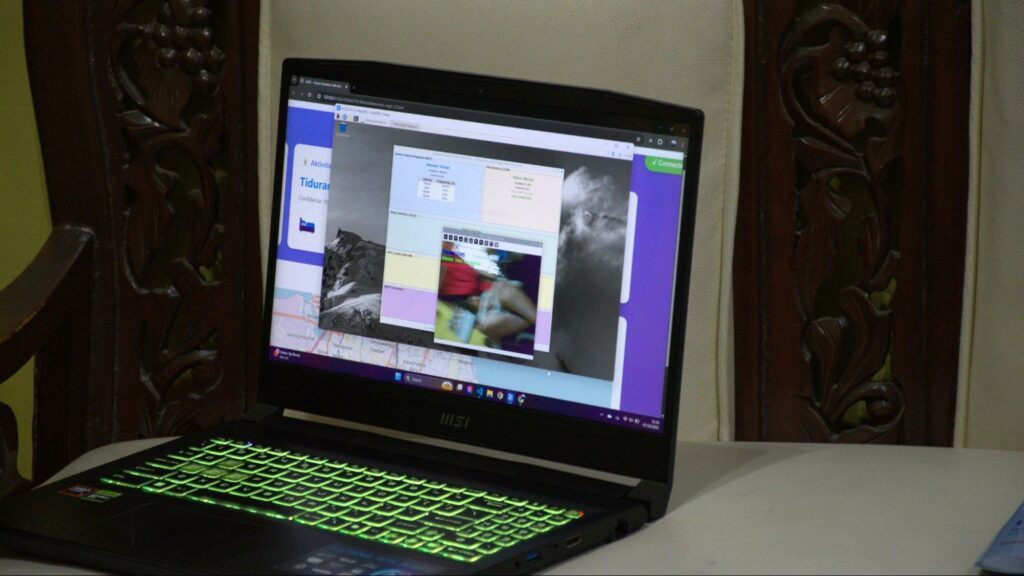
Ahmad Farhat explained that SAFE operates through several stages. After the preparation and calibration process, the vest adjusts sensor positioning according to the user’s standing posture. SAFE utilizes two motion sensors placed on the chest and in the trouser pocket, and is connected to a monitoring server and web-based dashboard.
“Elderly activity data can be monitored by caregivers or family members through a website, while emergency notifications are sent via Telegram if a dangerous condition is detected,” said Farhat.
From a technological perspective, SAFE relies on a Raspberry Pi 5 as its main processing unit, supported by a camera, GPS, buzzer, ESP module, and power management system. The core strength of SAFE lies in the integration of hardware and artificial intelligence–based software, including:
This approach enables SAFE to perform real-time monitoring with high accuracy.
The SAFE device has undergone field testing at Yayasan Bina Kasih, Surabaya, involving elderly participants aged 66–73 years and their caregivers. In addition, SAFE received validation from dr. Yudha Haryono, Sp.N(K), a geriatric neurologist at RSUD Dr. Soetomo.
According to him, SAFE is a relevant innovation as it is capable of detecting and reporting fall incidents quickly, thereby accelerating emergency response. From the users’ perspective, the SAFE vest was considered comfortable, non-restrictive, and similar to regular clothing, which helps maintain users’ confidence.
The success of SAFE’s development cannot be separated from the support of the academic environment at F-ELECTICS ITS. Farhat noted that faculty guidance particularly from Mr. Adib, played a crucial role in troubleshooting and system development, including during preparations for the GEMASTIK competition.
“The support from lecturers and the research atmosphere at F-ELECTICS ITS has been instrumental in realizing this innovation and preparing it for further development,” he stated.
Looking ahead, the SAFE team plans to develop energy-saving modes, simple navigation features, integration with vital sign monitoring, and expanded notification systems directly connected to healthcare facilities. SAFE is also expected to undergo certification by official health authorities to enable widespread adoption.
“Our hope is that SAFE can become a real solution for elderly individuals who require routine or remote monitoring, while continuing to evolve so that its benefits can grow even further in the future,” Farhat concluded.