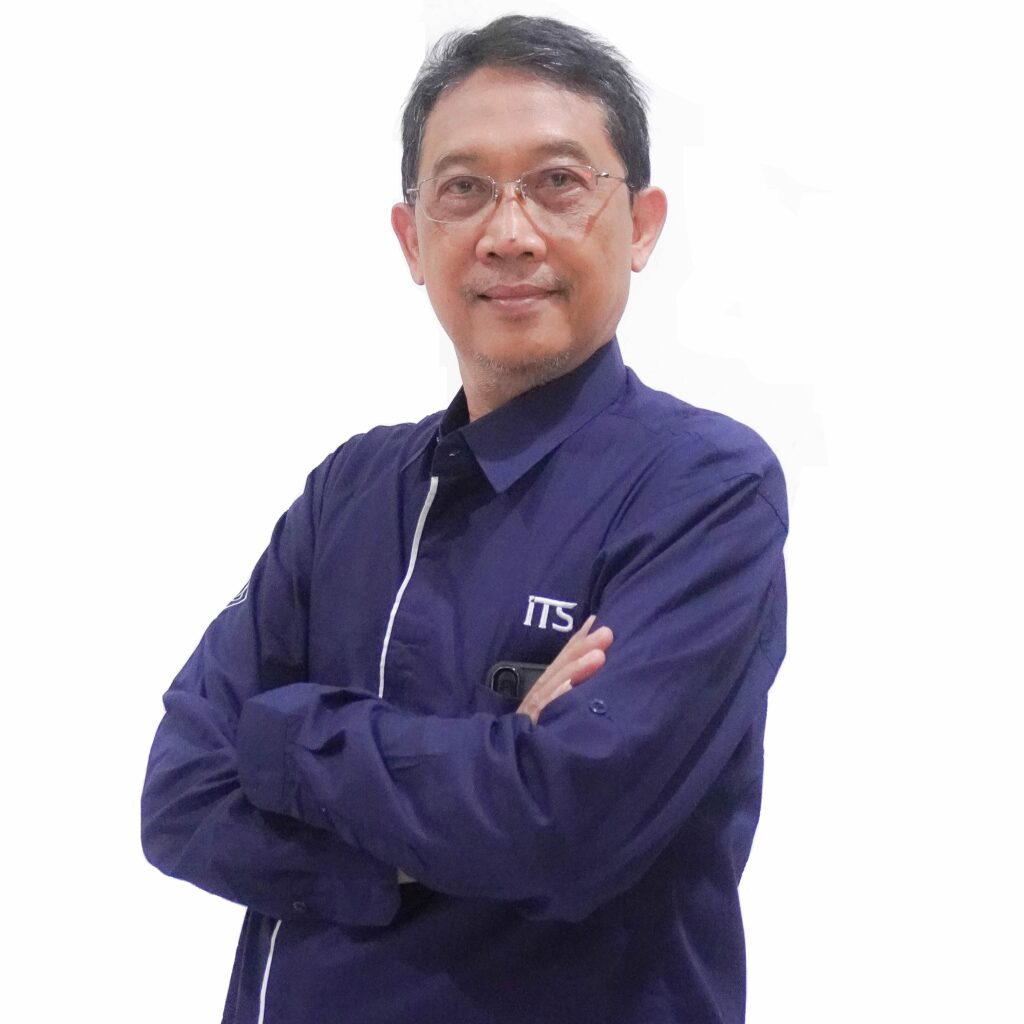
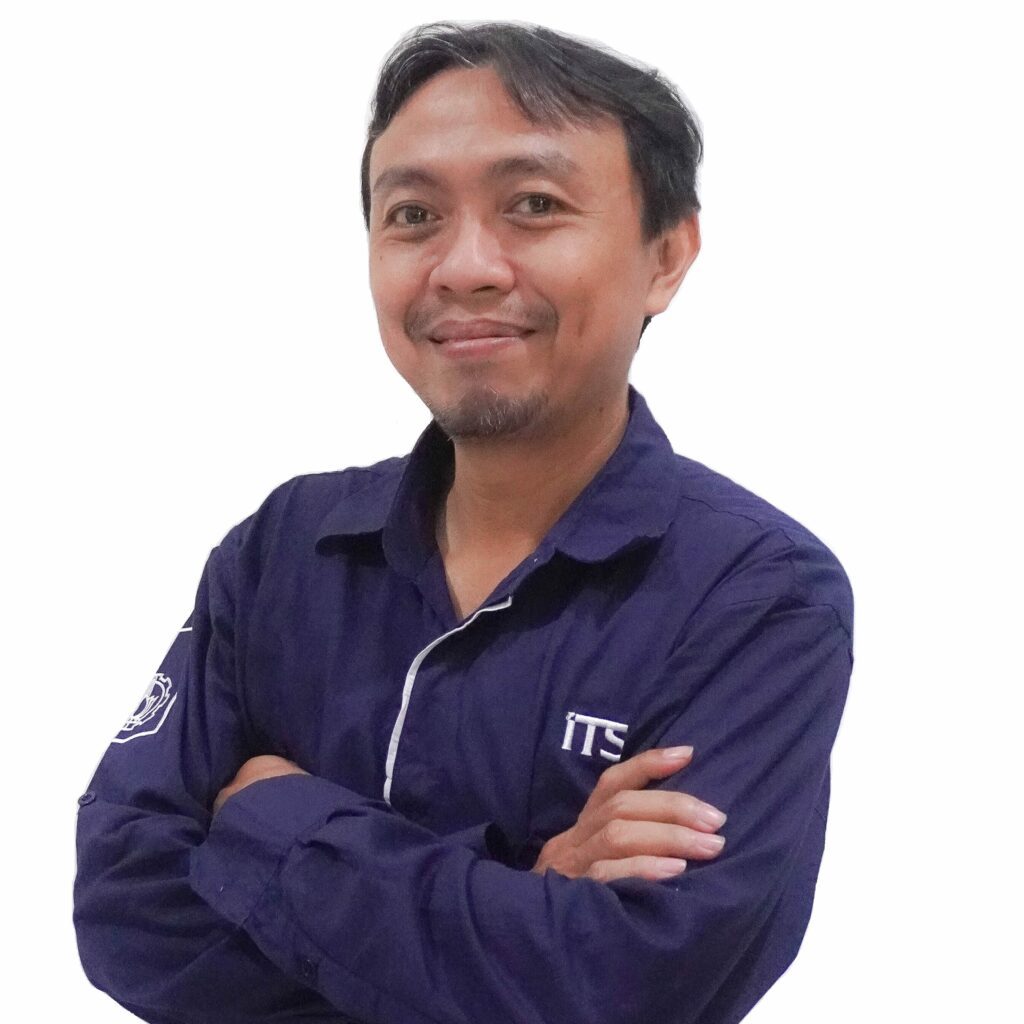
“The world is changing and changing rapidly. We are now in the midst of Era 4.0, marked by digitalization, online activities, and social media interactions that shape our daily lives. While today's society reaps numerous benefits from this transformation, it also faces significant challenges brought about by these developments. Meanwhile, Era 5.0 is on the horizon. In this evolving landscape, the DTMM Graduate Program offers education and research capable of keeping pace with these advancements and addressing their challenges through deep understanding of the world of 'materials/substance' a realm awaiting exploration by your creative minds, for the benefit of industry, society, and the welfare of all humankind. So do not hesitate to begin your journey and commitment toward a brighter future by joining us here.”(Head of the Graduate Program, DTMM ITS – Azzah Dyah Pramata, S.T., M.T., M.Eng., Ph.D)
An innovative study program with global excellence and competence in materials engineering and technology, designed to support industry advancement and foster a global network.
Conducting education, research, and community engagement to produce graduates of the highest quality and highly competent and professional in the field of materials engineering and technology, while continuously enhancing capabilities and developing global networks to support the competitiveness of the national industry.
The core values instilled by the Department of Materials Engineering and Metallurgy are:
Ethics and Integrity: Upholding societal, national, and religious norms and regulations in all aspects of life—whether in community engagement, citizenship, or professional practice.
Creativity and Innovation: Continuously seeking new ideas to generate innovations that enhance the quality and impact of one's roles and responsibilities.
Excellence: Striving relentlessly to achieve optimal results and uphold the highest standards in all endeavors.
Strong Leadership: Demonstrating visionary, creative, and innovative behavior; working diligently; courageously driving positive change; and taking full responsibility for actions and outcomes.
Synergy: Collaborating effectively to maximize the potential of individuals and teams toward shared goals.
Social Cohesion and Social Responsibility: Fostering harmony within communities and actively caring for the well-being of society at large.
A. Teaching and Academic Affairs
Produce graduates who are competitive, globally competent, professional, and ethical.
Implement research-based and technology-driven learning with industry and international collaboration.
Develop programs that enhance international reputation and visibility.
B. Research
Generate leading-edge research with tangible impact on industry and society.
Promote research outputs and patents with commercialization potential and revenue generation.
Increase international scientific publications and faculty h-index.
Expand national and international research collaborations.
C. Community Service
Apply science and technology to improve community economic development and welfare.
Foster collaboration with industry and government stakeholders.
Encourage empowerment initiatives based on materials and metallurgical engineering technologies.
D. Facilities and Infrastructure
Provide adequate facilities and infrastructure to support education, research, and community service.
Ensure a safe, inclusive, and conducive academic environment.
E. Human Resources
Maintain a competent workforce capable of fulfilling the three pillars of higher education (tri dharma perguruan tinggi): education, research, and community service.
F. Organization and Management
Establish comprehensive Organizational Structure and Work Procedures (OTK) and Standard Operating Procedures (SOP).
Strengthen data-driven quality management systems with continuous evaluation at the departmental level.
Cultivate a collaborative and accountable work culture.
Objectives of the Department of Materials Engineering and Metallurgy:
Enhance the quality of graduates to be excellent, professional, and globally competitive.
Develop competencies in the fields of metallurgical engineering, manufacturing, corrosion, failure analysis, and research-based innovative materials.
Establish and maintain a conducive academic atmosphere that supports the implementation of the three pillars of higher education (*tridharma perguruan tinggi*) within the study program.
Continuously improve the quality of students, faculty, staff, and educational facilities.
Develop, implement, and sustain partnerships with domestic and international institutions in the areas of education, research, and community service.
Produce graduates of high integrity, strong ethics, and exemplary academic morality.
Kurikulum prodi S2 Teknik Material dan Metalurgi ITS Surabaya
No
Course Code
Course Name
Credits
Total Credits / Semester
Semester -1
1
TL255101
Advanced Materials Characterization
3
2
TL255104
Research Methodology
3
3
TL255103
Materials Processing Modeling
3
4
TL255102
Materials Thermodynamics and Kinetics
3
Total
12
Semester -2
1
TL255201
Corrosion Control System Design
3
2
TL255202
Structure and Mechanical Properties of Materials
3
3
TL255203
Thesis Proposal Seminar
2
4
TL2552xx
Elective Course 1
3
Total
11
Semester -3
1
TL255301
Casting and Welding Metallurgy
3
2
TL255302
Heat Treatment and Surface Engineering
3
3
TL2552xx
Elective Course 2
3
9
Semester - 4
1
TL255401
Dissertation
4
10
Grand Total Credits
36
Matakuliah Pilihan
No
Kode
Nama Mata Kuliah
1
TL255204
Korosi Temperatur Tinggi
2
TL255205
Material Keramik Lanjut
3
TL255206
Material Polimer dan Komposit Lanjut
4
TL255207
Mekanika Material Komposit
5
TL255208
Metalurgi Ekstraksi
6
TL255209
Teknologi Material Nano
7
TL255307
Magang
8
TL255210
Material Bio
9
TL255211
Material Elektronik
10
TL255212
Material Energi
11
TL255213
Material Maju
12
TL255305
Paten
13
TL255304
Review Paper
14
TL255306
Sertifikasi Kompetensi
15
TL255214
Topik Khusus: Kecerdasan Buatan Untuk Rekayasa Material dan Metalurgi
Engineer, Graduates of the Master's Program in Materials Engineering and Metallurgy who serve as engineers possess distinctive characteristics and qualifications that enable them to contribute effectively to industry and technology. They are capable of driving product development, providing leadership in project management, and solving complex technical problems in the field of materials and metallurgical engineering. These engineers work collaboratively using multidisciplinary approaches to address real-world challenges and advance innovation in their respective domains.
Practitioner in Government/Institutions, Graduates of the Master's Program in Materials Engineering and Metallurgy who serve as practitioners in government agencies or non-profit institutions within the context of materials and metallurgy possess distinctive characteristics and capabilities in product and technology development, formulation of innovative policy ideas, and solving challenges related to materials and metallurgy. They are equipped to assist the government in managing material resources, promoting sustainability, and overseeing policies relevant to materials and metallurgy to ensure they meet societal and environmental needs.
Profesional Industri, Profil lulusan program Magister Teknik Material dan Metalurgi yang berperan sebagai profesional industri memiliki karakteristik dan kualifikasi yang mampu mendorong transformasi industri melalui optimalisasi proses, efisiensi produksi, dan pengambilan keputusan strategis berbasis keilmuan material dan metalurgi. Lulusan ini berkontribusi dalam pengembangan kebijakan industri, komersialisasi teknologi, serta penguatan daya saing sektor industri melalui integrasi ilmu pengetahuan, teknologi, dan kewirausahaan.
Scientist/Academician, Graduates of the Master's Program in Materials Engineering and Metallurgy who serve as academicians or scientists possess distinctive characteristics and qualifications focused on advancing scientific knowledge, conducting research, and disseminating scholarly expertise to support technological and industrial progress in Indonesia.
Technopreneur, Graduates of the Master's Program in Materials Engineering and Metallurgy who serve as technopreneurs (technology entrepreneurs) possess distinctive characteristics and qualifications enabling them to initiate research-based product development, formulate business strategies grounded in market and regulatory analysis, and manage innovative projects in the fields of materials and metallurgy. These graduates are expected to create applicable technological solutions, identify market opportunities, and contribute to economic growth and the downstreaming of research outcomes through intradisciplinary, interdisciplinary, and multidisciplinary approaches.
Program Learning Objectives
Lulusan yang mampu untuk mengembangkan dan menerapkan pengetahuannya secara mandiri untuk menyelesaikan masalah-masalah dalam lingkup praktik profesionalnya menggunakan prinsip-prinsip dari sains dan teknik material dan metalurgi.
Lulusan yang memiliki moral, kepribadian dan kepemimpinan yang baik diiringi kemampuan komunikasi dan kerja yang efektif dalam lingkup nasional dan internasional, serta senantiasa meningkatkan kemampuan diri.
Lulusan yang mampu untuk melakukan penyelidikan dengan alat-alat analisis, pemodelan dan eksperimen, termasuk dalam hal evaluasi projek dengan mempertimbangkan implikasi-implikasi sosial, etik, ekologi dan ekonomi maupun keperluan dasar dari projek tersebut.
No
Profil Lulusan (PL)
Tujuan Pendidikan Prodi (TPP)
TPP-1
TPP-2
TPP-3
1
PL-1
√
√
2
PL-2
√
√
3
PL-3
√
√
4
PL-4
√
√
5
PL-5
√
√
Capaian Pembelajaran Lulusan (CPL)
Graduates of the Master's Program in Materials Engineering and Metallurgy are expected to:
Demonstrate attitudes and character reflecting devotion to the Almighty God, noble morals, sensitivity and concern for social and environmental issues, respect for cultural diversity and pluralism, upholding the rule of law, and prioritizing the interests of the nation and broader society through innovation, creativity, and other inherent potentials.
Develop and solve scientific and technological problems in the field of materials engineering and metallurgy through research employing inter- or multidisciplinary approaches, resulting in innovative and validated works in the form of a thesis and a paper accepted in an accredited national scientific journal or presented at a reputable international conference.
Manage self-directed learning and develop themselves as lifelong learners to compete at national and international levels, contributing meaningfully to problem-solving while adhering to sustainability principles.
Solve complex problems in materials engineering and metallurgy by applying deep knowledge and understanding of science, technology, and mathematics.
Design complex and integrated components, systems, and processes related to the application of materials engineering and metallurgy.
Conduct systematic research and investigation in the fields of materials and metallurgy by utilizing available literature and research resources.
Comprehend the current state of knowledge in materials engineering and technology, including advanced applications.
Formulate decisions based on robust data and in-depth information analysis, while critically evaluating the impact and risks associated with those decisions.
Collaborate effectively in groups or teams comprising individuals with diverse disciplinary backgrounds and cultural perspectives.