Doctoral Program (S3)

Doctoral Program (S3)

“Make your dreams come true here”

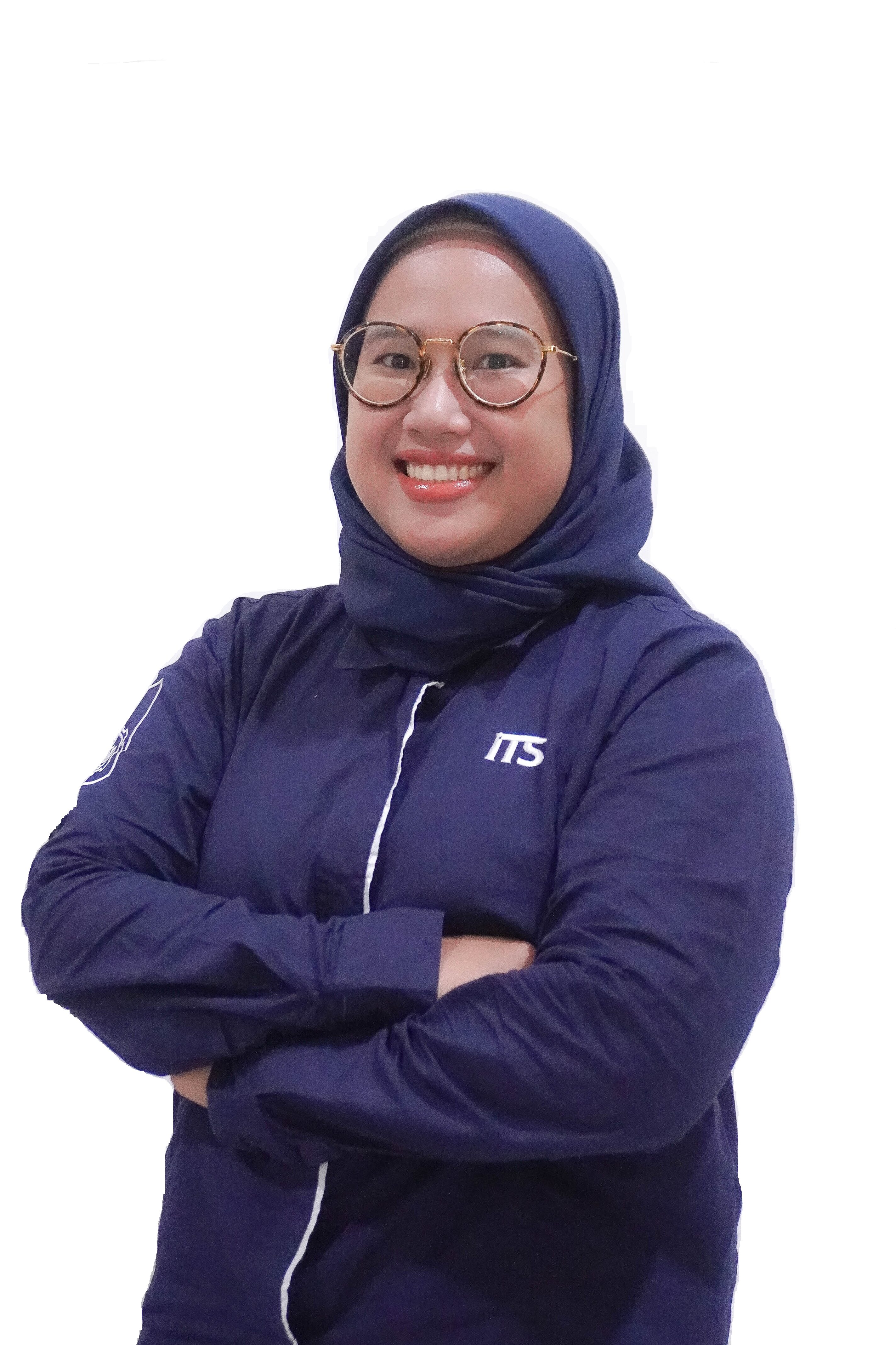
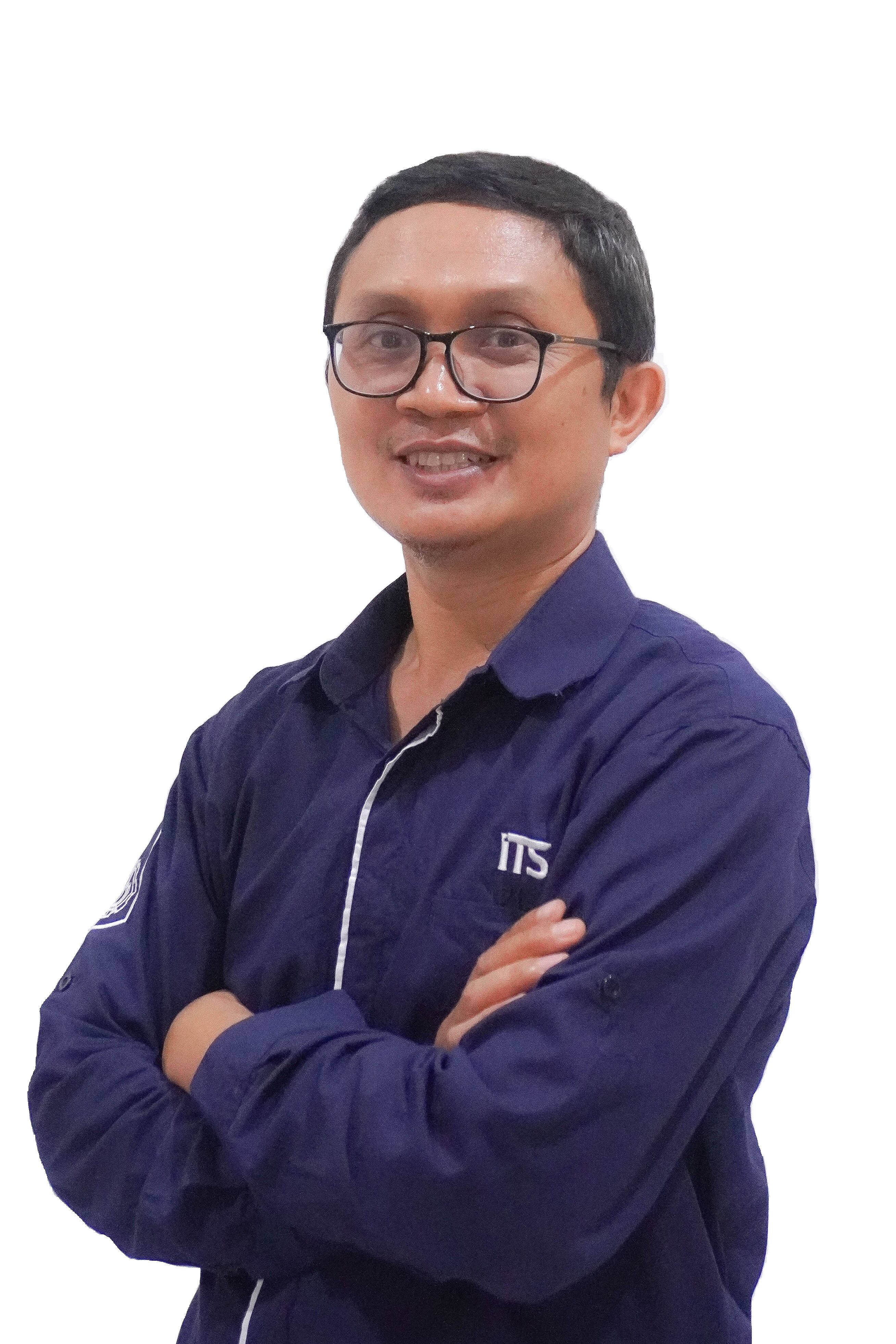
“The world is changing, and it’s changing rapidly. Now, the 4.0 era is marking this shift, where digitalization, online activities, and social media interactions color everyday life. While today’s society benefits greatly, they also face the challenges of this era. Meanwhile, the 5.0 era is also approaching. Here, the DTMM Postgraduate Program offers courses and research that can accompany these developments and address these challenges through a deep understanding of the world of “matter/substance/material”—a world waiting to be explored by your creative minds, for industry, society, and the welfare of humanity as a whole. So, don’t hesitate to begin your determination and journey towards a bright future by joining us here.”

(Head of the Postgraduate Study Program, DTMM ITS – Azzah Dyah Pramata, S.T., M.T., M.Eng., Ph.D)

To become a study program that has global excellence and competence in the development of sustainable science and technology, as well as solving complex problems in the field of innovation and advanced metallurgical materials engineering, with an environmentally conscious multidisciplinary science integration approach for industrial progress and national competitiveness.

Organizing education, research, community service to produce doctors with global competencies who are able to compete and contribute to the development of sustainable science and technology and solving complex problems in the fields of engineering, innovation, materials and advanced metallurgy with an environmentally friendly multidisciplinary science integration approach for the advancement of industry locally, nationally, and internationally by prioritizing academic, moral, social and economic values.

The values ​​that the Department of Materials and Metallurgical Engineering seeks to instill are:

  1.  Ethics and Integrity: in social, national, and professional life, always adhere to the norms and regulations that apply in society, the state, and religion.
  2. Creativity and Innovation: always seek new ideas to generate innovations in carrying out one’s duties/roles better.
  3. Excellence: strive to achieve maximum results.
  4. Strong Leadership: demonstrate visionary, creative, innovative, hardworking, courageous behavior in making changes for the better, and responsible.
  5. Synergy: work together to maximize one’s potential.
  6. Socio-cohesiveness and Social Responsibility: maintain harmony and care for the surrounding community.

A. Teaching and Academic Affairs

  1. To produce outstanding doctoral graduates with integrity and international competitiveness.
  2. To deliver learning processes based on research and cutting-edge technology through industry and international collaboration.
  3. To provide education grounded in original research that contributes to the advancement of materials and metallurgical science and supports the achievement of international reputation.

B. Research

  1. To produce innovative research that supports industrial solutions, strategic policy formulation, and the development of new knowledge in materials and metallurgical engineering.
  2. To encourage research outputs and patents with commercialization potential and revenue generation.
  3. To increase internationally reputable scientific publications and faculty h-indexes to strengthen academic reputation.
  4. To build global research networks with reputable universities and research institutions.

C. Community Engagement

  1. To apply science and technology to improve economic growth and community welfare.
  2. To develop collaborations with industry and local governments.
  3. To promote community empowerment activities based on materials and metallurgical technology.

D. Facilities and Infrastructure

  1. To ensure the availability of adequate facilities and infrastructure to support education, research, and community service.
  2. To guarantee a safe and inclusive academic and research environment.

E. Human Resources

  1. To ensure the availability of competent human resources to support the Tri Dharma of Higher Education.
  2. To encourage faculty members and students to actively participate in global research collaborations.

F. Organization and Management

  1. To establish comprehensive organizational structures and standard operating procedures (SOPs).
  2. To strengthen a data-driven quality management system with continuous evaluation at the departmental level.
  3. To foster a collaborative and accountable work culture.

Objectives of the Department of Materials and Metallurgical Engineering:

  1. To raise the quality standards of doctoral graduates in materials and metallurgical engineering who are superior, independent, and internationally competitive.
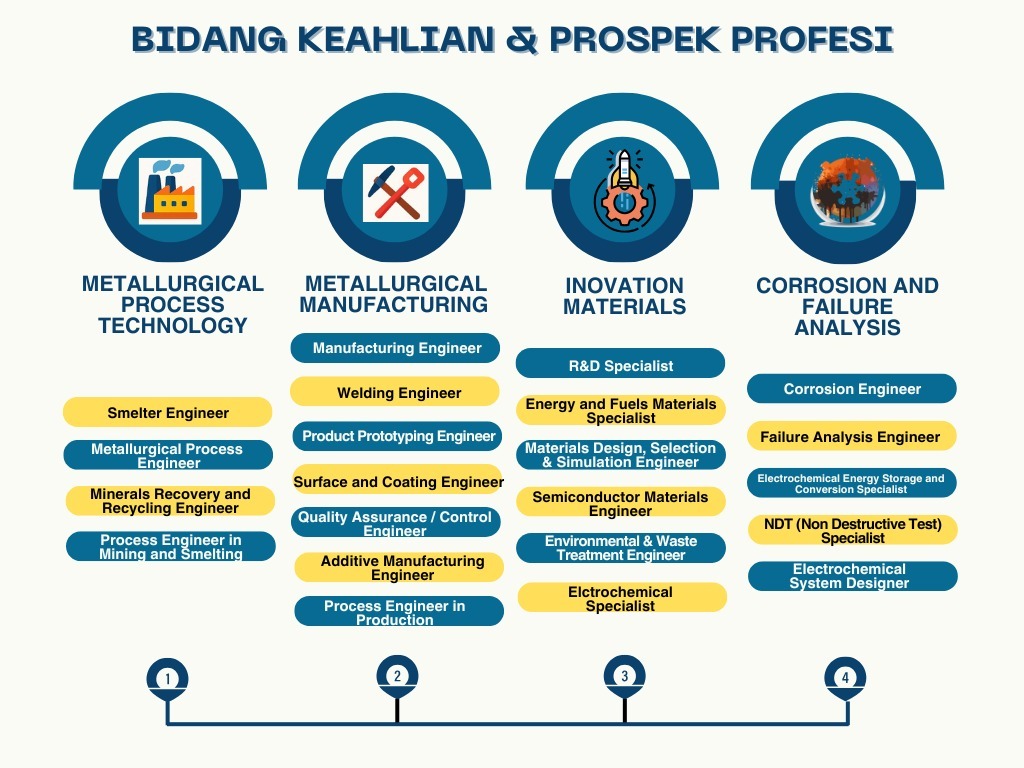
  2. To develop scientific competence and advanced research in metallurgical and manufacturing engineering, corrosion engineering, material failure analysis, and innovative materials engineering to generate new knowledge.
  3. To create and maintain an academic atmosphere conducive to the development of original research and the implementation of the Tri Dharma of Higher Education.
  4. To continuously improve the quality of students, faculty, staff, and educational facilities.
  5. To develop, implement, and maintain partnerships with other institutions at home and abroad in the fields of education, research, and community service to strengthen scientific collaboration and global research networks.
  6. To produce doctoral graduates with noble personalities, integrity, and high academic morals, capable of serving as leaders and developers of science in the field of materials and metallurgical engineering.

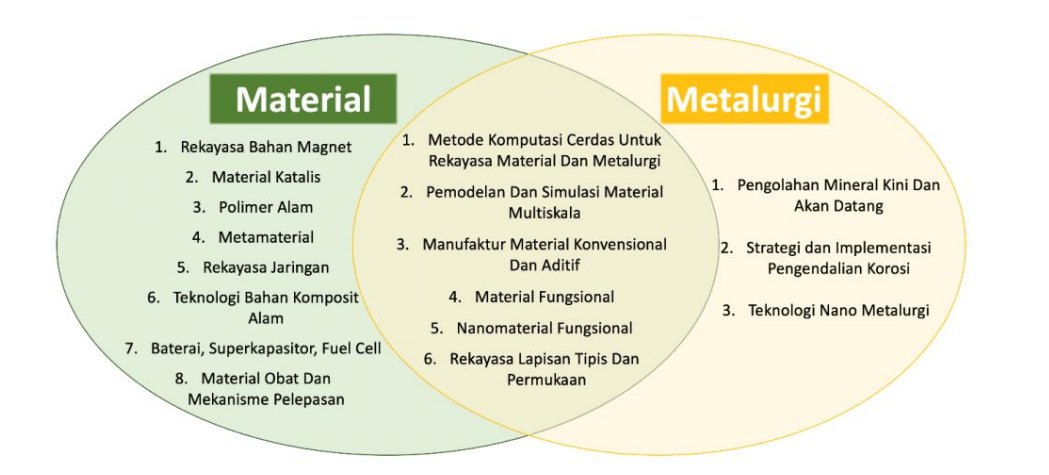
Fokus studi dan penelitian pada prodi S3 Teknik Material dan Metalurgi ITS Surabaya

No Kode MK Nama MK SKS SKS Total/ Semester
Semester -1
1 TL255101 Advanced Material Characterization 3
2 TL255104 Research methodology 3
3 TL255103 Material Processing Modeling 3
4 TL255102 Thermodynamics and Kinetics of Materials 3
  Total 12
  Semester -2
1 TL255201 Corrosion Control System Design 3
2 TL255202 Structure and Mechanical Properties of Materials 3
3 TL255203 Thesis Proposal Seminar 2
4 TL2552xx Elective Course 1 3
  Total 11
  Semester -3
1   TL255301 Casting and Welding Metallurgy 3
2   TL255302 Heat Treatment and Surface Engineering 3
3   TL2552xx Elective Course 2 3
9
  Semester – 4
1   TL255401   Thesis 4 10
Total SKS 36
No Kode MK Nama Mata Kuliah
1 TL256123 Electronic Materials and Semiconductors
2 TL256126 Advanced Characterization of Functional Materials
3 TL256122 Material Manufacturing (Conventional and Additive)
4 TL256103 Battery Materials, Supercapacitors and Fuel Cells
5 TL256125 High-Entropy Material
6 TL256104 Catalyst Material
7 TL256105 Drug Materials and Their Release Mechanisms
8 TL256121 Mechanics of Composite Materials
9 TL256120 Extraction Metallurgy
10 TL256119 Welding Metallurgy
11 TL256106 Metamaterials
12 TL256107 Intelligent Computational Methods for Materials Engineering and Metallurgy
13 TL256116 Nano Metallurgy
14 TL256108 Functional Nanomaterials
15 TL256109 Multiscale Material Modeling and Simulation
16 TL256110 Mineral Processing Now and in the Future
17 UG256201 Scientific Writing
18 TL256111 Magnetic Material Engineering
19 TL256124 Functional Biomaterial Engineering
20 TL256112 Network Engineering
21 TL256113 Surface Engineering
22 TL256114 Corrosion Control Strategy and Implementation
23 TL256118 Structure and Mechanical Properties of Materials
24 TL256115 Natural Polymer Material Technology
25 TL256117 Special Topics

This browser does not support PDFs. Please download the PDF to view it: Download PDF.

This browser does not support PDFs. Please download the PDF to view it: Download PDF .

This browser does not support PDFs. Please download the PDF to view it: Download PDF .

This browser does not support PDFs. Please download the PDF to view it: Download PDF .

This browser does not support PDFs. Please download the PDF to view it: Download PDF .

Profil Lulusan

Academics: The profile of graduates of the Materials and Metallurgical Engineering doctoral program who become academics have characteristics and qualifications that focus on the development of science and the dissemination of knowledge to support the progress of Industrial Technology in Indonesia.

Researcher: The profile of graduates of the Materials and Metallurgical Engineering doctoral program who act as researchers have characteristics and qualifications that focus on developing knowledge, creating innovations in materials engineering and multidisciplinary technology, and contributing to solving complex problems in the field of materials and metallurgy.

Engineer: The profile of graduates of the Materials and Metallurgical Engineering doctoral program who act as engineers have characteristics and qualifications that contribute to industry, technology, in the creation of innovation and product development, Project Management Leadership and solving complex technical problems in the field of materials and metallurgical engineering collaboratively with an inter, multi and transdisciplinary approach.

Practitioners in Institutions/Government: The profile of graduates of the Materials and Metallurgy Engineering doctoral program who act as practitioners in government agencies or non-profit institutions in the context of materials and metallurgy includes the characteristics and qualifications of creating innovations in product development, technology, creating new policy ideas and solving problems related to materials and metallurgy. They can assist the government in managing material resources, promoting sustainability, and ensuring that policies relevant to materials and metallurgy meet the needs of society and the environment.

Study Program Educational Objectives

  1. To produce doctoral graduates who can develop the scientific field of Materials and Metallurgical Engineering through synergistic academic and research activities, by optimizing the utilization of resources and establishing regional, national, and international collaborative networks for the development of science and technology, as well as materials and metallurgical engineering.
  2.  To produce doctoral graduates who can produce highly reputable scientific works at the international level that make significant contributions to the development of materials and metallurgical science and technology, actively disseminate them, and are able to translate them into technically and economically feasible technological and engineering applications.
  3. To produce doctoral graduates who have a deep mastery of science and engineering in the field of Materials and Metallurgical Engineering, with sharp analytical and theoretical synthesis skills, and are able to make real contributions to solving national and global strategic problems in the fields of industry, energy, the environment, and manufacturing with interdisciplinary, interdisciplinary, and multidisciplinary knowledge, taking into account the social, ethical, ecological, and economic implications as well as the basic needs of the project.
No Profil Lulusan (PL) Tujuan Pendidikan Prodi (TPP)
TPP-1 TPP-2 TPP-3
1 PL-1
2 PL-2
3 PL-3
4 PL-4
5 PL-5

Capaian Pembelajaran Lulusan (CPL)

  1. Able to demonstrate attitudes and character that reflect devotion to God Almighty, ethics and integrity, noble character, social and environmental awareness and concern, respect for cultural diversity and pluralism, upholding the rule of law, and prioritizing the interests of the nation and society, through creativity and innovation, excellence, strong leadership, synergy, and other potentials to achieve optimal outcomes.

  2. Able to create engineering solutions and innovations in focused areas related to the theme of the dissertation research being pursued.

  3. Able to integrate scientific frameworks and innovation development with areas of expertise beyond Materials and Metallurgical Engineering.

  4. Able to develop new theories, concepts, or ideas and solve science and technology problems within the field through research using inter-, multi-, and transdisciplinary approaches, resulting in creative, original, and validated works that gain national and international recognition.

  5. Able to manage self-directed learning and continuously develop oneself as a lifelong learner to compete at national and international levels, contributing tangibly to problem solving through the application of information and communication technology while adhering to sustainability principles.

  6. Able to develop new knowledge and technologies in the field of Materials and Metallurgical Engineering or professional practice through research, producing creative, original, and validated works.

  7. Able to solve science and technology problems in the field of Materials and Metallurgical Engineering using inter-, multi-, or transdisciplinary approaches.

  8. Able to manage, lead, and develop research and development activities that benefit scientific advancement and the welfare of humanity, and achieve national and international recognition.

Kode PL-1 PL-2 PL-3 PL-4 PL-5
CPL-1
CPL-2
CPL-3
CPL-4
CPL-5
CPL-6
CPL-7
CPL-8
Post Views: 665