Study Program


Academic
Facilities
Research and Collaboration
Published on
Thursday, 20 August 2026
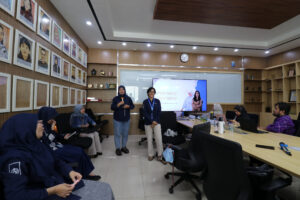
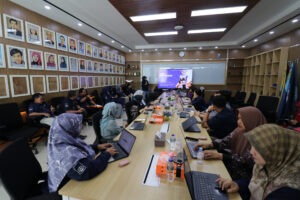
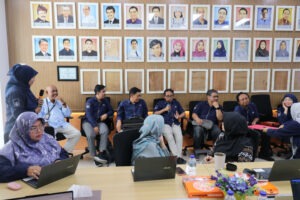
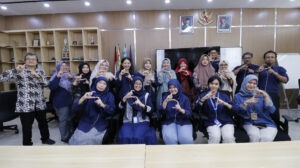
On Wednesday, August 19, 2026, faculty members of the Department of Information Systems participated in a Psychological First Aid (PFA) training organized by the ITS Medical Center Psychology Team. The training, entitled “When Students Are Not Doing Well: The Role of Lecturers in Psychological First Aid,” featured Fatimatuzzakiyah, S.Psi., M.Psi., Psychologist, and Syarifa Yurizdiana, S.Psi., M.Psi., Psychologist, as the speakers.
The training aimed to provide lecturers with the knowledge and initial skills needed to recognize students who may be experiencing psychological distress and to determine appropriate ways to respond when students need support. The session emphasized that lecturers play an important role because they interact directly with students throughout their academic activities.
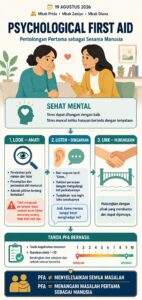
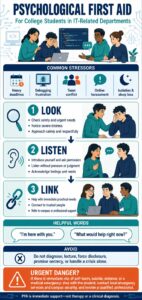
During the training, participants learned to recognize various warning signs that may indicate changes in a student’s academic performance, behavior, emotions, or physical condition. These signs may include a significant decline in academic performance, unfinished assignments, frequent absences, social withdrawal, noticeable behavioral changes, excessive anxiety, frequent crying, appearing highly distressed, significant loss of interest, fatigue, and visible changes in eating or sleeping patterns.
The training also emphasized the importance of observing first rather than making immediate assumptions about a student’s psychological condition. An appropriate initial approach involves paying attention to what is happening, ensuring the student’s safety, identifying urgent needs, and recognizing whether professional assistance may be required.
Psychological First Aid was introduced as initial psychological support provided to individuals who have recently experienced a critical situation, traumatic event, or severe distress. PFA is not therapy and is not intended to solve all of a student’s problems. Instead, it provides initial support to help individuals feel safer, calmer and more stable, connected to social support, able to address practical needs, and aware of the next steps they can take.
The training introduced three key steps in applying PFA:
Another important part of the training focused on how lecturers can communicate appropriately when interacting with students experiencing difficulties. Lecturers were encouraged to avoid judgmental, blaming, or overly directive responses.
For example, when a student’s assignments are incomplete, lecturers can use a more supportive approach by asking, “I noticed that several of your recent assignments have not been completed. Are you experiencing any difficulties?” When a student is crying, a lecturer can provide space and reassurance by saying, “It’s okay. You can take a moment.” Such responses can help students feel heard and more comfortable sharing what they are experiencing.
The training also included case studies to illustrate the practical application of PFA. One case involved a student experiencing academic pressure and conflict with a group member while still being able to participate in academic activities and develop a plan to address the situation. Another case described a student experiencing significant changes in attendance, academic performance, social interaction, sleep, concentration, and energy, with these difficulties increasingly affecting academic activities.
Through this training, lecturers in the Department of Information Systems are expected to develop greater awareness of students’ well-being and respond appropriately when students experience psychological distress. Lecturers are not expected to act as psychologists; rather, they are equipped to recognize warning signs, listen empathetically, ensure safety, and connect students with appropriate professional support when needed.
This activity reflects the Department of Information Systems’ commitment to creating an academic environment that goes beyond academic achievement and also supports the well-being and holistic development of students.