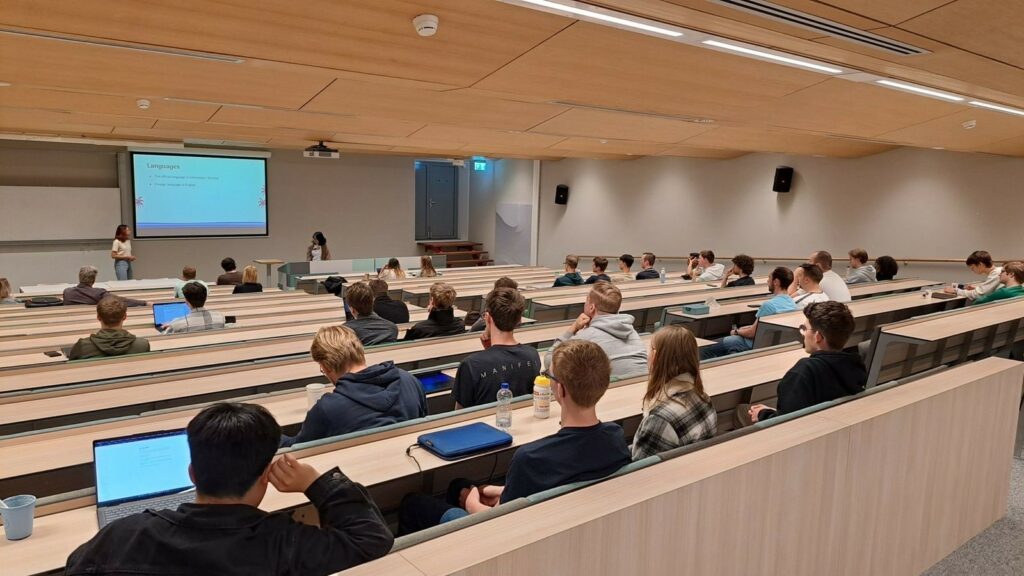
In the Artificial Intelligence Engineering (AI) study program, students learn how to develop systems that can imitate human abilities in thinking, learning, and adapting to the environment. This study program develops knowledge in the field of computer science, especially in the field of artificial intelligence, to create intelligent and innovative solutions in the fields of industry, education, health, and others. Examples of applications include object recognition in images, chatbots, virtual assistants, self-driving cars, and recommendation systems. Graduates of this study program are expected to have the competence to design, analyze, implement, and test efficient and effective artificial intelligence systems.
Program Studi Sarjana (S1) Departemen Rekayasa Kecerdas Artifisial telah dinyatakan sebagai progam studi dengan akreditasi baik sekali oleh LAM Infokom pada tahun 2024 sampai 2029.
Sertifikat-Akreditasi-S1-RKA-2024_2029-1
Achievement of Graduates Learning
1. Able to demonstrate attitudes and character that reflect: devotion to God Almighty, ethics and integrity, noble character, sensitivity and concern for social and environmental issues, respect for cultural differences and diversity, uphold law enforcement, prioritize the interests of the nation and the wider community, through creativity and innovation, excellence, strong leadership, synergy, and other potential to achieve maximum results.
2. Able to study and utilize science and technology in order to apply them to the field of Artificial Intelligence Engineering (RKA), and be able to make appropriate decisions based on the results of individual or group work in the form of a final project report or other forms of learning activities with output equivalent to a final project through logical, critical, systematic, and innovative thinking.
3. Able to manage one's own learning and develop oneself as a lifelong learner to compete at the national and international levels, in order to make a real contribution to solving problems by implementing information and communication technology, paying attention to the principles of sustainability, and understanding technology-based entrepreneurship. 4. Ability to apply knowledge and techniques in the field of artificial intelligence/machine learning to a system across multiple platforms.
5. Ability to design and implement Big Data in a system and perform data analysis using artificial intelligence techniques.
6. Ability to collect data and formulate meaning from data obtained from social channels to support business decisions and measure the performance of actions based on these decisions using social media.
7. Ability to develop graphics and/or computer vision programs to support intelligent systems across multiple platforms.
8. Ability to design and develop game programs that implement artificial intelligence techniques and/or develop animation programs for an intelligent system.
9. Ability to develop X-Reality software using graphics libraries and/or game development engines for use in various industry sectors.