Academic
Facilities
Research & Collaborations
Published on
Thursday, 26 November 2026
SURABAYA, November 26, 2026 — The Department of Geophysical Engineering, Faculty of Civil, Planning, and Geo Engineering (FTSPK), Institut Teknologi Sepuluh Nopember (ITS), hosted the 2026 Integrated Field Course Capstone Project Exhibition (Pameran Capstone Project Kuliah Lapangan Terpadu 2026) on Thursday morning (11/26/2026). Held at the Dr. Angka Building Corridor (Selasar Dr. Angka), ITS, from 07:00 to 10:30 WIB, the exhibition served as the culmination and final reporting stage of the Integrated Field Course previously conducted by final-year students in the Telaga Ngebel area, Ponorogo Regency, and its surroundings.
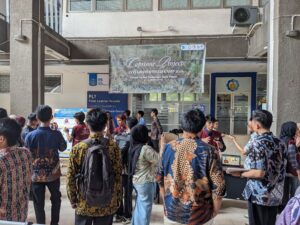
Integrated Field Course Capstone Project Exhibition at the Dr. Angka Building Corridor, ITS
Building upon the field data acquisition and processing stages carried out across the volcanic and geothermal landscape of Telaga Ngebel, senior students presented their integrated research outputs in the form of scientific posters, subsurface maps, and geophysical interpretation models. This capstone showcase was designed to evaluate students’ comprehensive analytical capabilities in integrating multiple geophysical methods to address earth resource exploration and geological hazard mitigation challenges.
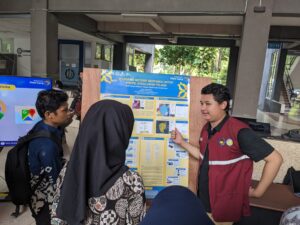
Students Presenting Capstone Project Research Findings to Exhibition Visitors
Throughout the morning, the Dr. Angka Corridor was bustling with visitors. High enthusiasm came not only from supervising lecturers and junior students of the Department of Geophysical Engineering ITS—who engaged in active discussions regarding field methodologies and findings—but also from the broader ITS academic community and general visitors eager to learn more about the research products and practical applications of Geophysical Engineering.
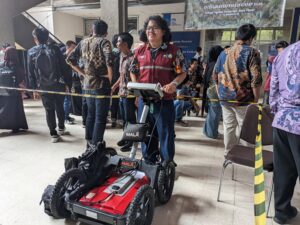
Demonstration of Ground Penetrating Radar (GPR) Equipment by Students
Through this Capstone Project showcase, the Department of Geophysical Engineering ITS continues to foster project-based learning and an open culture of research dissemination for the wider public. Furthermore, organizing this exhibition aligns with the department’s commitment to advancing the Sustainable Development Goals (SDGs)—specifically SDG 4 (Quality Education), SDG 7 (Affordable and Clean Energy), and SDG 9 (Industry, Innovation, and Infrastructure)—by nurturing graduates equipped to tackle clean energy exploration and geoscience technological innovation.
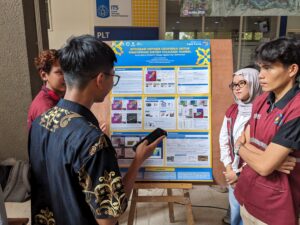 Interactive Q&A Session Between Visitors and Students on Geophysical Research