“Climate change is a crisis that will affect every part of society, and every country. Universities need to be at the forefront of action to reduce the impact of climate change, especially amongst the poorest who will be the most affected.”
(THE Impact Rankings)
SDG 13: CLIMATE ACTION
Low-Carbon Energy Use
University-Wide Low-Carbon Energy Tracking at ITS
Institut Teknologi Sepuluh Nopember (ITS) has implemented a comprehensive university-wide low-carbon energy tracking system to measure and monitor the utilization of renewable and energy-efficient power sources across all campus operations. This initiative is guided by the Rector’s Circular Letter No. 9665/IT2/TU.00.08/V/2024 on “Supporting ITS as a Sustainable and Environmentally Aware Campus,” which emphasizes the adoption of energy conservation and clean energy technologies throughout the university.
As part of this system, ITS records and evaluates the total amount of low-carbon energy generated annually. In 2024, ITS utilized three renewable energy sources, collectively producing 333,913 kWh per year, consisting of:
- Solar power systems installed in various campus buildings and facilities, generating 332,472 kWh/year;
- Biodiesel-based generation, producing 1,200 kWh/year from renewable fuel sources; and
- Clean biomass energy from the Department of Industrial Chemical Engineering, producing 240 kWh/year through sustainable conversion processes.
All energy data are integrated into the university’s central monitoring framework, ensuring that energy performance and carbon reduction progress are tracked comprehensively across all ITS units and facilities.
Environmental Education Measures
Local Climate and Disaster Education for Community Resilience
Institut Teknologi Sepuluh Nopember (ITS) consistently provides local education and community engagement programmes on climate change risks, disaster mitigation, and adaptation. Through its research centers, student organizations, and collaborative projects, ITS empowers communities to understand environmental challenges and develop practical responses toward a more resilient and sustainable society.
One of the major initiatives in 2024 was led by the Disaster Mitigation and Climate Change Research Center (MKPI ITS), which offered free consultation services for residents affected by the Tuban earthquake. Through the 2024 Earthquake Task Force, experts from ITS assessed the structural safety of damaged houses and provided professional advice to ensure community safety and awareness of post-disaster risks.
In addition, MKPI ITS conducted public discussions on earthquake mitigation, particularly emphasizing building reinforcement and national construction standards, to enhance community preparedness for potential megathrust disasters.
ITS also collaborated with the East Java Regional Disaster Management Agency (BPBD Jatim) to launch TENPINA Virtual Reality (VR) — an interactive disaster simulation tool located at the East Java Disaster Education Park. The VR system allows both students and the public to experience realistic simulations of floods, earthquakes, and fires, improving public understanding of climate-induced disasters and effective emergency responses.


Complementing these efforts, the Department of Visual Communication Design (DKV ITS) conducted school-based disaster education programs to enhance students’ knowledge of climate-related hazards such as earthquakes and floods. These sessions equipped students with practical evacuation and self-rescue skills, helping them act as young disaster awareness ambassadors in their communities.
At the grassroots level, the Environmental Engineering Student Association (HMTL ITS) promoted climate adaptation and green infrastructure education through the Kampung Mitra program. The initiative trained residents in creating biopore absorption holes, which enhance rainwater infiltration, reduce flooding, and recycle organic waste into compost — demonstrating a simple yet effective climate mitigation practice.
Through these multi-level educational programs — from technology-based simulations and school outreach to hands-on community workshops — ITS continues to raise awareness, build adaptive capacity, and strengthen local resilience to climate change and disaster risks in East Java and beyond.
 Complementing these efforts, the

Climate Action Plan: Collaborative Framework for Climate Resilience and Community Engagement
Institut Teknologi Sepuluh Nopember (ITS) has established a comprehensive regulatory foundation that guides its institutional actions in addressing climate change and advancing sustainability. These frameworks serve as the main reference for ITS not only in implementing environmentally responsible practices on campus but also in extending its Climate Action Plan through partnerships with local governments, academic institutions, and community groups.
This foundation is anchored by the Rector’s Statement on ITS Commitment to Achieving the Sustainable Development Goals (SDGs), which outlines strategic directions across three main domains—Economy and Welfare, Social Life, and Environmental Matters. The environmental component emphasizes energy conservation, pollution prevention, waste management, green open spaces, and biodiversity protection. These principles are further reinforced through the Rector’s Circular Letter No. T/95007/IT2/TU.00.08/2019, “Supporting ITS as a Sustainable and Environmentally Conscious Campus,” which mandates energy efficiency, sustainable mobility, and eco-friendly infrastructure practices. Complementing these policies, ITS has also declared its Institutional Commitment to Achieving Carbon Neutrality by 2030, supported by operational frameworks for managing GHG emissions across Scopes 1, 2, and 3, and the integration of renewable energy sources including solar, biomass, and biodiesel.
Building upon these institutional guidelines, various units and research centers across ITS have collaboratively advanced climate-related initiatives. The Disaster Mitigation and Climate Change Research Center (MKPI) serves as a key driver, coordinating research, outreach, and knowledge-sharing initiatives in disaster resilience and climate adaptation. MKPI’s programs include collaboration with :
- BPBD Nganjuk on developing regional Disaster Risk Assessment (KRB) documents,
- the TENPINA VR project with BPBD East Java to enhance public disaster education, and the Earthquake Response Task Force providing free post-disaster building consultations to affected communities,
- Flood Resilience FGD with Queensland University of Technology (QUT) and University of Technology Sydney (UTS). Also present at this event were KONEKSI management, Bappenas, Water Resources and Highways Service, BPBD, Bappeda, as well as sub-district heads, village heads, RT/RW who created holistic discussions and were based on the real needs of the community,
- A joint discussion with Japan Society of Civil Engineers (JSCE) and BPBD East Java on applying reverse zoning for flood mitigation, and
- Virtual Reality Climate Learning Project in collaboration with PENS, PNJ, Universiti Teknologi Malaysia (UTM), and Sanspower.
Through this integrated, regulation-driven, and multi-actor approach, ITS ensures that its Climate Action Plan is not only well-grounded institutionally but also actively shared and co-developed with local stakeholders. This reflects ITS’s position as both a policy-based leader and a collaborative partner in advancing regional climate resilience and sustainability.

Collaborative Disaster Resilience: Strengthening Climate Preparedness through Global and Local Partnerships
Institut Teknologi Sepuluh Nopember (ITS) plays a proactive role in cooperative disaster planning for climate-related hazards through both international and intergovernmental collaborations. At the global level, ITS joined forces with the Queensland University of Technology (QUT) and the University of Technology Sydney (UTS) in a joint research initiative under the KONEKSI program—an Australia–Indonesia knowledge and innovation partnership supported by both governments . The collaboration aimed to enhance Surabaya’s resilience to climate-induced flooding by combining academic research, data-driven policy analysis, and community engagement.
This multi-university project analyzed six flood-prone neighborhoods in Surabaya, collecting key data on flood duration, water depth, and local vulnerability profiles. Based on these findings, the consortium developed a comprehensive set of recommendations for the Surabaya City Government, including the establishment of a flood information system and targeted community training for vulnerable groups. The program emphasized inclusive decision-making, encouraging the involvement of at-risk populations in municipal disaster resilience planning. This initiative represents a model of cross-border academic cooperation that directly supports city-level climate adaptation strategies.
These findings were shared with the Surabaya City Government to strengthen public policy and integrate community data into city-level climate adaptation planning. The research emphasized the government’s key role in supporting vulnerable groups—especially those in high-risk areas—by ensuring their participation in disaster resilience programs and decision-making. The project also recommended the development of inclusive flood information systems and awareness training to improve preparedness and response among at-risk populations.
At the regional level, ITS researchers also partnered with the East Java Department of Public Works for Water Resources (PU SDA) to apply modular infiltration wells that prevent rainwater overflow and urban flooding. This innovative technology—implemented for the first time in East Java—serves as a scalable model for sustainable flood mitigation in other high-risk areas. As the first of its kind in East Java, this system strengthens climate resilience through sustainable water management and can be replicated in other cities facing similar challenges.
Through these multi-level initiatives, ITS strengthens the capacity of local and national governments to protect vulnerable communities from the growing risks of climate-related disasters.


Enhancing Government Readiness through Research, Education, and Technology for Climate Disaster Mitigation
Institut Teknologi Sepuluh Nopember (ITS) actively supports and informs local and regional governments in early warning and risk monitoring related to climate change–induced disasters through research collaborations, educational initiatives, and technological innovations.
Through its international collaboration with Queensland University of Technology (QUT) and the University of Technology Sydney (UTS), ITS organized the Forum Group Discussion on Strengthening Community Resilience to Floods, involving the National Development Planning Agency (Bappenas), Regional Disaster Management Agency (BPBD), and Water Resources and Highways Service. The FGD produced actionable insights for the government in developing more inclusive flood risk management policies that address community vulnerability at the local level.
In partnership with the East Java BPBD, ITS—through the Center for Disaster Mitigation and Climate Change (Puslit MKPI)—developed TENPINA Virtual Reality (VR), an interactive tool designed to simulate disaster scenarios such as floods, fires, and earthquakes. Installed at the East Java Disaster Education Park, this technology strengthens public preparedness and supports BPBD’s early-warning and public education strategies.
ITS also informs policy and spatial planning through its academic collaboration with the Japan Society of Civil Engineers (JSCE) and BPBD East Java, introducing the concept of reverse zoning to enhance adaptive land-use planning and reduce flood risks in urban areas.
Meanwhile, in partnership with the Ministry of Energy and Mineral Resources (ESDM) and the Center for Volcanology and Geological Disaster Mitigation (PVMBG), ITS organized the Megathrust Earthquake Preparedness Webinar to improve coordination and information delivery between government and the public.
Through these various collaborations—from cross-border research to applied simulation technologies—ITS strengthens the government’s capacity to monitor, anticipate, and respond to local climate-related disasters more effectively.


Collaborative Environmental Education for Climate Adaptation with NGOs
Institut Teknologi Sepuluh Nopember (ITS) actively partners with non-governmental organizations to deliver climate adaptation education and practical mitigation actions at campus and community levels. These NGO collaborations combine technical knowledge, community outreach, and youth mobilization to translate awareness into on-the-ground solutions.
ITS hosted the Climate Innovation Acceleration (CIA) roadshow in collaboration with Ecoxyztem, bringing together climate-tech startups, practitioners, and students. The program accelerated climate solutions by connecting over 3,000 students and supporting ~30 ecopreneurs—fostering tech-driven mitigation (waste management, circular economy) and opening market access and mentoring for climate startups.
Complementing tech-acceleration, ITS convened the “Road to Campus” seminar for World Environment Day with partners such as Rujak Center for Urban Studies and Green Leadership Indonesia. The forum translated urban heat island (UHI) science into practical mitigation strategies—vegetation facades, vertical gardening, and green pavement—and stressed the NGO role in mobilizing Gen-Z and community campaigns to adopt these measures across dense urban neighborhoods.
At neighborhood scale, ITS and the NGO Tunas Hijau Indonesia (via HMTL’s Kampung Mitra) implemented hands-on biopore and greening workshops, teaching residents how to create lubang resapan biopori (LRB) to increase infiltration, reduce flood risk, and turn organic waste into compost. These activities show NGO–university synergy: NGOs drive community mobilisation and outreach; ITS supplies technical guidance, monitoring tools, and pedagogical materials—together delivering education, behavior change, and scalable mitigation practices.
Through this blended model—acceleration programs (climate-tech NGOs), policy/awareness fora (research NGOs and community leadership), and hands-on neighbourhood interventions—ITS leverages NGO partnerships to convert climate knowledge into adaptive actions that protect vulnerable urban communities.


Commitment to Carbon Neutral University
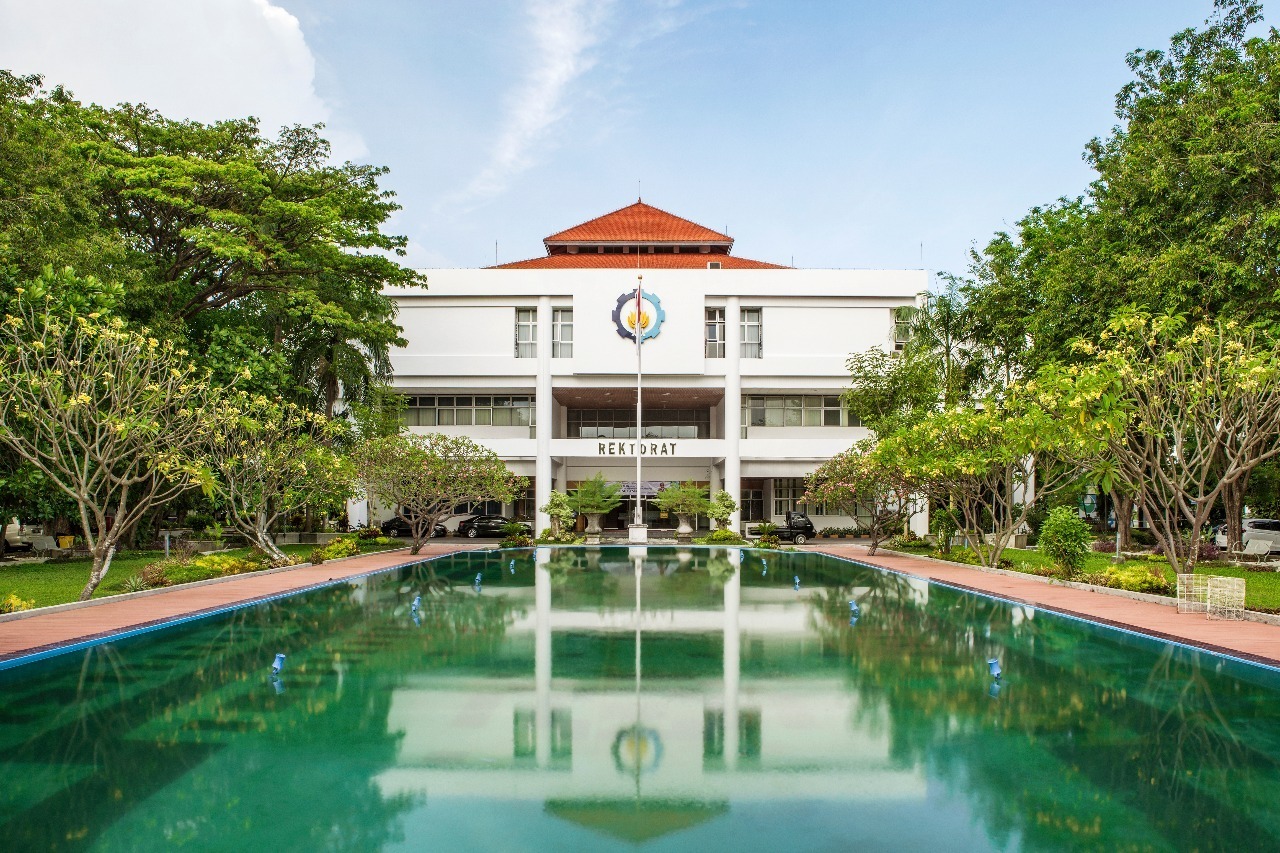
Institut Teknologi Sepuluh Nopember (ITS) has set a clear target to achieve carbon neutrality by 2030, as stated in Rector’s Decree No. 439/IT2/T/HK.00.01/XII/2024. This commitment demonstrates ITS’s strong dedication to sustainability and aligns with both national and global climate goals.
The university’s comprehensive strategy to reduce emissions is outlined in the Greenhouse Gas Emission Reduction Program, which addresses all three scopes defined by the Greenhouse Gas Protocol.
Scope 1 (direct emissions) focuses on reducing fossil fuel use within campus operations through initiatives such as promoting bicycles, electric vehicles, and campus buses, as well as establishing vehicle-free zones.
Scope 2 (indirect emissions from purchased energy) emphasizes the utilization of renewable energy, particularly solar power, alongside improvements in energy efficiency and conservation across campus facilities.
Scope 3 (other indirect emissions) covers sustainable procurement, waste management, and transportation activities, as well as awareness and engagement programs for staff, students, and the surrounding community to promote low-carbon behaviors.
To ensure measurable progress, ITS allocates adequate human, material, and financial resources, enabling systematic monitoring, evaluation, and continuous improvement of its emission reduction performance.
SDG 13 IN NUMBERS
55,163.52 GJ
Total Energy Consumption
1,202.06 GJ
Total Energy from Low-Carbon Sources
2%
Proportion of Electricity from Low-Carbon Sources