Smart Eco Campus



"Sustainable development is the responsibility of every part of society, across the world. It cannot be achieved without linkages, across the goals, but also between institutions, governments, companies, NGOs, and people." (THE Impact Rankings)
Institut Teknologi Sepuluh Nopember (ITS) contributes to sustainable development policy by working directly with government institutions, regional authorities, industry associations, and non-governmental partners. Its involvement spans identifying policy challenges, conducting stakeholder consultations, developing policy recommendations, and supporting regional strategies. These collaborations help translate research and technical expertise into practical inputs for policies addressing inclusive education, economic development, energy transition, trade, and sustainable urban planning.
At the institutional and regional level, a team from the Department of Urban and Regional Planning ITS, in collaboration with Universitas Trisakti, Institut Teknologi Bandung, and the University of the West of England Bristol, conducted a study supported by a British Council grant on Indonesian universities' capacity to support students with disabilities. The study identified gaps in inclusive higher education and resulted in a policy document submitted to ITS leadership in December 2025. Its recommendations include establishing a Disability Service Unit and implementing a three-stage support system covering inclusive admissions, adaptive learning, and students' academic and career independence. The findings provide a policy foundation for strengthening institutional arrangements and improving access to higher education for students with disabilities.
At the national level, ITS contributes policy analysis and recommendations on economic governance and industrial development. Following Indonesia's accession to BRICS in January, the Center for Industrial Development and Public Policy ITS organised a focus group discussion involving Prof. Hikmahanto Juwana of Universitas Indonesia and Agustino Wibisono, a Dubai-based technology executive. The discussion examined opportunities and challenges arising from Indonesia's membership, recommending greater prioritisation of climate and renewable energy projects financed by the New Development Bank (NDB), with Danantara overseeing their monitoring. The discussion positioned ITS's findings as input for policymakers on aligning international economic cooperation with national sustainability priorities.
(Second from left) Daddy Ytidna Nugraha ST, Dr. Ir. Arman Hakim Nasution M.Eng., Prof. Hikmahanto Juwana, and Agustino Wibisono participating in an FGD (Focus Group Discussion)
The same Center also developed a policy roadmap for mandatory Indonesian National Standard (SNI) certification of gold jewellery. Presented with participation from the Coordinating Ministry for Economic Affairs, Bullion Bank BSI, and Pegadaian G24, the proposal outlined a phased approach: standardising gold bars in 2025, followed by mandatory jewellery certification in 2027–2028, with state-owned enterprises serving as initial trial participants. This recommendation aims to strengthen product standardisation and the governance of Indonesia's gold industry. In another national policy initiative, ITS and the ITS Alumni Association (IKA ITS) convened a dialogue on Domestic Component Level (Tingkat Komponen Dalam Negeri/TKDN) at PLN's headquarters in Jakarta. The dialogue brought together representatives from Pertamina International Shipping, the Ministry of Marine Affairs and Fisheries, the Indonesian Shipbuilding Association, and technology companies to discuss opportunities to strengthen domestic industrial participation and local technological capacity.
At the regional government level, ITS provides technical expertise to support evidence-based spatial planning and local development strategies. In July, ITS hosted a discussion with East Java Deputy Governor Dr Emil Elestianto Dardak and a representative from DKI Jakarta's spatial planning authority on developing a LiDAR-based digital twin of Surabaya. The proposed initiative prioritises integrated drainage mapping, with the Gerbang Kertosusila area identified as a priority for regional development planning. The digital twin approach offers a technical basis for improving spatial information and supporting more integrated urban infrastructure planning.
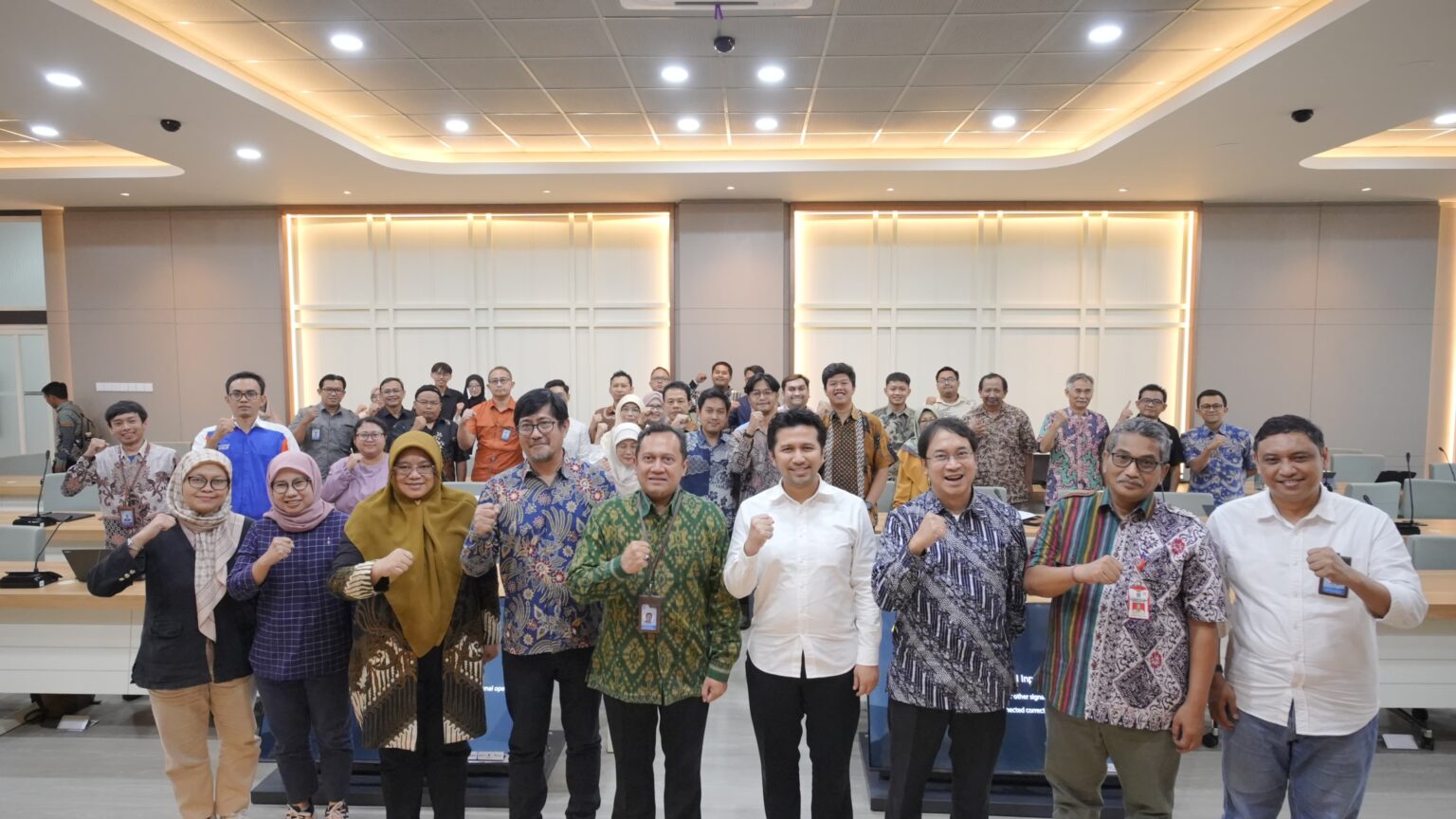
Assistant Deputy Governor for Spatial Planning of DKI Jakarta, Ir. Benni Agus Candra, M.Si., presenting the implementation of a digital twin for DKI Jakarta.
ITS further strengthened its regional development partnership by signing a Memorandum of Understanding with the Jembrana Regency Government, Bali. The collaboration outlines several areas of support, including destination branding, local revenue strategy development, digital public services based on spatial mapping, and mentoring for regional-owned enterprises. It also provides for follow-up cooperation in joint research, internships, and scholarships. These areas of collaboration are intended to strengthen local government capacity, improve public service planning, and support regional economic development.

ITS and the Jembrana Regency Government (Pemkab Jembrana) at the peak celebration of the 130th anniversary of Negara City, held at the Dr. Ir. Soekarno Arts Building.
Through these partnerships, ITS contributes to SDG policy development at multiple levels. Its work ranges from identifying institutional and regional challenges and formulating policy recommendations to providing technical models and establishing formal frameworks for government collaboration. Engagement with the British Council, universities, national ministries, state-owned enterprises, industry associations, provincial authorities, and regency governments demonstrates ITS's role as a research and technical partner in advancing evidence-informed policies. These contributions support institutional inclusion, sustainable economic development, industrial competitiveness, and more integrated regional planning in alignment with the Sustainable Development Goals.
Energy Transition and Sustainable Industrial Development
Energy transition was a major theme in ITS's engagement in 2025. In March, MPR Goes to Campus brought together ITS academics and People's Consultative Assembly (MPR) Deputy Chairman Dr Eddy Soeparno to discuss Indonesia's energy transition.

(from left) Fadlilatul Taufany ST PhD, Dr. Eddy Soeparno SH MH, and Dedet Candra Riawan ST MEng PhD during the 'MPR RI Goes to Campus' national seminar session at ITS.
In May, the LSCAMP 2025 seminar involved speakers from the Ministry of Energy and Mineral Resources, PLN, and Mitsui Indonesia, examining energy transition prospects from policy, energy provision, and business perspectives. In July, the Department of Electrical Engineering hosted EVOLVE 2025, connecting students and academics with PLN Nusantara Power and Teknologila to discuss renewable energy innovation and its practical applications.

Senior Business Consultant at Impactto, Arya Prihutama, explains business sectors that can be leveraged during the energy transition.
Economic Governance, Trade, and Regional Development
ITS also initiated discussions on industrial competitiveness and regional economic development. In January, ITS and Universitas Islam Indonesia (UII) organised a discussion on mandatory Indonesian National Standard (SNI) certification for gold jewellery, involving a Ministry of Industry policy analyst and industry associations.
In June, CEO Talk 2025 brought together the Deputy Minister of Trade, business leaders, and institutional partners to discuss the application of the Danantara holding concept to regional-owned enterprises (BUMD), alongside the signing of four memoranda of understanding with partners from South Korea, Hong Kong, and Indonesia.
At the regional level, a July focus group discussion on village-led growth connected ITS with the ADIDES village association, Surabaya's civil service and communications agencies, and the Indonesia Blockchain Center, resulting in cooperation agreements. ITS also initiated Indonesia's first Investment Exhibition in Dubai with the Indonesian Consulate General, involving 19 companies and start-ups to promote investment opportunities. 
Head of the IIE 2025 Delegation, Dr. Ir. Arman Hakim Nasution, M.Eng. (second from left), together with the Co-Founder of the Dubai Blockchain Center, participates in a discussion among prospective investors.
In November, ITS and Bank Tabungan Negara (BTN) hosted a talk show on sustainable housing innovation and inclusive urban development.
Maritime Innovation and Sustainable Ocean Development
ITS brought together academic, government, defence, and industry stakeholders to discuss maritime innovation. In August, the National Ship Design and Engineering Center (NaSDEC) ITS hosted a seminar on developing an Indonesian submarine technology centre, involving the Indonesian Navy, a naval design company, and PT PAL. In September, a national seminar on underwater technology for maritime defence involved the Chief of the Indonesian Naval Staff, BRIN, and Naval Group.
Chief of Staff of the Indonesian Navy, Admiral Dr. Muhammad Ali, S.E., M.M., M.Tr. Opsla (left), and Rector of ITS, Prof. Dr. Ir. Bambang Pramujati, S.T., M.Sc. Eng., Ph.D., during the exchange of mementos.
The Indonesian Port Marina Forum, held on 22 September, attracted more than 100 participants and resulted in cooperation agreements with Sweden's SF Marina on maritime research and education and PT Asset Monitoring Teknologi Indonesia on sensor-based building monitoring. This forum provides an opportunity for participants to hear presentations from experts and engage in in-depth discussions regarding the direction of marina development in Indonesia. In the same month, ITS hosted an ASEAN and Timor-Leste forum on the economic value and financing of blue carbon, connecting regional stakeholders on coastal ecosystem conservation and sustainable economic opportunities.
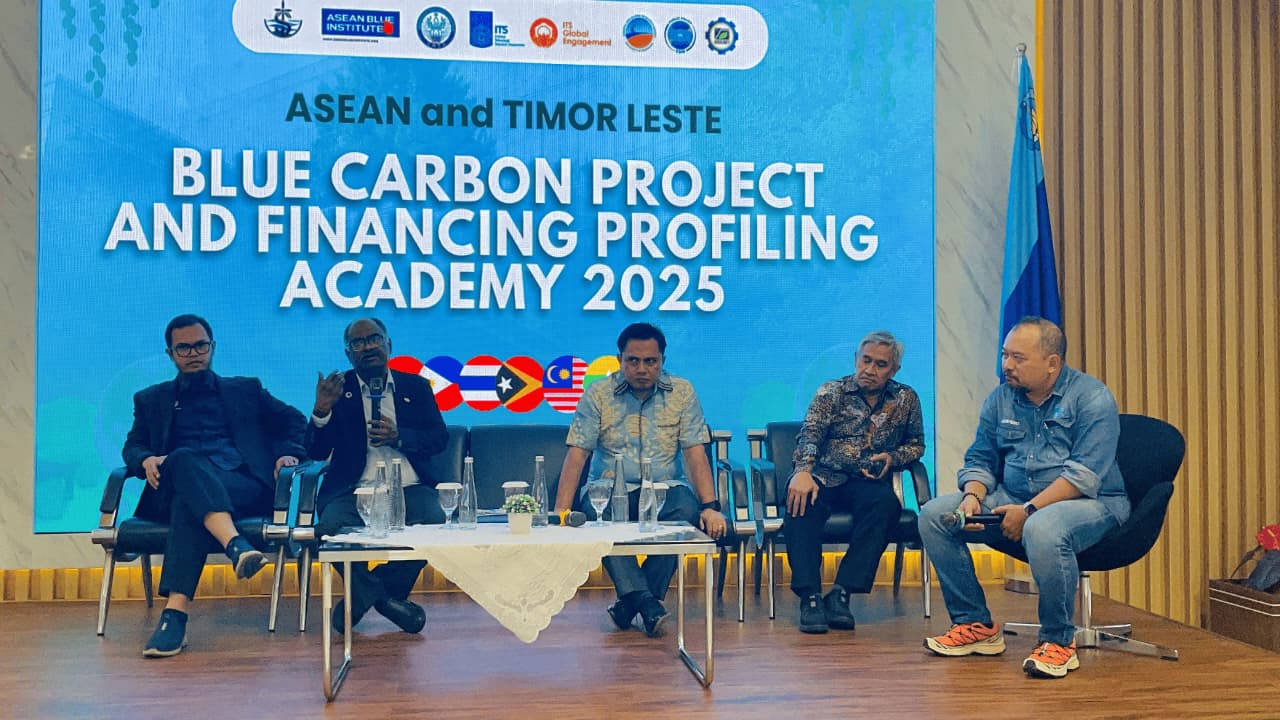
Mukhammad Muryono, S.Si., M.Si., Ph.D. (right), with the panelists while moderating a discussion session on blue carbon policy.
Regional Development and Community-Based Dialogue
Under the Ministry of Transmigration's Ekspedisi Patriot, ITS engaged with the Aceh Besar Regency Development Planning Agency (Bappeda), village heads, and local candlenut entrepreneurs to identify development priorities in the Seulimeum transmigration area. Discussions highlighted challenges involving unpaved agricultural roads, limited access to clean water, electricity and healthcare, and farmers' dependence on intermediaries. The findings are expected to inform the regency's ongoing preparation of a transmigration regulation (Qanun), with the local government awaiting the ITS study as an input for policy development.
The atmosphere during the FGD held by the ITS Patriot Seulimeum Expedition Team, attended by 22 representatives from regional government agencies and community group representatives
Through these engagements, ITS serves as both a convener and active participant in multi-stakeholder dialogue. By connecting policymakers, industries, researchers, international partners, and communities, ITS supports the exchange of knowledge, identification of development challenges, policy discussions, and the establishment of collaborative initiatives.
Many sustainability challenges require data collected across countries and regions to understand their scale, patterns, and potential solutions. ITS participates in international research collaborations by contributing local field observations, research expertise, and institutional data to joint efforts in monitoring environmental conditions, assessing climate resilience, and analysing sustainable development challenges.
A key example is ITS's involvement in Preventing Plastic Pollution, an international research partnership led by Brunel University London within the PISCES partnership, involving the universities of Leeds, Strathclyde and Plymouth, the Asian Institute of Technology, and Indonesian partners ITB, Universitas Airlangga, Udayana University and BRIN. ITS researcher Prof. Eddy Setiadi Soedjono contributes to fieldwork in Banyuwangi and Jembrana along the Bali Strait. Data collected from these locations feed into a satellite-based "plastic calculator" designed to estimate and predict the volume of plastic entering the sea, connecting local observations with international efforts to measure marine plastic pollution.
ITS also contributes to collaborative work on carbon data and coastal ecosystems. Together with the ASEAN Blue Institute, NaSDEC and Department of Biology, ITS hosted the ASEAN–Timor-Leste Blue Carbon and Financing Profiling programme. Participants conducted field visits to mangrove sites in Bawean and Gresik before exchanging findings and discussing carbon valuation, financing, and the Indonesian carbon exchange. The programme linked observations of mangrove ecosystems with assessments of their carbon value and financing potential, producing a Blue Carbon Deck webpage and plans for certification.
For climate resilience, ITS partnered with the University of Queensland, with support from BRIN, to organise a two-day Climate Resilience Workshop. Participants identified community adaptation strategies, began developing a framework for analysing urban climate resilience, and visited Kampung Iklim in RW 05 Kedung Baruk, Surabaya, to observe local adaptation practices. 
Participants of the Climate Resilience Workshop exchanged ideas during the interactive session.
In agriculture, ITS established a five-year smart agriculture research consortium with BRIN, Universitas Gadjah Mada, IPB University, Udayana University, Universitas Prasetiya Mulya and Japan's Ehime University. The consortium focuses on AI and IoT-based precision farming, biomass for renewable energy, and data-based agricultural insurance, creating a collaborative research framework for applying data and technology to agricultural management.
International data exchange and joint analysis also extend to disaster management and urban mobility. At ISOCEEN 2025, hosted by ITS's Department of Marine Engineering with Universitas Hang Tuah, UNESCO-IHE's Alvaro Semedo presented on storm mapping, alongside approximately 12 researchers from Malaysia discussing ocean and coastal engineering and natural disaster management. 
Institute of Water Education researcher Assoc. Prof. Alvaro Semedo, PhD, presents objective metrics for the "degree of storminess" during a keynote session.
In urban mobility, ITS partnered with the Singapore University of Technology and Design (SUTD) for a five-day Global Exploration Opportunities programme. Sixty participants in six groups analysed a Surabaya bus-transport case and visited the city's transport agency, using local transport conditions as the basis for collaborative assessment.
The participants discussed issues regarding bus transportation in the city of Surabaya.
ITS further supports regional research collaboration and knowledge exchange. At the QS Higher Education Summit: Asia Pacific 2025 in Seoul, the Rector joined a panel on the role of universities in shaping ASEAN's future. ITS also launched the Forum Pendidikan Tinggi Maritim Indonesia (Diktimarin) on 26 November, with 25 universities agreeing to collaborate on joint research, student exchange, curriculum harmonisation, and shared facilities.

Key panelists at the QS Higher Education Summit Asia-Pacific (APAC) 2025 in Seoul, South Korea.
Through these initiatives, ITS contributes to international collaboration on gathering and analysing evidence related to marine plastic pollution, mangrove carbon storage, climate resilience, agricultural systems, disaster management, and urban mobility. By combining local fieldwork and research with international expertise and collaborative frameworks, ITS helps strengthen the evidence base for monitoring environmental and development challenges across regions.
Best practices are developed by examining approaches from different contexts, exchanging expertise, and adapting relevant solutions to local needs. ITS pursues this approach through research partnerships and institutional agreements with universities, governments, classification societies, and foundations across Asia, Europe, Australia, and Latin America. In 2025, these collaborations focused on energy transition, sustainable ocean development, inclusive higher education, and technological innovation.
Energy Transition and Environmental Management
ITS uses its renewable energy infrastructure as a platform for demonstrating and exchanging sustainable energy practices. Its Renewable Energy Integration Demonstrator of Indonesia (REIDI) combines solar energy, biomass, and rooftop agriculture in a hybrid system, producing up to 300 kWh to support ITS laboratories. REIDI was presented during the ASEAN Bio-Circular-Green (BCG) Economy Network Meeting, co-hosted by ITS and Universitas Airlangga in June, as an example of integrating renewable energy and resource-efficient technologies. In December, PTB and GIZ visited REIDI to explore how its agrovoltaic facility could support joint research, pilot projects, and technical training, creating opportunities to exchange and develop applicable clean energy practices.

ASEAN delegations visit the REIDI laboratory facility at ITS to observe its operational concept.
ITS also engages international partners to explore alternative approaches to renewable energy deployment. These include discussions with the British Embassy on its floating offshore solar research, Solar2Wave, under the Indonesia–UK MENTARI programme, clean energy cooperation with Singapore, and international cooperation to reduce emissions from infrastructure development.

Singaporean Ambassador to Indonesia Kwok Fook Seng (center) delivers remarks during a visit to ITS alongside a delegation from the Embassy of Singapore.
Through its GPbL programme, ITS also engages students in developing energy transition solutions.
In water conservation, ITS joined four other state universities and Perum Jasa Tirta I in conserving the Sumber Brantas spring, enabling institutions to work together on watershed conservation approaches.

Prof. Dr. Nurul Jadid, M.Sc., Head of the Community Service Sub-directorate at ITS, personally sampled the taste and freshness of the water from the Sumber Brantas spring.
Maritime Innovation and the Blue Economy
International maritime partnerships allow ITS to benchmark industry standards, access technical expertise, and strengthen the application of sustainable practices. In June, ITS signed an agreement with Norway-based classification society DNV. The partnership provides ITS academics access to DNV's standards, rules, and guidelines, as well as internship and technical training opportunities for young lecturers. A guest lecture on decarbonisation, digitalisation, and maritime energy transition further enabled the exchange of international industry perspectives.

ITS Vice Rector I Prof. Nurul Widiastuti, S.Si., M.Si., Ph.D. (left) shares her expectations regarding the partnership established between ITS and DNV.
In September, ITS partnered with Sweden's SF Marina on maritime research, technology, and education, with a joint Marina Indonesia Research and Technology Center planned to support future knowledge and technology exchange.
ITS also participates in SustainaBlue, an Erasmus+ programme involving partners from Indonesia, Malaysia, Greece, and Cyprus. Its Sustainable Blue Economy Center was established through an MoU signed in November 2024 with ten partners, including the Surabaya City Environment Agency. During 2025, the programme promoted fisheries innovation, sustainable marine ecosystem management, and blue economy development. By connecting expertise and experiences across participating countries, the programme supports the exchange of approaches to sustainable fisheries, marine resource management, and coastal economic development. Further partnerships address sustainable maritime logistics with Universiti Utara Malaysia and seafarer education through an iSTOW CE grant.

The 4th Interim Meeting of the SustainaBlue Project, held at USM, serves as a continuation of previous meetings that took place in 2024 at UMT and in early 2025 in Athens, Greece.
Inclusive and Innovative Higher Education
ITS also collaborates internationally to examine and improve institutional practices in higher education. Together with the University of the West of England Bristol and Indonesian partners, ITS mapped graduate learning outcomes across several study programmes while developing a disability-inclusive education framework. This collaboration provides a basis for comparing educational approaches and formulating recommendations for more inclusive learning environments. The ISITIA 2025 seminar further explored how inclusive principles can inform technology development.

Professor Rosa H. M. Chan from the City University of Hong Kong presents her ideas on the integration of artificial intelligence (AI) and the Internet of Things (IoT) at ISITIA 2025.
In May, ITS's Department of Business Management joined the SatLab Consortium on Social Entrepreneurship and Sustainability, signing a manifesto at HSE University in St Petersburg alongside Universiti Teknologi Malaysia, Universidad Panamericana, and Brazil's UNICAMP and UNESP. Through planned joint case studies, publications, academic exchanges, and support for social enterprises, the consortium creates a platform for comparing entrepreneurship models and sharing practices across different economic and institutional contexts.
Cooperation with Australia further supports the exchange of higher education approaches. In February, the Australian Consulate-General discussed transnational education, the HETI programme with the Asian Development Bank, and the KONEKSI knowledge platform with ITS. Australian students also visited ITS to examine Sosrobahu technology and Indonesian project governance, while collaboration with the University of Queensland extended knowledge exchange to climate resilience.

Deputy Director of International Partnerships at ITS, Astria Nur Irfansyah, ST, MEng, PhD (far right), with a delegation from the Australian Consulate-General, during a discussion on academic and technological cooperation.
Australian students also visited ITS to study Sosrobahu technology and Indonesian project governance, complemented by climate resilience exchanges with the University of Queensland.

Victoria University students receive a technical briefing from the PT Adhi Karya team.
Research, Technology, and Knowledge Exchange
Research partnerships provide another mechanism for comparing technical approaches and developing shared solutions. In January, ITS signed an agreement with the Gauss Research Foundation covering education, research, and technology, with big data management as a strategic focus. A February workshop with APTIKOM East Java, featuring a speaker from the National University of Singapore, introduced international perspectives on software project management and AI applications. The AI-based agricultural research consortium also brings together Indonesian and Japanese institutions to develop and compare approaches to precision farming, renewable biomass, and agricultural insurance.
Student exchange programmes extend this comparative learning to practical problem-solving. Activities include the summer camp with Universiti Malaya, HAx, CIW 2025, a semiconductor innovation platform with Arizona State University, and the Global Exploration Opportunities programme with SUTD.
At the national level, ITS extends knowledge sharing among maritime universities through Diktimarin, alongside professional exchanges on archive management through CommTech 2025 and technical training for WasteTrack participants.

Participants in the CommTech Camp Insight 2025 sharing session discuss document management system services in various countries.
Through these collaborations, ITS works with international and national partners to benchmark standards, compare institutional and technological approaches, exchange research findings, and explore the adaptation of relevant practices to local conditions. The partnerships provide a foundation for developing and sharing solutions in renewable energy, maritime sustainability, inclusive education, and technological innovation, extending the value of individual initiatives into broader institutional and cross-country learning.
ITS collaborates with non-governmental organisations (NGOs), non-profit organisations, foundations, alumni associations, and community groups to address sustainability challenges and support community development. These collaborations take three complementary forms: student volunteering programmes, collaborative research, and the development of educational resources. By working with civil society partners, ITS connects its academic expertise and student participation with the knowledge, networks, and practical experience of organisations working directly on community and environmental issues.
Student Volunteering and Community Engagement
ITS involves students as volunteers in community-based activities, giving them opportunities to contribute directly to environmental conservation, public sanitation, and community development. The Siklus Safari Conservation programme and CommTech Camp Insight 2025 engaged students in sustainability-oriented activities. Students also contributed as volunteers in community service initiatives to preserve historic cemetery sites in Surabaya. The Environmental Engineering Student Association (HMTL) organised a sanitation programme in its partner village in RW 03, Medokan Semampir, and students led the Riveration river-care campaign with public participation. These activities connect student volunteering and community engagement with practical responses to local environmental and social needs.
ITS students (wearing brown shirts) work alongside local residents as they take part in cleaning up the river.
Collaborative Research with NGOs and Community Partners
ITS also collaborates with NGOs and other research partners on environmental and marine research. In December 2025, two ITS lecturers from Geomatics Engineering and Geophysical Engineering joined the OceanX–BRIN Collaborative Deep Sea Research 2025 Mission aboard the research vessel R/V OceanXplorer. The mission involved OceanX, a non-profit ocean exploration NGO, alongside BRIN, Indonesia's national research and innovation agency, and researchers from participating institutions. During the first leg (2–21 December), the team surveyed seamounts north of Sulawesi, with a second leg following in January 2026. The ITS lecturers contributed to mapping the water column to locate potential hydrothermal vents and examining seafloor morphology. They also provided technical assistance and capacity building for early-career scientists, contributing their expertise to a collaborative international research mission.
The OceanX–BRIN Collaborative Deep Sea Research 2025 Mission team prepares for an expedition to explore Indonesia’s deep-sea ecosystems
ITS extends its research collaboration to plastic pollution and marine resource management. Through the Preventing Plastic Pollution project, ITS works with international university partners and local communities along the Bali Strait to investigate plastic pollution and support evidence-based responses.
Another example is the Sustainable Blue Economy Center, established under the SustainaBlue collaboration. ITS works alongside civil society organisations, particularly Komunitas Nol Sampah and Komunitas Misi Bahari, as well as the Surabaya City Environment Agency and university partners. These community organisations contribute local knowledge and community engagement to joint activities on community service, sustainable marine resource management, and environmental monitoring. Their involvement connects the Center's institutional and research capacity with grassroots environmental initiatives, making community organisations active partners in addressing marine and coastal challenges.
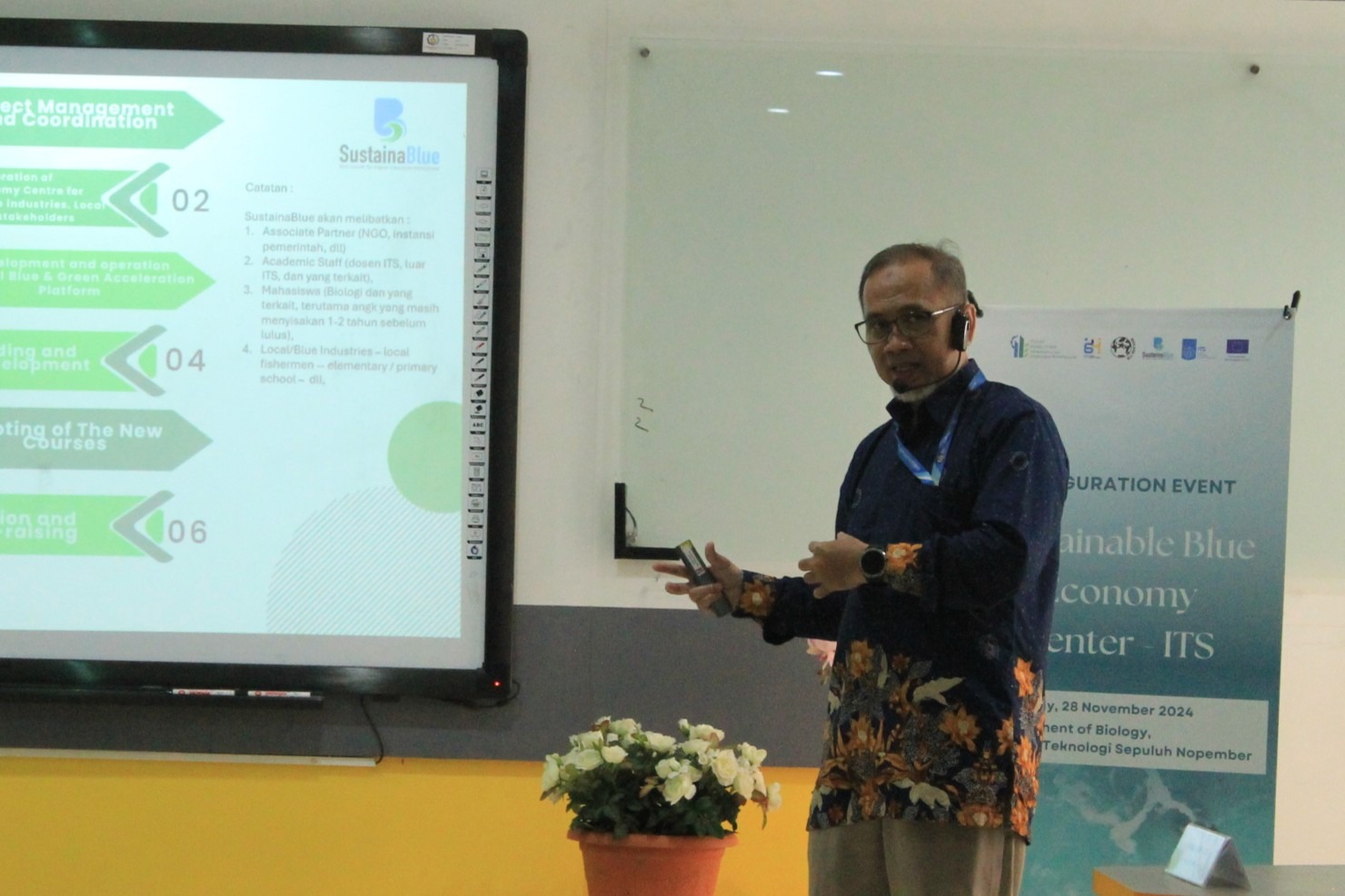
SustainaBlue Project Manager, Aunurohim SSi DEA, presents the work packages (WP) within the SustainaBlue program to ten partners.
Development of Educational Resources and Community Capacity
ITS also works with NGOs and civil society partners to develop educational resources and expand access to learning. Under SustainaBlue, ITS and its partners develop learning materials on marine issues and the blue economy. The collaboration supports knowledge sharing on sustainable fisheries, marine innovation, and responsible marine resource management, with community organisations contributing to the wider engagement and dissemination of these themes.
In education and community development, ITS collaborates with Yayasan Manarul Ilmi (YMI) and the ITS Alumni Association (IKA ITS) to establish scholarships for talented students.

Handover of Scholarships from YMI – IKA ITS to students living near the ITS campus and students at ITS.
The partners also provided ten clean-water facilities as charitable endowments (wakaf) for communities with limited access to reliable water supplies. In another capacity-building partnership, ITS and APTIKOM (Association of Higher Education in Informatics and Computer Science) East Java agreed to cooperate on human resource development, building on a workshop jointly organised in February.
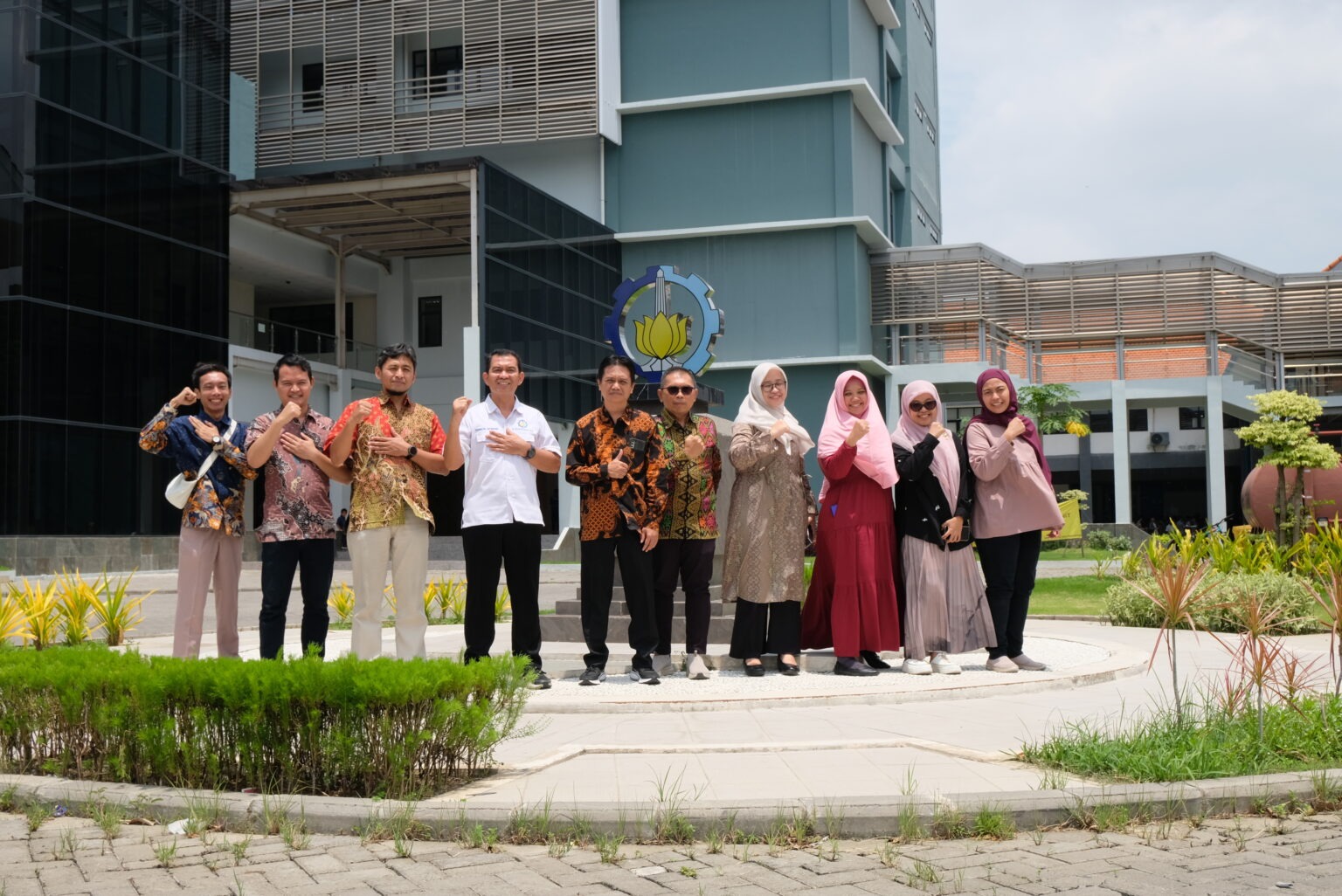
APTIKOM East Java delegation together with faculty members from the Department of Information Technology in front of the ITS Tower 2.
Together, these initiatives demonstrate ITS's collaboration with NGOs and civil society across three areas: engaging students as volunteers in community activities, conducting research with non-profit and community partners, and developing educational resources and capacity-building opportunities. The partnerships give NGOs and community organisations an active role in combining academic knowledge, research capabilities, and local experience to address shared sustainability challenges.
At Institut Teknologi Sepuluh Nopember (ITS), education for sustainable development is embedded in the university's academic framework and student experience. Rather than being limited to students who choose particular electives, sustainability education reaches students across disciplines through three complementary approaches: integration into the curriculum, mandatory learning experiences for all students, and optional programmes open to all.
Education Integrated Across the Curriculum
Sustainability is incorporated into teaching and learning across ITS's academic programmes. In 2025, ITS offered 3,022 sustainability-related courses across undergraduate, master's, and doctoral levels. These courses include sustainability themes as a substantial component of their learning outcomes, covering environmental, social, economic, technological, and cultural dimensions in alignment with the United Nations Sustainable Development Goals (SDGs).
The courses are delivered across a broad range of disciplines, including engineering, natural sciences, marine technology, environmental studies, information technology, industrial systems, and interdisciplinary programmes. This approach equips students with relevant knowledge, technical competencies, critical thinking, and innovative problem-solving skills to address sustainability challenges at local, national, and global levels.
In addition to discipline-specific teaching, students from every study programme take a general technology course classified as an Institute-Mandated Course. Its course plan (Rencana Pembelajaran Semester/RPS), titled Application of Technology and Digital Transformation, develops critical and systematic approaches to problem-solving, connecting technological development and innovation with the SDGs. It concludes with each student developing a community service proposal relevant to their respective field of study, encouraging them to apply classroom learning to real-world challenges.
Mandatory Education for All
ITS introduces sustainability to all new students as they begin their university journey. The SDGs Orientation, coordinated by the ITS SDGs unit, introduces the 17 goals through interactive sessions and activities from the first day of campus life. Activities such as ITS Walk encourage students to consider their environmental footprint and adopt more sustainable habits.
In August 2025, sustainability values and character development were incorporated into the New Student Orientation Programme (PKKMB), as highlighted in ITS's orientation programme. Through ITS Camp, new students explored the campus while learning about the SDGs and their relevance to university life. At the new student inauguration, students were also encouraged to bring their own drinking bottles, with refill points provided to reduce reliance on single-use plastic bottles. These shared experiences make sustainability part of the university's student culture from the outset.

ITS 2025 new students refill their water containers at a water refill station during the ITS 2025 new student orientation (PMB) festivities.
Optional Education Open to All
Beyond the formal curriculum and mandatory orientation, ITS provides additional opportunities for students to deepen their understanding of sustainability. One example is CommTECH Camp Insight 2025, an international and interdisciplinary programme bringing together ITS students and participants from other countries. Centred on SDG innovation, the programme encourages participants to explore global challenges and develop solutions applicable to local contexts.
ITS also organises a Guest Lecture Series on SDGs, a programme maintained since 2020. The lectures are open not only to ITS students but also to the public, NGOs, and international partners. By inviting participants from different backgrounds, the series creates opportunities to exchange perspectives and learn from expertise beyond the university.

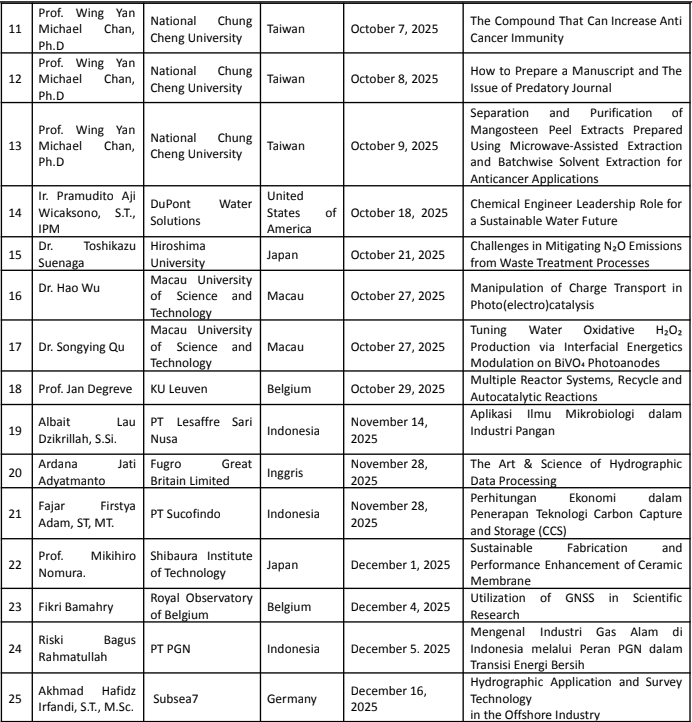
Guest Lecture by The Department of Geomatics Engineering, "Hydrographic Application and Survey Technology in the Offshore Industry".
Optional Education Open to All
Through these interconnected approaches, ITS demonstrates its institutional commitment to meaningful SDG education across the university. Sustainability is embedded in academic learning across disciplines, introduced to all new students through shared orientation experiences, and further explored through programmes accessible to students and wider audiences. This framework enables students from different academic backgrounds to understand sustainability challenges and develop the knowledge and capabilities to contribute to sustainable development.
Institut Teknologi Sepuluh Nopember (ITS) incorporates sustainability into its academic offerings through dedicated degree programmes, discipline-specific courses, and university-wide learning opportunities. These provisions enable students to develop specialised knowledge of sustainability within their fields while also gaining a broader understanding of sustainable development and its practical applications.
Dedicated Degree Programmes
ITS offers undergraduate and postgraduate programmes that address sustainability challenges through specialised academic training. The Master's Programme in Innovation of Systems and Technology (MIST), for example, offers a specialisation in renewable energy, equipping students with knowledge and competencies in the development, implementation, and management of clean energy technologies, including solar, wind, and biomass. Its interdisciplinary approach also addresses the policy, economic, and management dimensions of renewable energy development, preparing graduates to contribute to the transition towards sustainable energy systems.
Dedicated and Elective Courses on Sustainability
Beyond degree-level specialisation, ITS offers courses specifically focused on sustainability. In the Department of Urban and Regional Planning, the elective course Sustainable Development explores the three pillars of sustainability—social, economic, and environmental— and the carrying capacity of urban, regional, and coastal areas.
SDG-Oriented Courses and Learning Opportunities Across Disciplines
ITS also provides sustainability-oriented learning opportunities beyond specialised degree programmes.
The Guest Lecture Series on Sustainable Development Goals (GLS on SDGs) provides another avenue for specialised learning.
During 2025, ITS organized 25 SDG-related guest lectures involving speakers from 10 countries, including Australia, Taiwan, Malaysia, Japan, Germany, Belgium, the United Kingdom, the United States, Macau, and Indonesia. The topics covered a wide range of sustainability themes, such as renewable energy, sustainable materials, circular economy, waste management, water treatment technologies, marine conservation, carbon capture and storage (CCS), climate change mitigation, sustainable industrial innovation, hydrographic technology, and clean energy transition.
ITS extends sustainability education beyond its enrolled students to wider communities, including alumni, local residents, and displaced people and refugees. Through knowledge exchange, practical training, and community-based initiatives, the university connects academic expertise with real-world needs. These activities help strengthen professional networks, improve community knowledge and capacity, and encourage practical responses to sustainability challenges beyond campus.
Alumni Engagement
ITS engages alumni in sustainability discussions, research collaboration, and community initiatives, drawing on their professional experience and networks. In May 2025, the Ikatan Alumni Teknik Lingkungan (IKATL) ITS organised a discussion on the role of alumni in advancing the sustainability agenda. The discussion provides a platform for alumni to share perspectives and identify opportunities to contribute their professional expertise to the university's sustainability efforts.
The board of the Environmental Engineering Alumni Association (IKATL) of Institut Teknologi Sepuluh Nopember (ITS) held a discussion regarding the focus on sustainable development in Indonesia.
Alumni engagement was further strengthened at ITS's first large-scale reunion on 9 November 2025. The Rector encouraged collaboration in research and innovation, while the Minister of Agriculture highlighted alumni contributions to national food security. Contributions from the Civil Engineering Class of 1995 to the ITS Endowment Fund further strengthened the university's financial resources for long-term institutional development.

A symbolic presentation of a donation from the 1995 Civil Engineering alumni of ITS to the ITS Endowment Fund, held during the 2025 Grand Reunion of ITS Alumni at Grha Sepuluh Nopember, ITS.
Beyond institutional support, collaboration between ITS researchers and alumni helps connect academic research with industrial applications and research commercialisation.

A group photo featuring the leadership of ITS and the Balikpapan regional chapter of the ITS Alumni Association (IKA ITS) during the Alumni & Industrial Gathering in Balikpapan, East Kalimantan.
This creates opportunities to translate research and innovation into practical applications. International alumni networks also strengthen professional connections and institutional collaboration, including engagements in Singapore and Batam and gatherings in Malaysia, expanding opportunities for knowledge exchange and future partnerships.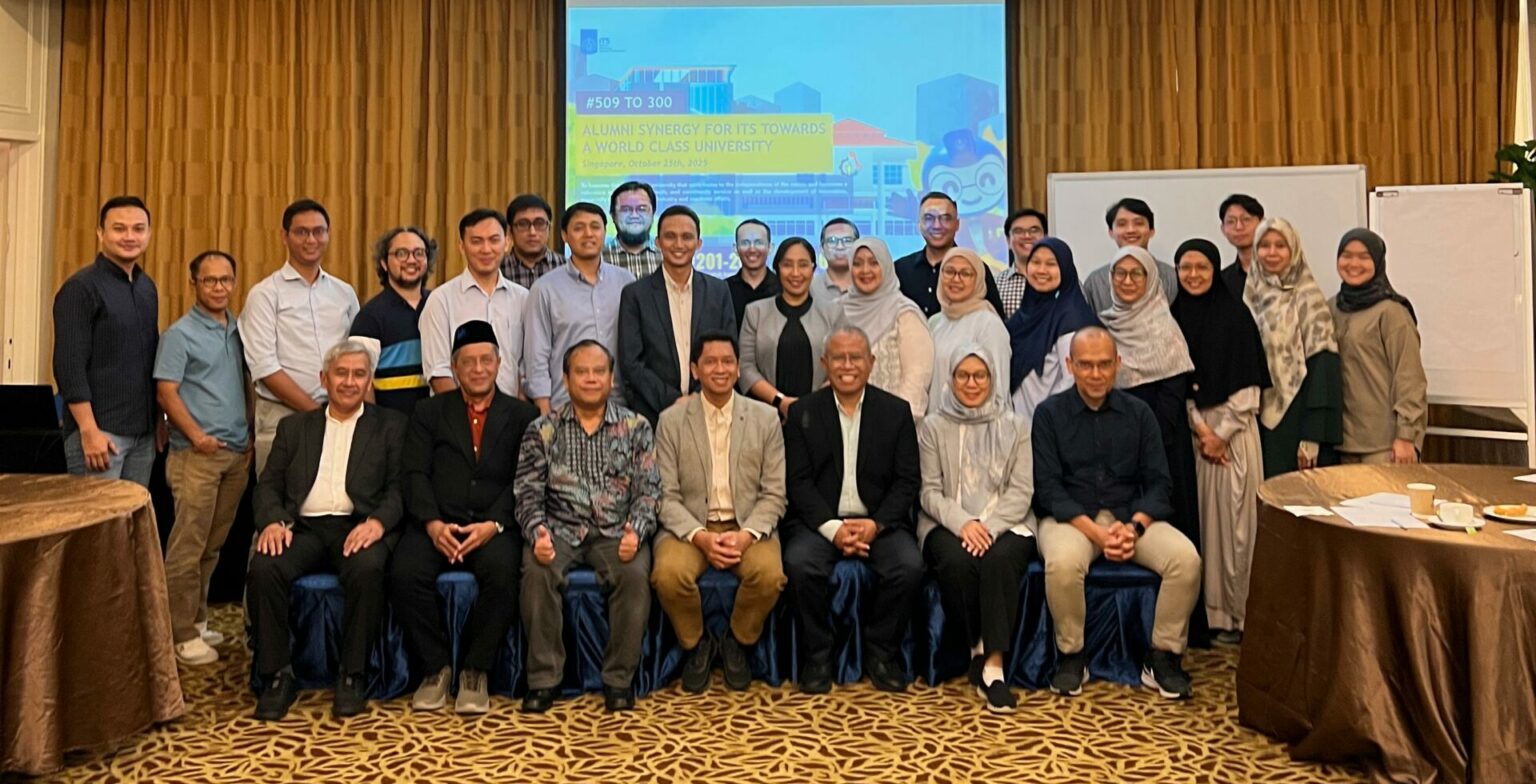
ITS Rector Prof. Dr. (HC) Ir. Bambang Pramujati, ST, MScEng, PhD (center), together with ITS Vice Rector III Imam Baihaqi, ST, MSc, PhD, as well as other members of the ITS leadership and alumni, in Singapore following an Alumni & Industrial Gathering—an event that serves as part of a series of strategic collaborations by ITS to strengthen its global reputation.
Alumni engagement also contributes to public well-being and social connection. Through the Surabaya ITS Run Fest 2025, 
Around 3,000 participants took part in the Surabaya ITS Run Fest 2025, which was divided into three categories: 2K, 5K, and 10K.
ITS and IKA ITS brought alumni and the wider public together to promote physical activity, healthy lifestyles, and community participation. Similarly, DTSI ITS's 40th-anniversary activities translated an institutional celebration into an opportunity for social contribution and care for others.
Education and Capacity-Building for Local Communities
ITS brings practical knowledge to local communities by addressing challenges in water management, sanitation, environmental conservation, and coastal livelihoods. These initiatives connect university expertise with local needs, helping residents and local stakeholders gain knowledge and practical approaches to improving their living environments.
In February 2025, ITS and the Badung Regency Government inaugurated a drinking-water treatment teaching factory. In addition to demonstrating water-treatment technology, the facility serves as a community training centre, providing opportunities for residents to develop practical knowledge of drinking-water treatment and management.
The Department of Environmental Engineering has also provided wastewater and greywater management training for government officials and residents in Madiun City.

Lecturers from the Department of Environmental Engineering (three individuals on the left) together with representatives from the Madiun City Government (three individuals on the right) during a training session organized by the Air Pollution Control and Climate Change Laboratory.
The training strengthens local understanding of wastewater management and supports more responsible sanitation and water-use practices. In Surabaya, the HMTL Medokan Semampir Ramah Sanitasi partner-village programme promotes community awareness and participation in sanitation improvement, encouraging residents to take a more active role in maintaining a healthier neighbourhood environment.

The process of making dish soap with the residents of RW 3, Medokan Semampir.
Student-led initiatives also combine environmental action with public education. Through the Riveration river-care campaign, ITS students pair river clean-up activities with public education, helping raise awareness of river pollution and encouraging greater community responsibility for maintaining clean waterways.
ITS further applies research to local economic challenges through the development of fertiliser made from shrimp-processing waste. By converting processing waste into a useful agricultural input, the innovation demonstrates opportunities to reduce waste, create added value from local resources, and support economic activities in coastal communities.
The Community Service (KKN Abmas) team from the ITS Department of Ocean Engineering conducted an outreach session on the processing of shrimp shell waste in Sukolilo Baru.
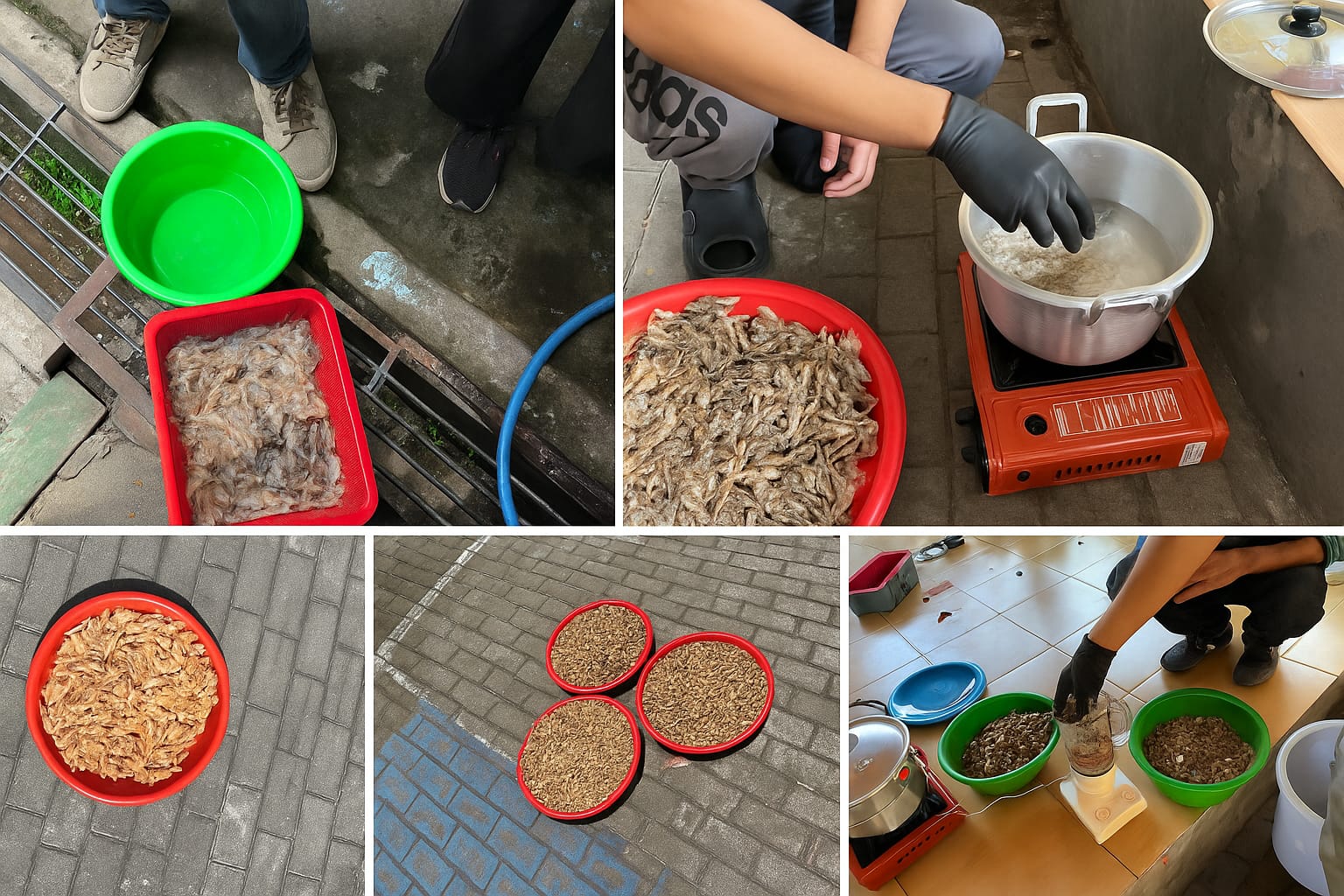
The ITS Community Service (KKN Abmas) team boils and sun-dries shrimp shells before processing them into organic fertilizer in Sukolilo Baru.
Together, these initiatives demonstrate how ITS extends education and knowledge-sharing beyond campus. Alumni engagement strengthens professional networks and connects research with wider applications, while community-based training and research introduce practical knowledge and solutions to local challenges.
ITS is developing a sustainability literacy assessment to evaluate students’ understanding, application, and critical thinking on sustainability concepts. The assessment draws on international best practices, including AASHE STARS, Sulitest, and assessment frameworks from Stanford University, the University of Michigan, and UC Davis, adapted to reflect local sustainability challenges and cultural contexts.
The assessment consists of 30 multiple-choice questions on fundamental sustainability concepts and six essay questions assessing critical thinking and the application of sustainability principles to real-world issues.
The test is intended for students, particularly new students during the compulsory New Student Campus Life Orientation Programme (Pengenalan Kehidupan Kampus bagi Mahasiswa Baru / PKKMB). It is administered online via ITS’s internal network within a designated time during the PKKMB programme, allowing students to complete the assessment remotely using the university’s digital infrastructure.

ITS' Sustainability Literacy Test page.
Participation in the assessment is intended solely to evaluate students’ initial sustainability literacy. Test results will not affect students’ academic grades or performance, nor their participation in any aspect of the new-student orientation and campus adaptation process. The assessment will provide a baseline for understanding students’ sustainability literacy and evaluating their development over time.
