“Sustainable development is the responsibility of every part of society, across the world. It cannot be achieved without linkages, across the goals, but also between institutions, governments, companies, NGOs, and people.”
(THE Impact Rankings)
SDG 17: PARTNERSHIP FOR THE GOALS
Relationships to Support the Goals
ITS’ Relationships with Regional NGOs and Government for SDG Policy
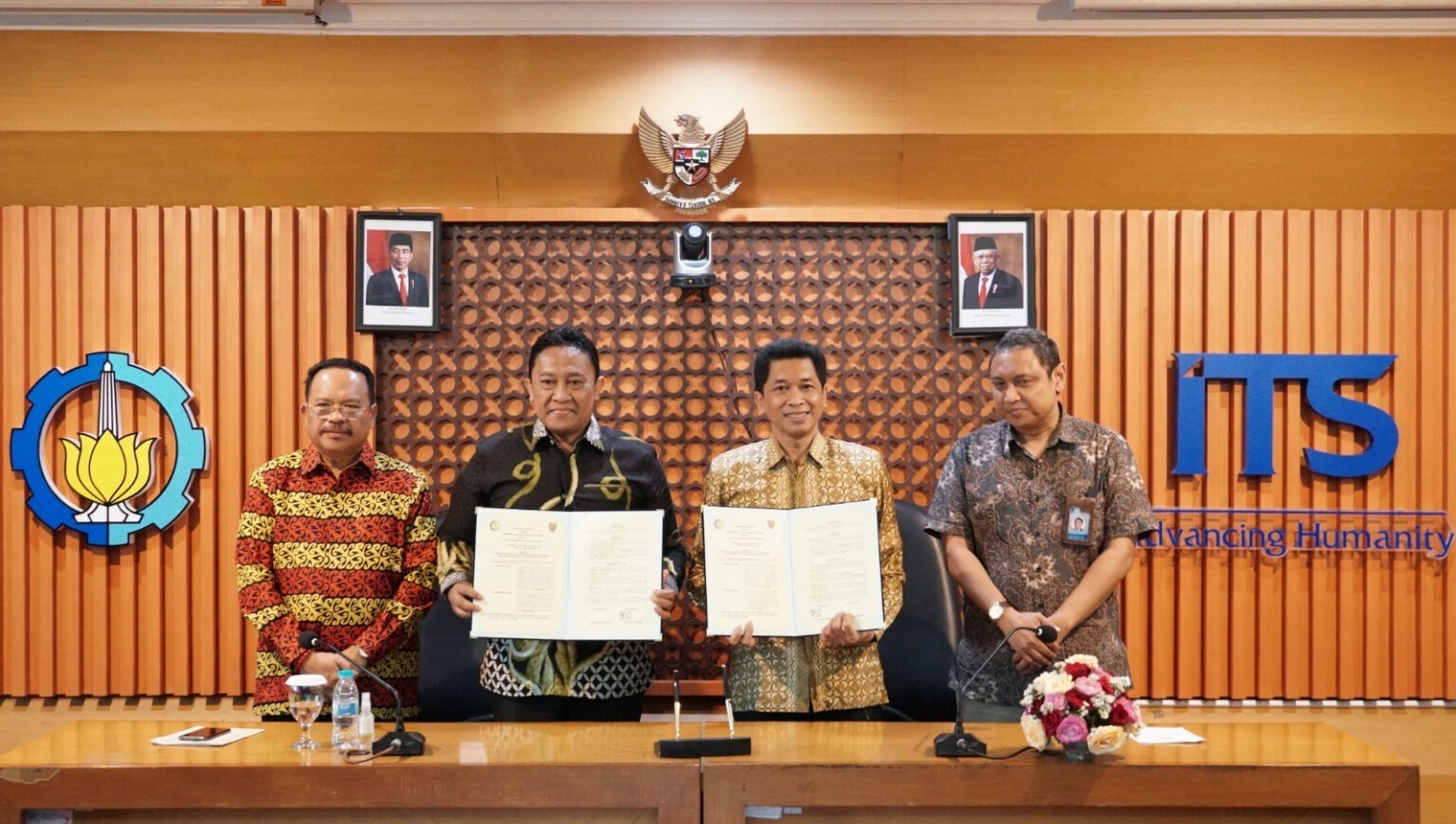
In 2024, Institut Teknologi Sepuluh Nopember (ITS) deepened its collaboration with regional governments and NGOs to strengthen the implementation of the Sustainable Development Goals (SDGs) across Indonesia. One of the key milestones was the signing of a Memorandum of Understanding (MoU) with the Central Kalimantan Provincial Government to optimize the use of local resources, particularly in areas of renewable energy, sustainable land management, and human capital development, ensuring regional growth aligns with sustainability principles. In parallel, ITS partnered with the North Morowali Regency Government to enhance digital transformation in public service systems, reflecting the university’s role in providing innovative governance solutions that increase efficiency, transparency, and community accessibility. Similarly, ITS formalized cooperation with the City of Bima, focusing on leveraging technology-based solutions to accelerate local economic growth, improve human resource development, and empower communities to actively participate in sustainable progress. These regional partnerships exemplify how ITS bridges research and innovation with practical applications that directly address local development challenges while contributing to broader SDG targets.
Beyond these regional engagements, ITS continued to solidify its role at the national and international levels in shaping sustainable development policies and practices. Its official recognition by Bappenas as an SDGs Center highlighted ITS as a key player in Indonesia’s SDG ecosystem, responsible for fostering knowledge sharing and policy alignment. The university also collaborated with NGOs such as the Institute for Global Environmental Strategies (IGES) to address pressing environmental challenges, including waste management, circular economy initiatives, and low-carbon development pathways. Furthermore, ITS actively participated in the SDGs Center Communication Forum, organized by Bappenas and JICA, which provided a platform for dialogue, data harmonization, and coordinated strategies among universities and development partners. Through these initiatives, ITS not only contributes to advancing SDG-related policies at the regional and national levels but also positions itself as a knowledge hub that links local innovations with international best practices, reinforcing its mission of advancing humanity through sustainable development.
Full articles:
Cross sectoral dialogue about SDGs in ITS
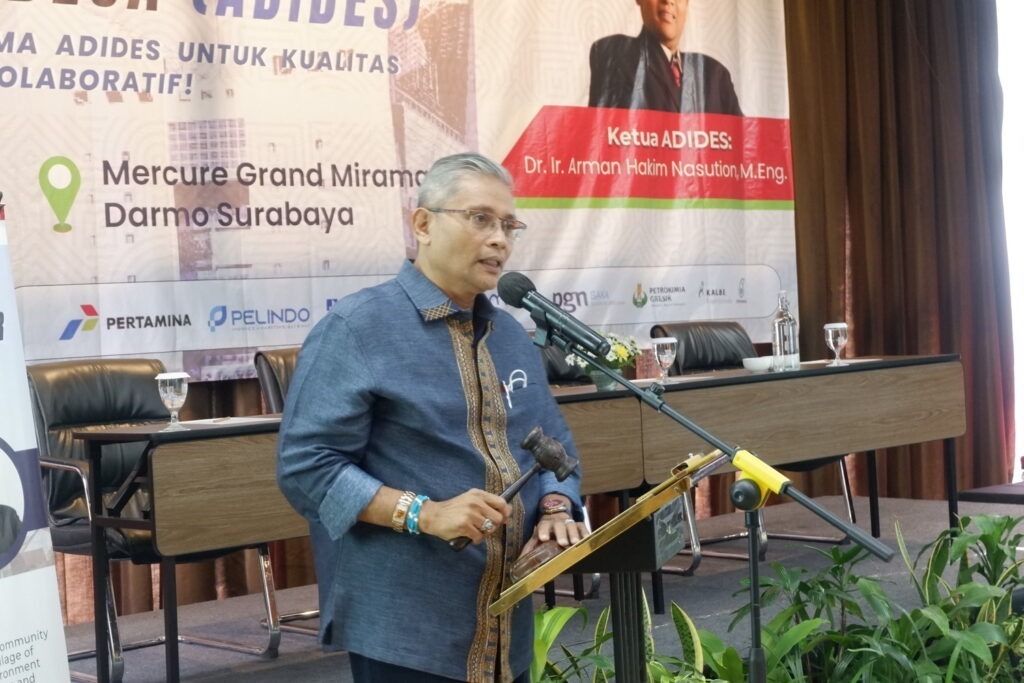
In January 2024, Institut Teknologi Sepuluh Nopember (ITS) further advanced its role as a hub for cross-sectoral dialogue on the Sustainable Development Goals (SDGs), strengthening its position as a bridge between local action and global agendas. Officially recognized as an SDGs Center by Bappenas earlier in the year, ITS became a vital platform where academia, government institutions, NGOs, and international partners could collaborate to align regional initiatives with Indonesia’s national priorities and the United Nations’ global framework. This commitment was strongly demonstrated in January 2024 through the Kongres ADIDES (Association of Village Apparatus Administrators), where ITS played a central role in shaping dialogue on village development policies. By engaging local leaders, policymakers, and community stakeholders, ITS provided evidence-based insights that empowered grassroots actors to adopt sustainable governance practices, ensuring that rural development initiatives were aligned with SDG principles such as poverty reduction, inclusive education, and environmental stewardship.
Later in the year, ITS strengthened its international outreach by hosting GeoICON 2024 in July, a flagship conference that brought together policymakers, researchers, academics, and industry representatives from across the globe. The event highlighted global best practices and innovations in areas such as renewable energy, climate resilience, digital transformation, and smart cities—demonstrating how technology-driven solutions can accelerate progress toward achieving the SDGs. By facilitating exchanges of knowledge and fostering multi-stakeholder cooperation, ITS positioned itself not only as a national knowledge hub but also as an international thought leader. Through these engagements throughout 2024, ITS underscored its mission of advancing humanity by fostering inclusive, evidence-based, and collaborative pathways toward the realization of the SDGs.
Full articles:
ITS’ International Collaboration on Data Gathering for SDGs
In 2024, Institut Teknologi Sepuluh Nopember (ITS) played a pivotal role in strengthening international collaboration for the collection, harmonization, and analysis of SDG-related data across Indonesia. A key milestone occurred on April 23, 2024, when ITS, as an SDGs Center officially recognized by Bappenas, hosted a meeting with representatives from the Japan International Cooperation Agency (JICA). The discussion addressed pressing regional challenges in gathering reliable SDG data, including issues of comparability, consistency, and integration across provinces. By facilitating this dialogue, ITS underscored the need for collaborative networks that not only improve regional action planning (RAD) but also ensure that SDG evaluation processes are evidence-based, inclusive, and aligned with both national and global standards.
Expanding beyond policy dialogue, ITS also created opportunities for young people and academics to directly engage with SDG data in practice. In February 2024, ITS organized the UMAP Discovery Camp Winter 2024, a cross-university program involving ITS and several partner institutions across Indonesia and Asia. This program introduced students and early-career researchers to hands-on experiences in SDG monitoring through site visits, case studies, and collaborative workshops with local governments and NGOs. By bridging theory with practice, the program not only enhanced participants’ data literacy but also fostered an appreciation for the complexity of SDG implementation in diverse local contexts.
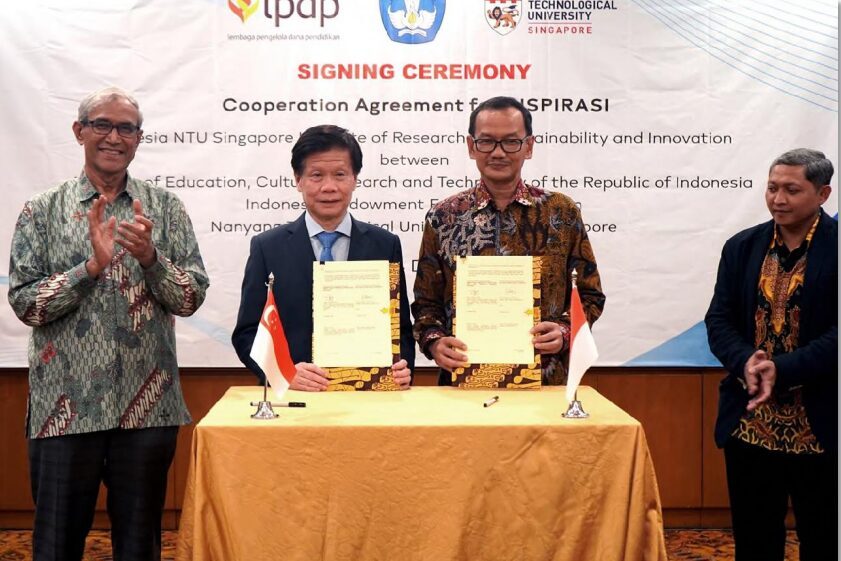
To further strengthen its international research network, ITS advanced the INSPIRASI program in mid-2024, a strategic collaboration with Nanyang Technological University (NTU) Singapore and other leading Indonesian universities. This initiative focused on systematizing data collection across sustainability themes such as renewable energy, smart cities, and the circular economy, with the explicit goal of creating standardized methodologies and enabling comparative regional analysis. By combining local expertise with international perspectives, INSPIRASI positioned ITS as a critical contributor to the development of shared frameworks that can inform global SDG best practices.
Through these interconnected initiatives in 2024, ITS not only reaffirmed its role as a knowledge hub for SDG-related data but also demonstrated its commitment to capacity building, evidence-based policymaking, and international cooperation. By engaging policymakers, researchers, and students alike, ITS continues to strengthen Indonesia’s ability to monitor progress toward the SDGs while contributing to the global dialogue on sustainable development.
Full articles:
ITS’ Collaboration for SDGs Best Practice
In 2024, Institut Teknologi Sepuluh Nopember (ITS) significantly advanced its role as a global collaborator in promoting best practices for the achievement of the Sustainable Development Goals (SDGs). A cornerstone of this effort was the INSPIRASI program, a strategic partnership launched in early 2024 with Nanyang Technological University (NTU) Singapore and several leading Indonesian universities. Through this program, ITS carried out comparative research on renewable energy transitions, smart city innovations, and the circular economy, fields that are central to Indonesia’s and the region’s sustainable development agenda. By benchmarking diverse regional approaches and harmonizing methodologies for SDG measurement, ITS contributed to the development of standardized frameworks that make sustainability research more comparable and actionable across different contexts. The outcomes of this research were not confined to academic discussions but were systematically translated into practical frameworks for urban planning, energy efficiency, and resource management, enabling governments and communities to benefit directly from the research. The initiative also created an iterative cycle of knowledge sharing and co-creation, allowing ITS to elevate local innovations to global recognition while integrating international insights back into Indonesian practice.
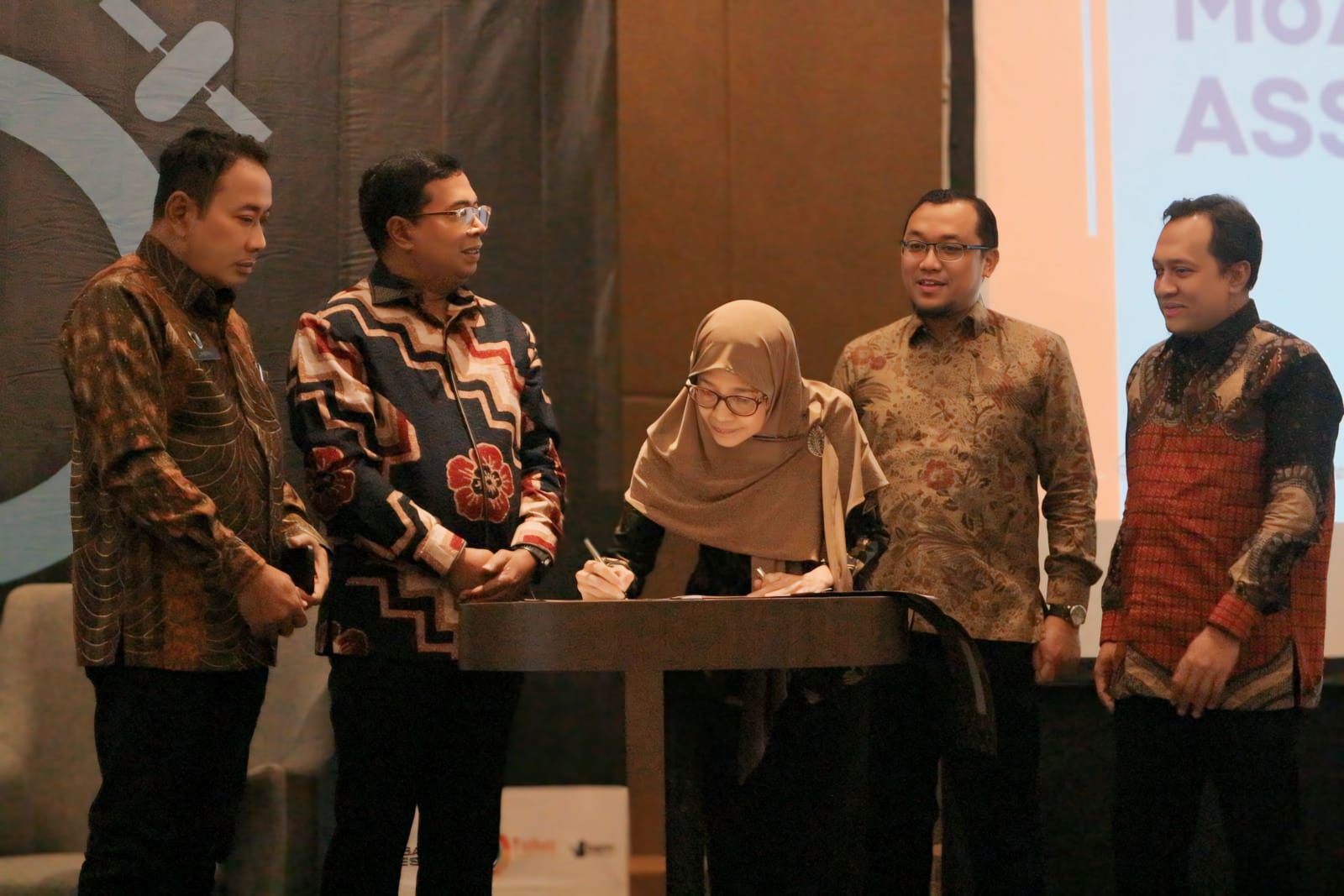
ITS also reinforced its international leadership by convening and contributing to global conferences and multi-stakeholder forums. At the GeoICON 2024 conference in July, ITS partnered with government institutions, industry leaders, and international organizations to explore sustainable land use, integrated resource management, and climate resilience strategies, bringing Indonesian perspectives into the global sustainability discourse. Earlier in the year, ITS’s role was further highlighted through its active participation in the SDGs Center Communication Forum, jointly organized by Bappenas and JICA, where ITS contributed to aligning Indonesia’s data monitoring and evaluation frameworks with international standards. This involvement not only ensured that Indonesia’s SDG reporting mechanisms remain globally relevant but also reinforced ITS’s identity as a national SDGs Center with international credibility.
By combining comparative research, joint programs, and participation in international policy dialogues, ITS demonstrated in 2024 its capacity to both adopt and co-develop international best practices for tackling the SDGs. These efforts positioned ITS as more than just a local or national actor; they underscored its role as a knowledge hub and global thought leader in sustainability, bridging innovative solutions from Indonesia with global development frameworks. In doing so, ITS not only strengthened its institutional reputation but also contributed tangibly to shaping international approaches to sustainable development.
Full articles:
ITS’ Collaboration with NGOs for SDGs
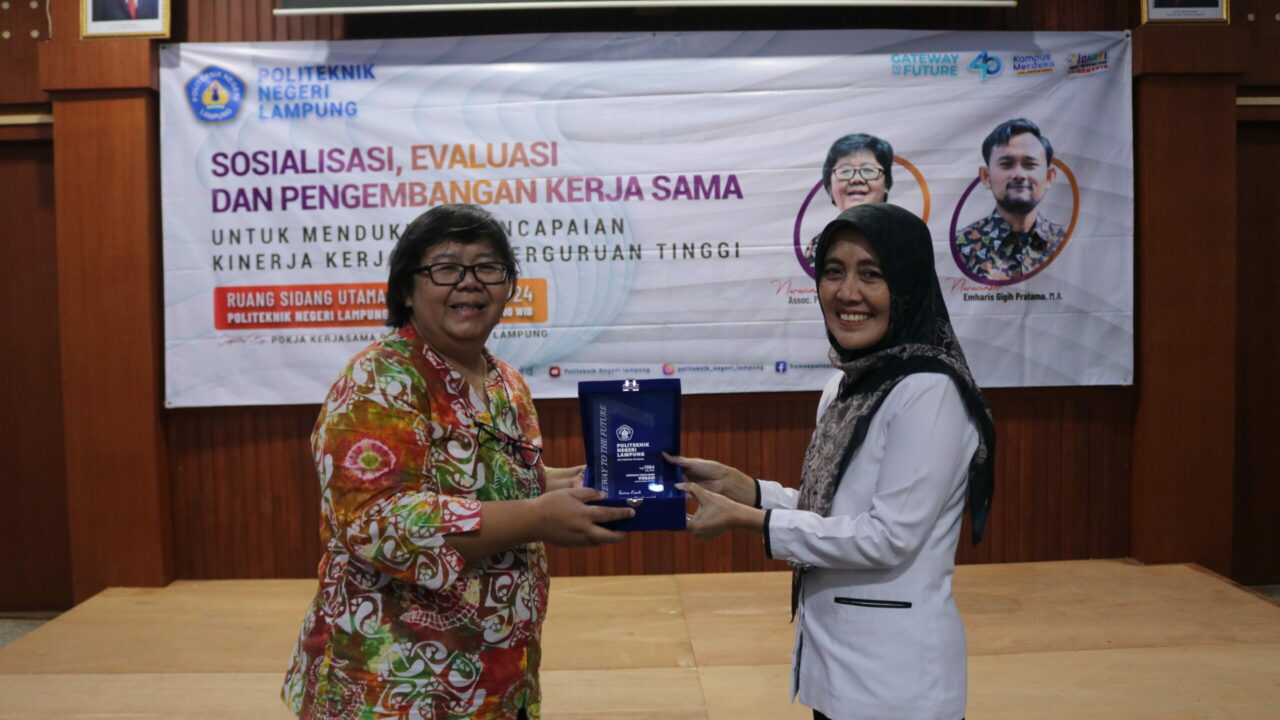
In 2024, Institut Teknologi Sepuluh Nopember (ITS) strengthened its collaboration with civil society organizations through student volunteering initiatives and community engagement programs aimed at advancing the Sustainable Development Goals (SDGs). One notable example was the Volunteers in Action (ViA) program, coordinated by ITS Global Engagement, where student teams traveled to Lampung in May 2024 to deliver workshops on internationalization strategies, student engagement, and capacity-building for staff and students at Politeknik Negeri Lampung and UIN Raden Intan Lampung. These activities not only empowered local institutions to align with global education standards but also nurtured ITS students’ leadership and cross-sectoral collaboration skills. Similarly, the UMAP Discovery Camp Winter 2024, hosted by ITS, welcomed international students from diverse cultural backgrounds to engage in dialogues on SDG challenges while participating in community-based projects in local schools and villages. This program emphasized cross-cultural empathy, grassroots empowerment, and sustainable awareness, fostering a generation of young leaders equipped to champion sustainability both locally and globally.
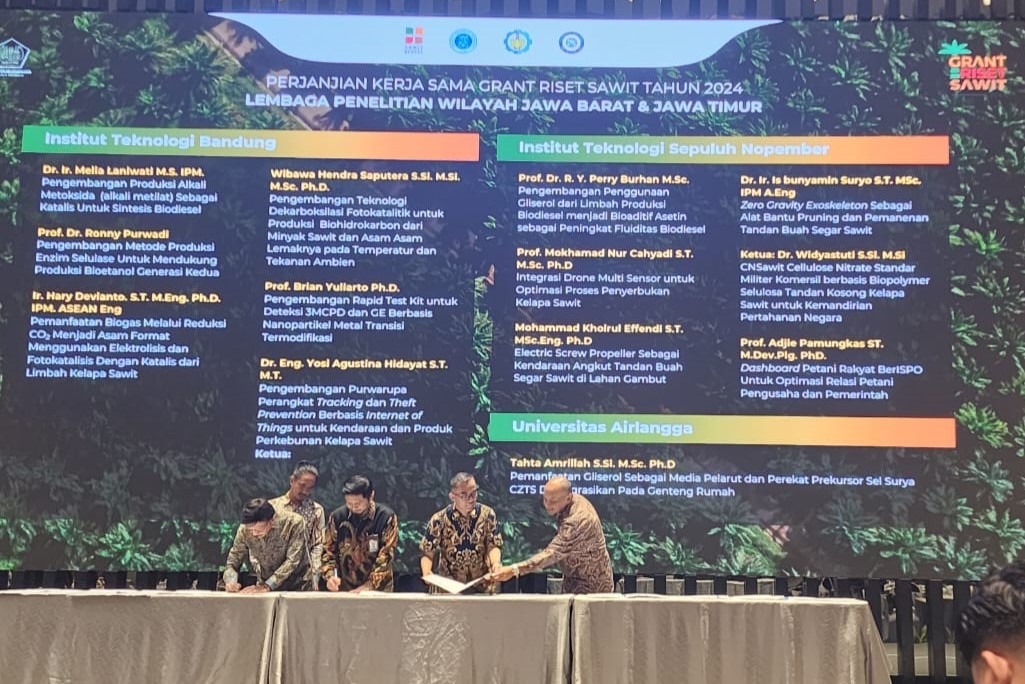
Beyond volunteering, ITS also expanded its research collaborations with NGOs, civil society groups, and government-linked organizations to develop educational resources and innovative sustainability practices. Through the Palm Oil Research Grant Program (GRS), supported by BPDPKS, ITS carried out monitoring and evaluation of palm oil research that included technology-based innovations in post-harvest processing. These efforts addressed critical issues at the nexus of economic empowerment, social welfare, and environmental sustainability, highlighting ITS’s ability to integrate research with real-world impact. In parallel, ITS launched SustainaBlue, a groundbreaking initiative funded by Erasmus Plus, in partnership with Universitas Indonesia, Universiti Malaysia Terengganu, Universiti Sains Malaysia, and European institutions in Greece and Cyprus. This program focused on blue sustainability, producing educational resources on marine ecosystems, blue economy management, and innovation accelerators for green–blue solutions. By doing so, ITS positioned itself as a regional leader in advancing SDG education, research, and advocacy, demonstrating how higher education institutions can effectively work with civil society and international partners to co-create knowledge and drive sustainable transformation.
Full articles:
Publication of SDG Reports
- Publication of SDG Report - SDG 1
- Publication of SDG Report - SDG 2
- Publication of SDG Report - SDG 3
- Publication of SDG Report - SDG 4
- Publication of SDG Report - SDG 5
- Publication of SDG Report - SDG 6
- Publication of SDG Report - SDG 7
- Publication of SDG Report - SDG 8
- Publication of SDG Report - SDG 9
- Publication of SDG Report - SDG 10
- Publication of SDG Report - SDG 11
- Publication of SDG Report - SDG 12
- Publication of SDG Report - SDG 13
- Publication of SDG Report - SDG 14
- Publication of SDG Report - SDG 15
- Publication of SDG Report - SDG 16
- Publication of SDG Report - SDG 17
Relationships to Support the Goals
Education for SDGs commitment to meaningful education at ITS
Integration Across the Full Curriculum
ITS has embedded the Sustainable Development Goals (SDGs) into its academic framework to ensure all students, regardless of discipline, are exposed to sustainability principles. For example, the university integrates sustainability themes into engineering and science courses through projects on renewable energy, waste management, and smart city design, while business and social sciences students engage in modules related to entrepreneurship for social impact and digital governance. Research programs under initiatives like INSPIRASI (with NTU Singapore) and the Palm Oil Research Grant Program (GRS) provide students with opportunities to link classroom knowledge to pressing sustainability challenges. This reflects ITS’s commitment to making SDGs a unifying element across disciplines.
Mandatory Education for All
To ensure a baseline understanding of sustainability, ITS mandates that all undergraduate students take courses that embed SDG-related content, such as ethics, environmental awareness, and social responsibility modules. In 2024, this was strengthened by ITS’s recognition as an SDGs Center by Bappenas, which encouraged the university to mainstream SDG education into required coursework and student projects. For graduate students, research methodologies and thesis requirements increasingly emphasize sustainability indicators, encouraging the integration of SDG-related metrics in academic output. Through these compulsory structures, ITS ensures every student leaves the university equipped with knowledge and awareness of sustainability.
Optional Education Opportunities
ITS also provides rich optional pathways for students to deepen their SDG engagement. In May 2024, the Volunteers in Action (ViA) program allowed student teams to deliver workshops on internationalization and student engagement at partner institutions in Lampung, connecting local educational development with global sustainability goals. Similarly, the UMAP Discovery Camp Winter 2024, hosted by ITS, brought together international students for dialogue on SDGs and community-based projects in schools and villages, fostering cross-cultural empathy and awareness. Meanwhile, the SustainaBlue Erasmus+ project, conducted in collaboration with universities in Indonesia, Malaysia, Greece, and Cyprus, created learning resources on marine sustainability and blue economy management, offering ITS students a chance to engage with cutting-edge global sustainability education.
Through curriculum-wide integration, compulsory coursework, and a variety of elective and extracurricular initiatives, ITS has shown its holistic commitment to meaningful SDG education. These efforts ensure that sustainability is not an isolated topic but an essential part of every student’s academic journey, while also providing diverse opportunities for students to apply their learning through volunteering, research, and international collaboration.
Specific Courses on Sustainability at ITS
Dedicated Degree Programs
Institut Teknologi Sepuluh Nopember (ITS) offers degree programs at both undergraduate and postgraduate levels that explicitly support sustainability education. For example, Environmental Engineering, Marine Engineering, and Oceanography are designed to equip students with in-depth knowledge of climate change mitigation and sustainable resource management. Moreover, ITS officially launched the Bachelor’s Program in Mining Engineering, which emphasizes ecological considerations in exploration and mining operations, thereby embedding sustainability principles directly into the curriculum.
Elective Courses Emphasizing SDGs
ITS also provides elective courses that directly engage with themes such as renewable energy, environmental management, and sustainable development. For example, in the Doctoral Program in Electrical Engineering, students may choose electives like “Renewable Energy and Electrical Energy Conversion.”
Similarly, in the Engineering Physics Undergraduate Program, electives such as “New and Renewable Energy” support students’ critical understanding of clean energy management.
Dedicated SDG-Oriented Courses for All Students
Beyond degree-specific curricula, ITS ensures that all students—regardless of discipline—are exposed to SDG-related learning opportunities:
- “Insights and Application Technology (IAT)”, also known as WASTEK, is a mandatory course for senior students across all majors. It teaches systematic approaches to community innovation using the SDGs as a framework.
- The elective “Sustainable Development Course” in the Urban and Regional Planning program equips students with applied knowledge in sustainable resource management for urban and regional planning.
- The Guest Lecture Series on Sustainable Development Goals (GLS on SDGs) is open to students, faculty, researchers, and external partners from both domestic and international institutions, providing global perspectives on sustainability.
- Additionally, workshops and webinars organized by the ITS SDGs Center extend SDG literacy beyond campus, engaging partner villages and local communities in adaptive management practices.
ITS Advances Community Education Through Innovative Sustainable Development Programs
ITS has demonstrated its comprehensive commitment to sustainable development through innovative educational outreach programs that effectively engage diverse community groups. These initiatives showcase ITS’ dedication to combining technological advancement with accessible education, creating lasting impact across different demographic segments.
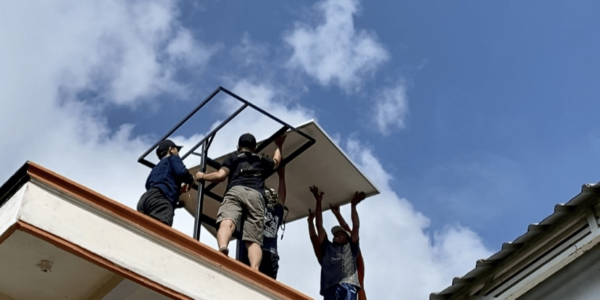
Two notable programs highlight ITS’s multifaceted approach to community education. The first initiative focuses on renewable energy education, led by Dr. Eng Rony Seto Wibowo ST MT, which successfully implemented a PV on-grid system while providing extensive community education. This program included the installation of a sophisticated 3kWp solar panel system at the Al Azhar Mosque in Surabaya’s Mulyosari district, serving as both a practical demonstration and a learning platform for the community. The implementation involved comprehensive workshops covering solar panel technology, maintenance procedures, and energy conservation practices, directly benefiting local residents and mosque administrators in the densely populated urban area.
The second program, headed by Rabendra Yudistira Alamin ST MDs, addresses financial literacy through innovative gaming solutions, targeting various community segments. The “Tata Harta” board game was specifically designed to simulate real-world financial scenarios, incorporating elements of budgeting, investment, and risk management. The program has conducted numerous workshops and gaming sessions in one of East Java’s rural high school, SMKN 1 Mojokerto. These sessions have provided them with practical financial management skills through an engaging and interactive format.
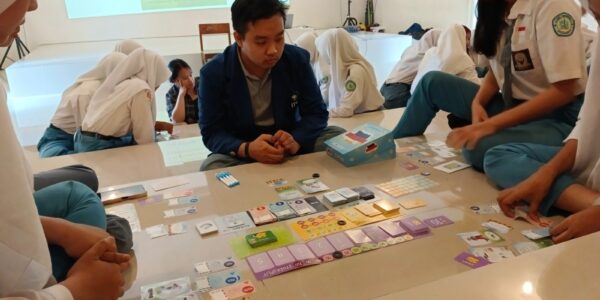
Both programs share a common strength in their inclusive educational approach, reaching beyond traditional academic boundaries to engage diverse community groups. The renewable energy program has effectively involved local residents in hands-on learning experiences, conducting regular training sessions at the Al Azhar Mosque community hall that cover both theoretical knowledge and practical skills. The mosque’s solar panel installation serves as a living laboratory, where community members from Mulyosari and surrounding neighborhoods can observe and learn about renewable energy systems in action. Meanwhile, the financial literacy initiative has created an accessible learning environment through its game-based approach, making complex financial concepts more approachable and understandable for participants of varying educational backgrounds.
The success of these programs lies in their participatory nature and practical application. The renewable energy workshops at Al Azhar Mosque provide technical training and maintenance knowledge, enabling participants to understand system monitoring, basic troubleshooting, and energy efficiency principles. The program has also established a sustainable maintenance system, where trained community members from the Mulyosari area take active roles in system upkeep and monitoring. The financial literacy program, through its innovative board game, has been complemented by guided discussions and practical exercises, helping participants develop concrete financial planning and decision-making skills.
Developing a Sustainability Literacy Assessment at ITS
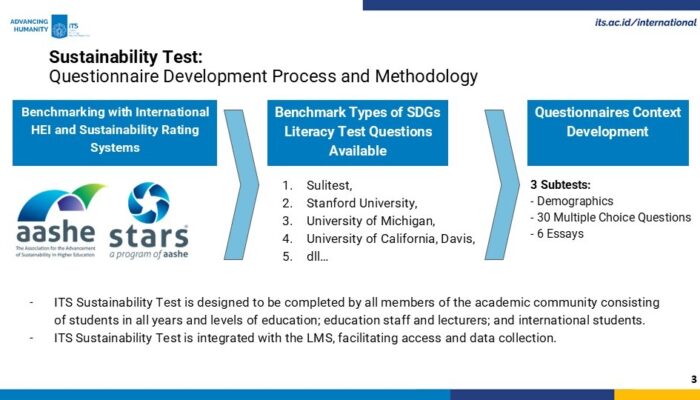
At ITS, we are implementing a strategic approach to evaluate sustainability literacy across our academic community. Our assessment framework is designed to measure understanding, application, and critical thinking related to sustainability concepts through these key initiatives:
Global Best Practices Integration:
We have carefully studied leading sustainability assessment frameworks, particularly AASHE’s STARS program, to align our evaluation methods with international standards. This benchmarking extends to examining successful sustainability literacy tests from renowned institutions like Stanford University, University of Michigan, and UC Davis, as well as established platforms like Sulitest.Customized Assessment Structure
Our assessment tool combines two complementary evaluation methods:
- A 30-question multiple-choice section that measures fundamental understanding of sustainability principles, environmental systems, and social responsibility
- Six thought-provoking essay questions that challenge participants to demonstrate critical thinking and apply sustainability concepts to real-world scenarios
Context-Sensitive Design
The assessment is tailored to reflect both global sustainability challenges and local contexts, ensuring relevance to our campus community while maintaining international perspectives. This approach allows us to:
- Address region-specific sustainability challenges
- Incorporate cultural and social dimensions of sustainability
- Connect global sustainability goals with local actions
Inclusive Implementation
To ensure widespread accessibility and participation, we’ve integrated the assessment into our Learning Management System, making it available to:
- Students across all academic levels
- Faculty members and staff
- International students and visitors
This comprehensive approach allows us to effectively measure and track sustainability literacy while fostering a deeper understanding of sustainable development principles throughout our academic community.