“Provides students with a unique lens on which institutions are demonstrating a commitment to a more sustainable existence. More than just the commitment, it looks for outwards evidence of this – from the impact that alumni are making in science and technology to solve climate issues, to the impact of research being done across the UN’s 17 sustainable development goals.”
(QS Sustainability)
- Equality, diversity, and inclusion committee
- Anti-bribery and corruption policy
- Dedicated staff for sustainable development
- Ethics culture
- Office for Ethical Matters
- Comprehensive values training
- Internal whistleblower system
- Student's Union
- Sustainability Committee
- Financial reports
- Published governance minutes
- Student representation on governing body
ITS’ Board of Trustees
The Board of Trustees at ITS is a vital organization responsible for various crucial functions. Their role encompasses not only making determinations and considering the implementation of general policies but also overseeing non-academic affairs. Additionally, they provide guidance on and actively promote policies, programs, and training initiatives concerning diversity, equity, inclusion, and human rights within the campus community.
Rectoral Regulation No. 34 2024 Regarding Student Code of Ethics
ITS Surabaya has anti-discrimination and anti-harassment policies. As mentioned earlier, the non-discriminatory policies apply both for student admission and employee recruitment. The Rector Regulation No. 34 year 2024 emphasizes that all students are required to uphold ethical conduct in their interactions with others, grounded in respect, fairness, and human dignity. It further highlights the importance of respecting human rights, fostering tolerance, and maintaining harmonious relationships among students regardless of their backgrounds. In addition, the code explicitly prohibits any form of behavior, speech, or actions that contain elements of discrimination based on ethnicity, religion, race, or inter-group differences (SARA). Through these provisions, ITS establishes a clear institutional framework that promotes inclusivity, mutual respect, and a campus environment free from discrimination. The Government regulation No. 54 the Year 2015 about ITS Statute, specifically Article 55 paragraph 2 stated “The employment system is open, based on performance, without distinguishing ethnicity, religion, race, and intergroup.
Rector Regulation No. 34 year 2024 Regarding Student Codes of Ethic
ITS’ Task Force of Prevention and Handling for Sexual Harassment
ITS has shown their support and standing for the victims of sexual violence through the statement of the Task Force of Prevention and Handling for Sexual Harassment (PPKS), as formalized in Rector Decree No. 1871/IT2/T/HK.00.01/2022. This establishment aims to raise awareness regarding the happenings of sexual violence on and off campus, provide support for everyone and implement preventive measures to ensure a safe learning and living environment.
Statement of the Task Force of Prevention and Handling for Sexual Harassment (PPKS)
ITS Anti-bribery and Corruption Policy
Institut Teknologi Sepuluh Nopember (ITS) reinforces its commitment to integrity and good governance through Rector Decree No. 112/IT2/T/HK.00.01/I/2024 concerning the establishment of faculties and schools in the development of Integrity Zones toward Corruption-Free Areas (WBK). The decree emphasizes the institutional obligation to implement integrity-driven practices across all academic units, in alignment with national regulations from the Ministry of Education, Culture, Research, and Technology. It highlights that every faculty within ITS is required to actively participate in building an integrity zone, promoting transparency, accountability, and ethical conduct in academic and administrative processes. This policy reflects ITS’s broader effort to cultivate a corruption-free environment and strengthen institutional credibility through structured and compliant governance frameworks.
ITS Smart Eco Campus
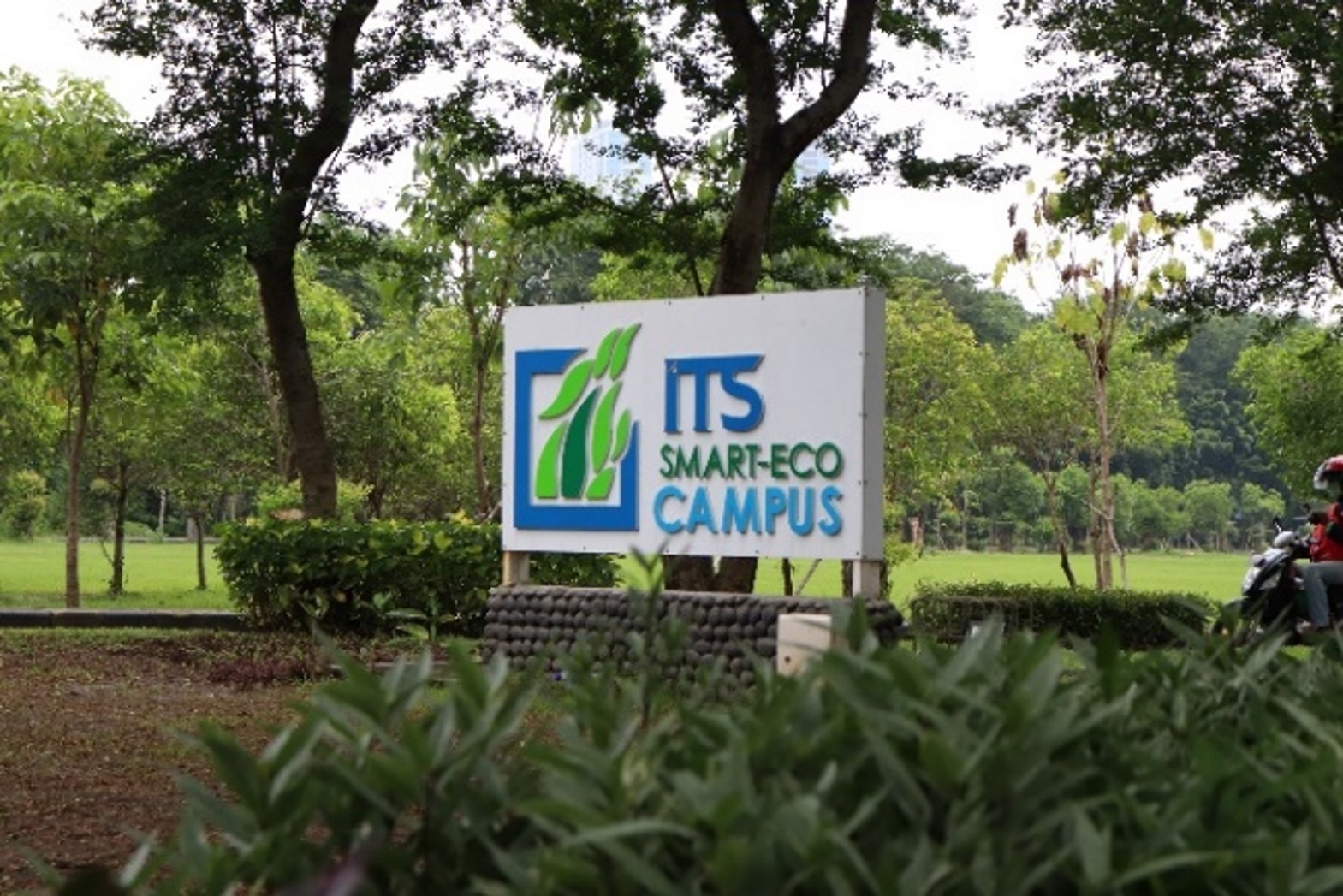
ITS has formed a specific organizational unit called the Smart Eco Campus development unit which is responsible for coordinating and implementing sustainability programs across campus, with a dedicated office and official contact structure. Furthermore, the initiative operates as an institutional program involving academic staff, operational units, and student contributors working collaboratively to integrate technology and environmental principles into campus development. Additional evidence shows that the Smart Eco Campus ecosystem includes a structured team of personnel and contributors, with an organizational scale of multiple employees and coordinators supporting sustainability activities. Together, these elements indicate that ITS has established dedicated staff and organizational support to ensure the continuous implementation and advancement of its Smart Eco Campus program, reinforcing its role as a sustainability-driven institution.
Regulation of ITS Rector No. 17 in 2021 on Employee Performance Measurement
ITS develops clear ethical values enshrined publicly in Rector’s Policy No 2 of 2017, specifically Article 4 Section 1 and Section 2 which describe the obligations of all employees that need to respect all colleagues and the community, be honest, and respect each other’s religions. Furthermore, in Article 8 Section 1 and in the Rector’s Policy No 25 of 2021, about changes in Rector’s Policy No 2 of 2017 Article 8 Section 1, also stated that employee recruitment carried out with non-discrimination, open, does not distinguish between ethnicity, religion, race, class, and taking account into gender equality in accordance with the organizational needs.
- Regulation of the Rector of Institut Teknologi Sepuluh Nopember Number 17 of 2021 Regarding Employee Performance Measurement
- Regulation of the Rector of Institut Teknologi Sepuluh Nopember Number 25 of 2021 The second amendment to the Chancellor’s Regulation No. 2 of 2017 concerning personnel on ITS environment
- Regulation of the Rector of Institut Teknologi Sepuluh Nopember regarding Employment Number 2 of 2017
ITS Directorate of Human Resources and Organizational Development
Directorate of Human Resources and Organization Development (SDMO) is directorate that operates under the direct coordination of the Vice Rector and is responsible for managing human resources and organizational development across the university, ensuring that institutional practices align with established policies and standards. Through the SDMO, the institution reinforces its commitment to ethical compliance and robust governance.
ITS’ Information Documentation and Management Officer
The Information Documentation and Management Office (PPID) ITS is an Office for overseeing, managing, and providing any information about ITS that needs to be publicly documented. At present, PPID ITS excels in delivering exceptional services for information and documentation requests from any part of campus members, including students. Moreover, they have introduced an official public service WhatsApp channel to expedite the dissemination of public information. Furthermore, PPID also serves as an ethical compliance entity within the institution, with a designated official overseeing ethical matters across the entire organization.
ITS’ Directorate of Human and Organizational Resources’ Training

ITS’ Directorate of Human and Organizational Resources has human resources development training, human resources evaluation, and cultural reinforcement programs. The latest training program being held for ITS faculty members’ competency upskilling is University Leadership Development Center (ULDC). ULDC is one of the efforts to integrate all development programs to improve organizational performance and create future leaders. Besides that, ITS provides several training for each level of the organization, such as Basic Training for Staff and Lecturers. ITS also commences programs such as Outbound Staff Mobility (OSM), intentionally for staff to be able to take training and build professional networking by taking training at various partner universities abroad. As for students, an event for new students named GERIGI ITS also provides training and bolstering diversity culture in ITS. New students will team with all students from all faculties and commence several activities and contests throughout the event. Furthermore, there is Student Leadership Training (LKMM) that is attended each year and consists of pre-basic to advanced level. All students can participate in the pre-basic is mandatory for all students as the guidance from Indonesia’s Ministry of Education.
ITS Training and Programs on Diversity and Inclusion Values
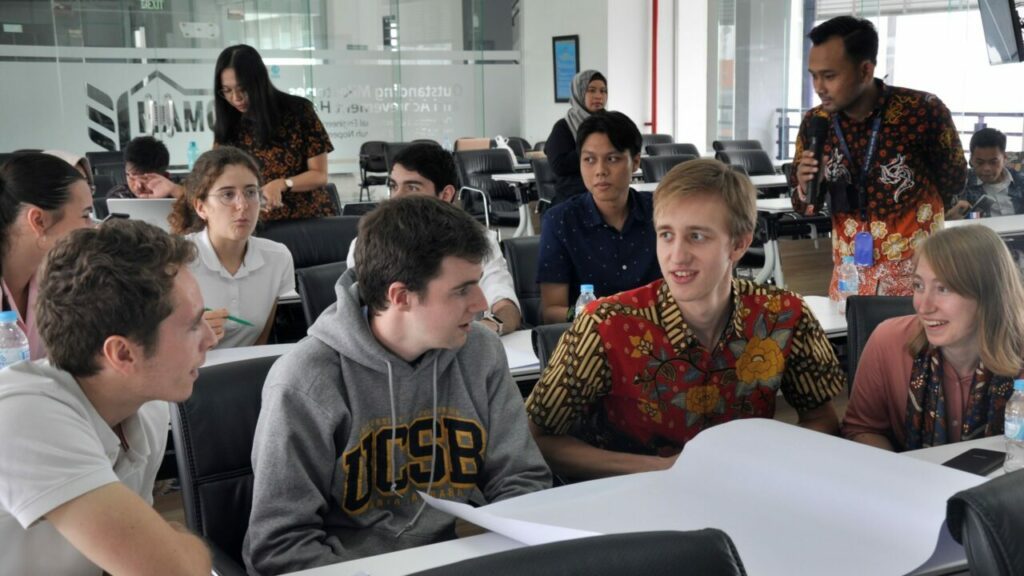
ITS is deeply committed to fostering diversity and inclusion, aiming to become a globally recognized university that attracts a diverse community of students and faculty from various backgrounds. The university’s steadfast dedication to diversity is reflected in its ongoing internationalization program, which actively encourages individuals to embrace international experiences and cultivates an environment of healthy competition and creativity. With a wide range of programs in place, ITS consistently supports diversity and internationalization efforts, offering initiatives such as short and full-degree programs, student and staff exchanges, internships, and more. By embracing diversity, ITS strives to create an inclusive academic community that prepares individuals to excel in an ever-changing global landscape. The university places particular emphasis on three key categories: CommTECH Camp, International Students, and Training Programs, which provide invaluable opportunities for learning, collaboration, and scholarships, fostering inclusivity and fostering global partnerships.
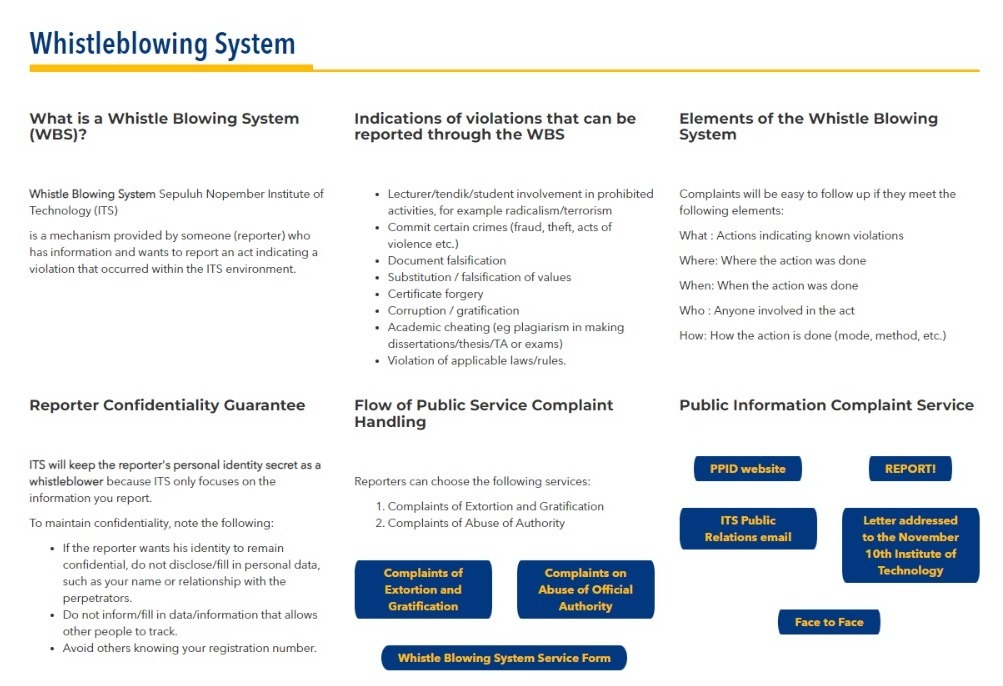
Internal Whistleblower Assurance System
ITS’ Information Documentation and Management Office (PPID) provides service for reports of whistleblowers and complaints from all of ITS members. The system is already established and used by all of the students and lecturers with the name of service desk ITS. PPID also creates procedures and guidelines for support requests and whistleblowing systems. The reports will be sent to the management of PPID for online ticketing systems and the reporter can also make a report directly to the office for comprehensive details or emergency situations.
ITS Student’s Union
Among ITS Students, there are various student unions with many goals and shapes. The biggest one and in charge for general needs is the BEM (Badan Eksekutif Mahasiswa) or Student Executive Board (SEB) that exist in every Faculty and the Institute Level. This Organization is in charge of all internal student matters at ITS. There is also Himpunan Mahasiswa Pasca-Sarjana, the union for the Master and Doctoral Degree organization becoming the main representative for the Postgraduate Students at ITS. Even though the Student Executive Board is in charge of student matters, there is also Badan Kelengkapan Majelis Wali Amananat Wakil Mahasiswa (BK MWA-WM) or Student Representative at ITS Board of Trustees, as the representative of ITS Students to the ITS committee board, joined by the Rector, Lecturer, Staff, and ITS Organs. Through the Student Representative Council and the Constitutional Student Court, they run at Legislative and Judicative parts to maintain the organization stick to the goal without any fraud.
ITS Student Executive Board or BEM ITS is also joined to the Aliansi BEM Seluruh Indonesia or Indonesia’s Student Union Alliances. This Alliance is the association of all Student Union throughout Indonesia for Higher Education Level and become the main forum for Student needs in all parts of Indonesia and a place for Student Actions nationwide. This organization tries to gather, discuss, and act to solve problems in Indonesia’s society such as poverty, politics, community development, etc.
Student Executive Board Election System
At the end of the student union period, ITS students are always allowed to vote for the next leader of the Student Union. The ITS Interactive Web called myITS also provides a feature for students to vote throughout ITS called myITS Vote and helps to reduce the paper-based system. Each student can use this feature for organizational needs and using Indonesian election principles such as secret, truth, equality, and free.
Sustainability Committee at ITS
ITS Smart Eco Campus represents an initiative by ITS to foster sustainable growth within the campus environment, leveraging technological and scientific advancements developed onsite. ITS is committed to scientific and technological progress that can coexist harmoniously with nature. Thus, ITS has taken proactive steps to harness every aspect of the campus to foster eco-friendly development.
The creation of this program involved innovative approaches. ITS not only facilitates campus management and governance to facilitate environmental sustainability but also integrates this ethos into student life through diverse activities. Furthermore, ITS continuously advances research efforts, actively engaging students to refine the concept for future perfection. Click here for detailed committees of ITS Smart Eco Campus.
ITS’ Annual Financial Report
ITS publishes its financial reports annually through Information Management and Documentation Office, as published financial reports promote transparency and accountability. It also allows stakeholders, including students, faculty, donors, and the public to understand how funds are managed and allocated within ITS. To access ITS’ annual financial reports, please click here.
Minutes of Meeting: Annual General Meeting
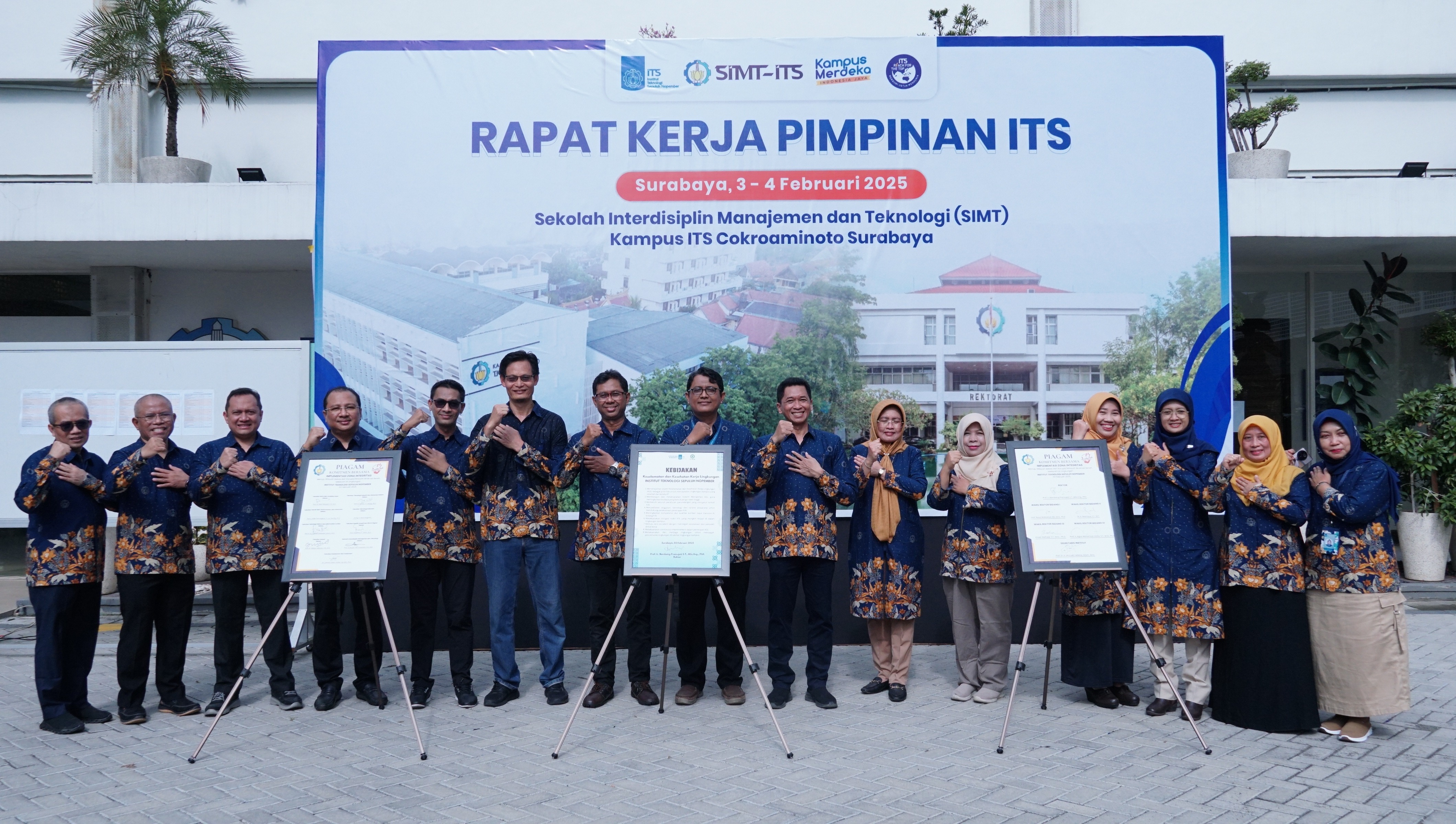
The 2025 ITS Leadership Work Meeting, held in early February at the SIMT Cokroaminoto campus, established a comprehensive roadmap for the university’s transition toward global excellence and institutional modernization. Led by Rector Prof. Bambang Pramujati, the forum which consisted 358 attendees identified three critical pillars for the upcoming year: elevating the university’s international standing, unifying its data architecture, and securing long-term financial independence.
A primary focus of the discussion was the strategic push to climb the QS World University Rankings. While ITS currently maintains a solid position around #500, leadership emphasized that breaking into higher tiers requires a more balanced approach to research and reputation. To achieve this, the university is mandating a closer alignment between departmental KPIs and QS indicators, specifically targeting an increase in international research collaborations and a more equitable distribution of faculty citations. By March 2025, a real-time performance dashboard will be deployed to monitor these metrics, ensuring that every unit contributes effectively to the institution’s global academic reputation.
Simultaneously, the university is undergoing a digital transformation through the “ITS Satu Data” initiative. This program aims to eliminate the current fragmentation of data across various units, moving away from inefficient manual processes and reconciling discrepancies in personnel and workload records. The roadmap for this integration includes syncing human capital systems with academic and financial reporting by mid-2025. This transition is designed to standardize business processes across the campus, creating a single, reliable “source of truth” that enhances administrative transparency and decision-making speed.
Finally, the meeting outlined a path toward Financial Independence by diversifying revenue streams and optimizing internal resources. A key component of this strategy is the implementation of unit-level energy monitoring to track and reduce utility costs, alongside the development of a more transparent revenue-sharing model for ITS business units. By strengthening the endowment fund through deeper engagement with alumni and industry partners, ITS seeks to decouple its growth from traditional funding constraints, ensuring the university has the sustainable financial backing necessary to support its ambitious technological and research goals.
Notulensi_Rapat_Kerja_ITS_2025ITS’ Board of Trustees
The Board of Trustees at ITS is a vital organization responsible for various crucial functions. Their role encompasses not only making determinations and considering the implementation of general policies but also overseeing non-academic affairs. Additionally, they provide guidance on and actively promote policies, programs, and training initiatives concerning diversity, equity, inclusion, and human rights within the campus community. ITS Board of Trustees consists of public figures, government representatives, lecturers, staff and student.
Our university believes in the importance of student involvement in the university’s body governance. Therefore, student representation is fundamental to our decision-making process. The governing board makes sure that various student voices and perspectives are heard and taken into consideration in all matters by actively interacting with student representatives.

ITS Student’s Union
In Institut Teknologi Sepuluh Nopember (ITS), students are not only guided to become academically capable but also encouraged to become a valuable society that has more value with its soft skills. For example, leadership skills, self-management, event management to communication skills. One of the best platforms to develop those abilities is through the student organization. Student organizations that are developed by ITS include Student Executive Board, Student Representative Council, and the Constitutional Student Court.