Social Impact 2025

How seriously do institutions take their role in creating a more equal, fair and just world? As well as environmental impact, the QS Sustainability Rankings also considers university impact around today’s biggest social issues.

The equality indicator rates institutions according to a number of factors, such as the percentage of female faculty and students, the accessibility of public equality, the diversity and inclusion policy, and the accessibility of disability support.

The knowledge exchange indicator evaluates universities’ tendency to collaborate with other organizations and institutions as well as their dedication to sharing information in partnership with institutions that receive less financial assistance.

Impact of education examines the university’s research on high-quality education, the impact of its graduates on the community and its academic standing in pertinent social issues, as well as how free students and academics are to conduct research without interference.

Based on how well-prepared students are for successful professions, the employability and opportunity indicator assigns each university a score for the employer reputation and a score for employment outcomes. Universities are also graded on their research into employment and economic development, as well as peace, justice, and strong institutions, as well as the unemployment rate in the nation in which they are located.

The last social effect measure, quality of life, is used to assess how committed a given institution is to overall wellness both inside and outside the university. We also take a look at studies being done, for instance, on the region’s air quality, campus health services, and quality of life.

Equality, Diversity, and Inclusion Policy at ITS

Institut Teknologi Sepuluh Nopember (ITS) has long integrated the principles of Equality, Diversity, and Inclusion into its core institutional fabric, moving beyond mere conceptual goals to create a measurable, inclusive academic ecosystem. By fostering a campus environment that actively removes barriers for individuals from all socio-economic backgrounds, ethnicities, and physical abilities, ITS ensures that meritocracy remains the only benchmark for success. This dedication is visible in the university’s provision of accessible infrastructure, specialized support units for diverse student needs, and a curriculum that promotes global citizenship and mutual respect among its entire academic community.

Realizing this important matter, ITS has a policy with the Rector’s Circular Letter No. 9665/IT2/T/TU/.00.08/V/2024 Point 2 and 3 about Welfare and Social Life. Here are the points in the regulation:

Chapter 2: Welfare

  • Uphold integrity, discipline, norms, and behaviors in alignment with the values of Pancasila.
  • Ensure no discrimination or violence based on religion, ethnicity, race, or gender in student admissions and human resource management.
  • Guarantee academic and societal activities based on equality, humanity, and fairness.
  • Prevent forced labor, slavery, child labor, and human trafficking practices.
  • Ensure there is no physical, psychological, bullying, sexual, discrimination, intolerance, or violent policy.
  • Promote general welfare, both physical and mental, by providing health, sports, and counseling services.

Chapter 3: Social Life

  • Ensure academic freedom within campus life, including the dissemination of research results.
  • Encourage and facilitate innovation, research, and community service related to sustainable concepts.
  • Ensure the involvement of the academic community in campus policy formulation to ensure transparency and accountability in campus management.
  • Guarantee the academic community’s freedom to organize, express opinions, and participate actively in peaceful and constructive social and political activities on campus.
  • Ensure meaningful, relevant, and practical educational access for the community rooted in sustainable development for all stakeholders.
  • Support and facilitate scholarship and subsidy programs to ensure students can pursue education.
  • Provide disability-friendly campus facilities to support the academic community with special needs.

To further strengthen its commitment, ITS has implemented a comprehensive suite of EDI-related policies designed to cultivate a more equitable and inclusive campus environment:

Disability Services Unit at ITS


The Disability Services Unit (ULD) at ITS Surabaya serves as a dedicated support system designed to ensure that the campus remains a truly inclusive and equitable environment. Established with a commitment to human dignity and accessibility, the unit focuses on removing barriers for students, faculty, and staff with special needs. By fostering an “Inclusive-Disability” culture, the ULD ensures that every individual, regardless of their physical or mental limitations, has the same opportunity to excel in a high-tech academic setting.

To translate this commitment into action, the ULD operates under a comprehensive roadmap and specific Key Performance Indicators (KPIs). These include the continuous upgrading of campus facilities to be disability-friendly, providing specialized training for lecturers and staff on inclusive service delivery, and integrating disability support into the university’s central service systems. Through this structured approach, ITS is not just making physical adjustments but is systematically embedding inclusivity into the university’s institutional DNA.

Beyond infrastructure, the ULD serves as a hub for innovation and community building. The unit actively promotes research and technological breakthroughs from students and faculty that help people with disabilities, further using ITS’s engineering strengths for social good. By providing accessibility maps, standard operating procedures for assistance, and a supportive community network, the Disability Services Unit empowers its members to navigate campus life with independence and confidence, reinforcing ITS’s role as a pioneer in socially responsible education.

Administrative Services

  • Disability-friendly services at academic and non-academic administration counters, such as new student registration, processing of certificates, document legalization, academic leave, and graduation.

  • Administrative assistance, namely, assistance from officers or volunteers for students with disabilities in filling out forms, uploading documents, or accessing campus information systems.

  • Access inclusive digital systems, such as websites, academic applications, and ITS online services, that are compatible with screen readers, have adequate color contrast, and have simple navigation.

  • Priority services for people with disabilities in public service units to avoid long queues and physical barriers.

  • Providing information in accessible formats, such as digital documents, large print, or audio formats, according to user needs.

Academic Services

  • Adjustment of learning methods (reasonable accommodation), such as extending exam time, adjusting evaluation methods, or changing the form of assignments without reducing learning outcomes.

  • Provision of study companions , such as notetakers, sign language interpreters, or academic companions for students with special needs.

  • Access inclusive course materials , including digital modules, screen reader-readable learning materials, subtitles on learning videos, and lecture recordings.

  • Accessible classroom settings , such as dedicated seating, wheelchair-friendly desks and chairs, adequate lighting, and a clear audio system.

  • Assistance to lecturers and educational staff through socialization and training to understand the characteristics and needs of students with disabilities in the learning process.

  • Special academic consulting services to help with study planning, course selection, and final assignment preparation.

Student Services

  • Access to organizational and SME activities , by adjusting facilities, communication methods, and activities to be disability-friendly.

  • Assistance in student activities , such as new student orientation, leadership activities, seminars, and competitions.

  • Access campus activity information in a format that is easily accessible to people with disabilities.

  • Counseling and self-development services , including psychological counseling that is sensitive to the needs of students with disabilities.

  • Career and entrepreneurship support , such as soft skills training, internships, and inclusive career guidance.

  • Prevention and handling of discrimination , with reporting mechanisms and protection for students with disabilities.

Medical Services

  • Access disability-friendly campus health services , such as clinics with wheelchair ramps, accessible examination rooms, and trained staff.

  • Routine and emergency health services , including health checks, first aid, and referrals to advanced health facilities.

  • Medical assistance , especially for disabled students with certain health conditions.

  • Mental health services , in the form of psychological counseling and psychosocial support.

  • Inclusive health education , such as health counseling that is accessible to all people with disabilities.

  • Coordination of emergency response , including safe evacuation of people with disabilities during disasters or emergency conditions.

Accommodation Services

  • Disability-friendly physical facilities , such as special rooms, accessible bathrooms, ramps, handrails, elevators, and safe evacuation routes.

  • Strategic room placement, for example, close to lift access or exit doors.

  • Assistance and supervision, including dormitory staff who understand the needs of people with disabilities.

  • Security and safety systems, such as visual and audible alarms, and inclusive evacuation procedures.

  • Flexibility of dormitory rules to accommodate the special needs of students with disabilities without compromising order.

  • An inclusive social environment, with education for other dormitory residents to create mutual respect and empathy.

ITS Trains Blind and Visual Impairment Student in Using Braille Embosser and Text Editor Software


Committed to help diffable children in Indonesia in the field of literacy, ITS through the Faculty of Electrical Engineering provided training with the theme Workshop on Using Braille Embosser and Text Editor Software for the Blind and Visual Impairment Student. The workshop is conducted with collaboration with the Motorola Solutions Foundation (MSF).

ITS Collaborate with Disabilities Community


ITS helps the Mata Hati Community to develop a website that is used by people with disabilities. The given features really helpful for disabilities stuff such as vision impairment, hearing impairment, cerebrum palsy, etc.

ITS Students Promote Disability-Friendly Building Design


With the rising issue of buildings being less friendly for people with disabilities. The Department of Architecture Lecture Project Team provided workshops related to the urgency of need for these buildings and how to apply them. This workshop was attended by students, the general public and people with disabilities. The results of this discussion showed that one of the issues that occurred was that people with disabilities were prevented from worshiping due to lack of physical support. So one real example regarding the implementation, is the construction of railings in mosque toilets to help people with disabilities to perform worship. In the future, this can be applied further and can reach more places so that people with disabilities can carry out activities more comfortably and safely.

Accommodation for People with Disability at ITS


The disability dormitory service at ITS is prepared to create a safe, comfortable, and inclusive living environment for students with disabilities who live in campus dormitories.

The hostel service coverage includes:

  • Disability-friendly physical facilities, such as special rooms, accessible bathrooms, ramps, handrails, elevators, and safe evacuation routes.

  • Strategic room placement, for example close to lift access or exit doors.

  • Assistance and supervision, including dormitory staff who understand the needs of people with disabilities.

  • Security and safety systems, such as visual and audible alarms, and inclusive evacuation procedures.

  • Flexibility of dormitory rules to accommodate the special needs of students with disabilities without compromising order.

  • An inclusive social environment, with education for other dormitory residents to create mutual respect and empathy.

Through this dormitory service, ITS is committed to providing housing that supports the independence and well-being of students with disabilities.

Policy that outlines the reasonable adjustments and provisions for people with disabilities


The Circular Letter Number 1470/IT2.I/T/TU.00.08/2022 regarding the admissions process for prospective students with special needs at the Institut Teknologi Sepuluh Nopember (ITS) outlines a structured and inclusive approach to higher education. This official guidance is designed to ensure that applicants with various needs receive the necessary accommodations during the selection process. By formalizing these procedures, the university reinforces its commitment to equal opportunity, ensuring that administrative and academic barriers are addressed right from the initial point of entry.

A key component of this policy involves the early identification of specific requirements to provide appropriate support during entrance examinations and evaluations. Prospective students are encouraged to disclose their needs during the registration phase so that the university can prepare specialized facilities, such as accessible testing rooms or assistive technology. This proactive coordination between the admissions office and the relevant academic units ensures that the selection process is both fair and dignified for all candidates.

Furthermore, the circular underscores the importance of a holistic support network that extends beyond the admissions stage. It serves as a directive for faculty and staff to maintain a high standard of inclusivity, aligning with the university’s broader strategic goals for sustainable and socially responsible education. Through these clear administrative guidelines, ITS aims to create a welcoming environment that recognizes potential and talent across a diverse range of abilities.

LPDP ITS Awardee Mental Health Webinar: Financially Fit, Mentally Strong


The LPDP ITS awardee community organized a mental health webinar titled “Financially Fit, Mentally Strong” on June 12, 2025, to raise awareness of the relationship between financial management and students’ psychological well-being. The session featured psychologist Rahel Gloria Natalia Abel, who emphasized that financial pressure is a major stressor affecting students’ academic focus and mental health, making financial literacy an essential life skill. Conducted online via Zoom and open to the public, the webinar attracted active participation and aimed to equip attendees with practical strategies to manage finances effectively in order to support better mental health and overall well-being.

Computer Engineering Department Mental Health Seminar 2025


Computer Engineering Department of Institut Teknologi Sepuluh Nopember (ITS) organized a mental health seminar on October 9, 2025, in response to increasing academic pressure and its impact on student well-being. Attended by over 150 students, the seminar aimed to raise awareness about the importance of psychological health, focusing on emotional awareness, self-validation, resilience, and stress management, especially as students face heavier curricula and social pressures. The event also included a Psychological First Aid (PFA) session for lecturers and staff to strengthen early support systems for students. Overall, the initiative reflects ITS’s commitment to fostering a supportive academic environment that prioritizes not only academic excellence but also students’ mental health and holistic development.

ITS Strengthens Commitment to Gender Mainstreaming through Leadership School 2025


In order to reaffirm its commitment to gender mainstreaming, Institut Teknologi Sepuluh Nopember (ITS) ran the implementation of the ITS Leadership School 2025, which included a Gender Action Plan (GAP) workshop and training. The program involved institutional leaders from the rectorate to department level and aimed to strengthen their capacity to integrate gender perspectives, social inclusion, and disability rights into campus policies and programs. In addition to expert-led discussions and training sessions, the initiative resulted in a Declaration of Commitment to Gender Sensitivity as a concrete step toward more inclusive and equitable policies. This initiative reflects ITS’s strategic role in supporting sustainable development through the promotion of gender equality and multi-stakeholder collaboration.

ITS Leadership School Encourages Leaders to Take Concrete Action


Tri Rismaharini, former Surabaya Mayor and Minister of Social Affairs, was featured as keynote speaker in Institut Teknologi Sepuluh Nopember (ITS) 2025 Leadership School to strengthen leadership capacity among its institutional leaders. Held under the theme “From Zero to Hero,” the program emphasized that leadership is not merely about holding positions, but about taking responsibility and delivering real, impactful actions. Risma highlighted the importance of consistency, integrity, and the ability to empower others, stressing that even the best plans will not yield results without continuous implementation. The initiative also reinforced ITS’s commitment to developing adaptive, solution-oriented leaders who can contribute meaningfully to society and support sustainable development goals, particularly in advancing quality education.

ITS Supports Women’s Empowerment in Science for Policy in Indonesia


Institut Teknologi Sepuluh Nopember (ITS) reaffirmed its commitment to advancing women’s empowerment in science through a workshop held in collaboration with the Organization for Women in Science for the Developing World (OWSD) Indonesia National Chapter. The event brought together experts and policymakers, including Indonesia’s Deputy Minister of Higher Education, Science, and Technology, Prof. Stella Christie, to highlight the critical role of scientific evidence in policymaking. The discussions emphasized that effective policies must be grounded in data and quantitative analysis, while also encouraging greater participation of women scientists in shaping policy. This initiative reflects ITS’s dedication to fostering inclusivity in science and strengthening the linkage between research and evidence-based policymaking to support national development.

ITS Informatics Engineering Held Digital Leaders Summit, Strengthening the Digital Talent Ecosystem from Campus to Industry


The Informatics Engineering Department of Institut Teknologi Sepuluh Nopember (ITS), in collaboration with its alumni association (IKA COMITS), organized the Digital Leaders Summit to commemorate its 40th anniversary, bringing together more than 300 alumni, industry leaders, academics, and young digital talents. The event aimed to strengthen Indonesia’s digital talent ecosystem by fostering collaboration between academia and industry, aligning curriculum and research with industry needs, and preparing work-ready graduates amid the projected demand for nine million digital talents by 2030. Through keynote speeches, talk shows featuring prominent alumni, and the establishment of multiple “Collaboration Clubs” (including AI, cybersecurity, and business forums), the summit facilitated knowledge exchange, networking, and sustainable partnerships. Overall, the initiative reflects ITS’s strategic role in supporting national digital transformation by developing high-quality talent and reinforcing synergy across stakeholders

ITS Community Service Developed Local Pottery Craft Industry


The Community Service Program (KKN Abmas) of Institut Teknologi Sepuluh Nopember (ITS) was implemented to support the development of the local pottery craft industry through community empowerment and technological innovation. The program introduced appropriate technologies, including improved molding and finishing tools, to enhance production efficiency, reduce physical strain, and improve product quality. In addition, participating students and academics provided training and assistance to local artisans, focusing on skill development, product diversification, and increased market competitiveness. This initiative demonstrates ITS’s commitment to fostering sustainable community development by integrating education, technology, and economic empowerment within traditional craft sectors.

Improve Sorghum Productivity through ITS Community Service Program


To enhance sorghum productivity, the Institut Teknologi Sepuluh Nopember (ITS) Community Service Program (KKN Abmas) implemented advanced spouted bed drying technology to resolve post-harvest processing bottlenecks. By replacing weather-dependent sun-drying with efficient hot air circulation, this innovation ensures uniform moisture reduction and shorter processing times. The initiative coupled prototype scaling with comprehensive farmer training, reflecting ITS’s dedication to food security and sustainable agricultural development through community-led innovation.

Encourages High School Students’ Interest in Technology Through Game Development


Through its community service (KKN Abmas) program, ITS is promoting technological literacy by teaching high school students the fundamentals of game development. The initiative uses a hands-on approach to introduce programming and digital design, making technical education more approachable and exciting. By encouraging students to solve problems creatively, the program aims to inspire a lifelong interest in the digital sector and supports ITS’s broader goal of nurturing the next generation of innovators.

Healthy and Affordable Food


Institut Teknologi Sepuluh Nopember (ITS) recognizes the importance of healthy and nutritious food as a fundamental component of students’ lifestyles in supporting academic achievement and overall well-being. To address this, ITS provides a wide range of dining facilities across campus that offer balanced and nutritious meals at affordable prices. These efforts ensure that all members of the academic community have equitable access to food that supports both physical health and cognitive performance. The availability of healthy and affordable meals has been emphasized as essential for maintaining students’ concentration, mental acuity, and overall productivity.

Among the available facilities, the Central Canteen and the ITS Student Dormitory Cafeteria serve as the two main dining hubs on campus. The Central Canteen, located strategically in the center of the campus, offers a diverse selection of meals and beverages, ranging from traditional Indonesian dishes to modern food options, all at student-friendly prices starting from around Rp5,000. Meanwhile, the Dormitory Cafeteria provides convenient and accessible food services for students residing on campus, allowing them to obtain quick and affordable meals without leaving their residential area. These facilities ensure that nutritious food is always within reach for students regardless of their location on campus.

Beyond accessibility and affordability, ITS ensures that all campus dining services adhere to strict standards of health, hygiene, and food safety. Through the implementation of the Halal, Safe, and Healthy Culinary Zone (Zona KHAS), all canteen tenants are required to provide food that is halal, clean, and hygienic, while also meeting nutritional standards. Vendors must comply with administrative requirements such as halal certification and a Business Identification Number (NIB), and are encouraged to use safe, high-quality ingredients that are free from harmful contaminants.

In addition, ITS promotes sustainable and healthy food practices by encouraging the provision of nutritious menus, including vegetarian-friendly options such as gado-gado, pecel, and fresh juices. The university also integrates environmental considerations into its food system by reducing single-use plastics, promoting local sourcing of ingredients, and implementing waste management practices within canteen operations. Through these initiatives, ITS not only ensures access to healthy and affordable food but also fosters a sustainable, hygienic, and health-conscious campus environment.

Health-care Services


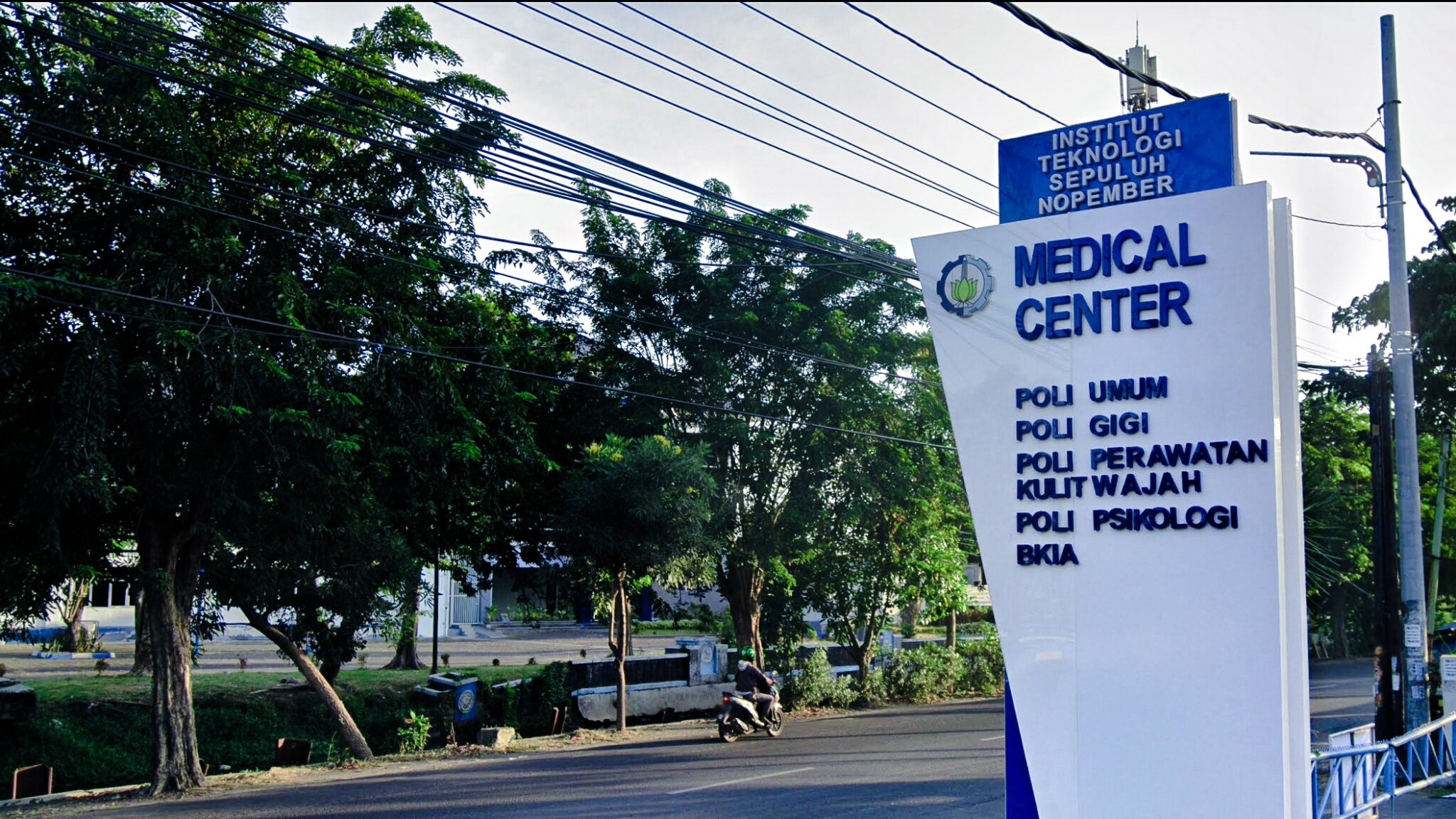
Institut Teknologi Sepuluh Nopember (ITS) has established the ITS Medical Center as a comprehensive facility to support the health and well-being of students, lecturers, staff, and the surrounding community. This center serves as a primary access point for healthcare services on campus, reflecting ITS’s commitment to creating a safe, inclusive, and supportive academic environment. By providing accessible and affordable healthcare, ITS ensures that its academic community can maintain both physical and mental well-being, which is essential for productivity and quality of life.

The ITS Medical Center offers a wide range of essential healthcare services designed to address diverse medical needs. These include the General Medical Unit for consultations and routine examinations, as well as the Emergency Unit for urgent medical treatment. In addition, the Dental Clinic provides oral health services, while the Maternal and Child Health unit supports preventive and routine care for families. The center also includes a Psychology Clinic that offers counseling and mental health support, recognizing the importance of psychological well-being alongside physical health.

To ensure comprehensive care, the ITS Medical Center is equipped with supporting facilities such as a Pharmacy that provides prescribed medications and health-related products. It also features Estetiderma services, offering dermatological and facial treatment consultations. These integrated services enable patients to receive end-to-end care within a single facility, improving efficiency and convenience while promoting preventive healthcare practices across the campus.

Through the ITS Medical Center, ITS demonstrates its strong commitment to health promotion, disease prevention, and early intervention. The availability of diverse medical services, combined with professional healthcare personnel and accessible facilities, ensures that the university community receives timely and quality care. This initiative supports ITS’s broader sustainability goals by fostering a healthy campus ecosystem that enhances overall well-being and resilience.

Sexual and Reproductive Health Services


Institut Teknologi Sepuluh Nopember (ITS) provides dedicated sexual and reproductive health services through its ITS Medical Center, particularly via the Maternal and Child Health Center (MCHC). This unit is specifically designed to address the health needs of women and children, ensuring access to essential services that support reproductive health, maternal care, and early childhood well-being. By integrating these services within its campus healthcare system, ITS demonstrates its commitment to inclusive, accessible, and comprehensive health provision for its academic community.

The MCHC delivers a range of structured programs that combine preventive, promotive, and curative healthcare approaches. These include routine health check-ups and screenings related to gynecological and reproductive health, as well as services addressing menstrual health concerns and early diagnosis of related conditions. In addition, the center manages immunization programs, family planning services, and reproductive health programs, enabling patients to access holistic care and make informed decisions about their health. Educational initiatives are also provided to increase awareness of reproductive health, hygiene, and disease prevention.

Furthermore, the ITS MCHC ensures that services are delivered in a safe, professional, and supportive environment. Patients receive consultations, diagnosis, and appropriate treatment for reproductive and gynecological conditions, with referrals to specialists when necessary. The integration of education, clinical care, and preventive services ensures continuity of care while promoting long-term health outcomes for women and children.

Through the provision of these comprehensive sexual and reproductive health services, ITS strengthens its commitment to health promotion and social inclusion. The MCHC not only supports individual well-being but also contributes to broader public health goals by improving awareness, access, and quality of care related to reproductive and maternal health, aligning with ITS’s sustainability objectives.

Celebrating Cancer Awarness Month in October 2025, ITS in collaboration with the Faculty of Medicine and Health (FKK), successfully hosted a Reproductive Health Seminar and Free Cancer Screening event that drew nearly 1,000 participants from both the academic community and the general public. The initiative took place over several days starting October 16, 2025, at Graha ITS and various medical centers. It included important health literacy sessions and provided early detection services, such as prostate cancer screenings (PSA) for 500 participants and cervical cancer screenings (HPV DNA) for 100 individuals.

Student Health Care Center


Institut Teknologi Sepuluh Nopember (ITS) has demonstrated its strong commitment to student well-being through the establishment of the Student Health Care Center (SHCC), a dedicated facility focused on addressing mental health challenges within the academic community. The center was initiated in collaboration with the ITS Parents Association (IKOMA) as a direct response to the growing concern over student mental health, particularly the increasing number of cases observed in recent years.

The urgency of this initiative is supported by internal data and stakeholder input. It was identified that more than 50 ITS students per month require mental health consultation, highlighting a significant demand for psychological support services. Furthermore, ITS Rector Mochamad Ashari stated that approximately 70% of ITS students experience varying levels of stress, ranging from mild to severe. These findings emphasize the critical need for early intervention and structured mental health services within the university environment.

To address these challenges, SHCC provides accessible and professional mental health services, including consultation sessions with qualified psychologists. The facility is designed to function as an early detection and intervention platform, helping identify the root causes of stress and preventing more severe mental health issues. Services are delivered through a structured appointment system, ensuring confidentiality, personalized care, and effective support for each individual.

Importantly, the SHCC is inclusive and accessible to the entire ITS community, including students, lecturers, and administrative staff. By offering a safe and supportive environment for mental health consultation, ITS fosters a culture that reduces stigma and encourages help-seeking behavior. This initiative aligns with ITS’s broader sustainability and well-being goals by promoting mental resilience, improving academic performance, and creating a healthier campus ecosystem.