

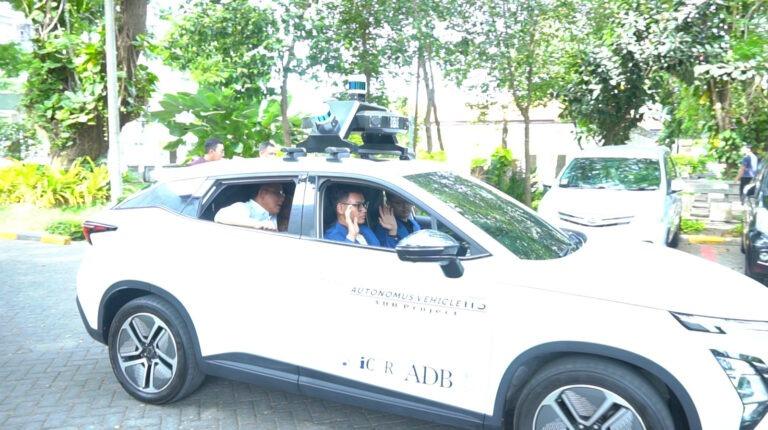
ITS Campus, ITS News — The rise of electric vehicles amid current automotive technological advancements represents an undeniable phenomenon, offering environmental advantages alongside lower operational and maintenance costs. Notably, several developed nations such as the United States have already introduced driverless electric vehicles, known as robotaxis, into their transportation ecosystems.
The development of autonomous systems has also attracted the attention of Dr. Rudy Dikairono, S.T., M.T., a faculty member from the Institut Teknologi Sepuluh Nopember (ITS) Department of Electrical Engineering, who leads a research team in this domain. Rudy observes that the global trend toward autonomous vehicles will constitute a future necessity for communities worldwide.
Rudy explains that autonomous features are currently available in premium automotive brands such as Tesla and BMW. In contrast, mid-to-low-tier vehicles offer only Advanced Driver Assistance System (ADAS) functionalities. He chose to focus his development on an electric vehicle model already available in the Indonesian market. “For vehicles already equipped with ADAS, we replace the system by deactivating the factory-installed ADAS,” Rudy elaborated.
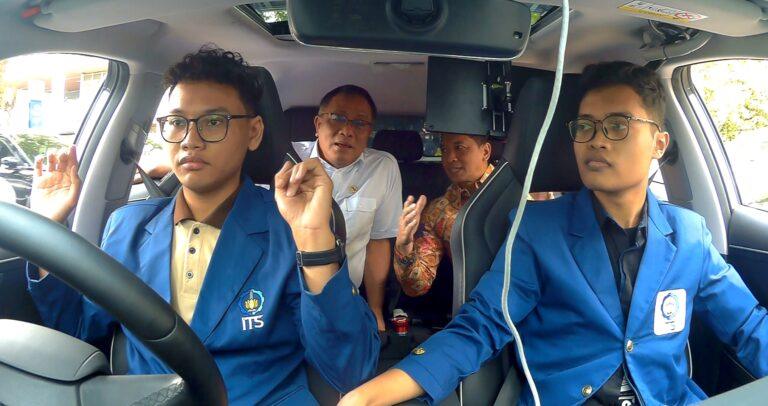
Consequently, this ITS expert in Robotics and Intelligent Systems reveals that implementation in electric vehicles facilitates easier electronic system integration. Through the system developed by his team, the vehicle can operate in two modes: manual and autonomous. “We aim to deliver a more inclusive and affordable autonomous solution,” stated the Senior Manager of STP ICT and ITS Robotics.
From a technical perspective, the autonomous system Rudy applied to this electric vehicle adopts a modular concept, incorporating various advanced sensor technologies. These include Light Detection and Ranging (LiDAR) technology, a laser-based sensor for distance measurement, alongside Global Positioning System (GPS) or mapping capabilities. This combination enables the vehicle to comprehensively interpret environmental conditions. “Our system allows the vehicle to recognize its surroundings and determine routes independently,” he explained.
Furthermore, Rudy developed an intelligent navigation system that enables the vehicle to automatically determine destinations and travel routes. The vehicle can adjust its path based on real-time road conditions. Industry observers consider this innovation highly promising for attracting interest from both the automotive and technology sectors.
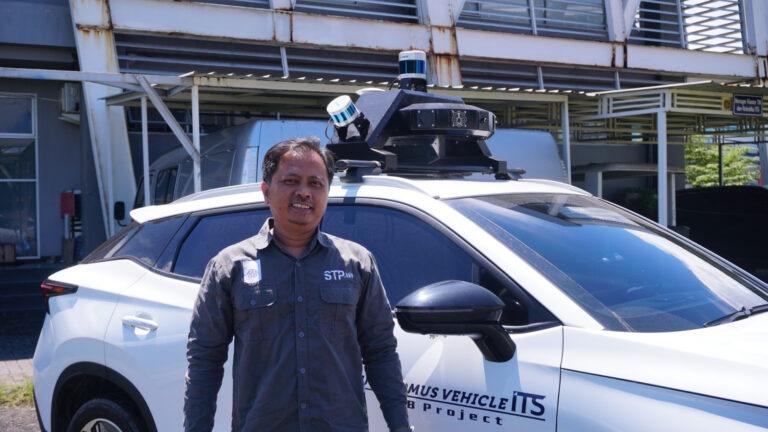
The team conducted system testing on the electric vehicle within the ITS campus environment, adhering to applicable Indonesian regulations. Results demonstrate that the vehicle can detect obstacles ahead and respond adaptively. “We continue to enhance safety aspects to ensure the vehicle responds more effectively to various road conditions,” Rudy stated.
Looking ahead, the development team will focus on enhancing vehicle capabilities, including overtaking maneuvers and automatic speed adjustment. Beyond automotive applications, the team also plans to adapt this system for other sectors, including agriculture and industry. “We remain open to industrial collaboration to enable broader implementation of this innovation,” he concluded.
This innovation aligns with ITS’s commitment to supporting the Sustainable Development Goals (SDGs), particularly SDG 9 concerning Industry, Innovation, and Infrastructure, through the advancement of autonomous control system technology for vehicles. (HUMAS ITS)
Reporter: Syifa Rahmadina