
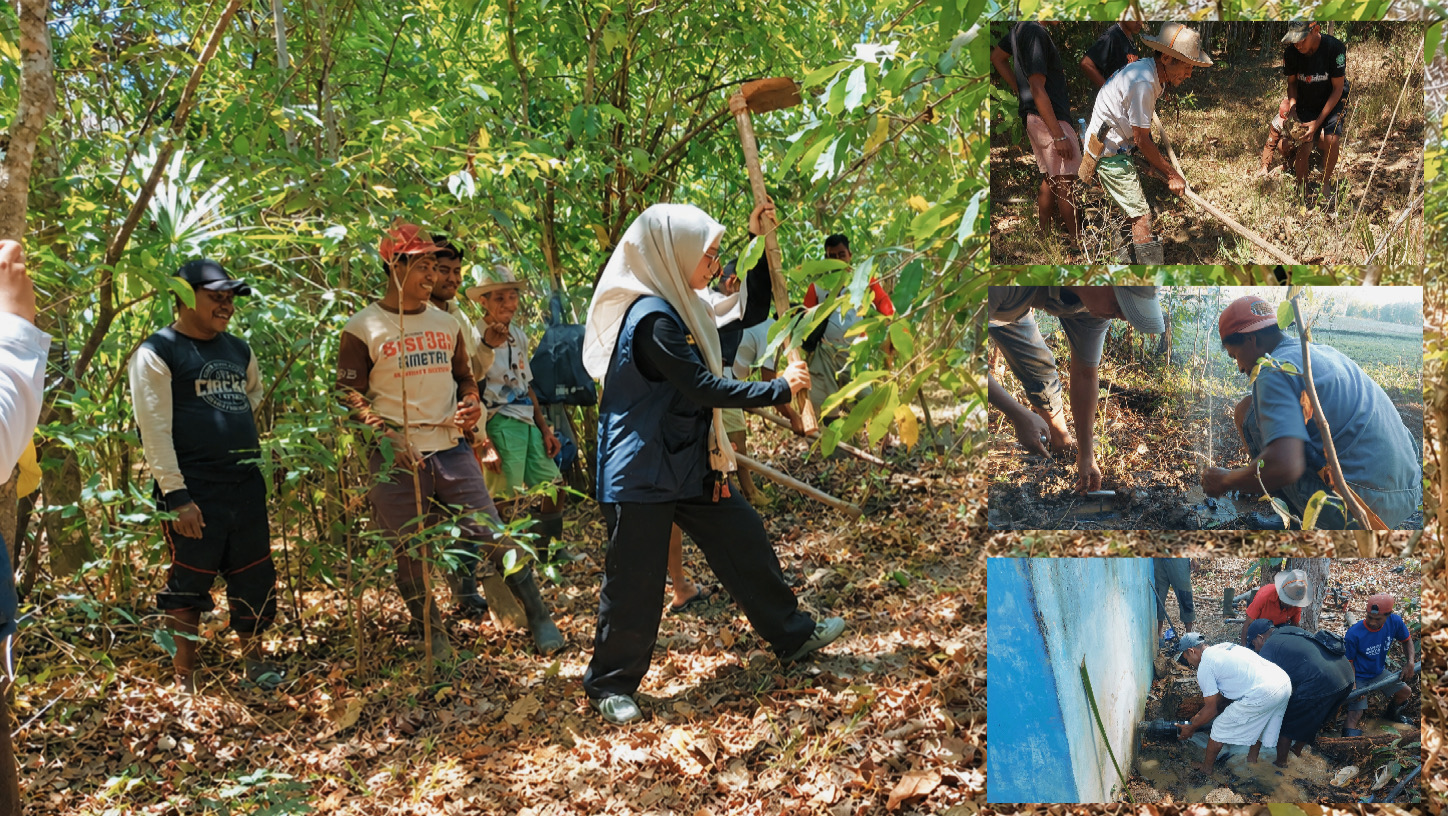
Belu, ITS News — A collaboration between Institut Teknologi Sepuluh Nopember (ITS) and the Ministry of Transmigration of the Republic of Indonesia through the Patriot Expedition program has successfully revitalized the clean water network in Dafala Village, Belu Regency, East Nusa Tenggara (NTT). Through the ITS Patriot Expedition Team (TEP) 24, the infrastructure improvements conducted alongside the community over nearly three months have enhanced the water flow for 59 households in Sanabibi Hamlet, the Tasifeto Mandeu transmigration area.
During the program’s implementation, the team led by Prof. Ir. IDAA Warmadewanthi, ST., MT., PhD., along with residents, carried out comprehensive repairs to the water network, which had previously experienced leaks and a decline in flow rate. The intervention did not only focus on replacing damaged pipes but also included strengthening the infrastructure from the water source to the storage facilities at residents’ homes.
Prior to the revitalization, leaks at several points of the network caused the filling of storage tanks to take a relatively long time. This condition prompted TEP 24 ITS to conduct a field survey to identify the damage and determine the priority of interventions according to the community’s needs.
Based on the survey results, the team and residents repaired the spring area, fixed the spring catchment building (broncaptering), and constructed retaining embankments to protect the water source area. The repairs also covered approximately 3 kilometers of high-density polyethylene (HDPE) piping, including addressing leak points and connecting galvanized pipes in sections requiring additional protection.
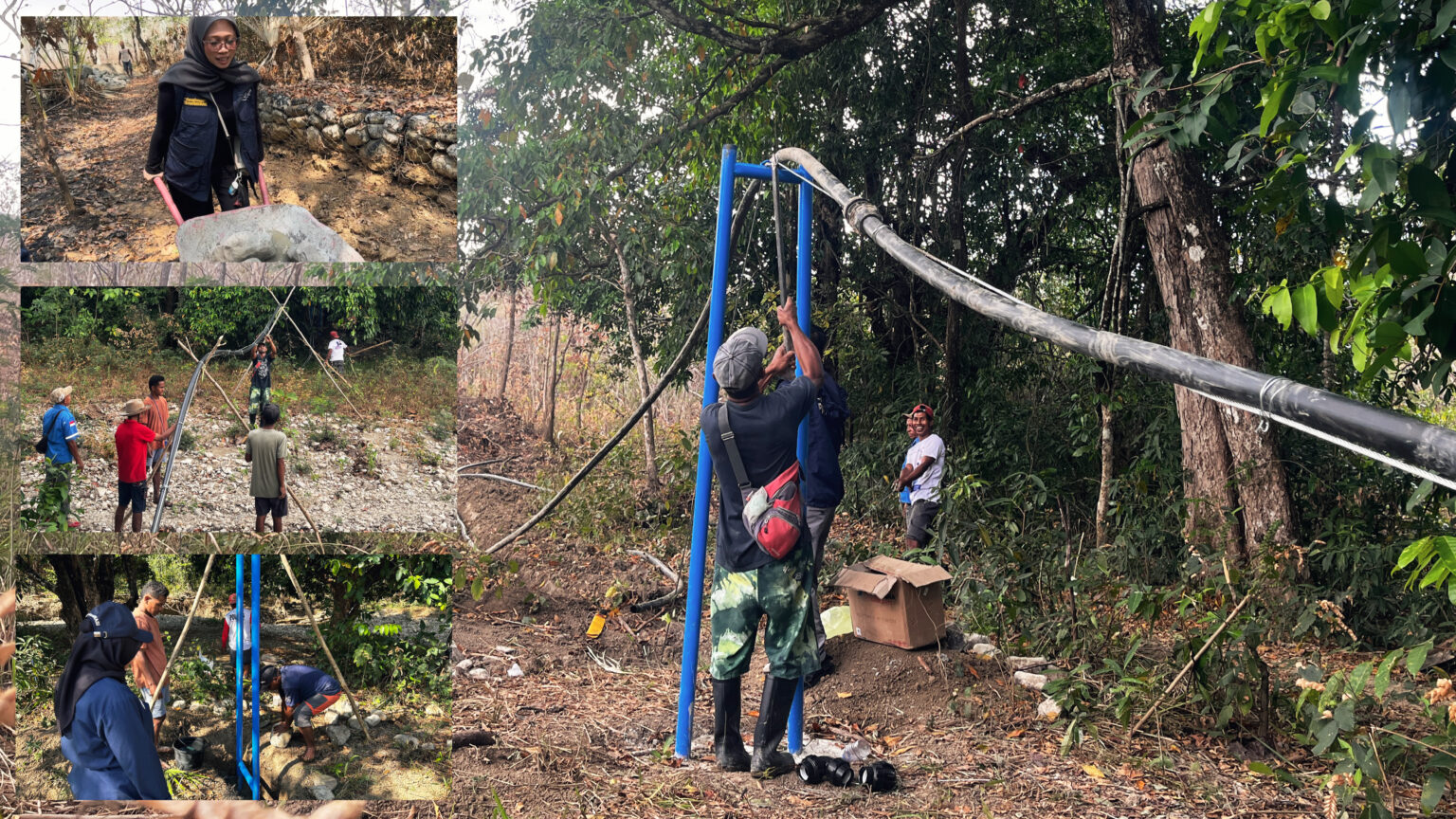
To maintain the continuity of water distribution along the route crossing the river, the team also constructed a support bridge using a sling system to hold the pipes. This structure is designed to help protect the network from potential disruptions caused by terrain and environmental conditions.
The revitalization was then completed with the repair of public hydrant valves and the provision of 59 water storage units for beneficiary households. With this integrated approach, the improvements covered all stages of distribution, from the water source and piping network to the storage facilities at residents’ homes.
TEP 24 ITS field team member Ipung Wisnu explained that the network intervention was carried out based on actual field conditions. According to him, the initial survey served as the basis for determining damage points while anticipating recurring disruptions to the infrastructure. “This repair is based on the community’s needs and the actual condition of the network in the field,” he stated.
Before the work began, Ipung continued, his team conducted a survey to identify leak points and sections of the network prone to damage. “Therefore, the intervention not only repairs leaking pipes but also provides additional protection at certain points, including the use of galvanized pipes and the construction of pipe supports in the river crossing area,” he explained.
The results of this revitalization are already being directly felt by the community. The Head of Buburlaka Hamlet, Oktoviana, conveyed that the network repairs have helped accelerate the filling of residents’ water storage tanks. Before the repairs, filling one storage tank could take nearly an hour or more. After the network was revitalized, she noted, the filling time was reduced to approximately 30–40 minutes. “Therefore, I express my gratitude to the Ministry of Transmigration, which in this case was guided by Prof. Warma and the team,” expressed Oktoviana.
This change demonstrates an operational improvement in clean water services felt by residents. Compared to the benchmark of 60 minutes, filling the tank now takes about 20–30 minutes faster. Nevertheless, the magnitude of the performance improvement may vary depending on tank capacity, flow rate, and the initial condition of the network at each point.
More than just technical results, this program also places community participation as an important part of infrastructure development. Residents were directly involved in field work through the spirit of mutual cooperation, while the ITS team identified and addressed damage based on survey results. This involvement is expected to enhance the community’s understanding of the water network’s condition while encouraging shared responsibility in maintaining the infrastructure that has been repaired.
The revitalization of the clean water network in Dafala Village demonstrates that improving basic services does not always require building an entirely new system. Restoring existing infrastructure through surveys, targeted repairs, and strengthening vulnerable points can serve as an alternative to improve the reliability of water distribution.
For the community in the Tasifeto Mandeu transmigration area, these repairs are expected to support the fulfillment of daily household needs while strengthening the basic infrastructure in the region. The long-term benefits will still require routine maintenance, leak monitoring, and the protection of water sources and distribution networks.
Through the collaboration between ITS, the Ministry of Transmigration, and the local community, the Patriot Expedition program serves as a manifestation of higher education’s contribution to addressing development issues in transmigration areas. This effort also strengthens the commitment to the Sustainable Development Goals (SDGs), particularly in expanding access to proper clean water and promoting resilient and sustainable infrastructure development.
This program represents a concrete step in supporting the SDGs, specifically SDG 6 (Clean Water and Sanitation) through improving access to and reliability of clean water services for the community. Additionally, this activity supports SDG 9 (Industry, Innovation, and Infrastructure) by strengthening basic infrastructure, and SDG 17 (Partnerships for the Goals) through synergy among universities, the government, and the community. (*)