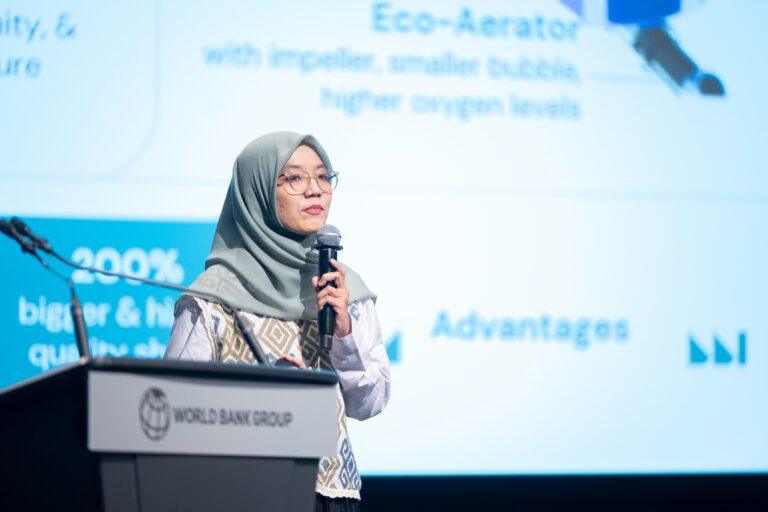
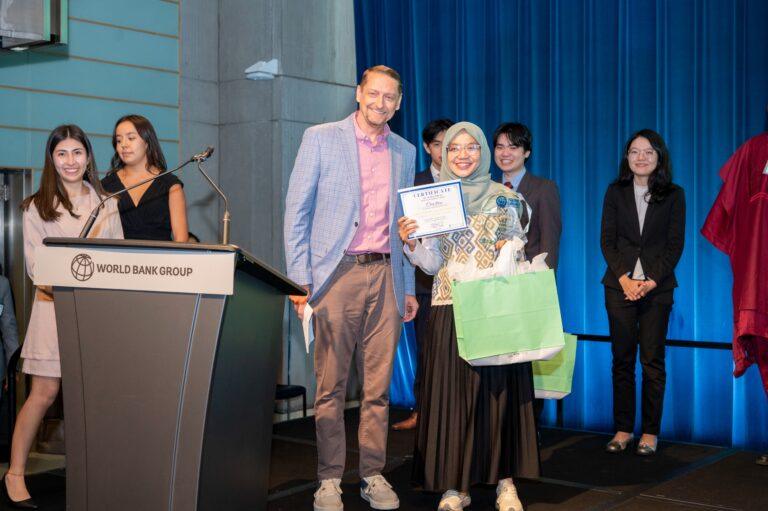
ITS Campus, ITS News — An alumnus of the Department of Industrial and Systems Engineering at Institut Teknologi Sepuluh Nopember (ITS) has earned global recognition for developing an innovative technology solution for the aquaculture industry. Roikhanatun Nafi’ah, Founder and CEO of Crustea Indonesia, secured first place at the 13th World Bank Group Youth Summit held in Washington, D.C., United States, recently.
Known as Nafi, she introduced an intelligent aquaculture solution designed to support small-scale fish and shrimp farmers through Crustea Indonesia. Together with her colleague, Prisma Riashuda Prakosa, an alumnus of the ITS Department of Electrical Engineering, she has worked closely with aquaculture communities struggling with crop failures, limited electricity access, and rising operational costs.
“We built this solution based on the challenges we experienced firsthand as fish farmers,” Nafi explained.
Drawing from field observations, Nafi highlighted that low and unstable dissolved oxygen levels remain one of the primary causes of fish and shrimp mortality, leading to frequent harvest failures. In addition, high operating expenses—particularly electricity and fuel costs for water pumps—continue to burden aquaculture farmers across Indonesia.
To address these critical challenges, Crustea Indonesia developed a comprehensive technological ecosystem that simultaneously improves water quality and reduces energy consumption. Leveraging her expertise in Industrial Engineering, Nafi designed an integrated solution that enhances aquaculture productivity while improving operational efficiency.
“To improve both production efficiency and sustainability, Crustea Indonesia developed an aquaculture ecosystem powered by the Artificial Intelligence of Things (AIoT) and renewable energy,” she explained.
One of the company’s flagship innovations is the solar-powered Eco-Aerator, which delivers stable oxygen levels while consuming significantly less energy. The technology is particularly beneficial for fish and shrimp farms located in remote areas without reliable electricity access.
“This environmentally friendly smart aerator provides consistently higher dissolved oxygen levels while reducing dependence on grid electricity and diesel fuel,” Nafi said.
Complementing the Eco-Aerator, Crustea Indonesia has also developed an AIoT-based monitoring and automation system capable of continuously measuring dissolved oxygen, temperature, pH, and salinity in real time. Whenever oxygen levels decline below the optimal threshold, the system automatically activates the aerator. Once water quality returns to the desired condition, the aerator switches off automatically, ensuring maximum energy efficiency without compromising production.
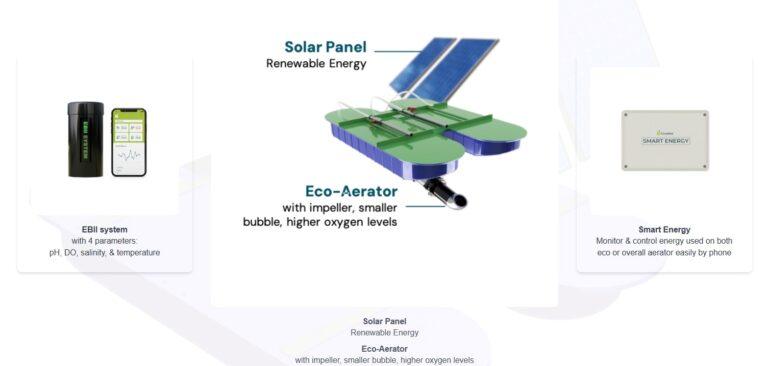
Beyond water quality management, the aquaculture technology company has introduced a smart energy management system that monitors electricity consumption, enables remote device control, and provides early warnings when technical issues occur. According to Nafi, future technological development is focused on implementing AI-driven precision aquaculture to enable more accurate farming decisions.
“Our goal is to ensure that technology makes farmers more efficient rather than creating additional burdens,” she emphasized.
Since its commercialization in September 2022, Crustea Indonesia has experienced rapid growth. The number of fish and shrimp farmers supported by the company has increased from only three to more than 1,000 farmers across Indonesia.
“Our target continues to grow. This year, we aim to support an additional 2,000 aquaculture farmers,” said the ITS Industrial Engineering alumna, who earned both her bachelor’s and master’s degrees from the university.
In line with its mission, Crustea Indonesia extends its impact beyond technology deployment. The company also organizes climate-resilient field schools, technology adoption training programs, and women’s empowerment initiatives within the aquaculture sector. Rather than simply selling equipment, Crustea Indonesia has built an inclusive end-to-end ecosystem that supports farmers throughout the entire aquaculture value chain.
The implementation of Crustea Indonesia’s technology has delivered measurable results. According to Nafi, fish and shrimp mortality rates have declined by up to 50 percent, while operational costs have been reduced by as much as 80 percent for farms previously relying on diesel-powered systems.
“Our solutions have also prevented the emission of more than 23,000 tons of carbon dioxide equivalent (23,000 tCO₂e),” she added proudly.
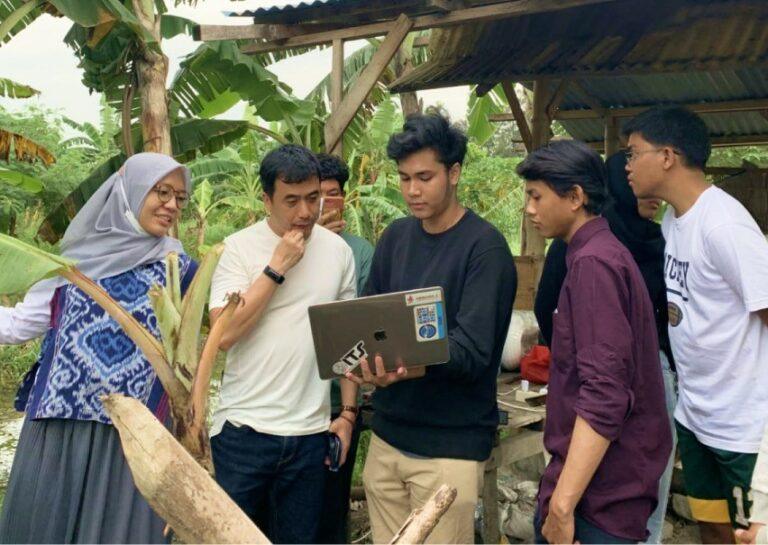
Today, Crustea Indonesia’s technologies are being utilized in numerous regions across Indonesia. Internationally, the company has begun expanding its partnerships and technology adoption to several countries, including nations in Africa, the Philippines, India, and other global markets.
“This international expansion reflects Crustea Indonesia’s commitment to strengthening global food security through sustainable and environmentally responsible aquaculture,” Nafi stated.
For Nafi, receiving the prestigious international award represents global recognition of Indonesia’s innovation potential. She hopes that technologies developed from the real needs of Indonesian aquaculture farmers will contribute to global food security while promoting environmental sustainability. This vision also reflects ITS’ three institutional pillars: resilience, impact, and global excellence.
The achievements and innovations developed by these two ITS alumni also contribute to the realization of the United Nations Sustainable Development Goals (SDGs), particularly SDG 2 (Zero Hunger), SDG 7 (Affordable and Clean Energy), and SDG 14 (Life Below Water) through the advancement of sustainable aquaculture technologies.
Reporter: Syifa Rahmadina