Study Program


Facilities
Research and Collaborations
Published on
Thursday, 30 July 2026
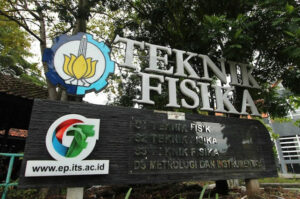
ITS Campus, DTF News — Modern industrial systems operate with a high level of precision, stability, and safety. Behind complex factory operations, there are measurement, control, and optimization systems running in an integrated manner. This competence is the focus of development at the Department of Engineering Physics (DTF) Institut Teknologi Sepuluh Nopember (ITS).
Engineering Physics studies how industrial processes can be controlled to remain in optimal conditions. Students are equipped with an understanding of industrial instrumentation, control systems, process dynamics, and system performance analysis. Learning focuses not only on theory, but also on application through simulations and laboratory practicals. This approach forms a comprehensive understanding of the interactions between variables within a system.
In modern industry, even the smallest control error can impact production efficiency and workplace safety. Therefore, control systems are designed to keep parameters such as temperature, pressure, flow, and composition stable. Engineering Physics plays a role in designing control strategies that are responsive and adaptive to changing process conditions. This expertise ensures systems remain reliable even when facing complex operational dynamics.

Besides control aspects, students also learn data acquisition systems and performance analysis. Sensors serve as the initial component in the industrial decision-making process. The data obtained is then processed to determine corrective actions either automatically or manually. The integration between hardware and software is an essential part of building smart industrial systems.
ITS, as a technology-based educational institution, provides support through laboratory and research facilities relevant to industrial needs. An applicative academic environment allows students to understand real-world challenges in the field. Collaboration with the industrial sector also opens up opportunities for implementing learning outcomes on a broader scale. This strengthens graduates’ readiness to enter the professional world.
The role of Engineering Physics is not limited to a single industrial sector. Graduates have opportunities to contribute in the fields of energy, manufacturing, petrochemicals, to smart building systems. The ability to analyze and integrate systems positions them as strategic process controllers. This expertise is required to ensure industries operate efficiently, safely, and sustainably.
As the hidden brain behind modern industrial systems, Engineering Physics delivers precision system engineering-based solutions. The integrative approach developed shapes graduates with analytical capabilities adaptive to technological advancements. Through continuous education and research, DTF ITS continues to contribute to strengthening the foundation of national industrial technology. (*)
Reporter: Shafa Annisa Ramadhani