Smart Eco Campus



"The ability to feed the world is a key element of sustainable development. If done right, agriculture, forestry and fisheries can provide nutritious food for all. At the same time it can ensure rural development with people at the centre of the process, supporting the incomes of those who rely on agriculture. Universities need to be able to demonstrate how they are contributing to end hunger, achieve food security and improved nutrition and promote sustainable agriculture." (THE Impact Rankings)
Having initiatives towards a sustainable and environmentally friendly campus, ITS prioritizes issues such as water and air pollution reduction and waste management. The phenomenon of high-level public consumption that led and impact the amount of waste with an unsettled management system concerned ITS to promote a new lifestyle in waste management. At ITS itself, waste processing is carried out with the 3R principle: Reuse, Reduce, and Recycle. The 3R principle is implemented through reducing the use of single-use materials, E-waste drop boxes, and waste sorting.
ITS measures the amount of waste generated and recycled across the university. Waste in the university is handled through composting and recycling, while food waste is handled through composting. The residue is sent to a landfill site. ITS also has a mini waste processing center to implement the organic waste treatment policy.

ITS has established several programmes to reduce student food insecurity and ensure access to sufficient and nutritious meals. Various events held at ITS regularly provide free meals for students. 
FTSPK ITS students collecting free "blessed meals" (nasi berkah) provided by the Dharma Wanita Persatuan (DWP) of FTSPK ITS in the Civil Engineering Department parking area.
One example is the Free Healthy Nutritious Meal Distribution activity organized by Dharma Wanita Persatuan (DWP) ITS. This social action has been carried out for nine months by nine different DWP Faculty Units. The peak of this free nutritious meal giving activity was held alongside the 26th anniversary of DWP ITS and the 65th Dies Natalis of ITS, when 7,500 portions of free nutritious meals were distributed on Thursday, 4 December 2025.
Members of the Dharma Wanita Persatuan (DWP) at ITS distributing free, healthy, and nutritious meals to students in the area of the Department of Industrial Mechanical Engineering, Faculty of Vocational Studies, ITS.
Beyond food distribution, ITS also ensures that students stay hydrated despite the hot Surabaya weather. To support this, free drinking water provision points have been installed in several strategic locations such as Masjid Manarul Ilmi ITS, Plaza Angka parking area, the Departments of Mechanical Engineering, Physics Engineering, and Materials & Metallurgical Engineering, and most recently at the Rectorate Building.
Through these initiatives, ITS demonstrates its strong commitment to tackling student food insecurity, promoting student well-being, and ensuring that no student is left behind in terms of access to food and clean water.
Institut Teknologi Sepuluh Nopember (ITS) provides direct food assistance and accessible campus dining facilities to help prevent and alleviate hunger among students. These interventions combine free meal distributions for students who may experience difficulties accessing food with the availability of affordable, nutritious, hygienic, and halal meals across campus. The initiatives aim to strengthen food security and ensure students have access to meals during their academic activities.
In 2025, ITS implemented direct food interventions led by the university's Dharma Wanita Persatuan (DWP), working at both faculty and university levels. On 25 February 2025, DWP of the Faculty of Civil, Planning, and Geo Engineering (FTSPK) organised Bakti Kampus 2025, distributing
1,000 free rice meals (Nasi Berkah) to students . Meals were distributed at two locations, the Departments of Civil Engineering and Geomatics Engineering, to reach students across the faculty. Around 500 meal boxes were collected within the first hour, demonstrating strong demand for the initiative. DWP FTSPK also planned to establish the activity as an annual programme.
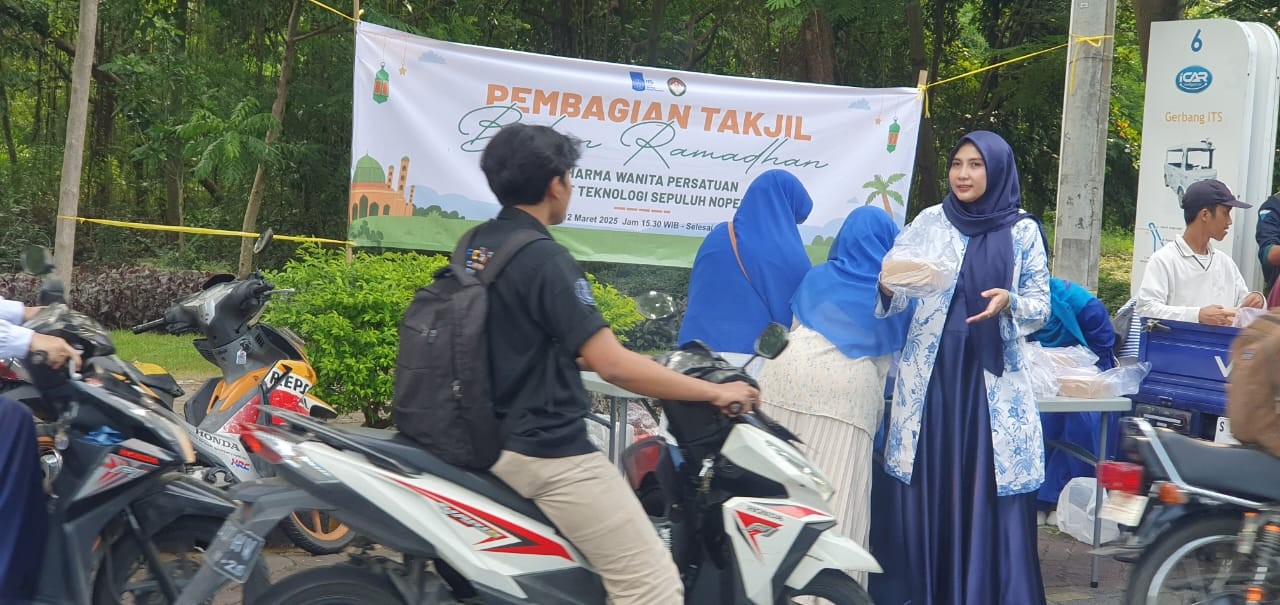
Chair of DWP ITS, Galih Kanestri Dewi Pramujati, is distributing free takjil (iftar snacks) to students and the community around ITS.
During Ramadan, on 12 March 2025, DWP ITS distributed another 1,000 free iftar (takjil) packages along the main campus roads. The distribution reached students who had not yet obtained food to break their fast, as well as members of the surrounding community. This initiative provided immediate food assistance during a period when access to meals at the appropriate time was particularly important.
Beyond direct food assistance, ITS supports students' everyday food access by providing affordable dining options across campus. All ITS canteens are open and accessible to students and staff, offering a wide range of reasonably priced menus with nutritious, hygienic, and halal food options. With multiple food outlets distributed throughout the campus, students can conveniently access meals without needing to leave the university environment. The canteens also provide comfortable dining areas where students can eat and take breaks between academic activities.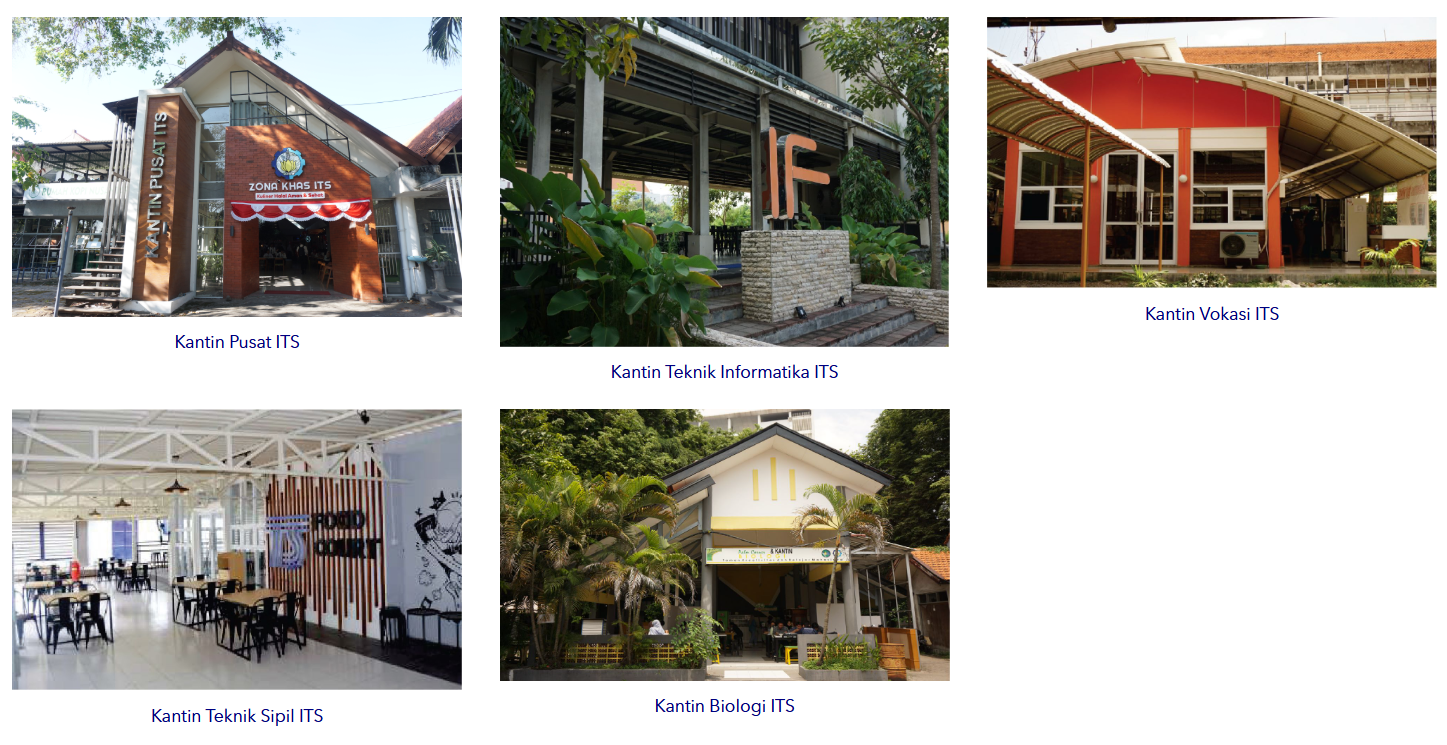
Canteens throughout ITS campus.
Together, these interventions address student hunger through both immediate food assistance and ongoing access to affordable meals. Free meal distributions help students access food during specific periods of need, while the availability of campus canteens provides a more continuous food access option throughout their studies. By combining these approaches, ITS contributes to a more food-secure and supportive campus environment for its student community.
Institut Teknologi Sepuluh Nopember (ITS) provides sustainable food choices for everyone on campus, including students, lecturers, staff, and visitors. Vegetarian and plant-based food options are available at all canteen locations across the ITS Sukolilo campus, from the Central Canteen (Kantin Pusat) to canteens located within individual departments and faculties. By incorporating plant-based dishes into everyday menus, ITS makes nutritious and affordable food choices accessible without requiring consumers to visit designated vegetarian outlets.
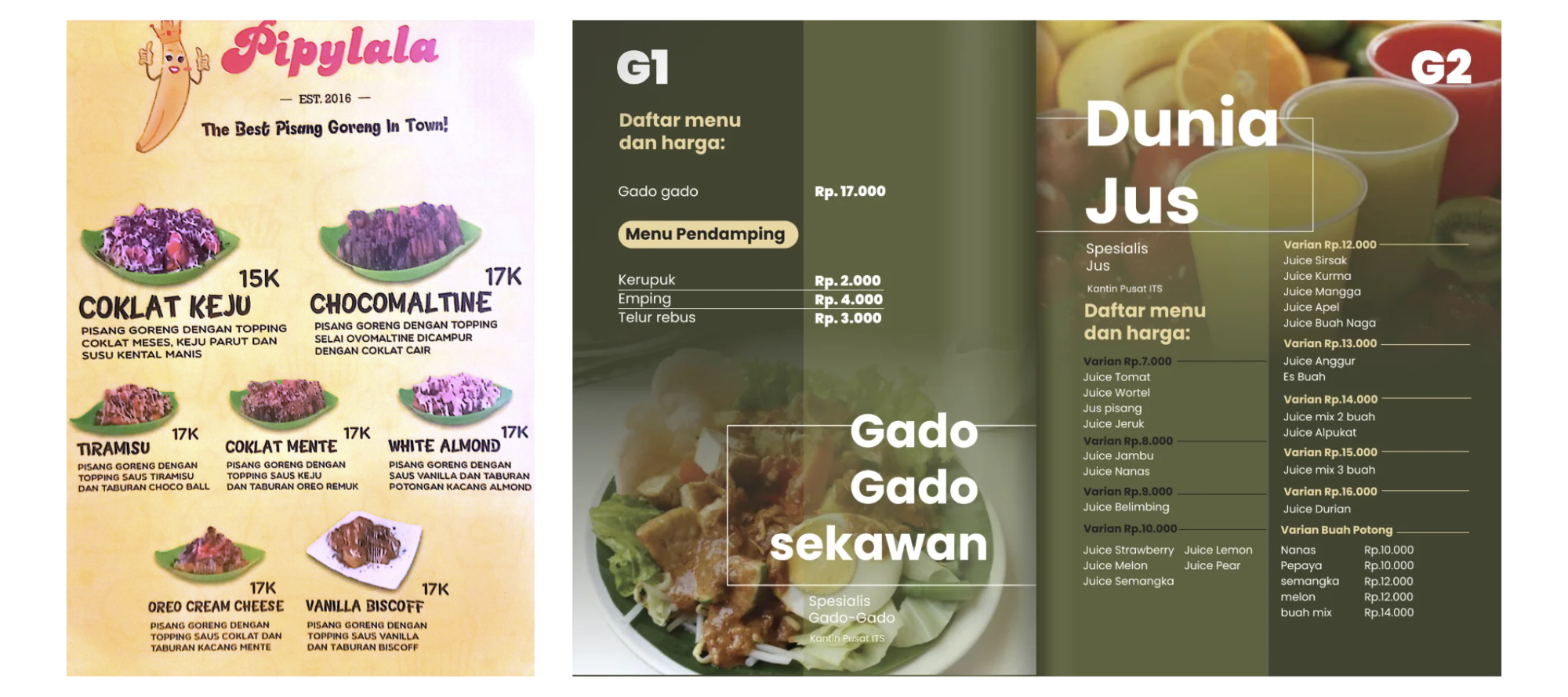
(Left) Menu options from a vendor that features bananas as a key ingredient. (Center) The traditional dish, gado-gado, consisting of steamed mixed vegetables served with peanut sauce. (Right) A selection of juices made from various tropical fruits, available at affordable price points.
These choices include traditional Indonesian dishes naturally based on vegetables and plant-derived ingredients, such as pecel (steamed vegetables served with peanut sauce), gado-gado (mixed vegetable salad with peanut dressing), and tahu-tempe (tofu and fermented soybean cakes). Canteens also offer fresh fruit juices made from a variety of tropical fruits, alongside other affordable plant-based menu options. These everyday food choices provide students and staff with accessible alternatives based on vegetables, legumes, soy products, and fruits. Their availability across all canteen locations makes plant-based eating a practical option throughout the campus.
The Central Canteen (Kantin Pusat), as the main dining facility at ITS, was officially designated as one of ten culinary locations in Indonesia to be transformed into a Halal, Safe, and Healthy Culinary Zone (Zona KHAS). This program is part of the National Committee for Sharia Economics and Finance (KNEKS) initiative, chaired by the Vice President of the Republic of Indonesia.
To support this transformation, ITS issued the Standard Operating Procedure for Central Canteen Management (POS No. 0226.1.00/IT2.1V.3/DKPU.00.01/2024). The policy require all tenants at the Central Canteen to limit the use of plastic and single use materials, provide proof of Halal certification and a Business Identification Number (NIB) to ensure food safety, legality, and quality, and source products from suppliers that use sustainable packaging and meet halal and sustainability certification standards.
The implementation of Zona KHAS emphasizes not only food quality but also environmental responsibility. Food providers must maintain high hygiene standards, undergo halal product testing certified by the Halal Task Force (Satgas), and comply with ITS administrative selection processes.
By making vegetarian and plant-based meals available at every canteen location across the ITS Sukolilo campus, ITS integrates sustainable food choices into everyday campus life. The combination of affordable traditional plant-based dishes, fresh fruit options, and institutional measures for safer and more responsible food services supports a campus food environment that is more inclusive, health-conscious, and environmentally sustainable.
ITS Promotes Access to Nutritious and Affordable Meals across All Campus Food Outlets
Institut Teknologi Sepuluh Nopember (ITS) is committed to providing healthy, nutritious, and affordable food choices for all students and staff across its campus. ITS operates various canteens and food outlets across departments and faculties, ensuring that the campus community can access a variety of meals at convenient locations. Healthy and affordable food choices are available across all ITS food outlets, including the Central Canteen, student dormitory canteen, and faculty- and department-based canteens. These facilities offer diverse menus, combining traditional Indonesian meals with fresh fruit-based options to support balanced eating habits.
All ITS canteens are expected to uphold halal, cleanliness, and hygiene principles, as regulated under the ITS Central Canteen Standard Operating Procedures. To support food quality and safety, canteen tenants are required to have a Nomor Induk Berusaha (NIB) and implement the Sistem Jaminan Halal (SJH). The available menus include fresh juices, nasi pecel, sayur sop, sayur lodeh, and soto ayam, providing options featuring vegetables, fruits, and other ingredients commonly found in balanced meals.
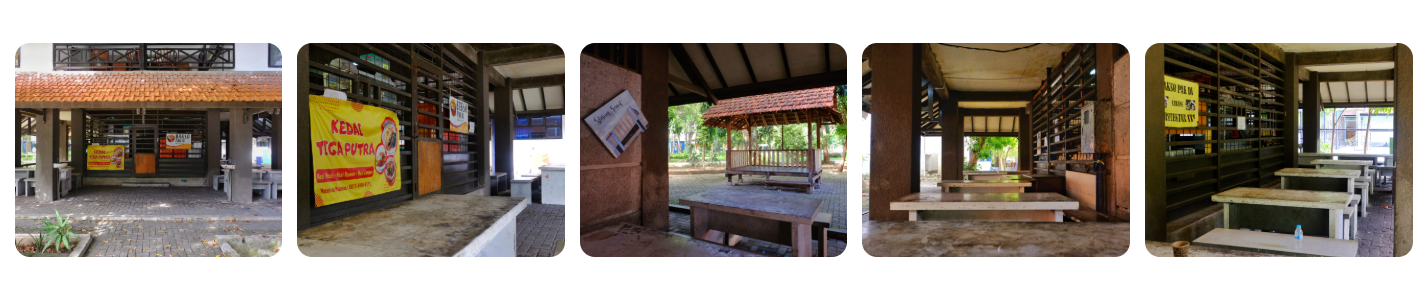
Architecture Department's canteen at ITS.
Affordability is another important consideration in ITS's campus food provision. Meals at ITS canteens are offered at student-friendly prices ranging from Rp5,000 to Rp30,000, making nutritious food more accessible to the campus community. These affordable options can be found at the Central Canteen, Kantin Asrama Mahasiswa, and faculty- or department-based outlets, including Kantin Idjo Teknik Fisika, the Architecture Canteen, and Kantin FTK ITS. These facilities also provide adequate seating areas, allowing students and staff to enjoy their meals, take breaks, and engage in informal discussions and social interactions.
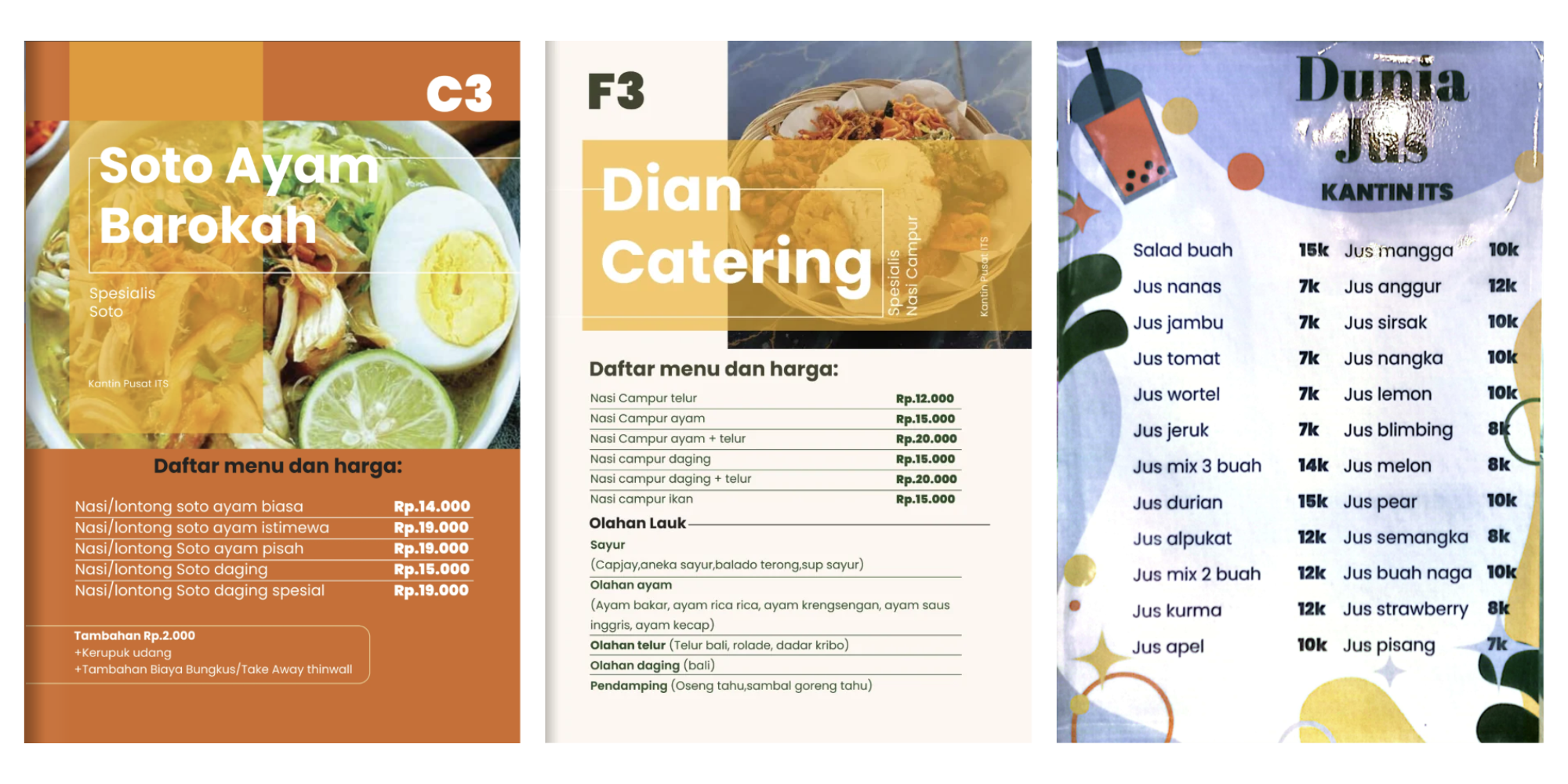 A number of menu options, featuring a range of ingredients—including carbohydrates, proteins, vegetables, and fruits—provide balanced meals that are affordable and accessible for students.
By making nutritious meals available at affordable prices across all campus food outlets, ITS helps ensure that students and staff have convenient and continuous access to food during their campus activities. The combination of diverse menus, reasonable prices, and food safety requirements supports a healthier, more accessible, and supportive campus dining environment.
ITS strengthens hunger interventions for staff by providing a meal allowance as stipulated in the 2025 Fiscal Year Cost Standard (Standar Biaya ITS), Chapter A on “Meal Allowance, Overtime, Meeting Consumption, Communication Data Package, and Social Assistance”, specifically Point 1 on “Permanent Employee Meal Allowance Rates”. The meal allowance is distributed monthly, calculated based on the number of working days, and adjusted according to the employee’s grade level:
Grade IV or equivalent: IDR 41,000 per day
Grade III or equivalent: IDR 37,000 per day
Grade II and I or equivalent: IDR 35,000 per day
Moreover, ITS helps staff who may face food insecurity, particularly lower-paid workers. On 5 March 2025, ahead of Ramadan, Dharma Wanita Persatuan (DWP) ITS held a social service event at Plaza dr. Angka. It distributed 217 staple food packages to ITS’s daily contract cleaning staff (Tenaga Harian Lepas). Each package contained rice, sugar, cooking oil, noodles, tea, coffee, and festive cakes. Shopping vouchers and cash prizes were also given out. The initiative helps cover staff food needs during the fasting month.

Handover of basic food supplies by DWP Chair Galih Kanestri (second from left), accompanied by ITS Rector Prof. Ir. Bambang Pramujati, ST, MSc, Eng, PhD (left), to one of the ITS daily contract workers (THL).
Through these initiatives aimed at staff, ITS demonstrates its strong commitment to ensuring food security, promoting nutritional well-being, and fostering an inclusive and caring campus environment.
Institut Teknologi Sepuluh Nopember (ITS) provides free access to knowledge, practical skills, and technology for sustainable agriculture and aquaculture to local food producers across East Java. Beneficiaries include crop and horticultural farmers, aquaculture and fish farmers, farmer groups, waste bank managers, and other community-based food producers. Delivered mainly through university-funded Community Service (Pengabdian kepada Masyarakat/Abmas) and Student Community Service (KKN Abmas) programmes, these initiatives combine technology transfer with hands-on training, demonstrations, mentoring, and technical guides. This approach equips communities with the knowledge and skills to operate, maintain, and independently apply the innovations in their production activities.

(from left) Adi Setiawan, Ir. Nur Husodo MT, Suryono, M. Afairur Ramadhan, and Dr. Eng. Ir. Achmad Dwitama Karisma, S.T., M.T., at the sorghum plantation in Tembeleng, Jombang.
In 2025, ITS introduced a range of practical technologies to help farmers improve cultivation, irrigation, and post-harvest management:
Jombang – Sorghum grain drying: ITS trained farmers to operate a spouted-bed grain dryer, supported by demonstrations and technical modules. The technology enables more controlled grain drying, reduces dependence on weather conditions, and supports better post-harvest handling.
Mojokerto – Integrated farming technologies: Through the Engineers in Action programme with NTUST (Taiwan) and OIT (Japan), ITS conducted workshops in Kemiri Village in July 2025 on rice drying, chilli and eggplant greenhouses, and biodigesters. Farmers learned to improve post-harvest processing, manage crop-growing conditions, and convert organic waste into fertiliser.
Tuban – IoT-based smart farming: The Manunggal Rejeki farmers' group received an IoT monitoring system, training, and a user guidebook. Using smartphones, farmers can monitor soil moisture, acidity, and pest risks, supporting more informed irrigation, soil management, and crop protection decisions.
Probolinggo – Solar-powered irrigation: Shallot farmers received three months of training to operate and maintain battery-powered sprinklers charged by a hybrid solar system. The technology supports more controlled irrigation and reduces reliance on conventional electricity.
Jombang – Automated melon cultivation: Farmers were introduced to an automated drip-fertigation greenhouse equipped with TDS and pH sensors. This enables more precise monitoring of nutrient conditions and water delivery, supporting efficient resource use and controlled crop cultivation.
Nganjuk – Modern mushroom cultivation: ITS established a mushroom house with automatic humidity control for the POMOSDA farmers' group and trained them in its operation and management. The facility helps maintain suitable growing conditions and supports more consistent mushroom production.

Implementation of aerator technology by the community service team from the Laboratory for Instrumentation, Measurement, and Power System Identification (LIPIST) at ITS.
ITS also extends its technology transfer to aquaculture. In August 2025, an ITS team installed solar-powered, IoT-based aerators for catfish farmers in Wringinrejo, Banyuwangi. Training covered aeration, system operation, and equipment maintenance. By helping farmers maintain oxygen circulation in fish ponds, the technology supports suitable water conditions for fish health and survival, while introducing a more energy-efficient approach to aquaculture management.
In addition, ITS promotes circular food production by helping communities turn organic waste into useful agricultural and aquaculture inputs:
Pasuruan – Organic fertiliser: In November 2025, ITS trained Dawuhansengon villagers and waste bank managers to produce liquid organic fertiliser from household waste and provided marketing mentorship. This creates opportunities to reduce organic waste and produce alternative agricultural inputs.
Sidoarjo – Waste-to-aquaculture: Through Aksi Sobat Bumi in Kalanganyar, organic waste is converted into maggot feed for catfish raised in buckets. This demonstrates how waste resources can support small-scale fish production and more circular food systems.

The Sobat Bumi ITS team conducted an outreach program on fish farming in buckets, alongside an incentive scheme where waste could be exchanged for tree seedlings, in Kalanganyar Village, Sidoarjo.
Beyond direct community training, ITS expands access to agricultural knowledge through INESIK, a digital platform launched in August 2025. It provides open access to agricultural innovations and information for soybean farmers, partners, and local governments in East Java, extending opportunities to explore and adopt relevant agricultural technologies beyond individual training locations.

Prof. Erma Suryani, ST, MT, PhD, in a discussion session with participants from the East Java Center for the Implementation of Agricultural Modernization (BRMP).
Through these initiatives, ITS supports local food producers across the production chain, from cultivation, irrigation, and post-harvest processing to aquaculture and organic waste utilisation. By combining free technology access with practical training and ongoing knowledge sharing, ITS strengthens farmers' capacity to improve production management, use resources more efficiently, and adopt sustainable agricultural and aquaculture practices. These efforts contribute to more resilient local food production and stronger community capacity for food security.
Institut Teknologi Sepuluh Nopember (ITS) organises free events where local farmers, fishers, food producers, community groups, academics, and government partners can meet, exchange practical knowledge, and explore opportunities for collaboration in sustainable food production. Delivered through community service programmes and international research projects, these events create opportunities for participants to learn from experts, share experiences with fellow producers, and build connections with relevant stakeholders.

Participants in the workshop on the implementation of the Sustainable Blue Economy model, conducted in Blitar Regency with the SBEC ITS community service team.
On 13 October 2025, the Sustainable Blue Economy Centre (SBEC) ITS held a zero-waste training workshop in Progo Hamlet, Blitar. Organised in collaboration with the Blitar Fisheries and Livestock Office under the EU-funded SustainaBlue project, the workshop brought together local fishers, fish processing and marketing groups, and fish farmers. It provided a shared learning space for participants to exchange knowledge on sustainable fish processing and waste utilisation. They learned how snakehead fish could be processed into higher-value products such as albumin, gelatin, and fish-skin chips, and how fish offal could be fermented into liquid biofertiliser. The event also connected local producer groups with government and university partners, opening opportunities for further knowledge exchange and collaboration.
 .
Participants are taking a pretest to gauge their initial understanding of liquid organic fertilizer.
On 17 November 2025, ITS held a training and mentoring session in Dawuhansengon Village, Pasuruan, bringing together local residents and waste bank managers to learn and practise producing liquid organic fertiliser from household organic waste Participants exchanged practical experiences in organic waste management, learned how to operate composters, and discussed initial approaches to marketing the fertiliser. The session enabled community members to learn from one another and explore the potential of turning household waste into a useful agricultural input. Post-test scores were higher than pre-test scores, indicating improved participant knowledge following the activity.

The Community Service (Abmas) Team from the ITS Department of Chemistry during a melon seedling planting activity in Pacul Gowang Hamlet, Jatirejo, Diwek, Jombang.
In Pacul Gowang Hamlet, Jombang, an ITS Community Service (Abmas) team organised an outreach session for local farmers on sustainable melon cultivation. The event connected farmers with ITS academics and technical expertise, giving them an opportunity to learn about and discuss the application of modern cultivation methods. The team demonstrated an automated drip-fertigation greenhouse designed for approximately 1,000 seedlings, equipped with TDS and pH sensors and supported by a nutrient guide. The demonstration enabled farmers to observe how automated irrigation and nutrient monitoring could be applied to melon production and gain practical knowledge for improving cultivation practices.

Owners of food stalls and cafes partnering with the KKN GEMESH program from ITS attending a meeting.
ITS also supports connections among food businesses in the local food ecosystem. On 30 November 2025, the KKN GEMESH team met with local food and beverage business owners around the ITS campus. The meeting provided a forum for participants to share their needs and perspectives, discuss halal certification, and establish a shared vision for long-term collaboration. By bringing local businesses together with the student team, the event encouraged knowledge exchange on halal requirements and helped strengthen connections among food producers in the area.
Through these events, ITS provides accessible opportunities for local farmers and food producers to connect with peers, academics, students, and government stakeholders. The activities support practical knowledge transfer in sustainable production, food processing, waste utilisation, cultivation technologies, and halal certification, while helping build networks for continued learning and collaboration.
ITS provides free access to its university facilities, laboratories, research services, technologies, and innovations for local farmers and food producers to support more sustainable agricultural and food production practices. This access includes laboratory testing, research-based knowledge, technology transfer, equipment, training, and technical guidance. Research-based agricultural innovation is coordinated by the Agrifood and Biotechnology Research Centre (Agrifotech) under the Directorate of Research and Community Service. Its research portfolio includes qualified synthetic seeds, premium biofertiliser, fish feed pellets, and mushroom cultivation.

Staff and personnel of the Energy Laboratory and the Environmental Laboratory.
Farmers and food producers can also access the Energy and Environment Laboratory (LEL), managed by the Directorate of Cooperation and Business Management (DKPU), free of charge. Accredited to ISO/IEC 17025:2017 and certified to ISO 9001:2015, the laboratory offers testing of soil, sediment and fertiliser, irrigation and surface water, and the nutrient content of foodstuffs. These services provide farmers with scientific information to support evidence-based decisions on soil fertility, water quality, and fertiliser use.

Visit by the ITS Community Service Team to the Jawatan Taliati POMOSDA Farmer Group, Tanjunganom Village, Nganjuk.

The installation process of an automated humidity control system in a modern mushroom growing house, designed by the ITS Community Service (Abmas) team for mushroom farmers in Tanjunganom Village, Nganjuk.
In 2025, ITS extended free access to its university-developed technologies and research outputs to local farming and food-producing communities through its community service programmes (Abmas and KKN Abmas). The support included equipment, practical training, and technical guidance, with examples including:
Rice farmers in Tuban in the Manunggal Rejeki farmers’ group received an IoT system to monitor soil moisture, acidity, and pest risk via smartphone, along with a bird repeller, training, and a user guidebook.
Mushroom farmers in Nganjuk in the POMOSDA group received a modern mushroom house with automatic humidity control.
Shallot farmers in Probolinggo received a battery-powered sprinkler charged by a hybrid solar power system.
Catfish farmers in Banyuwangi received IoT-based, solar-powered aerators to maintain stable oxygen levels in their ponds.
Sorghum farmers in Jombang gained access to a spouted-bed grain dryer for post-harvest processing.
Melon farmers in Jombang were introduced to an automated drip-fertigation greenhouse equipped with TDS and pH sensors.
Farmers in Kemiri, Mojokerto received a rice dryer, greenhouses, and a biodigester under the Engineers in Action 2025 programme, in collaboration with NTUST and OIT.
Residents of Jepara, Surabaya received support in establishing communal gardens equipped with hydroponic and vertical farming installations.
Soybean farmers in East Java gained free, open access to agricultural innovations and information via the INESIK digital platform, launched in August 2025.
Through these initiatives, ITS makes its university facilities, research services, and technological innovations accessible to local farmers and food producers without charge. By removing financial barriers to accessing scientific services, practical technologies, and research-based knowledge, ITS helps farming communities strengthen their production capabilities, improve post-harvest management, and adopt more sustainable agricultural and aquaculture practices. These efforts extend the benefits of university research beyond campus and support local food production and community resilience.
Prioritise purchase of products from local, sustainable sources has been formally adopted by ITS through the transformation of its central canteen into the Zona Kuliner Halal, Aman, dan Sehat (Zona KHAS) since 2023. This initiative ensures that the main dining facility for students, lecturers, and staff operates under sustainability principles, requiring all food to be halal, safe, and clean, while minimising the use of single use plastics.
To regulate its implementation, ITS issued the Standard Operating Procedure No. 0226.1.00/IT2.1V.3/DKPU.00.01/2024. In Chapter II: Policy and Procedure, suppliers of food products and equipment for Zona KHAS are required to meet halal certification, strict hygiene standards, and plastic minimisation measures. Contracts with tenants must also include obligations to comply with these requirements, supported by legal documents such as the Business Identification Number (NIB). Priority is explicitly given to suppliers who can provide both halal certification and environmental sustainability certification.
Furthermore, Chapter III: Implementation and Review reinforces the prioritisation of sustainable food purchases by regulating the extension of these policies across the supply chain. Suppliers must comply with ITS’ plastic minimisation policy and provide products with recyclable or minimal packaging. This chapter also specifies that priority is granted to suppliers with both halal and sustainability certifications, in line with the objectives of Zona KHAS.
Institut Teknologi Sepuluh Nopember (ITS) gives priority to local suppliers when buying food for its internal activities. Since July 2018, all university spending on food and catering for ITS events has been required to go through ITS Food. ITS Food does not cook the food itself. It works with local micro, small, and medium enterprises (MSMEs, or UMKM), including MSMEs fostered by the Surabaya City Manpower Office.

The ITS Food page, where MSMEs offer halal and affordable menu items that can be ordered by the ITS community.
The same approach applies to daily campus meals. Food outlets in the Central Canteen and the department canteens across the ITS Sukolilo campus are run by local MSMEs. Buying from local producers shortens supply chains, lowers transport-related emissions, and supports the livelihoods of local food entrepreneurs, in line with ITS’s commitment to sustainable food systems.
