ITS demonstrates a strong commitment to upholding water quality to protect ecosystems, wildlife, and human health and welfare through the establishment of water quality standards and discharge management guidelines. This commitment is stated in the Rector Circular Letter on ITS Commitment as a Green and Sustainable Campus, specifically in Chapter 7 (Water Management) and Chapter 8 (Waste Management).
In Chapter 7 – Water Management, ITS promotes responsible and sustainable water use by:
- Encouraging a culture of clean water conservation (point a).
- Implementing water-saving technologies across campus facilities (point b).
- Treating and recycling wastewater through sustainable water management systems (point c).
- Reusing recycled water for plant irrigation, toilet flushing, and general cleaning (point d).
- Utilizing rainwater harvesting as an alternative water source (point e).
- Conserving water through optimizing campus reservoirs and lakes for rainwater storage and flood control (point f).
Meanwhile, Chapter 8 – Waste Management outlines ITS’s standards and guidelines to prevent water pollution by:
- Preventing contamination of surface water, rivers, and marine bodies (point l).
- Managing hazardous and toxic waste (B3) in accordance with environmental regulations (point m).
- Ensuring sustainable wastewater treatment (point n).
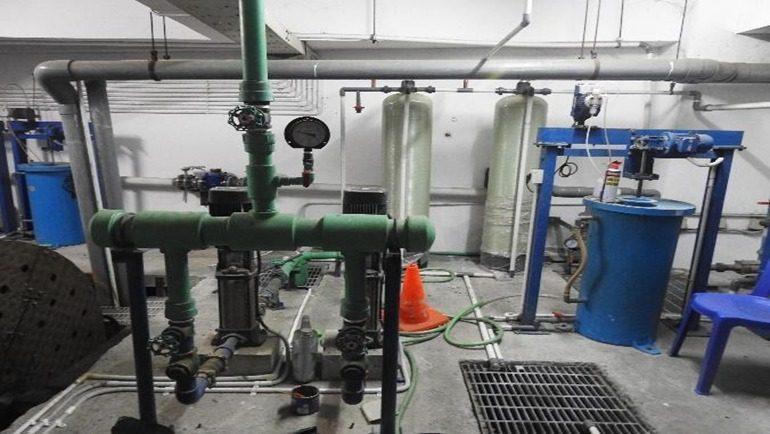
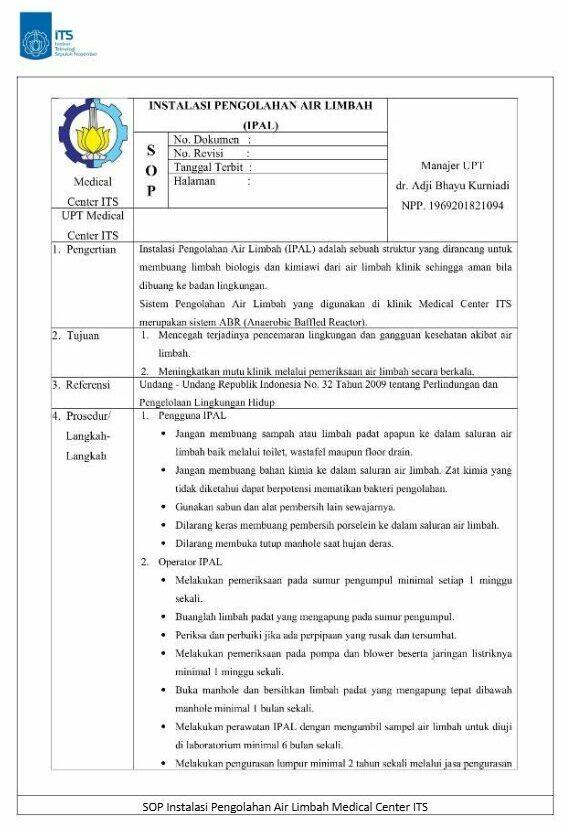
The implementation of these policies is reflected in ITS’s Wastewater Treatment Plant, which employs Anaerobic Baffled Reactors (ABR) and simple treatment systems such as grease traps and sedimentation ponds.