Published on
Wednesday, 10 June 2026
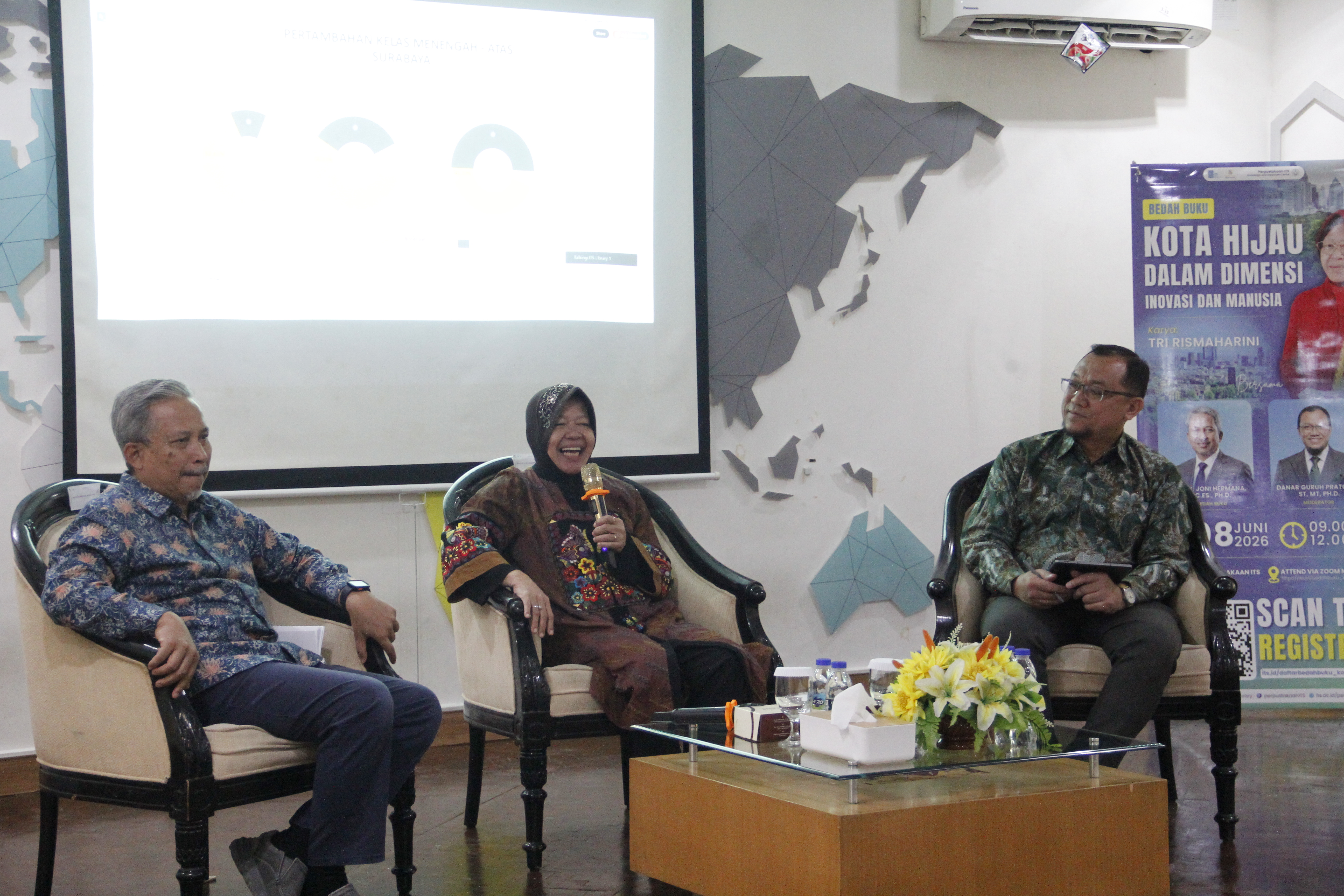
ITS Campus, ITS News — The Sepuluh Nopember Institute of Technology (ITS) held a book review of Green City in the Dimension of Innovation and Humanity by Dr (HC) Ir Tri Rismaharini MT . Held at the CCWS ITS Library , this activity sought to invite the public to understand environmental development as a solution to various societal problems, Monday (8/6).
In this book, published by ITS Press, the Minister of Social Affairs of the Republic of Indonesia for the 2020-2024 period, Dr. (HC) Ir. Tri Rismaharini, MT, recounts her experiences while serving as Head of the Surabaya City Parks and Sanitation Service. At the time, the figure, familiarly known as Risma, admitted to observing various issues occurring in the community and attempting to find their roots through various sources.
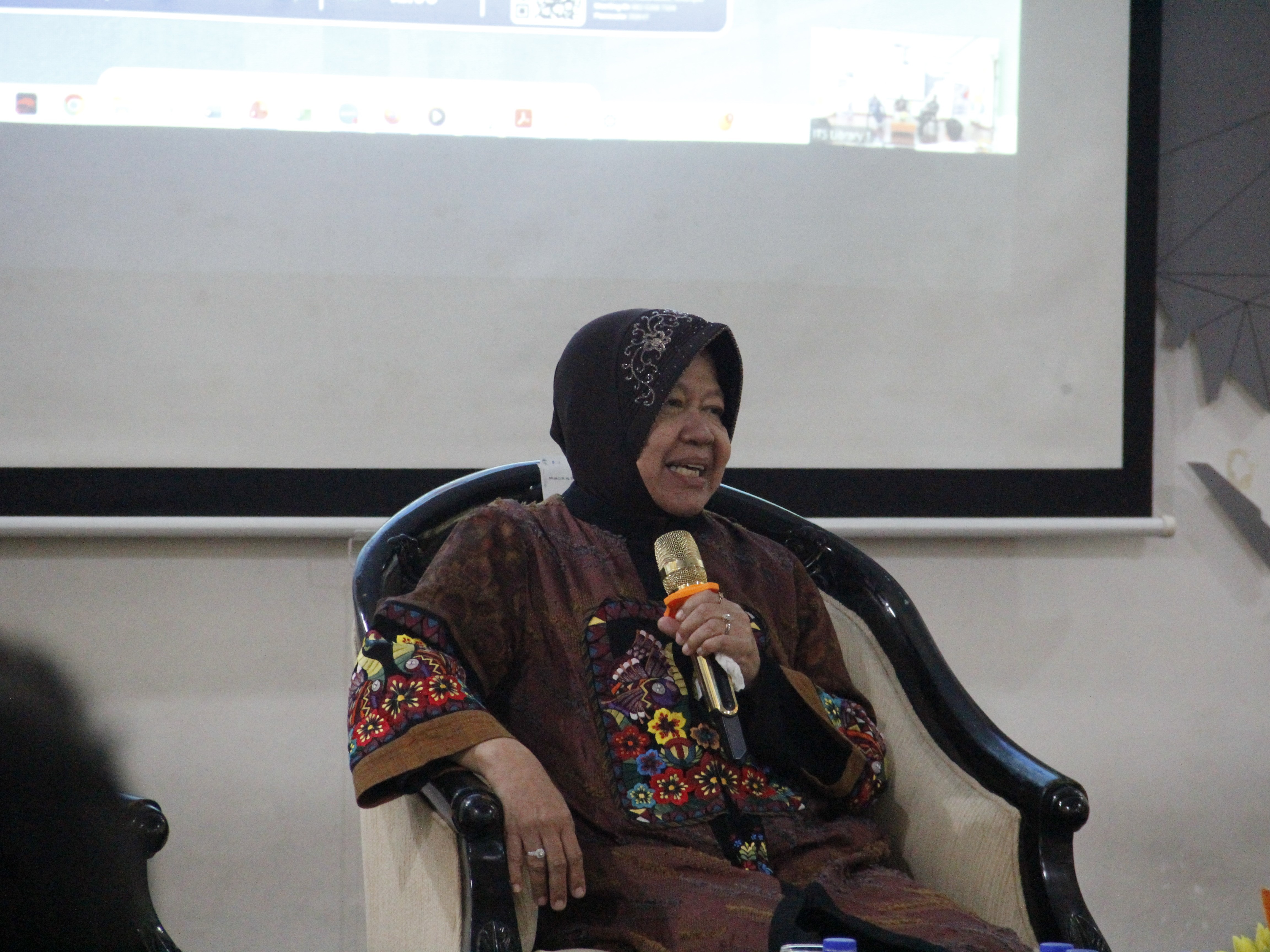
Based on her findings, Risma concluded that hot urban conditions and a lack of green open spaces (RTH) also impact public comfort. She gained this understanding after studying various sources, from psychology literature to studies on green cities. “From that, I believe that developing RTH is not only about beautifying the city, but also about creating a healthy and comfortable environment for residents,” she explained.
This concept was then realized through the construction of dozens of parks across Surabaya. One of the most famous is Bungkul Park, which has earned international recognition as the best park in the world. According to Risma, the presence of green open spaces in various parts of Surabaya is expected to provide spaces for public interaction and improve the quality of life for urban residents.
In addition to developing city parks, this 95-page book also serves as Risma’s platform for reviewing the Urban Farming (UF) program as a poverty alleviation strategy. Risma argues that poverty alleviation can be achieved through two approaches: reducing household expenses and increasing community income.
The ITS Architecture graduate explained that the UF program involved distributing plant seeds to residents in various residential areas and urban alleys. As a result, various types of vegetables could be harvested to meet family needs and potentially generate additional income. “At that time, almost every week we facilitated the sub-district government to supply vegetables to several hotels and restaurants,” he recalled.
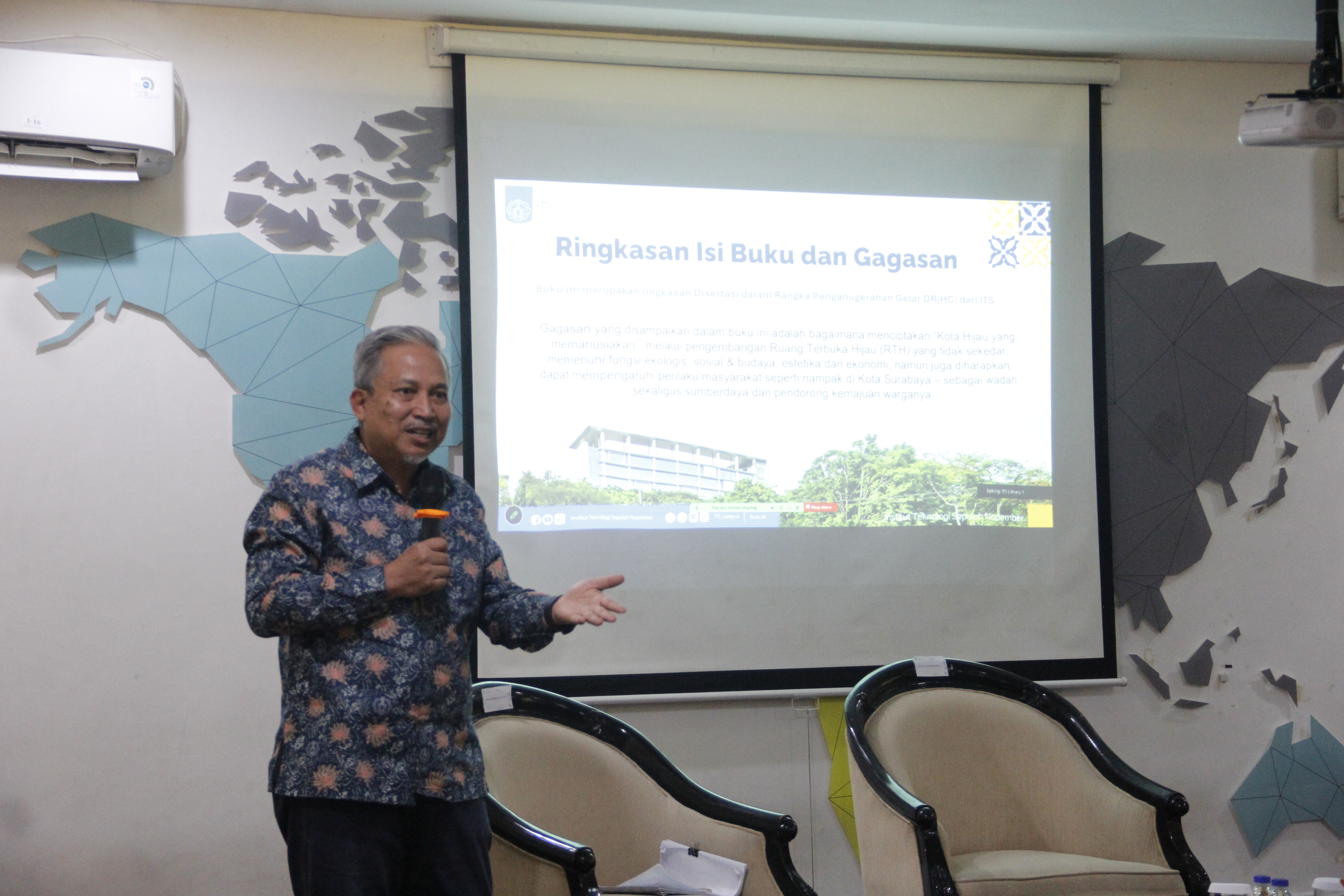
Responding to this, Prof. Ir. Joni Hermana, MScES, PhD, book reviewer and Technical Advisor for the Surabaya Region on Sanitation and Environment, assessed that the book demonstrates a people-centered approach to development. He believes that the success of a city’s development is not determined by the amount of infrastructure built, but by its impact on community well-being.
Furthermore, the ITS Rector for the 2015–2019 period emphasized that green open spaces serve more than just aesthetic purposes in the city. Their presence also plays a role in creating a more comfortable environment, thus positively impacting the social conditions of the community. “Green open spaces not only enhance the beauty of the city but also influence the quality of life of the community,” he explained.
Through this book review, participants were encouraged to understand that sustainable urban development requires synergy between environmental innovation and social development. This activity also supports Sustainable Development Goals (SDGs) points 3 and 11, namely, Healthy and Prosperous Lives and Sustainable Cities and Settlements. (*)
Reporter: Mifda Khoirotul Azma
Redaktur: Mohammad Febryan Khamim
Translator: Devinka Mutianeira