Baguio, ITS News — The Institut Teknologi Sepuluh Nopember (ITS) is further strengthening its research commitment through a strategic partnership with a Philippine research institution, the International Research and Development Organization for Sustainable Solutions (IRDOSS). This research collaboration to address the climate crisis in the Southeast Asian region was held at the Crown Legacy Hotel in the Philippines on Wednesday, April 8, 2026.
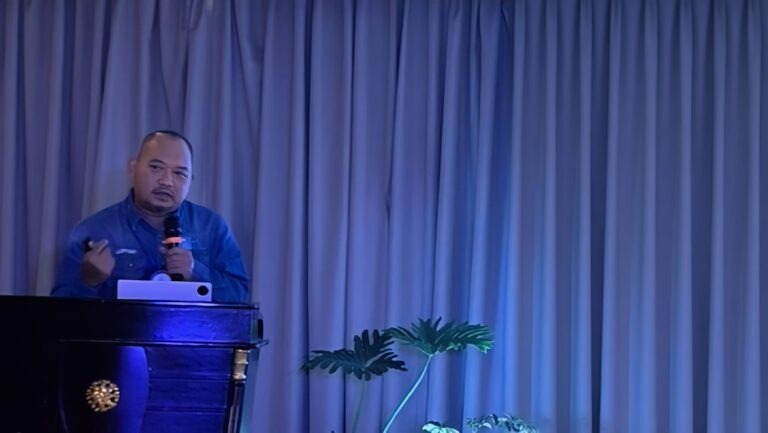
The Deputy Head of the Center for Industrial Development and Public Policy Studies (PSPI-KP) at ITS, Mukhammad Muryono, S.Si., M.Si., Ph.D., revealed that the Southeast Asian region has high vulnerability to climate change, particularly in coastal and archipelagic areas. This condition necessitates efforts to address the climate crisis with active involvement among countries in the Southeast Asian region. “Cross-country synergy based on research integrated with public policy is required,” he stated.
Muryono, who is familiarly known by that name, explained that this cross-country synergy is embodied in the collaboration between IRDOSS and five countries in Southeast Asia. These five countries include Indonesia, the Philippines, Vietnam, Malaysia, and Thailand. ITS, representing Indonesia, will be actively involved in data exchange and will contribute technically through this collaboration.
Furthermore, the lecturer from the Department of Biology at ITS explained that ITS will focus on ensuring the effectiveness of the implementation of Blue-Green approaches in cross-country public policies. He stated that Blue-Green is a strategy that integrates environmental aspects and development for sustainability. “This approach can produce solutions that are adaptive to the geographical characteristics of Southeast Asian countries,” added Muryono.
The alumnus of Tohoku University elaborated that one of the strategic steps in this collaboration is the preparation for the soft launching of the ASEAN SDGs Academy as a center of excellence in the region. This academy is designed to produce professional talents capable of integrating environmental, social, and governance aspects into sustainable development practices. The impact of this academy will be to strengthen human resource capacity in responding to environmental issues in a sustainable manner.
In the development of the ASEAN SDGs Academy, Muryono stated that IRDOSS also plays a role in developing a curriculum based on international standards. The integration of the Environmental, Social, and Governance (ESG) and Corporate Social Responsibility (CSR) frameworks into the curriculum is expected to encourage more applicable conservation practices.
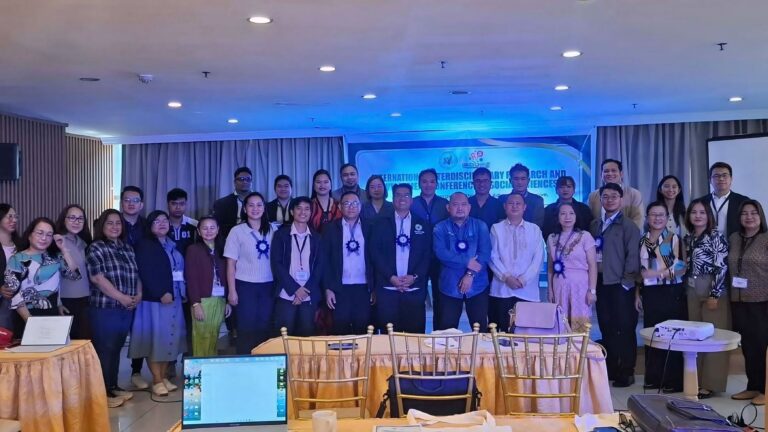
Through this collaboration, ITS is optimistic about strengthening its regional research network while also encouraging the emergence of sustainable innovations. According to Muryono, the active involvement of IRDOSS Philippines ensures that the sustainability vision is supported by a strong research network at the regional level. “The interconnectedness among researchers in the Southeast Asian region is key to accelerating the implementation of solutions in public policy,” he concluded.
Moving forward, this collaboration is expected to strengthen ASEAN’s position in collectively addressing the challenges of climate change. This effort is also part of ITS’s contribution to advancing the Sustainable Development Goals (SDGs), particularly point 13 on Climate Action and point 17 on Partnerships for the Goals. (*)
Reporter: Nadhifa Raghda Syaikha
Editor: Aghnia Tias Salsabila