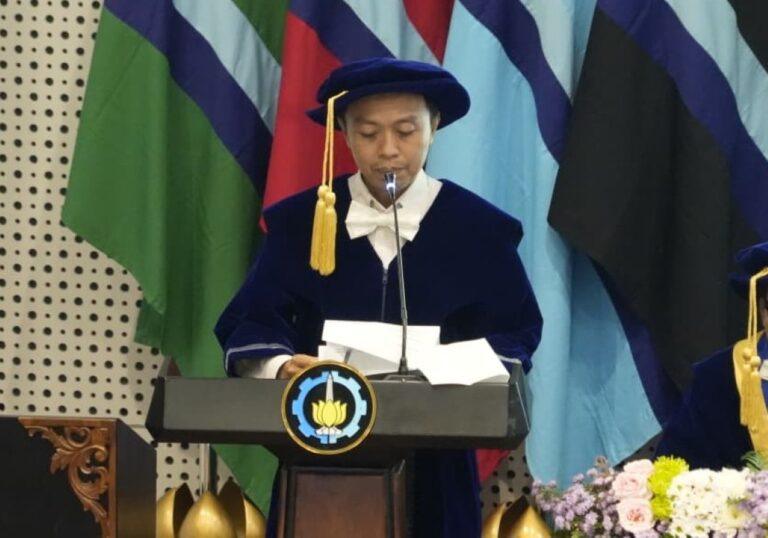
ITS Campus, ITS News — Indonesia’s dependence on imported materials remains a challenge to national technological independence. Responding to this issue, the 248th Professor of the Institut Teknologi Sepuluh Nopember (ITS), Prof. Dr. Eng. Hosta Ardhyananta, S.T., M.Sc., has developed hybrid polymer composite materials that combine Indonesia’s natural resources with synthetic materials.
The advancement of materials technology serves as one of the key drivers of human civilization’s progress. Hosta explained that the increasing demand for lightweight, high-performance, and sustainable materials positions polymer composite materials as having tremendous potential across various strategic sectors. “These sectors include transportation, aerospace, energy, construction, healthcare, and defense,” he elaborated.
Furthermore, the lecturer from the ITS Department of Materials and Metallurgical Engineering (DTMM) explained that polymer composite materials consist of a combination of a polymer matrix and reinforcing filler materials. According to Hosta, the matrix can originate from various sources such as petroleum, plants, or animals. “Additionally, natural fibers, biomass, cellulose, and microfibers also hold potential as fillers with promising performance,” Hosta stated.
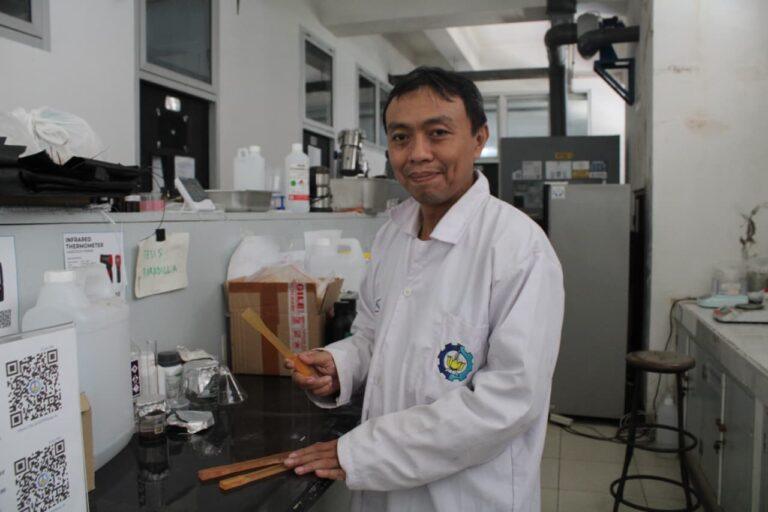
One of the main innovations that Hosta has developed is a hybrid composite material that combines two or more filler components. This hybrid composite material features spherical microparticle fillers and microfiber fillers. “This combination of components can produce new materials with superior properties, such as low density combined with high mechanical strength,” Hosta revealed.
The uniqueness of this Bandung-born researcher’s work lies in the cellulose fiber materials derived from empty palm oil fruit bunch waste and other natural materials. Despite their abundance in Indonesia, Hosta noted that these materials have not yet reached optimal utilization. “In fact, natural fiber waste fillers hold high value due to their strong bonding within the epoxy matrix,” explained the doctoral graduate of Toyohashi University of Technology, Japan.
Test results demonstrated significant improvements in the material’s mechanical characteristics. Hosta stated that flexural strength and tensile strength increased, while the material’s density remained low. “Cellulose fibers act as bridges that strengthen inter-component interactions, thereby improving stress load transfer,” Hosta explained.
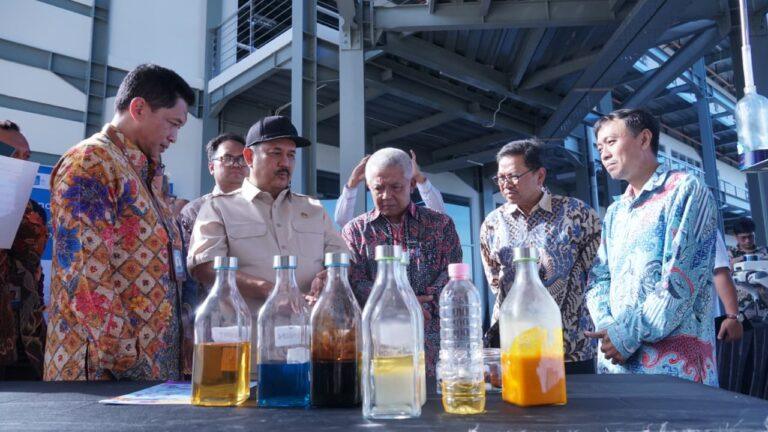
On the other hand, Hosta observes that the utilization of local resources does not stop at developing composite materials alone. In the palm oil commodity sector, empty fruit bunch waste can undergo extraction for lightweight composite materials, while palm oil can be processed into biogasoline. “Utilizing these local resources can reduce our dependence on imported materials,” he concluded.
Hosta hopes that synergy among universities, industry, and government will further strengthen the development of hybrid composite materials in the future. In line with this, the research presented in his scientific oration for his professorial inauguration also contributes to the achievement of the Sustainable Development Goals (SDGs), particularly point 7 on Affordable and Clean Energy and point 9 on Industry, Innovation, and Infrastructure. (ITS Public Relation)
Reporter: Naurah Fitri