Germany, ITS News – Institut Teknologi Sepuluh Nopember (ITS) continues to reinforce its role in the national energy transition through international collaboration. This time, ITS joined the Indonesian delegation facilitated by the Deutsche Gesellschaft für Internationale Zusammenarbeit (GIZ) GmbH to attend The Smarter E Europe/Intersolar Europe 2026 in Munich, Germany. This event provided ITS with a strategic opportunity to study the latest solar energy technologies while simultaneously expanding its strategic networks in agrivoltaic development in Indonesia.
The event, held from June 20–27, 2026, involved various stakeholders, including the Ministry of Energy and Mineral Resources (ESDM), PT PLN (Persero), the Indonesian Solar Energy Association (AESI), Danantara, the Agency for Meteorology, Climatology, and Geophysics (BMKG), and ITS. On this occasion, ITS was represented by the Deputy Head of the Center of Studies in Industrial Development and Public Policy (CSID) ITS, Mukhammad Muryono, S.Si., M.Si.,, Ph.D.
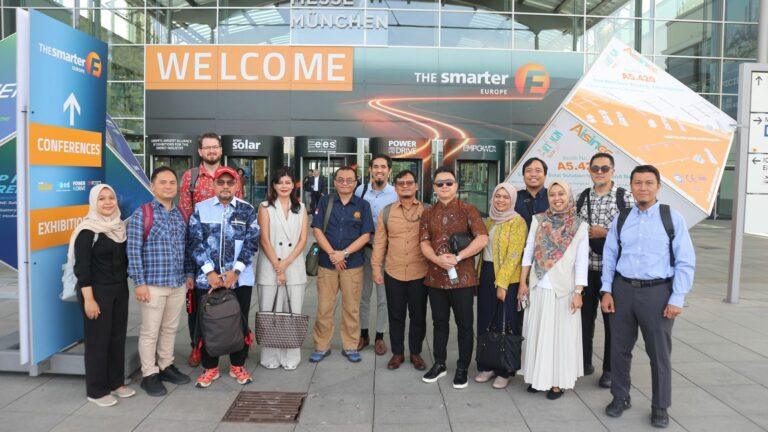
The Smarter E Europe exhibition represents Europe’s largest energy industry event, bringing together innovations in solar energy, energy storage, electric vehicles, and energy management. During the event, presenters showcased the latest developments in renewable energy technology in Germany, which have reached the commercialization stage, particularly regarding the integration of solar power plants with energy storage systems and electricity grids.
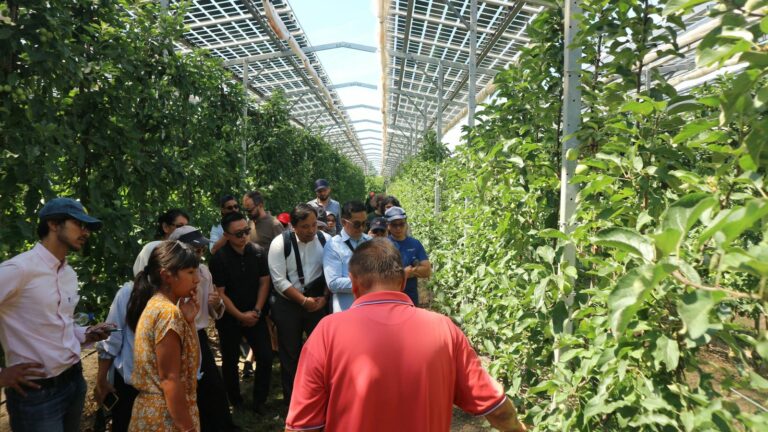
In addition to attending the international conference, the delegation conducted field visits to two Agrivoltaic Photovoltaic (Agri-PV) implementation sites in Bavaria. These systems enable simultaneous solar power generation and agricultural activities on the same land by installing solar panels above cultivation areas or by allocating separate zones for farming and panel installation.
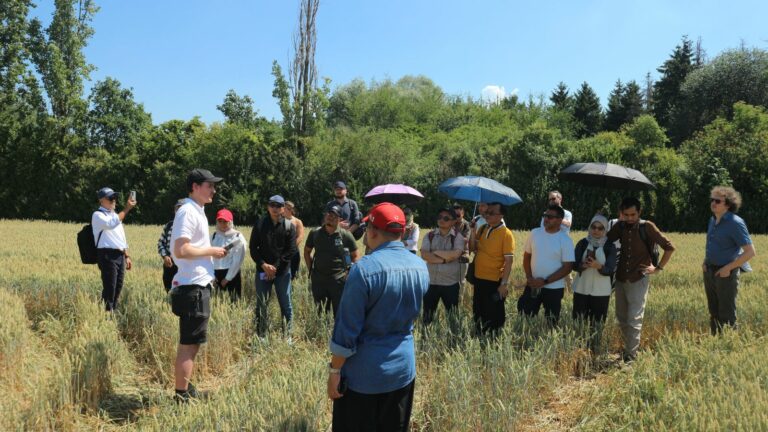
According to Muryono, this experience provided critical insights for Indonesia, which targets a solar power plant capacity of approximately 180 gigawatt-peak (GWp) as part of its Net Zero Emissions 2060 agenda. At the same time, Indonesia faces the challenge of maintaining food security, thereby requiring optimal land utilization. “From these visits, we observed that energy production and agriculture can coexist through appropriate panel design, spacing between panels, and proper structural height,” he stated.
These findings hold significant relevance for the development of ITS’s Renewable Energy Integration Demonstrator of Indonesia (REIDI). This research facility is currently developing an agrivoltaic laboratory that integrates solar power generation with the agricultural and aquaculture sectors as a model for sustainable land use.
Beyond acquiring technological insights, the Indonesian delegation also established direct communication with various solar energy technology providers, engineering contractors, and German development agencies. The delegation expects these relationships to open opportunities for research collaboration, investment, technology transfer, and renewable energy project development in Indonesia.
As a follow-up to the Munich visit, the GIZ delegation also visited the REIDI ITS facility in Surabaya. On that occasion, GIZ reviewed an integrated platform that combines solar power generation, agrivoltaic crop cultivation, and fisheries within a single research area. This platform supports the cultivation of approximately 48,000 tilapia fish integrated beneath solar panel structures, along with 120 agrivoltaic planting points. The presence of this facility serves as a practical example of an integrated land-use concept that aligns with the lessons learned from Germany.
Moving forward, ITS, together with GIZ and national partners, plans to strengthen cooperation through knowledge exchange on agrivoltaic design, joint research development, and capacity building in policy formulation and renewable energy project implementation. The institution expects these steps to accelerate Indonesia’s energy transition while maintaining a balance between clean energy needs and national food security.
These efforts align with the achievement of the Sustainable Development Goals (SDGs), particularly Goal 7 (Affordable and Clean Energy), Goal 2 (Zero Hunger) through strengthening sustainable agricultural systems, Goal 9 (Industry, Innovation, and Infrastructure) through research collaboration and technological innovation, and Goal 17 (Partnerships for the Goals) through strengthened strategic cooperation between ITS, GIZ, the government, and international partners. (*)
HUMAS ITS