


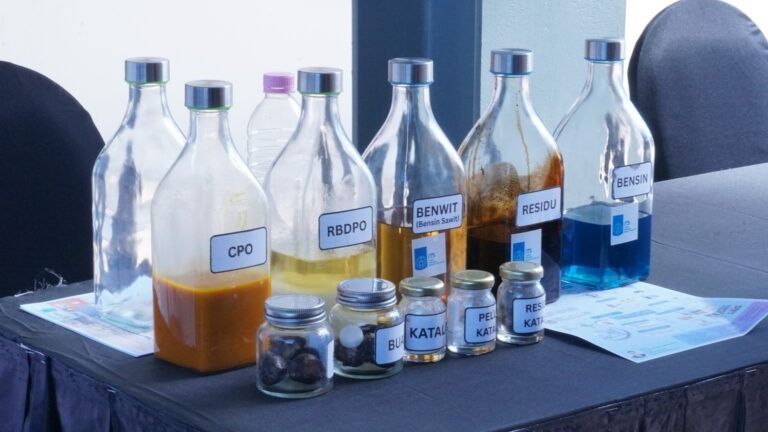
ITS Campus, Opinion — The Institut Teknologi Sepuluh Nopember (ITS) is strengthening its role in the downstreaming and economic strengthening of the nation through the inauguration of the ITS Science Techno Park (STP) on Monday, April 13, 2026. During this limited launch, the Minister of National Development Planning of the Republic of Indonesia, Rachmat Pambudy, designated the STP ITS area as an ecosystem and orchestrator of a knowledge-based economy.
ITS’s Role in Downstreaming
Rachmat conveyed that the operation of STP ITS is expected to act as a stimulus for capital enhancement and to generate significant impacts on the sustainable economic growth of the nation. This direction aligns with the operational concept of STP ITS, which focuses on the development of talent, products, and business. This development is directed to provide tangible impacts on strengthening the national economy based on science and technology.
ITS, which is a member of the Indonesian Science, Technology, and Industry Convention (KSTI), is determined to carry out the mandate to become a domestic pilot STP. In this role, ITS promotes the downstreaming of various excellent research outputs through its priority clusters, including the maritime, robotics, automotive, creative, and information and communication technology sectors.
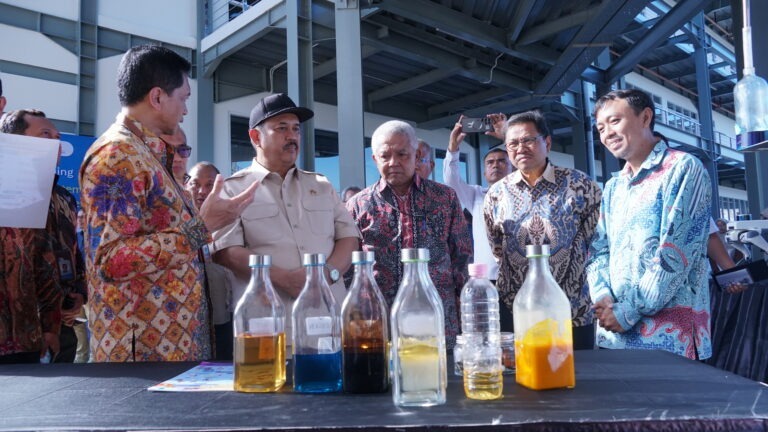
In its operations, STP ITS oversees the downstreaming process together with partners in sectors that support national priority programs, including the food, health, energy, defense, maritime, digitalization-AI-semiconductor, downstreaming, and industrialization sectors. This development is realized by STP ITS through the support of the Higher Education for Technology and Innovation (HETI) program of the Asian Development Bank (ADB) and the involved investors.
Furthermore, internal collaboration is also conducted by STP ITS in efforts to develop the economy through the downstreaming process. This step is taken to harmonize the downstreaming of research outputs together with the ITS Directorate of Innovation and Science Technology Park (DIKST) and the ITS Directorate of Research and Community Service (DRPM).
Integration for Self-Development
In business development, STP ITS actively plays a role through its subordinate units or offices. Through the endeavors of the Technology Transfer Office (TTO), STP ITS manages intellectual property, ranging from copyrights to impactful patents. Additionally, one of the important units in ITS business development is the ITS Incubator and Innovative Business Services (ILBI), which fosters technology-based startups at the Pahlawan Campus.
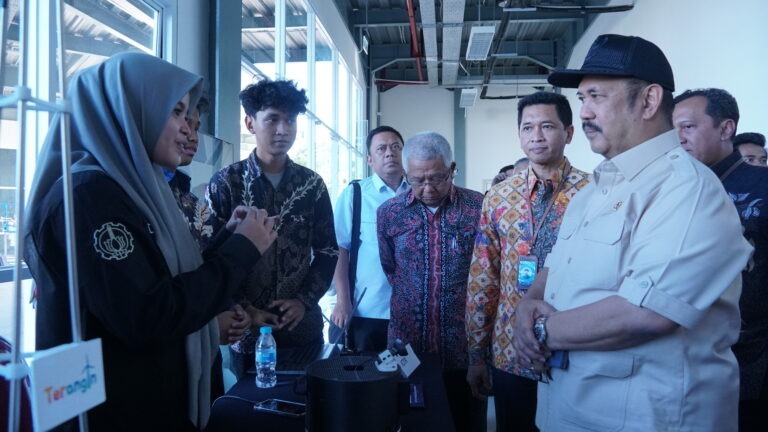
In the near future, STP ITS is planned to become an integrated area that accommodates various international technology seminar activities, programs of the Indonesian STP Association, and the implementation of various flagship ITS exhibitions, particularly Tennovex 2026. These activities will illustrate the downstreaming process from laboratories, study centers, centers for science and technology excellence (PUI), intellectual property management, cluster operations, to ITS-owned startups and companies.
Learning from developed countries, this downstreaming and strengthening of the knowledge and technology-based economy requires structured stages. Therefore, after undergoing the initiation stage in 2017 and the incubation stage until 2027, STP ITS is determined to enter the developing stage. This effort is specifically carried out to support ITS’s strategic plan to achieve entrepreneurial university status.
Written by:
Dr. Ir. Endroyono, D.E.A.
Director of DIKST ITS 2026