


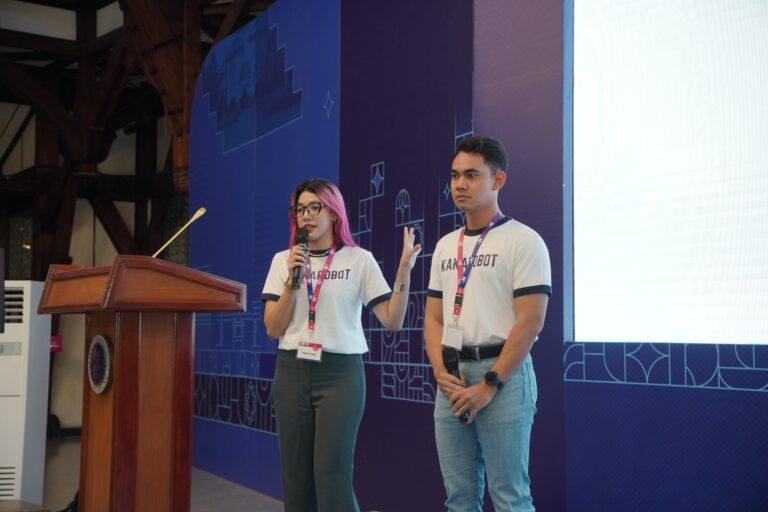
ITS Campus, ITS News – The rapid advancement of technological devices has not yet reached children in Indonesia’s frontier, outermost, and underdeveloped regions (collectively referred to as Daerah 3T) due to severely limited learning resources. Addressing this challenge, students from the Master’s Program in the Department of Electrical Engineering at Institut Teknologi Sepuluh Nopember (ITS) have developed an innovative, screen-free robotics teaching kit named Kakarobot for schools with limited access to technology.
This innovation was created and developed by Danya Deluca, who serves as Chief Executive Officer (CEO) and inventor, together with his colleague Muhammad Azriel Rizqifadhiilah. Deluca explained that the design of Kakarobot originated from his own difficulties in learning robotics while an undergraduate student.
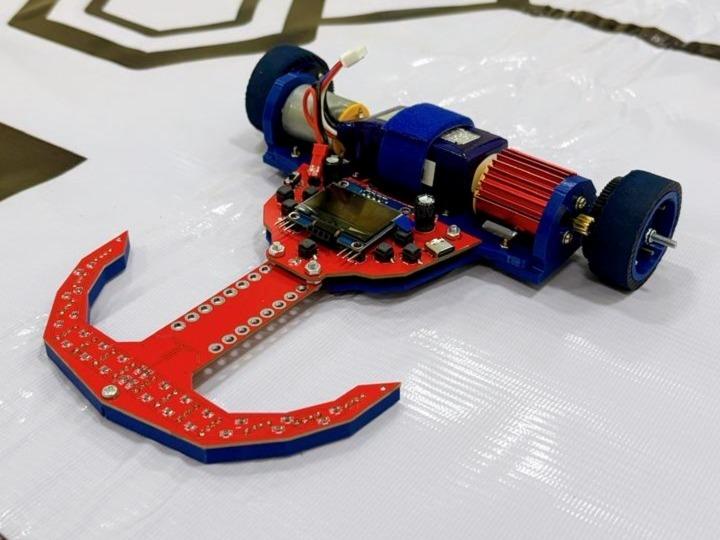
He assessed that such difficulties would certainly be even more severe for children in the 3T regions. “With an educational robot already equipped with an internal operating system, it can serve as an entry point for children to learn about technology with device-free accessibility,” he stated.
Beyond mere device introduction, according to Deluca, Kakarobot focuses on instilling computational thinking and systematic problem-solving logic. Thus, students in the 3T regions will possess the mental preparedness to face future technological disruptions. “With a strong foundation in logic, they are expected to be able to compete and improve the economic standards of their respective regions,” said the recipient of the Indonesia Maju Scholarship.
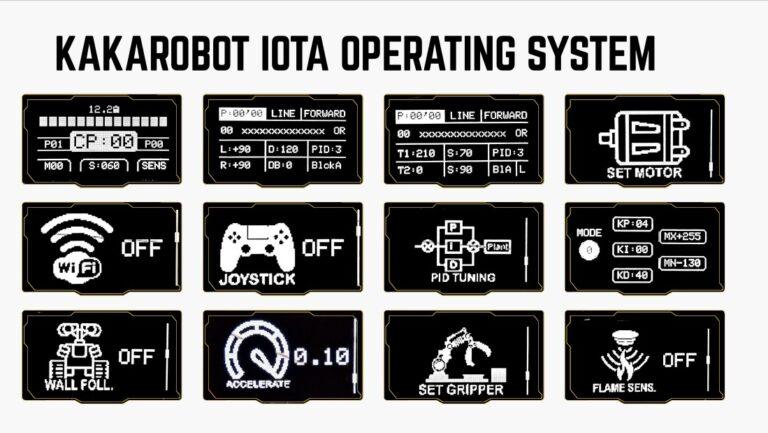
This approach renders Kakarobot capable of addressing global challenges while simultaneously holding substantial potential for future development. By building resilience among young people in less developed areas, children in the 3T regions will no longer be mere spectators of information technology advancement.
Furthermore, Deluca, an ITS alumnus of the Undergraduate Program in Electrical Engineering, explained that the instructional content delivered by his robotic device is packaged interactively and enjoyably. Complex robotics theories are transformed into exploratory activities that naturally nurture children’s curiosity.
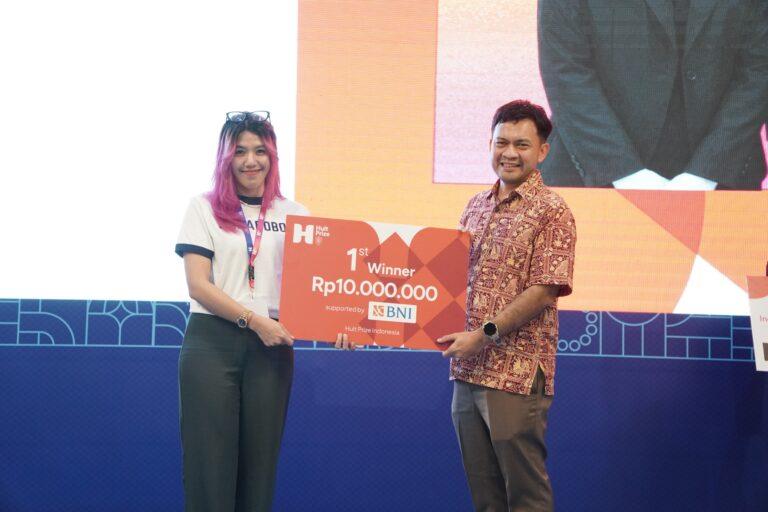
Remarkably, the inclusive technology learning vision promoted by these two ITS master’s students has won an award at the Hult Prize competition held at the Bandung Institute of Technology (ITB) on May 10, 2026. At that event, Kakarobot emerged as the winner and will represent Indonesia at the Hult Prize Global Final, which is scheduled to take place in the United Kingdom.
This brilliant innovation by Deluca and his colleague constitutes a concrete form of support for the Sustainable Development Goals (SDGs) in Indonesia, particularly the realization of Goal 1 (No Poverty), Goal 4 (Quality Education), and Goal 10 (Reduced Inequalities). (ITS Public Relations)
Reporter: Syifa Rahmadina