


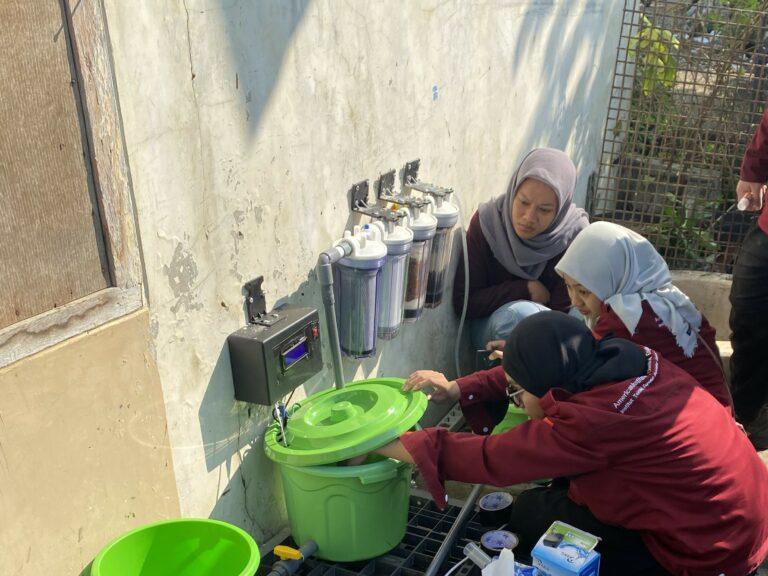
ITS Campus, ITS News — Responding to the growing challenge of clean water scarcity caused by the risk of contamination from waste disposal sites, students of Institut Teknologi Sepuluh Nopember (ITS) have introduced an appropriate technology innovation. The American Institute of Chemical Engineers ITS Student Chapter (AIChE ITS SC) has developed a smart well water filtration system integrated with the Internet of Things (IoT).
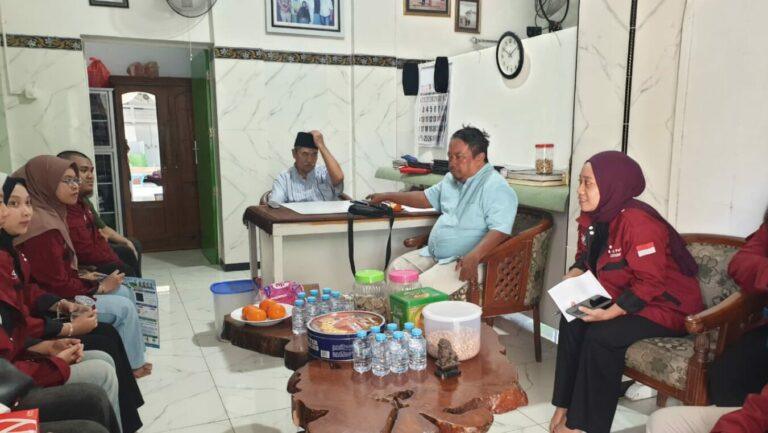
AIChE ITS SC representative Inan Jazilaturrohmah explained that residential areas located in close proximity to temporary waste disposal sites face significant concerns regarding groundwater quality. Leachate generated from accumulated waste is considered highly susceptible to introducing dissolved organic substances and heavy metals into groundwater sources. “Therefore, this well water filtration system has been installed in a community well located on Jalan Keputih Tegal Bakti I Block C, Surabaya,” Inan stated.
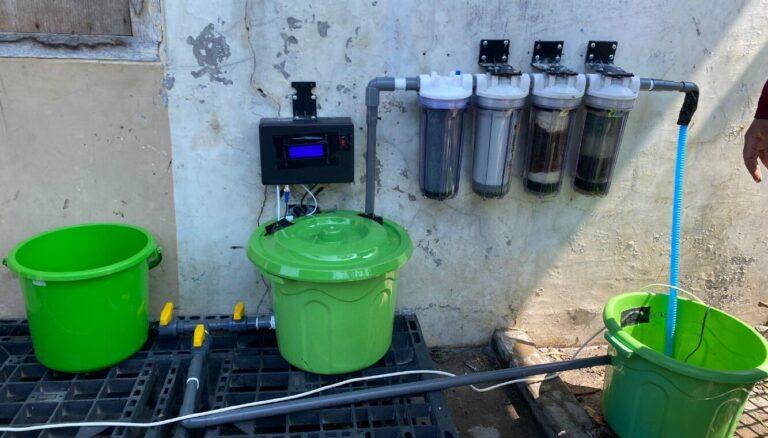
Further elaborating on the innovation, Inan explained that the team designed a four-stage automated water purification architecture. The system combines multimedia filtration, biofiltration, and advanced adsorption technologies utilizing Granulated Activated Carbon (GAC) and Chlorine, Taste, and Odor (CTO) filters. According to her, this combination has proven effective in removing contaminants by significantly reducing the high levels of suspended solids commonly found in domestic well water.
More than a conventional water filtration unit, the system is also equipped with a real-time water quality monitoring platform powered by an ESP32 microcontroller. The microcontroller integrates five smart sensors, including pH, Total Dissolved Solids (TDS), turbidity, temperature, and ultrasonic sensors. Data collected from all sensors are processed and analyzed through an integrated monitoring system.
Inan added that the device is complemented by a numerical LCD display panel that provides real-time information on water quality parameters and filtration performance. The system is designed to present data in a user-friendly format, enabling residents to independently monitor the condition of their water supply. “This ensures that the system complies with the hygiene and sanitation water quality standards stipulated in the Indonesian Ministry of Health Regulation No. 32 of 2017,” explained the Chemical Engineering student.
The development of this innovation is expected to serve as a strong catalyst for fostering sustainable community-based environmental resilience in the future. This initiative by AIChE ITS SC represents a tangible contribution toward achieving the *Sustainable Development Goals (SDGs), particularly Goal 6: Clean Water and Sanitation.
Editor: Syahidan Nur Habibie Ash-shidieq