
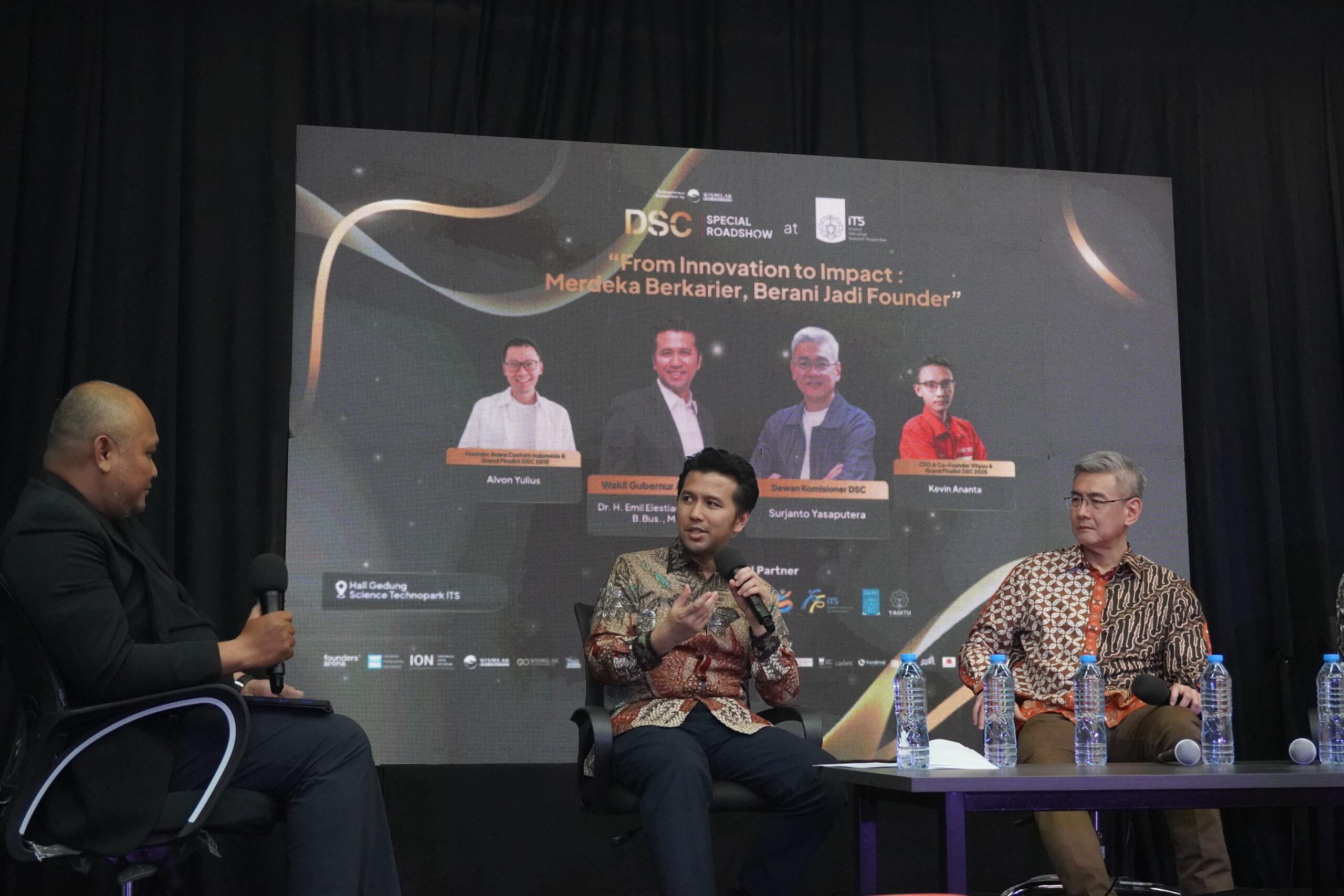
ITS Campus, ITS News — Institut Teknologi Sepuluh Nopember (ITS) continues to strengthen its transformation from a Research University towards an Entrepreneurial University. This commitment was realised through the 17th Diplomat Success Challenge (DSC) Special Roadshow, themed From Innovation to Impact: Merdeka Berkarier, Berani Jadi Founder, held at the Hall of the Science Techno Park (STP) Building at ITS on Friday (9/10).
ITS’s transformation is carried out not only through the mandatory technopreneurship curriculum for all first-year students, but also through the provision of supporting facilities such as STP, which houses creative industry, automotive, robotics, and shipbuilding clusters. This measure aims to produce graduates who are not only academically outstanding, but also possess an entrepreneurial spirit and the courage to create solutions to various societal challenges.
At the event, the East Java Provincial Government proposed the concept of an entrepreneurship sandbox as a testing ground for young entrepreneurs. The concept is designed to help beginners assess product feasibility, understand consumer response, determine competitive pricing, and map out the competition before entering a broader market. The East Java Provincial Government also plans to establish communication with the Ministry of Micro, Small, and Medium Enterprises (MSMEs) to discuss opportunities for developing this entrepreneurial ecosystem.
The development of the entrepreneurial ecosystem does not stop at providing business capital grants. The DSC programme also seeks to build an ecosystem through education, mentoring, and the expansion of business networks via the Diplomat Entrepreneur Network (DEN). Entering its 17th year, DSC is transforming through the Founders Arena by emphasising openness, inclusivity, collaboration, and equal opportunities for business founders across Indonesia.
Building an entrepreneurial mindset is considered to require three essential elements: personal willingness, knowledge, and skills. Knowledge can be obtained from various sources, while skills must be continually honed through practice and experience. Neither will develop optimally without the willingness to start a business and persevere in the face of various challenges.
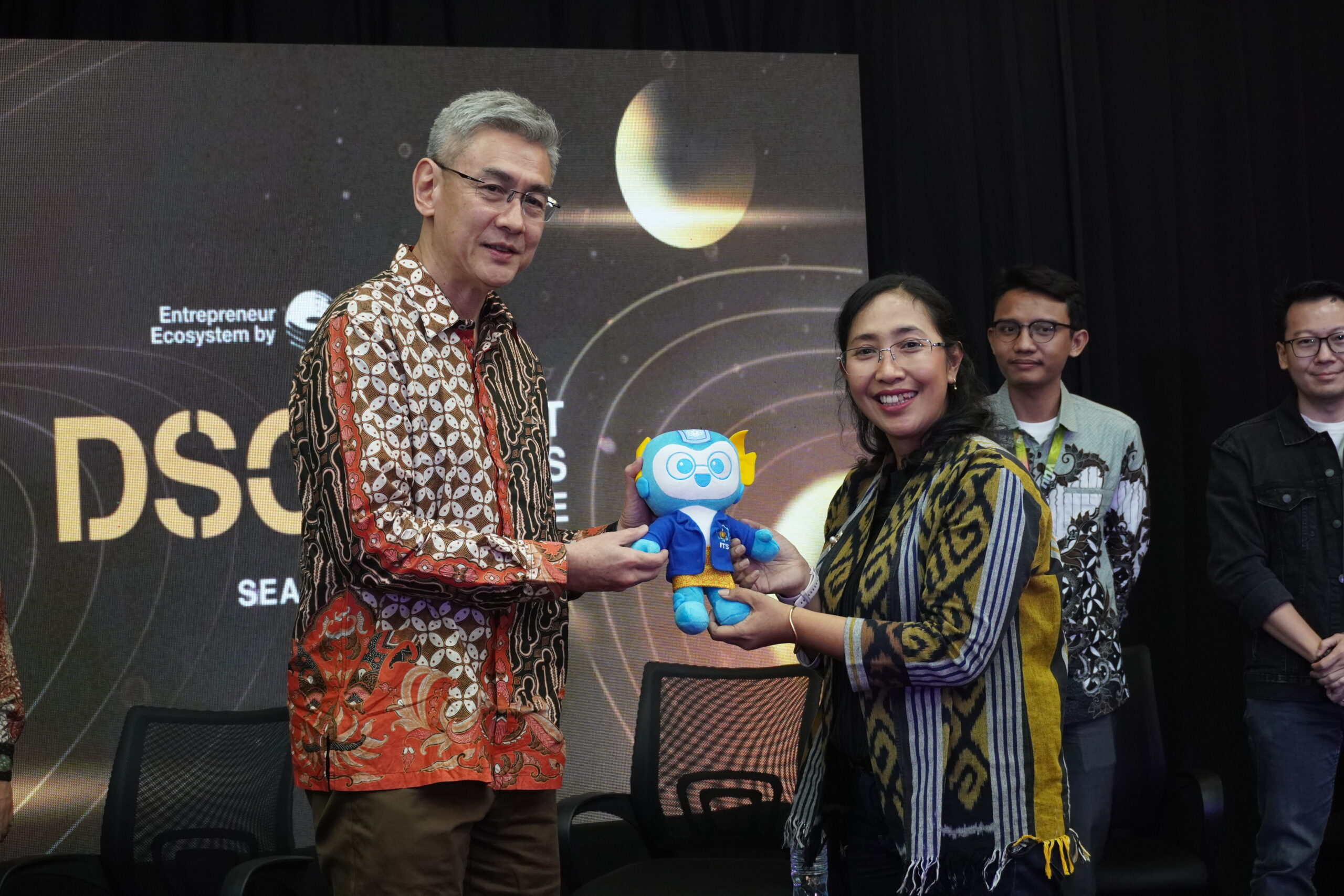
As part of the series of activities, collaboration among business actors also helps drive the creation of more innovative products. One example is the development of an ear monitor product involving DSC alumni and other alumni with microphone products. This collaboration has even opened opportunities to introduce the product to overseas markets.
In addition, ITS students have also developed an innovation in the form of a spray that provides a sweet taste suggestion. The product is intended to help reduce the desire to consume sweets excessively, in line with growing attention to healthy lifestyles.
Behind this series of innovations lies a spirit that the University seeks to instil in the younger generation: that starting a business is not an impossible feat. Creativity, collaboration, and sensitivity to societal needs serve as essential foundations for producing economically valuable products. Through these various initiatives, ITS together with stakeholders continues to strengthen the entrepreneurial ecosystem within the campus, while encouraging the growth of young Indonesian entrepreneurs who dare to take action and create impact.