ITS Campus, ITS News — Demonstrating its presence on the global stage, the Sepuluh Nopember Institute of Technology (ITS) is officially hosting the 26th Meeting of the Coordinating Council of the Commission on Science and Technology for Sustainable Development in the South (COMSATS). This international partner meeting, which will be followed by the COMSATS-ITS Conference, will take place over three days, starting Monday (June 8).
Through the COMSATS organization, this event aims to promote the development of science and technology-based solutions. This supports sustainable socio-economic development, particularly in strengthening cooperation among developing countries and the Global South.
This prestigious meeting brings together delegations from 27 member countries to discuss the theme “Cutting-Edge Technologies for Sustainable Development.” As the only university in Indonesia participating in this organization, ITS’s role as host represents a strategic opportunity for Indonesia to position itself in international science diplomacy.
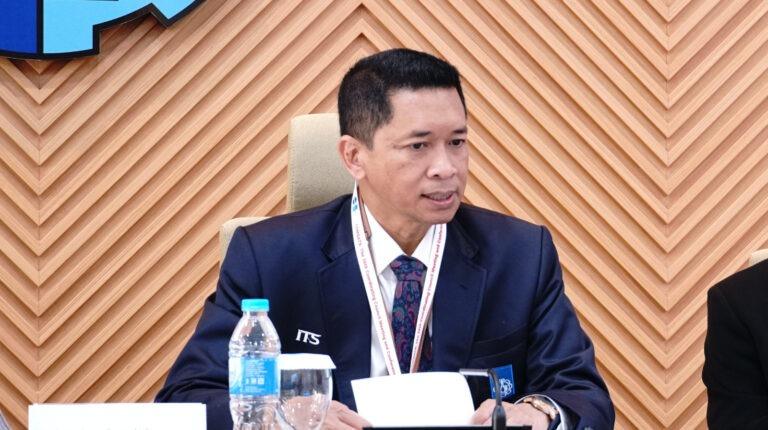
In his opening remarks, ITS Rector Prof. Dr. (HC) Ir. Bambang Pramujati, ST, MScEng, PhD, emphasized that the official designation as a Center of Excellence within the COMSATS network could open opportunities for ITS to participate in cross-border research and technology development collaborations. “Through the integration of cutting-edge technology, we (ITS) are interested in strengthening the potential for research collaboration and the exchange of ideas as tangible solutions for our community (the Global South),” said Bambang.
This ITS Professor of Mechanical Engineering is optimistic about the research ecosystem that has been established, so that ITS is believed to be capable of playing an active role in cross-border technological collaboration that is applicable, impactful, and sustainable. COMSATS Executive Director Dr. Mohammad Nafees Zakaria agrees with this. According to him, investment in research and development is the key to progress for developing countries.
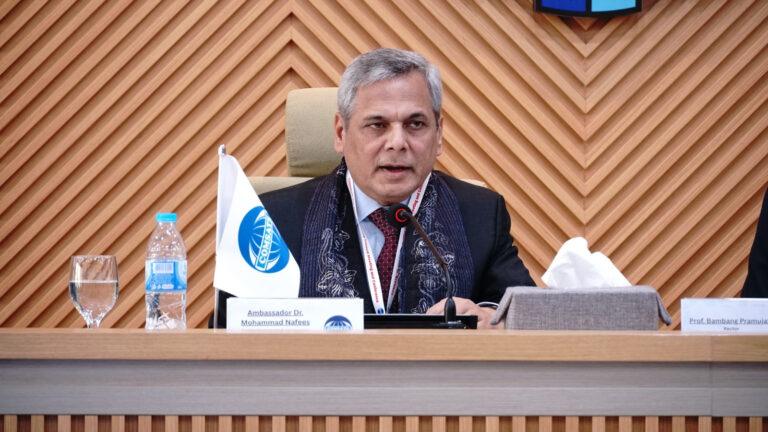
Nafees highlighted how artificial intelligence (AI), biotechnology, nanotechnology, and quantum computing have advanced rapidly. He expressed hope that member states could jointly develop technologies, share knowledge, and provide solutions to local challenges. “In this way, COMSATS member states can advance rapidly and collectively without leaving anyone behind,” emphasized the man who also serves as Pakistan’s Ambassador.
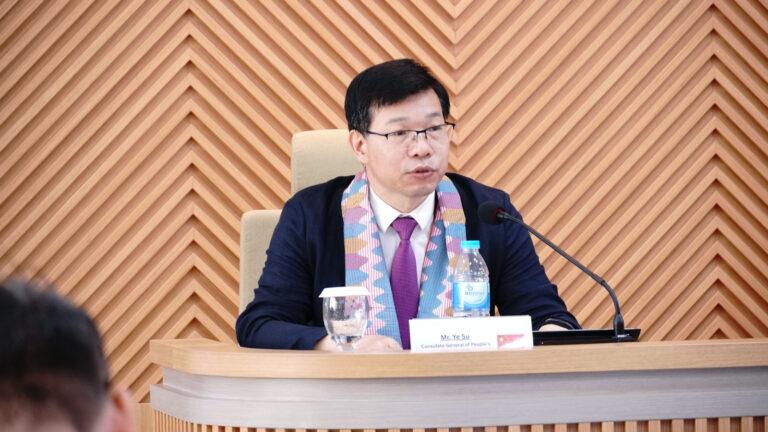
Additional support was also provided by the Consul General of the People’s Republic of China (PRC) in Surabaya, Ye Su. He stated that his office is committed to facilitating talent exchange and mutually beneficial research collaboration. “As government representatives, we are ready to promote synergy from the local level to universities to strengthen the science and technology ecosystem among COMSATS member states,” he said.
Held for the first time in Indonesia, this Coordinating Council meeting will evaluate the organization’s activity report for the 2024–2026 period. In addition, research achievements from the 25 Centers of Excellence will be presented, along with the appointment of new leadership and the organization’s strategic agenda. The forum will also finalize key initiatives such as the development of an ISO-standard Nano Tech Laboratory, an electric vehicle program, and the strengthening of funding mechanisms through an Endowment Fund.
ITS International Conference, the final event in the series, will be held on Wednesday, 10 June. As part of the conference program, it will also be attended by Fauzan Adziman, ST, MEng, PhD, Director General of Research and Development at Indonesia’s Ministry of Higher Education, Science, and Technology (Kemdiktisaintek), who is scheduled to participate on Tuesday, 9 June.
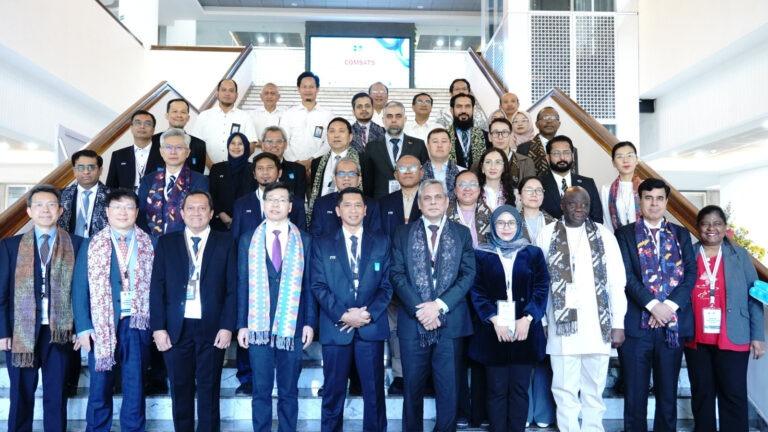
The session reflects the diversity of the COMSATS network, bringing together representatives from the International Center for Chemical and Biological Sciences (ICCBS), University of Karachi; Al-Farabi Kazakh National University (KazNU); the Tianjin Institute of Industrial Biotechnology (TIB); and the Alliance of National and International Science Organizations for the Belt and Road Regions (ANSO) as an observer organization.
In addition, representatives from other countries of the Global South are also participating, including the Higher Institute for Applied Sciences and Technology (HIAST) in Damascus and the Industrial Technology Institute (ITI) in Colombo. Representation from the Americas is provided by Jamaica, through the International Centre for Environmental and Nuclear Sciences (ICENS), University of the West Indies, while Nigeria is represented by the National Mathematical Centre (NMC) in Abuja.
Through this synergy, ITS aims to promote the downstream implementation and commercialization of innovations while strengthening a global research collaboration ecosystem that addresses societal needs. This initiative aligns with the conference’s overarching theme of leveraging advanced technologies as sustainable solutions to the challenges of digital transformation and global energy resilience.
The event is expected to contribute to the acceleration of the Sustainable Development Goals (SDGs), particularly SDG 4 (Quality Education) and SDG 9 (Industry, Innovation and Infrastructure). Furthermore, the innovations generated through this collaboration are anticipated to help address the objectives of SDG 10 (Reduced Inequalities) and SDG 16 (Peace, Justice and Strong Institutions). The initiative also supports SDG 17 (Partnerships for the Goals) by fostering international cooperation and collaborative action. (ITS Public Relations)
Reporter: Syifa Rahmadina