
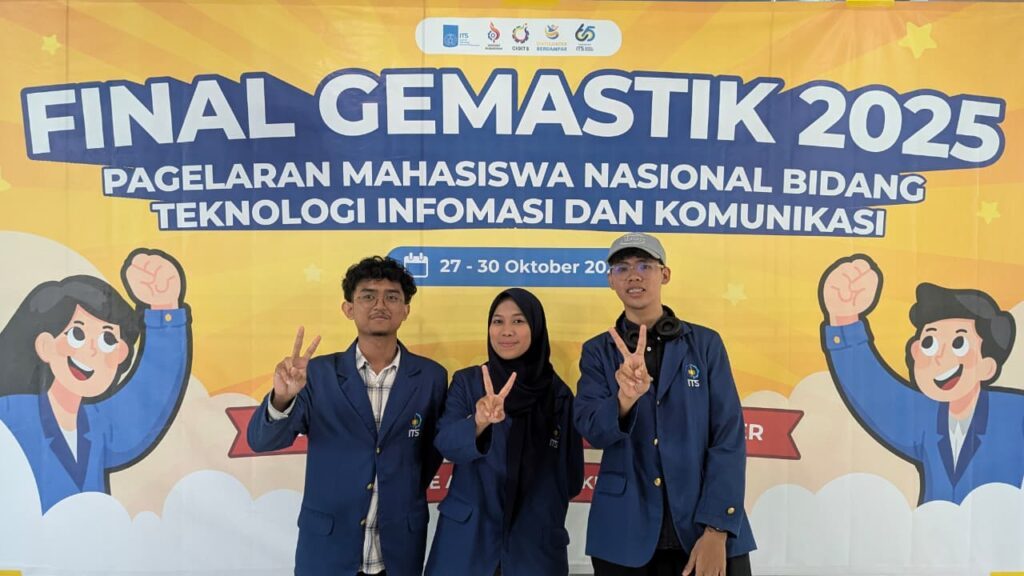
Surabaya, ELECTICS ITS – Amidst the urgency of addressing tuberculosis in Indonesia, which still ranks second in the world in terms of the highest number of cases, three ITS students presented an innovation born out of scientific curiosity and a spirit of exploration. The DoAlert Team, consisting of Ahmad Naufal Farras and Mochammad Henry Alifian from the Artificial Intelligence Engineering Program, along with Luna Arafatul Nikmah, secured first place at GEMASTIK 2025 in the Software Development Division thanks to their work, TB Vector, an acoustic monitoring system capable of classifying TB coughs and tracking sound sources in real-time in public spaces.
The team was formed out of a combination of curiosity and a drive to provide relevant solutions to public health issues. The initial inspiration came after their advisor, Dr. Dhany Arifianto, emphasized the importance of a technological approach in TB control. The idea then developed through exploration of the potential of machine learning and acoustic radar, including studies on microphone arrays, Direction of Arrival (DoA), and inverse beamforming. Intensive discussions between Luna and Henry paved the way for collaboration, which was further strengthened by Farras joining as the lead developer of the machine learning system. The combination of their expertise formed the basis for DoAlert, a team focused on developing acoustic monitoring technology for TB cough detection and real-time sound source tracking.
TB Vector itself was built from a major theme in line with SDG number 3, namely health and well-being. This product seeks to address one of the main obstacles in TB treatment, namely delayed detection. Many individuals with chronic cough symptoms do not seek immediate medical attention, while public spaces such as terminals, stations, and crowded centers are places with the highest risk of transmission. TB Vector is designed to provide early detection through the classification of TB and non-TB coughs based on acoustic signal processing. The system is equipped with the ability to track the direction and position of the sound source using DoA and inverse beamforming, so that potential cases can be identified more quickly and provide a deterrent effect for symptomatic individuals.
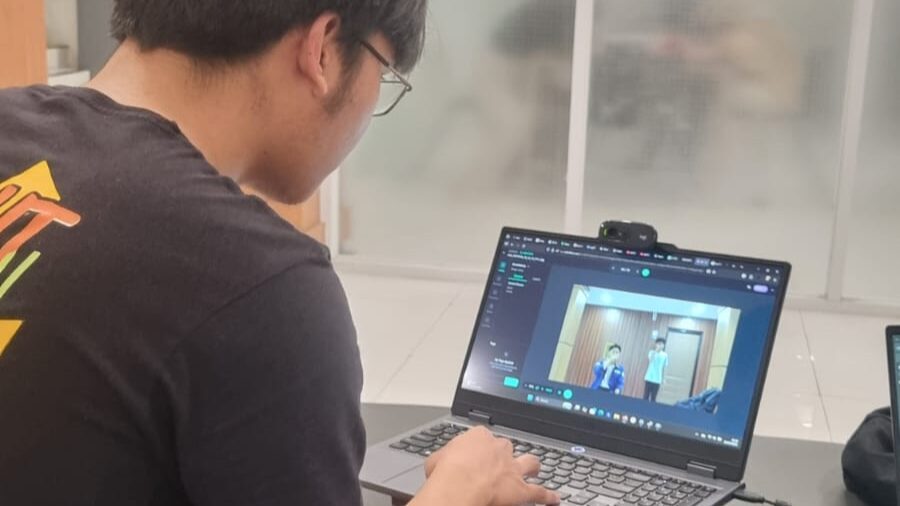
From a technical perspective, Henry explained that development began with the selection of core components such as sound sensors and microcontrollers. “After determining the components, we began designing signal processing to be able to detect the direction of the cough sound. Once the algorithm was running, the data was sent to a web system for classification and object detection,” he explained. On the other hand, Farras strengthened the system through a machine learning model that is central to cough pattern recognition.
The advantage of TB Vector lies not only in its technological complexity, but also in its social relevance. The burden of TB in Indonesia reaches 14 deaths every hour, a figure that underscores the urgency of innovation in early detection. Luna said that the team’s success did not only come from a unique and solution-oriented idea, but also from their ability to answer the judges’ questions systematically and based on data. The technology they offer is considered implementable and directly addresses real issues concerning public safety.
Their journey was also filled with moral and intellectual support. Luna recounted that Dr. Dhany not only provided technical guidance but also served as a compass that kept them on the right track. Beyond academic guidance, they also received a lot of help from colleagues across divisions, including the PPL Monitoring Team, which helped monitor the progress of the research on a regular basis.
After winning the competition, DoAlert is committed to continuing TB Vector towards the stage of actual implementation. They realize that public health innovation requires a long downstreaming process, but their determination to develop this technology remains a priority.
For this team, the experience of participating in GEMASTIK was not just about competition, but a reflective journey of hard work, collaboration, and learning. The process of moving from room to room in search of a quiet place, putting together a project from scratch, and receiving prayers of support from loved ones became an important part of their story. Through this experience, they want to convey a message to other students who want to enter the same field: enjoy the process, remain humble, and never forget to pray and seek support from those around you.
TB Vector is proof that great innovation can emerge from the courage to try, perseverance in research, and the belief that technology can be a vital tool for saving lives. With this dedication, DoAlert demonstrates that students can play a significant role in addressing national health challenges.