Smart Eco Campus



“This is the second of two SDGs that look at the broader ecosystem – the other being SDG 14: Life Below Water. Life on land is a precious resource – we need to ensure that it is passed on to future generations, at a time when loss of biodiversity is an increasing concern. Different universities will have responsibility for very different landscapes and the life within, but all have a responsibility as stewards of their environment.” (THE Impact Rankings)
ITS supported coastal ecosystem conservation through mangrove and seagrass rehabilitation, alongside education on their ecological functions. The SIKLUS ITS Environmental Student Association, through SIBECON 2025 in Labuhan Village, Bangkalan, planted 1,500 mangrove seedlings and transplanted 200 seagrass seedlings to support coastal ecosystem restoration and protect wildlife habitats. ITS Global Engagement, together with the Institute of Research for Sustainability and Innovation (INSPIRASI), Nanyang Technological University (NTU), and students from various universities across Indonesia, conducted mangrove planting and beach clean-up activities.

The process of planting mangrove seedlings serves as an effort to conserve blue carbon ecosystems, aiming to maximize the sequestration of atmospheric CO2.
In addition, the AIChE ITS Student Chapter collaborated with Climate Rangers Surabaya to organize Socio-Community Collab: Nurturing Nature, Uplifting Lives at Wonorejo Mangrove Ecotourism Area in Surabaya. The initiative combined education on the climate crisis and the ecological importance of mangroves with hands-on mangrove planting. These activities contribute to coastal ecosystem restoration, the protection of natural habitats, and greater awareness of the importance of maintaining healthy coastal environments.

Documentation Photos of the Socio-Community Collab: Nurturing Nature, Uplifting Lives Organizing Committee and Volunteers.

The Community Service team from the ITS Department of Chemistry planted vegetable seedlings together with local residents using a floating hydroponic method.
ITS also promoted more productive use of limited land through agricultural technologies designed to improve resource efficiency. The Department of Chemistry introduced melon cultivation using hydroponic drip fertigation in Jombang Regency, as well as floating hydroponic cultivation of mustard greens and kale in Magetan Regency. Both initiatives equipped communities with skills in modern cultivation methods that can optimize growing space and water use without relying entirely on soil conditions. In Surabaya, students from the Department of Materials and Metallurgical Engineering developed a vertical hydroponic system with automated irrigation in Keputih Tegal as an alternative approach to urban farming in space-constrained areas. Meanwhile, lecturers from the Department of Urban and Regional Planning, together with the ITS Planology Student Association (HMPL ITS), provided education on hydroponics, vertical gardening, and polybag cultivation to community members, women's family welfare groups (PKK), community leaders, and elementary school students. These initiatives expand public knowledge of cultivation methods suited to limited land availability while supporting local food security.

Aris Nurcahyo (head bowed), the head of RW 02 in Jepara Village, Bubutan District, Surabaya, provides instruction to residents on the correct way to plant.
Within the campus environment, ITS expanded vegetation cover through tree-planting activities to improve environmental quality and support carbon sequestration. As part of its 65th anniversary celebrations, ITS planted 2,100 trees at the Sukolilo Campus to increase green cover. The Department of Industrial and Systems Engineering (DTSI), together with the ITS Industrial Engineering Alumni Association (Altius), also planted 20 tree seedlings within the department's grounds. These initiatives demonstrate how campus spaces can serve not only educational purposes but also contribute to urban greening and environmental sustainability.

DTSI ITS alumni, assisted by students, plant tree seedlings as part of an effort to green the campus.
Through these initiatives, ITS advances ecosystem conservation and sustainable land use, encompassing coastal ecosystem rehabilitation, agricultural practices suited to limited land availability, and the expansion of campus green cover. By combining direct action with educational outreach, these efforts strengthen environmental awareness and promote the responsible conservation and productive use of land and natural resources.
ITS is committed to ensuring that all food served on campus is sustainably farmed. This commitment is formally outlined in the Rector’s Circular Letter on ITS’s dedication to becoming a Green and Sustainable Campus Number 9665/IT2/T/TU.00.08/V/2024, particularly under the health aspect, stated in points g–i:
Encouraging the management of clean and healthy canteens, ensuring that all canteens use safe, high-quality food sources free from pesticide contamination. The food provided must contain sufficient nutrients, vitamins, and calories to support body functions and overall health.
Promoting environmentally friendly food provision and canteen management practices.
Ensuring that food on campus is sourced from good agricultural practices, with animal-based products obtained from livestock and fisheries that adhere to animal welfare ethics.
These principles are implemented in the Standard Operating Procedure for the ITS Central Canteen under the Sustainable Canteen Management: Halal, Safe, and Healthy Culinary Zone (Zona KHAS) Number 0226.1.00/IT2.IV.3/DKPU.00.01/2024. This initiative aims to guarantee that food on campus is not only sustainably sourced but also supports environmental conservation and the health of the ITS community.
Key measures include:
Sustainable Sourcing Policies: All vendors are required to prioritise sustainably farmed ingredients, with a preference for organic and pesticide-free products that meet ITS’s environmental standards.
Local and Low-Impact Procurement: Vendors are encouraged to source ingredients from local farms and producers, reducing transportation emissions and supporting regional agriculture, including small-scale and sustainable farming practices.
Waste Reduction and Eco-Friendly Packaging: Food service providers must minimise plastic use, utilise recyclable containers, and adopt proper waste management practices, including composting and sustainable food waste disposal.
Regular Monitoring and Compliance: ITS conducts routine inspections to ensure all vendors comply with sustainable sourcing and farming standards.
Through these policies and their consistent implementation, ITS reinforces its role as a sustainable campus that supports responsible farming practices while maintaining high standards for food quality, health, and environmental stewardship.
Urban Farming facility at ITS.
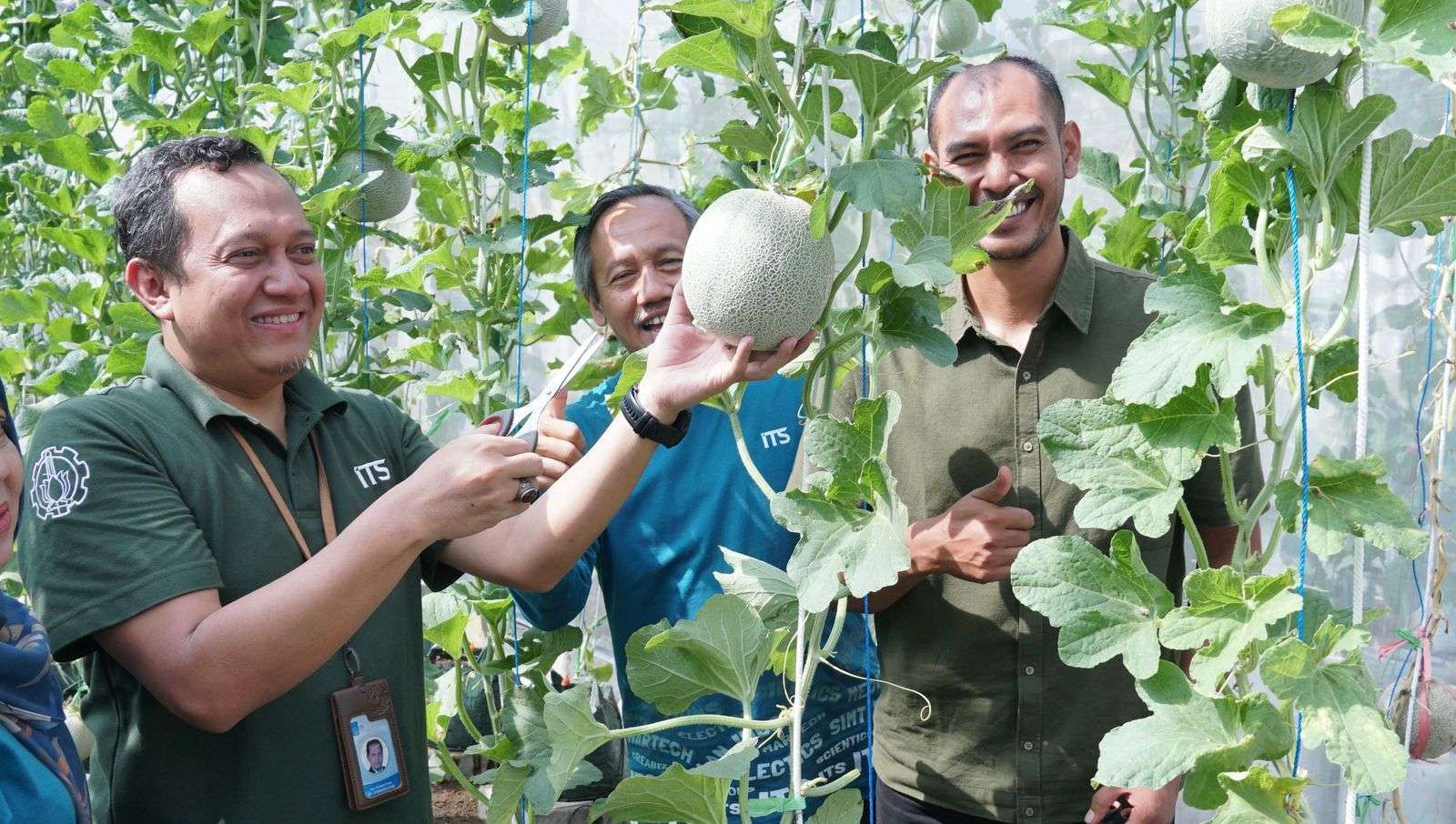
ITS Vice Rector IV, Prof. Ir. Agus Muhamad Hatta, M.Si., Ph.D. (left), conducts the first harvest of 'Sagami' baby melons, cultivated using the Smart Aquaponics System (SIAP).
Beyond its policies, ITS also promotes sustainable farming through its Urban Farming facility, which supports the development of sustainable agricultural technologies and provides learning opportunities for the ITS academic community. As part of its precision agriculture initiatives, ITS launched the Smart Aquaponics System (Sistem Aquaponik Pintar or SIAP) and the I-Farm programme, marked by the first melon harvest at the ITS Urban Farming area. The facility demonstrates ITS’s commitment to developing modern, efficient, and environmentally friendly agricultural practices. I-Farm is designed to make precision cultivation more accessible, with plans to add SIAP units and expand the variety of crops grown. These initiatives strengthen agricultural technology research and broaden opportunities for the ITS academic community to engage in in innovative learning and sustainable farming development.
Together, ITS’s campus food policies and Urban Farming initiatives demonstrate a complementary approach to sustainable food systems: promoting responsible food sourcing and canteen management while providing facilities for research, practical learning, and the development of sustainable agricultural technologies. This approach supports the wider goal of integrating environmental responsibility into campus food provision and agricultural innovation.
ITS is committed to maintaining and enhancing existing ecosystems and their biodiversity, as outlined in the Rector’s Circular Letter on ITS’s Commitment to Becoming a Green and Sustainable Campus, No. 9665/IT2/T/TU.00.08/V/2024. The policy on Protection of Terrestrial and Marine Ecosystems establishes the following commitments:
Considering the impact on ecosystem sustainability in campus development projects.
Ensuring that no invasive alien species enter and disrupt campus ecosystems through pest control policies.
Conducting activities to identify, monitor, and protect species listed in the IUCN Red List and the national conservation list that may be affected by campus activities.
Enhancing ITS’s role in managing vulnerable ecosystems, such as wetlands, mangroves, and peatlands.
Preserving local biodiversity by integrating it into physical campus development plans and conserving ecosystems within campus grounds.
Protecting wildlife by issuing advisories or prohibitions against capturing, hunting, or damaging the habitats of wild animals on campus.
Promoting research and education focused on aquatic ecosystems to maintain the sustainability of lakes and ponds on campus.
Implementing conservation, rehabilitation, and restoration efforts to maintain the quality of natural ecosystems.
In Desa Labuhan, Bangkalan Regency, the ITS Environmental Student Association SIKLUS (PLH SIKLUS) organised SIBECON 2025, planting 1,500 mangrove seedlings and transplanting 200 seagrass seedlings. These activities directly support the recovery and expansion of two important coastal habitats. Mangrove planting helps restore vegetation in coastal areas and provides habitat and nursery grounds for various marine and terrestrial species. Seagrass transplantation contributes to the recovery of underwater vegetation, which provides feeding and shelter areas for marine organisms and supports coastal food webs. Together, these interventions help maintain the ecological functions and biodiversity of threatened blue carbon ecosystems.

The SIBECON 2025 team from the UKM PLH SIKLUS ITS student organization planted mangrove seedlings using the spaced-cluster method.
In Desa Labuhan, Bangkalan Regency, the ITS Environmental Student Association SIKLUS (PLH SIKLUS) organised SIBECON 2025, planting 1,500 mangrove seedlings and transplanting 200 seagrass seedlings. These activities directly support the recovery and expansion of two important coastal habitats. Mangrove planting helps restore vegetation in coastal areas and provides habitat and nursery grounds for various marine and terrestrial species. Seagrass transplantation contributes to the recovery of underwater vegetation, which provides feeding and shelter areas for marine organisms and supports coastal food webs. Together, these interventions help maintain the ecological functions and biodiversity of threatened blue carbon ecosystems.
In Wonorejo Mangrove Forest, Surabaya, an ITS Community Service (Abmas) team collaborated with the Ministry of Marine Affairs and Fisheries and local forest managers to monitor mangrove health using primary and secondary data, complemented by coastal mapping conducted by six students. Monitoring and mapping provide information on the condition and distribution of mangrove vegetation, helping identify areas requiring protection or further restoration. Such activities support more informed conservation and management of existing mangrove habitats.
Within the campus, ITS maintains a web-based tree inventory, documenting tree species and related information across the university grounds.

ITS' web-based tree inventory.
The inventory supports the identification and monitoring of existing tree populations, providing a basis for maintaining campus vegetation and informing future planting and landscape management. Documenting tree diversity is important for recognising the range of plant species present on campus, identifying vegetation that requires attention, and supporting efforts to preserve and extend green spaces. These measures also help maintain habitats and food resources for birds and other wildlife living within the campus ecosystem.
ITS also takes measures to protect animal biodiversity on campus, particularly birds and other wildlife, by enforcing a prohibition on capturing animals within the campus area. The Campus Security Unit (SKK) oversees security posts and conducts regular patrols to help prevent activities that may threaten wildlife. This protection helps safeguard animals from capture and disturbance, allowing them to continue using campus green spaces as part of their habitat.

ITS further supports biodiversity conservation by sharing research and funding opportunities through the Directorate of Research and Community Service (DRPM). In 2025, these included the Mohamed bin Zayed Species Conservation Fund Grant, the Rainforest Trust Grant Programme for ITS Lecturers and Researchers, and the Youth Conservation Competition 2025. These opportunities encourage lecturers, researchers, and young conservationists to develop and undertake projects focused on species protection, rainforest conservation, and biodiversity preservation. They complement ITS' direct conservation activities by supporting further research and action to protect threatened species and their habitats.
Overall, ITS works to maintain and extend existing ecosystems and biodiversity through direct habitat restoration, mangrove and seagrass planting, ecosystem health monitoring, tree inventory and documentation, and wildlife protection. These initiatives address both plant and animal biodiversity, particularly in vulnerable coastal ecosystems and campus green spaces. By combining restoration activities with ongoing monitoring, habitat protection, and community participation, ITS contributes to maintaining existing ecological conditions, supporting species survival, and extending the areas of vegetation and habitat available to biodiversity on campus and beyond.

Institut Teknologi Sepuluh Nopember (ITS) provides free educational programmes on ecosystems for local communities as part of its Community Service (Pengabdian kepada Masyarakat/Abmas) initiatives. These programmes introduce participants, particularly younger generations, to wild flora and fauna, ecological relationships, ecosystem functions, and the importance of conserving natural habitats. By combining classroom instruction with outdoor learning, ITS helps learners develop ecological knowledge based on direct observation and interaction with nature.
One example is the annual Community Service programme organised by the Department of Ocean Engineering (DTK) ITS in collaboration with partner schools. In 2025, the programme involved SD Nahdlatul Ulama 1 Trate Gresik, continuing similar educational activities previously conducted with schools in Surabaya. The programme aims to strengthen maritime and marine literacy among young learners through educational books, guest-teaching sessions, interactive experiments, and outdoor learning activities.
A key component was an outdoor educational visit to the Mangrove Ecotourism Area in Wonorejo, Surabaya, held on 13 September 2025. Grade 6 students explored the mangrove forest by boat and received direct explanations from local ecotourism officers about mangrove trees, the characteristics of mangrove ecosystems, and their conservation. Students were introduced to the ecological importance of mangroves as coastal habitats and learned how these ecosystems contribute to environmental protection and support marine life. They also discussed practical approaches to mangrove preservation and the role of younger generations in safeguarding coastal ecosystems.
The outdoor learning experience helped students connect ecological concepts with observable natural processes. By examining mangrove roots, tidal movements, water, soil, and surrounding living organisms, they learned how different elements interact within an ecosystem. This enabled them to move beyond simply recognising mangroves as coastal trees and begin understanding mangrove forests as interconnected habitats supporting diverse forms of life. The activity also introduced the relationship between healthy coastal ecosystems, marine biodiversity, and human well-being, helping students recognise why habitat degradation and pollution can threaten ecological balance.
The educational visit was complemented by a clean-up activity in the mangrove area near the river mouth. Rather than treating waste collection as an isolated activity, the programme used it to demonstrate how human behaviour can affect the condition of natural habitats. By collecting litter from the surrounding area, students experienced a practical form of environmental stewardship and learned how everyday actions can contribute to protecting ecosystems and the organisms depending on them.
Ecosystem education was further reinforced through interactive classroom sessions led by final-year Ocean Engineering students. Presentations, storytelling, question-and-answer sessions, quizzes, and simple experiments introduced schoolchildren to marine environments, ecological concepts, and maritime technology in an accessible format.
Delivered free of charge as part of ITS's Community Service (Abmas) programme, this initiative extends ecosystem education beyond the university and makes it accessible to local school communities. Its educational contribution lies in helping students develop an understanding of mangrove ecosystems, recognise the relationships between vegetation, water, soil, and living organisms, and appreciate the importance of biodiversity and habitat conservation. By combining scientific explanations, direct observation, interactive learning, and practical environmental activities, ITS encourages young learners to become more informed and responsible stewards of coastal and marine ecosystems.
ITS encouraged communities to adopt organic resource management practices that support sustainable agriculture and reduce waste. A Community Service team led by Dr. Ir. Totok Soehartanto, DEA, a lecturer in the ITS Department of Instrumentation Engineering, introduced the use of spent mushroom growing bags (baglog) as a component of worm cultivation media, enabling the reuse of post-harvest waste.
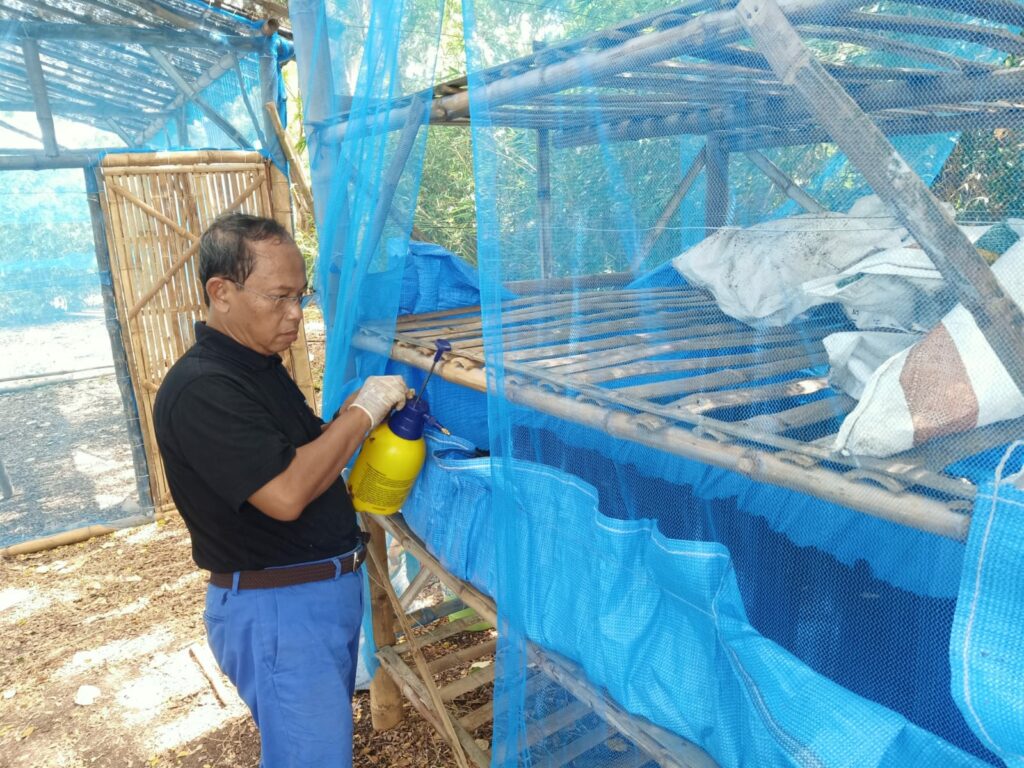
The process of spraying the EM4 probiotic liquid, carried out by Dr. Ir. Totok Soehartanto, DEA, to maintain the moisture level of the worm cultivation medium.
In Dawuhansengon Village, Pasuruan Regency, the ITS Quantitative Modelling and Industrial Policy Analysis Laboratory (Lab QMIPA) provided educational sessions and practical demonstrations on producing liquid organic fertilizer (POC) from organic waste.
In Kemiri Village, Mojokerto Regency, the ITS Department of Chemical Engineering, through Engineers in Action (EIA) 2025, also educated residents on constructing biodigesters to process organic waste into materials that support agricultural activities.

The Engineers in Action team worked together to build a greenhouse at the project site.
ITS also introduced technologies and cultivation practices that help farmers manage soil, water, and nutrients more efficiently. The ITS Department of Engineering Physics provided guidance to the Manunggal Rejeki Farmers' Association (Gapoktan) in Ngimbang Village, Tuban Regency, on using an Internet of Things (IoT)-based soil and pest monitoring system. Sensors connected to mobile phones enable farmers to monitor soil moisture and acidity and receive information about potential pest activity, helping them determine more appropriate fertilizer application timing and dosage. The programme also included training on system operation and maintenance to help farmers use the technology independently.

The community service team with the Internet of Things-based soil monitoring device that has been developed.
In Pacul Gowang Hamlet, Jombang Regency, an ITS Community Service team introduced melon cultivation using hydroponic drip fertigation, which delivers water and nutrients directly to plant roots to improve water-use efficiency and nutrient management.
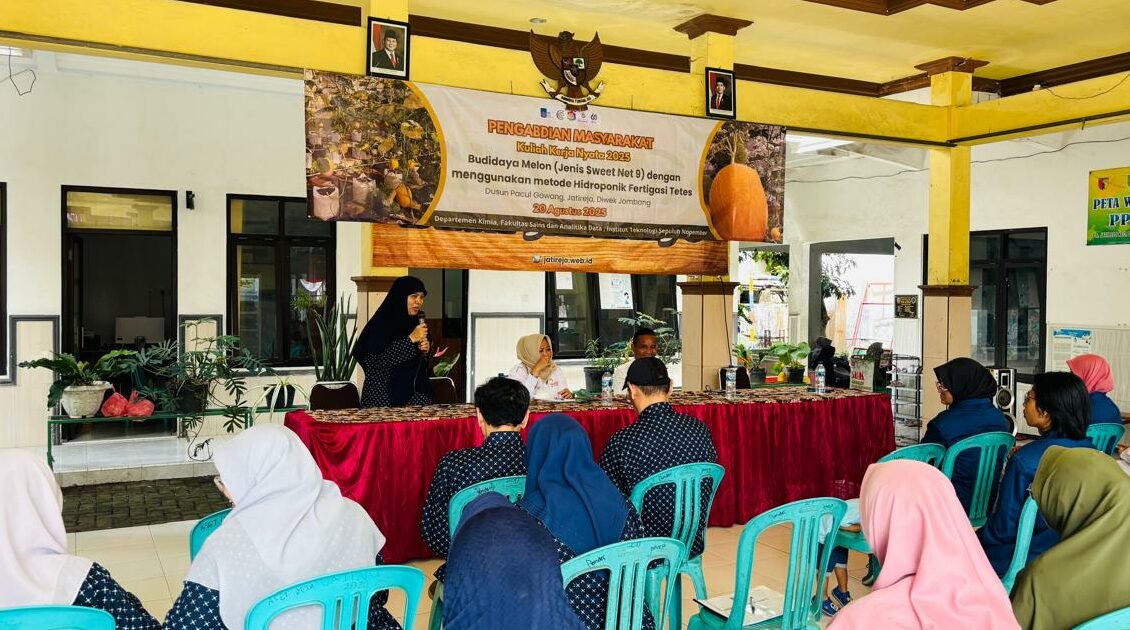
Head of the community service team, Prof. Yatim Lailun Ni’mah, PhD (standing, holding a microphone), conducts an outreach session for the local community and farmers regarding plant nutrition tables and hydroponic methods.
In addition, ITS provided education on maximizing limited land for productive cultivation. Lecturers from the ITS Department of Urban and Regional Planning, together with the ITS Planology Student Association (HMPL ITS), assisted residents of RW 02, Jepara Urban Village, Surabaya, in transforming home gardens, rooftops, and narrow alleys into spaces for growing vegetables and culinary herbs. The Ruang Inspirasi (RUSA) programme also introduced sustainability education to children.
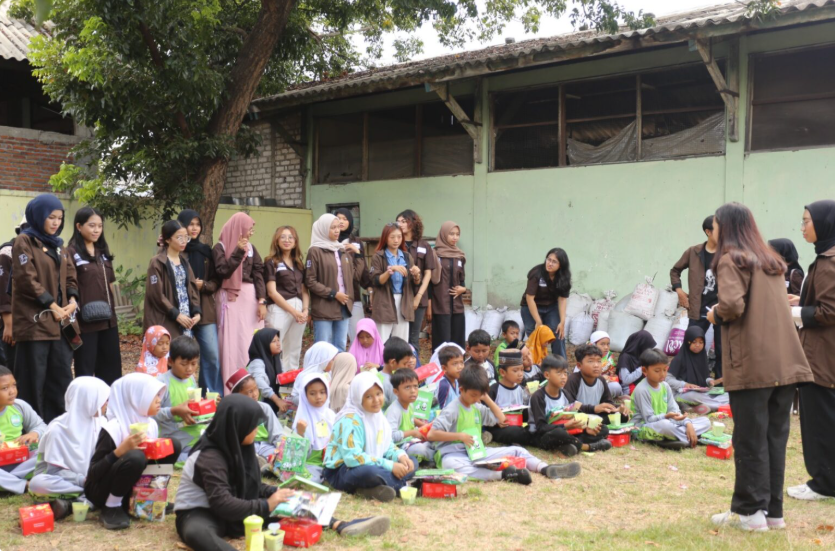
ITS Urban and Regional Planning students provided education on urban farming to elementary school pupils—demonstrating how it can be applied in their local surroundings—by presenting the material through a play.
In Keputih Timur, Surabaya, an ITS Student Community Service and Community Engagement (KKN Abmas) team developed a hydroponic greenhouse on a 2 × 7-metre plot for growing chillies and eggplants. Meanwhile, the ITS Department of Chemical Engineering, through EIA 2025, established a greenhouse in Kemiri Village, Mojokerto Regency, for chilli and eggplant cultivation, managed by local business operators
The ITS Community Service (KKN Abmas) team harvesting produce from a hydroponic greenhouse, together with the Family Welfare Empowerment (PKK) organization of Keputih Timur, Surabaya.
Through these programmes, ITS provided free educational and practical support to help communities reuse organic waste, adopt resource-efficient cultivation technologies, and make productive use of available land. These initiatives strengthen community capacity for sustainable agricultural land management by promoting more efficient resource use, cultivation methods suited to spatial constraints, and practical approaches to improving agricultural productivity.
ITS promoted community awareness of mangrove ecosystem management as a key asset for coastal nature tourism. The AIChE ITS Student Chapter collaborated with Climate Rangers Surabaya to organize Socio-Community Collab: Nurturing Nature, Uplifting Lives at the Wonorejo Mangrove Ecotourism Area in Surabaya. Through educational presentations, participants learned about the role of mangroves in carbon sequestration, shoreline protection against erosion, and the preservation of coastal biodiversity. The programme emphasized the importance of maintaining the ecological functions of mangrove areas to preserve the natural environment that underpins the appeal of ecotourism destinations.
Delivery of environmental educational material by Climate Ranger Surabaya.
ITS also introduced site cleanliness as an essential component of sustainable coastal tourism management. The ITS Department of Ocean Engineering's Community Service team partnered with SD Nahdlatul Ulama 1 Trate Gresik, a leading school located close to the coast in a community with a strong maritime culture. Environmental education was delivered to fifth- and sixth-grade students through experiential learning at the Wonorejo Mangrove Ecotourism Area. Students learned about mangrove forest functions and the importance of coastal conservation, followed by an exploration of the mangrove area and a clean-up activity on land near the estuary. These activities introduced practical approaches to maintaining the cleanliness of tourism sites while fostering young people's awareness of their role in the sustainable management of coastal tourism areas.
Students from SDNU 1 Trate, together with students from the DTK ITS community service program, cleaned up trash in the mangrove forest within the Wonorejo mangrove ecotourism area in Surabaya.
Beyond natural tourism areas, ITS supported the use of local resources to enhance the value and appeal of village tourism destinations. An ITS Community Service team implemented a community empowerment programme in Gunungsari Tourism Village, Madiun District, Madiun Regency. The programme included training on diversifying craft products made from locally available waste materials. Community members learned to process lontar palm leaves and create souvenirs that reflect local history and cultural heritage. The training encouraged the transformation of locally available materials and used goods into value-added products that can support tourism-related economic activities while strengthening the destination's local identity.

The ITS Product-Based Community Service Team, together with the local tourism awareness group (Pokdarwis) management, local residents, and guest speakers, during the training on the diversification of craft products for tourism in Gunungsari Village, Madiun Regency.
Through these initiatives, ITS provided free educational outreach and mentoring to promote sustainable land and resource management for tourism development. The programmes addressed the maintenance of ecosystems that attract visitors, cleanliness management at tourism sites, and the use of local resources to strengthen destination potential and support more responsible tourism development.
ITS ensures that every planning and development process considers local biodiversity. This commitment is outlined in the Rector’s Circular Letter on ITS Commitment to a Green and Sustainable Campus (2024), particularly in:
The Rector’s Appeal Letter (number T/18311/IT2/TU.00.08/2020) outlines conservation efforts on the ITS Campus, focusing on:
As part of this integration, ITS is committed to preserving and managing forest vegetation areas within its campus environment as part of its sustainable campus development strategy. Forest vegetation areas at ITS consist of urban forests, conservation zones, biodiversity areas, and densely vegetated landscapes that support ecological balance, environmental conservation, climate resilience, and sustainable campus management. These areas are also actively utilized for research, teaching, and community engagement activities related to environmental sustainability, biodiversity conservation, and environmental education.
Based on the campus land cover and vegetation assessment, the total forest vegetation area within the ITS campus is 524,259.97 m². With a total campus area of 1,469,371 m², the percentage of forest vegetation coverage was calculated below:
(Forest Vegetation Area / Total Campus Area) × 100%
= (524,259.97 / 1,469,371) × 100%
= 35.68%
Based on the calculation, the percentage of campus area covered by forest vegetation at Institut Teknologi Sepuluh Nopember (ITS) is 35.68%.
The forest vegetation areas within the ITS campus include urban forests, mangrove areas, green conservation zones, biodiversity areas, tree corridors, and densely vegetated landscapes distributed across ITS-owned campuses and conservation sites. These areas are maintained and utilized to support:
biodiversity conservation;
environmental sustainability programs;
ecological and climate resilience;
research and teaching activities;
community environmental engagement;
water absorption and microclimate regulation; and
sustainable campus landscape management.
ITS Campus has implemented conservation programs covering more than 75%. The conservation initiatives implemented at the ITS Campus include:
Prohibition of catching animals on Campus area since 2000.
Monitoring bird populations on the ITS Campus.
Regulations regarding tree cutting, which require recommendations from the unit managing the smart eco-campus and the infrastructure bureau; a standard operating procedure (SOP) has been in place since 2017.
The digitization of tree inventories through QR codes, labeling large trees on campus along with their locations.
An inventory and identification of flora and fauna on campus, documenting plants, birds, and invertebrates, with their habitats mapped and available on the biodiversity website.
Eco Enzyme pouring initiative to improve lake water quality at ITS
Mangrove planting initiative to preserve ITS Blue Carbon Ecosystems
Efforts to preserve native coastal plants, particularly mangroves, as part of the original ecosystem at the ITS campus in Sukolilo, involving inventory and conservation in various locations.
Utilization of land through ITS Eco Urban Farming, which includes growing vegetables and rare or medicinal plants native to the area.
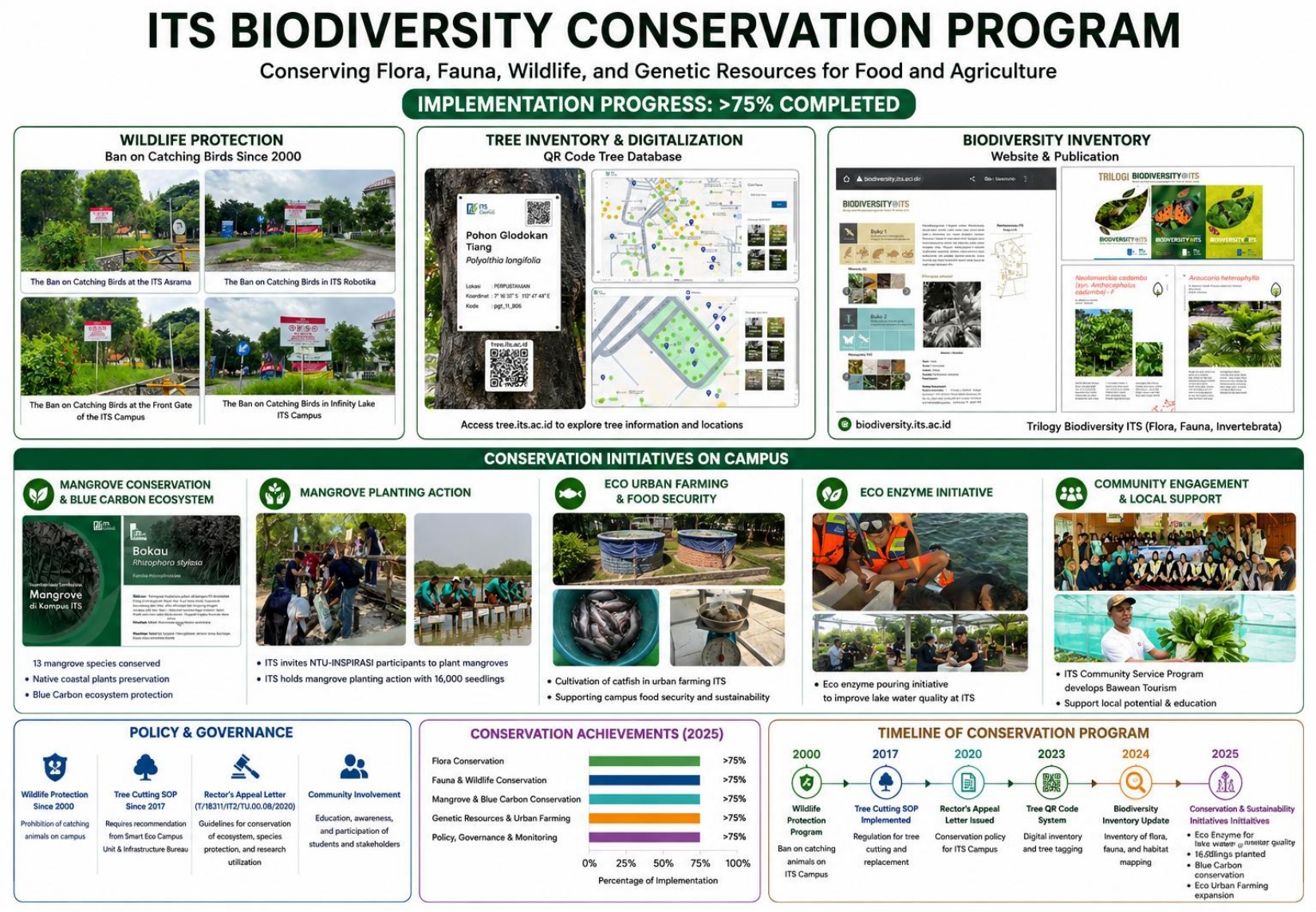
Through these measures, ITS demonstrates its strong commitment to integrating biodiversity into campus development, ensuring that growth and modernization are aligned with ecological preservation and sustainability principles.
In pursuit of its commitment to environmental sustainability, ITS has enacted policies to mitigate the ecological impact of alien species within its campus, as outlined in Rector’s Statement Letter 2021 which states that:
Institut Teknologi Sepuluh Nopember ensures that no invasive alien species enter the campus. (Chapter III Environment, Point H)
Additionally, ITS Rector Circular Letter: 9665/IT2/T/TU.00.08/V/2024 to ITS’ Commitment as a Green and Sustainable Campus on Chapter Land and Marine Ecosystem Protection reinforces this commitment by addressing comprehensive biodiversity measures that contribute to reducing the impact of alien species on campus ecosystems:
Chapter: Land and Marine Ecosystem Protection
Throughout 2025, ITS promoted collaboration with local communities, including school communities, coastal residents, government agencies, non-governmental organisations (NGOs), industry partners, alumni, and the academic community, to protect land ecosystems, restore vegetation, and optimise green spaces. These collaborative initiatives addressed local environmental needs through practical conservation efforts, including productive land use, coastal ecosystem restoration, waste reduction, and tree planting, strengthening shared responsibility for maintaining the ecological functions of these environments.

Residents help pack harvested vegetables grown on a vacant plot near SMAN 1 Plaosan—an initiative led by the Community Service (Abmas) Team from the ITS Department of Chemistry.
Through its Community Service (Abmas) programme, the ITS Department of Chemistry collaborated with students, teachers, and surrounding residents of SMAN 1 Plaosan in Magetan to optimise approximately 17,000 m² of previously underutilised land. The area was transformed into a school garden, green spaces, and outdoor learning areas. This collaboration improved productive land use, expanded green spaces, and created a more supportive learning environment.

Senior Manager Technical External Relation PT Smelting Ir Bouman Tiroi Situmorang MT IPU menyampaikan apresiasinya atas keterlibatan ITS dalam konservasi di Wisata Pulau Cisiu.

Some students from the Coastal and Marine Resources course carried out a mangrove-planting activity.
In coastal areas, ITS students collaborated with the management team of Pulau Cisiu Tourism Area in Ujungpangkah, Gresik, to plant mangroves as part of project-based learning. Local managers shared their knowledge of mangrove species, seedling techniques, and local environmental conditions, ensuring that conservation activities reflected the experience of communities directly connected to the ecosystem. Coastal restoration efforts also included beach clean-ups and the planting of mangroves, sea pine, breadfruit, and other trees at Romokalisari Adventure Land in Surabaya, commemorating World Oceans Day and Coral Triangle Day 2025. These activities combined waste removal with vegetation restoration, supported by government agencies, NGOs, and industry partners through the provision of cleaning equipment and seedlings, sponsorship, and public awareness campaigns.

New ITS students participated in planting fruit tree seedlings in the Saante Lebak area at the ITS Science Techno Park (STP) during the 'Gugur Gunung 8.0' event.

The Rector of ITS, along with the leadership team and members of the ITS Academic Senate, plant tree seedlings in the ITS Research and Education Innovation District (REIDI) area during the 'Gugur Gunung 8.0' event.
On campus, Gugur Gunung 8.0 brought together ITS leaders, students, alumni, partners, and the Brantas River Basin Management Agency (BPDAS Brantas) to plant more than 2,100 tree seedlings across the Science Techno Park (STP), Research and Education Innovation District (REIDI), and ITS Alumni Fruit Garden. Exceeding the initial target of 300 seedlings, the initiative strengthened efforts to expand vegetation cover across the campus.
Overall, these initiatives demonstrate how collaboration with local communities and cross-sector partners contributes to productive land use, coastal vegetation restoration, waste reduction, and green space expansion. Engaging communities as active partners strengthens shared responsibility for protecting and maintaining the ecological functions of shared land ecosystems.
Institut Teknologi Sepuluh Nopember (ITS) implements institutional guidelines and standards for wastewater management and discharge to protect water quality, aquatic ecosystems, wildlife, and public health. These guidelines establish the university's commitment to managing domestic and laboratory wastewater responsibly, preventing water pollution, and ensuring that wastewater is appropriately treated before discharge or reuse.
The implementation is guided by the Wastewater Programs Implementation at ITS and the Rector's Circular Letter on ITS' Commitment as a Green and Sustainable Campus, No. 9665/IT2/T/TU.00.08/V/2024. These institutional commitments provide direction for sustainable wastewater treatment, water recycling, pollution prevention, and responsible water resource management across campus facilities.
Wastewater treatment at ITS is carried out through designated Wastewater Treatment Plants (Instalasi Pengolahan Air Limbah/IPAL), with treated wastewater reused for appropriate purposes. ITS manages wastewater generated from various campus activities using Anaerobic Baffled Reactor (ABR) systems and simpler treatment facilities equipped with grease traps and sedimentation ponds. These systems are applied according to the wastewater sources and characteristics, including domestic wastewater, laboratory wastewater, and wastewater from food services.
The implementation of wastewater treatment and reuse can be seen in several facilities across the campus:
ITS Rectorate Building: Wastewater from urinals, sinks, and floor drains in the building's bathrooms is treated at the IPAL facility and reused for toilet flushing.

ITS Research Center Building: Wastewater from urinals, sinks, and floor drains is processed through the building's IPAL and subsequently reused for toilet flushing.
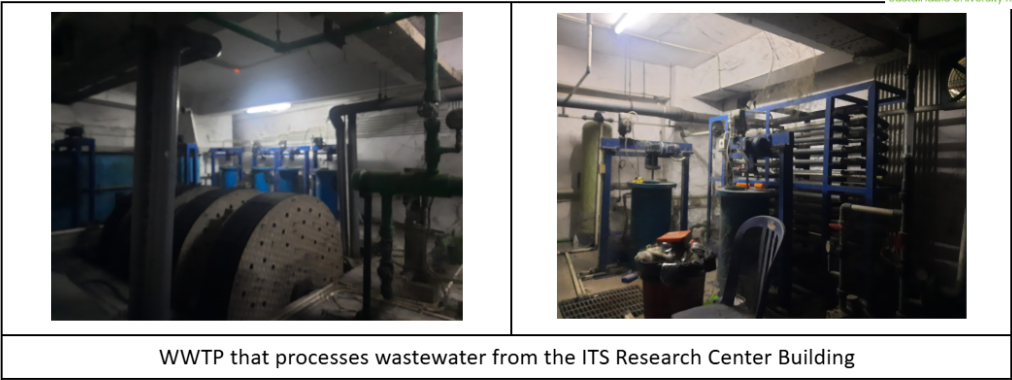
Department of Chemistry and Department of Environmental Engineering: Organic wastewater generated from laboratory activities is managed through designated IPAL facilities to ensure appropriate wastewater treatment.

Manarul Ilmi Mosque: Wastewater from ablution (wudu) activities is collected and managed using holding and aeration ponds. The treated water is reused for plant irrigation and as a water source for fish ponds.
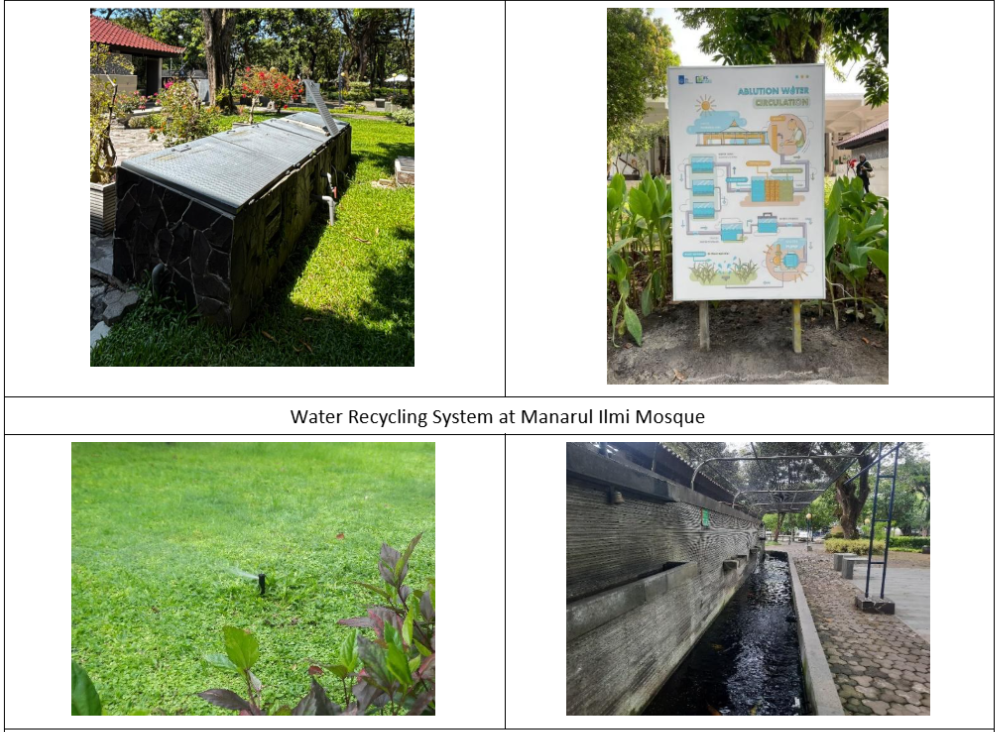
Department of Mechanical Engineering: Wastewater from ablution facilities is collected in a holding pond and reused for plant irrigation.
ITS Central Canteen: Wastewater generated by food service activities is processed using an Anaerobic Baffled Reactor (ABR) IPAL located behind the central canteen.
In addition to these treatment facilities, ITS promotes water conservation and reuse as part of its broader campus sustainability strategy. Approximately 30% of campus water is treated and reused through various initiatives, including the recycling of ablution water and graywater for plant irrigation and fish ponds, as well as the use of treated wastewater for toilet flushing in selected buildings. Constructed wetlands, aeration systems, and holding ponds further support wastewater management and water quality improvement.
The Rector's Circular Letter further establishes the following institutional commitments:
Chapter: Water Management
Foster a culture of clean water conservation.
Implement water-saving technologies in campus facilities.
Pursue sustainable wastewater treatment and recycling efforts.
Reuse treated water for plant irrigation, toilet flushing, and general cleaning.
Harvest rainwater as an alternative water source.
Conserve water by optimizing retention ponds for rainwater storage and campus flood control.
Chapter: Waste Management
Prevent pollution in water bodies, rivers, and the sea.
Manage hazardous and toxic waste (B3) responsibly and sustainably.
Ensure the sustainable management of wastewater.
Through these institutional policies, wastewater treatment facilities, and water reuse initiatives, ITS integrates pollution prevention into its campus operations. These efforts demonstrate the university's commitment to responsible water discharge management, reducing the risk of contamination to surrounding water bodies, and protecting ecosystems and the health and welfare of communities.
Institut Teknologi Sepuluh Nopember (ITS) has established institutional policies to reduce plastic waste and minimise the use of single-use materials across campus operations. The Rector Circular Letter No. 9665/IT2/T/TU.00.08/V/2024 on ITS' Commitment as a Green and Sustainable Campus outlines campus-wide waste management measures based on the 3R principles (Reduce, Reuse, Recycle). Its Waste Management chapter includes provisions to minimise single-use plastics in procurement and campus activities, reduce plastic beverage containers, and provide water dispensers and reusable cups in workspaces and meeting rooms.
The policy was further reinforced by Rector Circular Letter No. 1287/IT2/T/TU.00.08/I/2025,
"Urging all ITS work units to limit purchases of bottled mineral water in plastic containers, particularly for daily consumption, coordination meetings, and guest hospitality. As alternatives, lecturers and administrative staff are encouraged to bring personal drinking bottles or tumblers for daily use and provide reusable jars or glasses during meetings."
The circular letter also calls on unit leaders to promote and support the reduction of single-use plastic products within their respective units. This measure translates ITS' broader sustainability commitment into practical requirements for everyday campus operations and institutional activities.
ITS' commitment is also reflected in the Rector Statement Letter No. T/38539/IT2/ITU.00.08/2021 on Implementing Sustainable Development Principles, which establishes the university's commitment to minimising single-use plastic materials and plastic bags, from procurement and purchasing to distribution and disposal.
This commitment is further translated into operational requirements in the Standard Operating Procedures (SOP) of the ITS Central Canteen (Zona KHAS). All canteen tenants are required to minimise plastic and other single-use items. These requirements also extend to suppliers and partners, encouraging the use of bulk packaging and reduced packaging materials to limit plastic waste across canteen operations.
Together, these policies establish a framework for reducing plastic consumption across ITS, covering institutional procurement, daily staff practices, meetings, guest hospitality, and food service operations. By translating its commitment into specific guidance for university units and campus tenants, ITS promotes the reduction of single-use plastics as part of its campus-wide sustainability practices.
ITS is dedicated to protecting the environment and advancing sustainable practices. As part of this commitment, ITS has established policies and practices for the responsible management of hazardous materials, supported by formal institutional statements, dedicated storage facilities, and technical procedures.
The ITS Rector has reaffirmed the university's commitment to sustainable development and environmental conservation through the Rector Statement Letter on ITS' Commitment to Achieving the Sustainable Development Goals (SDGs), No. T/38539/IT2/TU.00.08/2021, which outlines the following environmental commitments:
Institut Teknologi Sepuluh Nopember is committed to conserving water resources and maximizing their reuse. Chapter 3, Verse a.
Institut Teknologi Sepuluh Nopember ensures its involvement in reducing pollution to rivers and seas by promoting efforts to manage domestic wastewater through treatment and recycling. Chapter 3, Verse b.
Building on this broader environmental commitment, the Rector Circular Letter No. 9665/IT2/T/TU.00.08/V/2024 on ITS' Commitment as a Green and Sustainable Campus specifically addresses hazardous waste management in its Waste Management chapter, stating:
Manage hazardous and toxic waste (B3) responsibly and sustainably. Point 8, Verse m.
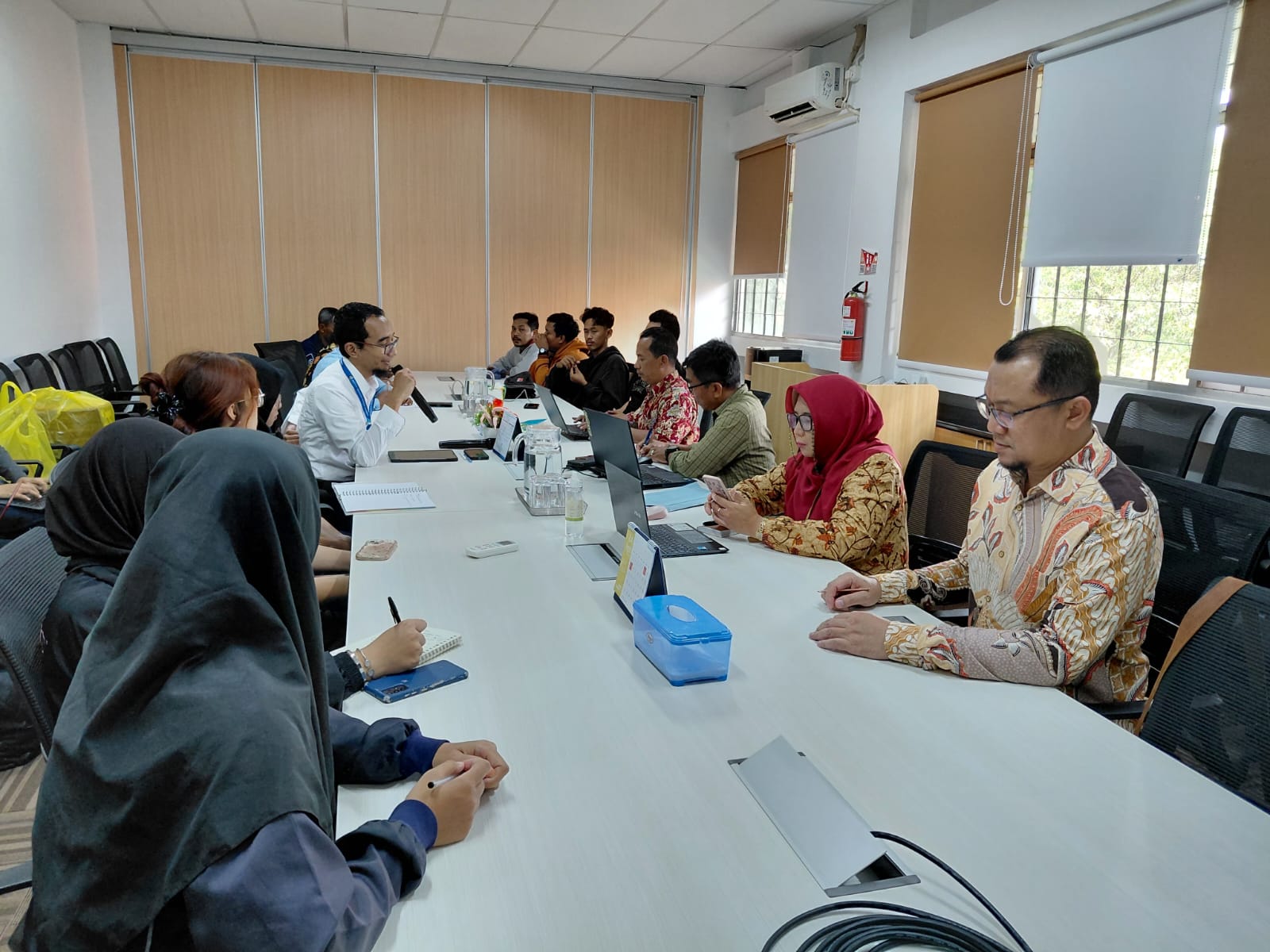
To implement this policy, ITS has established a centralised Temporary Storage Facility for Hazardous and Toxic Waste (Tempat Penampungan Sementara Limbah B3/TPS Limbah B3 Terpusat). The facility has obtained an official permit from the Surabaya City Environmental Agency (Dinas Lingkungan Hidup Kota Surabaya) and is available to all ITS units generating hazardous waste from laboratory practical sessions, research activities, and routine campus operations.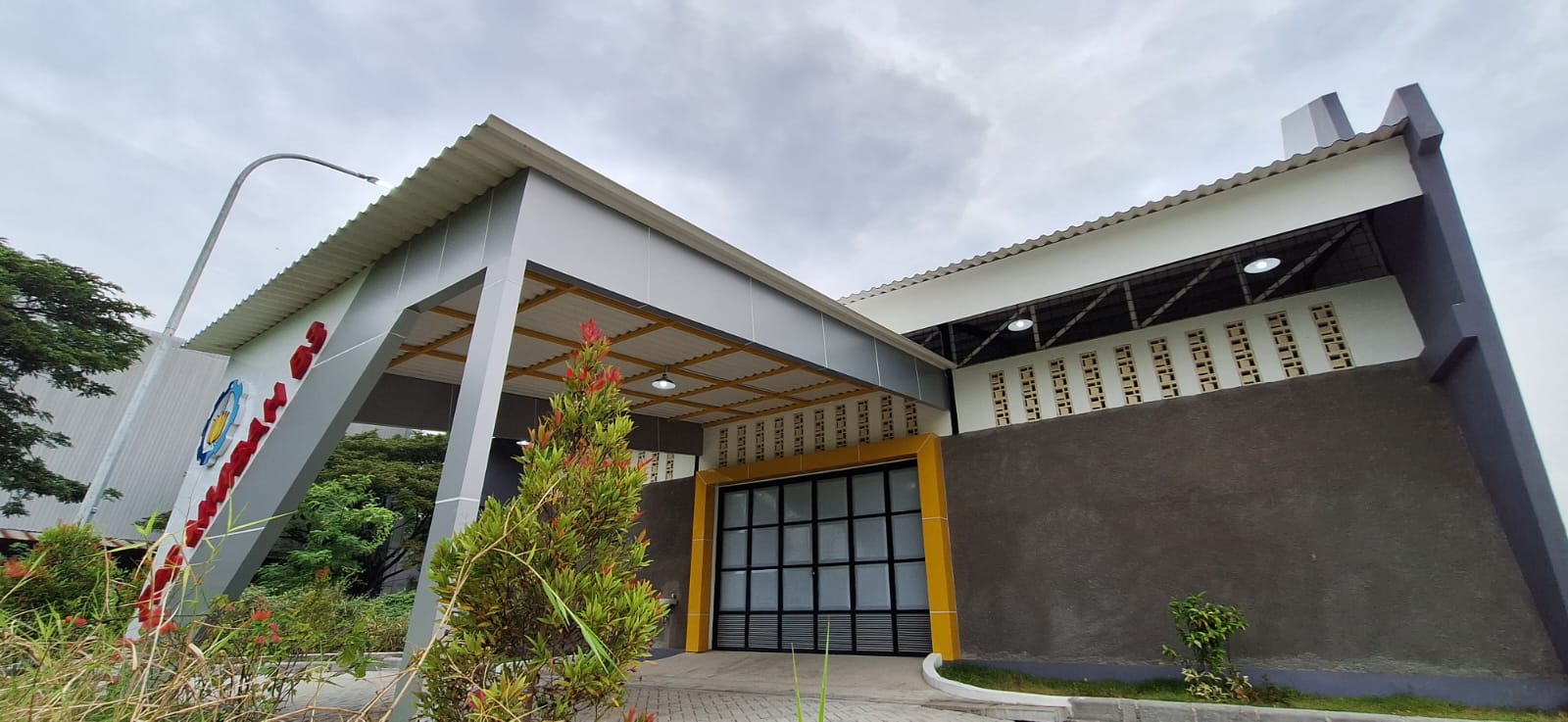

The storage and management of hazardous waste are further regulated by the university's Technical Details Document for Hazardous Waste Storage and Management (Rincian Teknis Penyimpanan/Pengelolaan Limbah B3), which provides the technical basis for hazardous waste storage and management procedures.
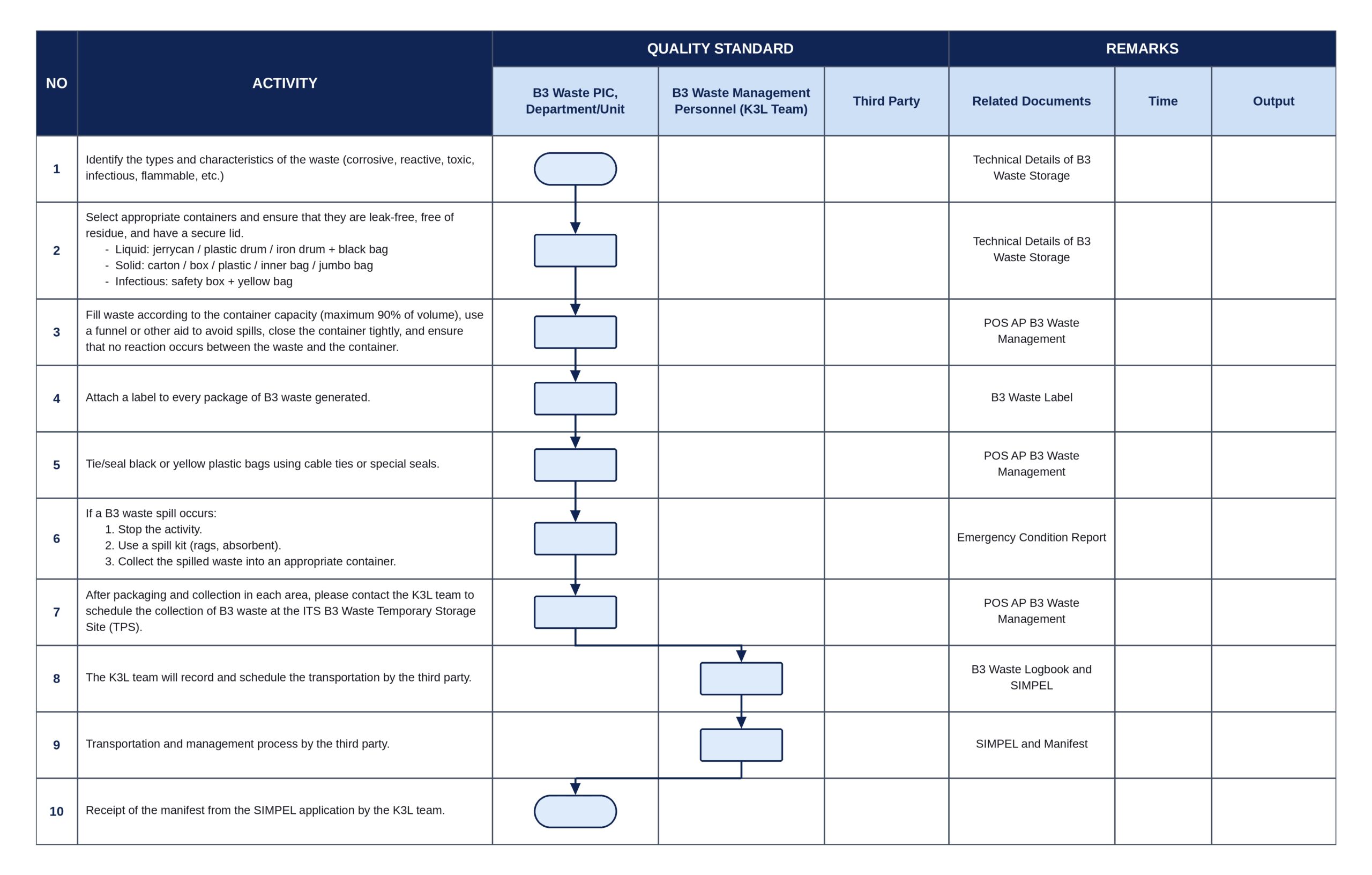
This procedure applies to all hazardous waste (B3 waste) packaging activities at the hazardous waste (B3 waste) storage facility.
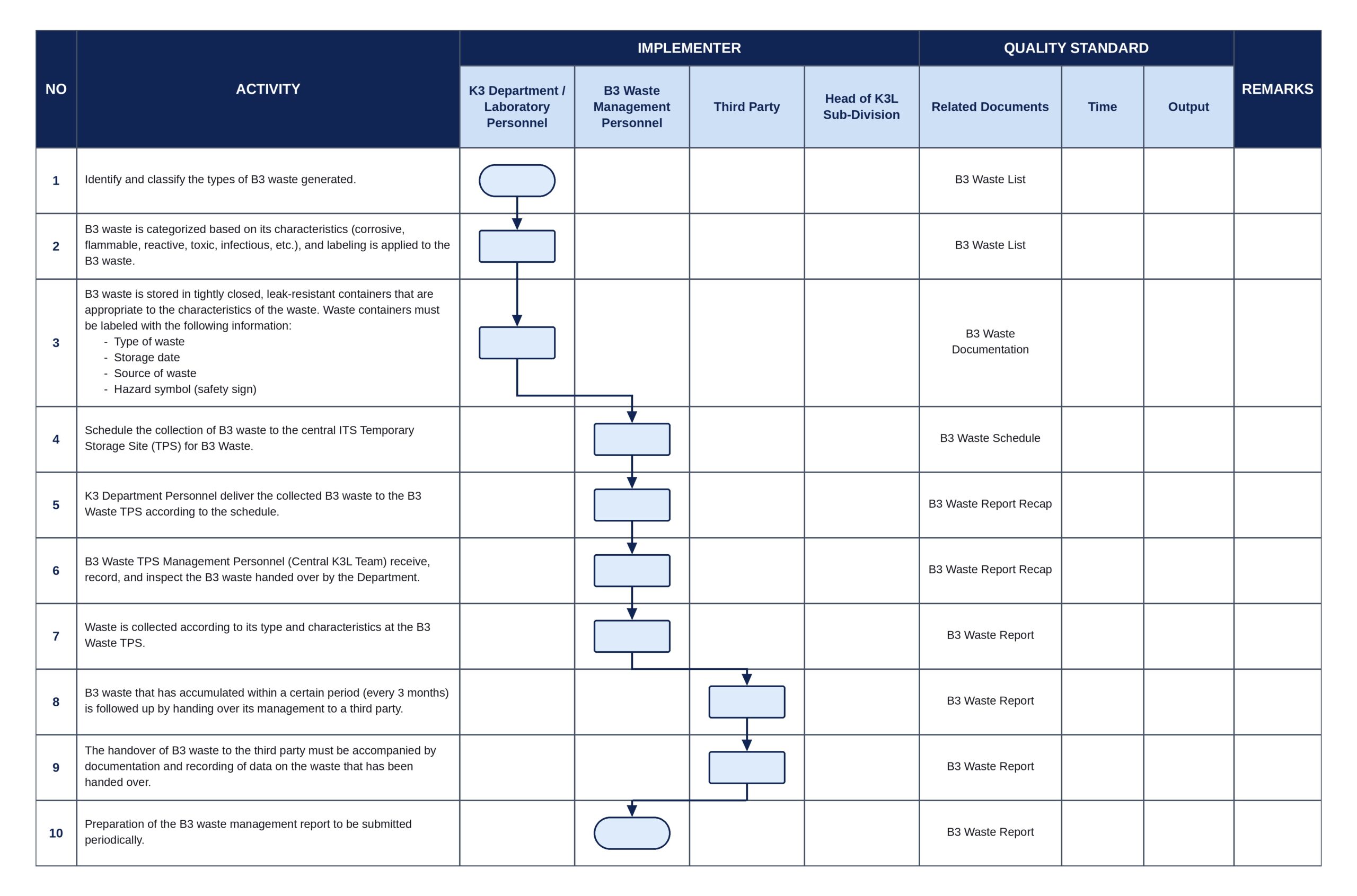
This procedure applies to all activities that generate, store, transport, or process hazardous and toxic waste (B3 waste) within the Institut Teknologi Sepuluh Nopember (ITS) Surabaya campus.
Together, these institutional commitments, policies, dedicated facilities, and technical procedures demonstrate ITS' approach to environmental protection and the responsible management of hazardous waste across campus.