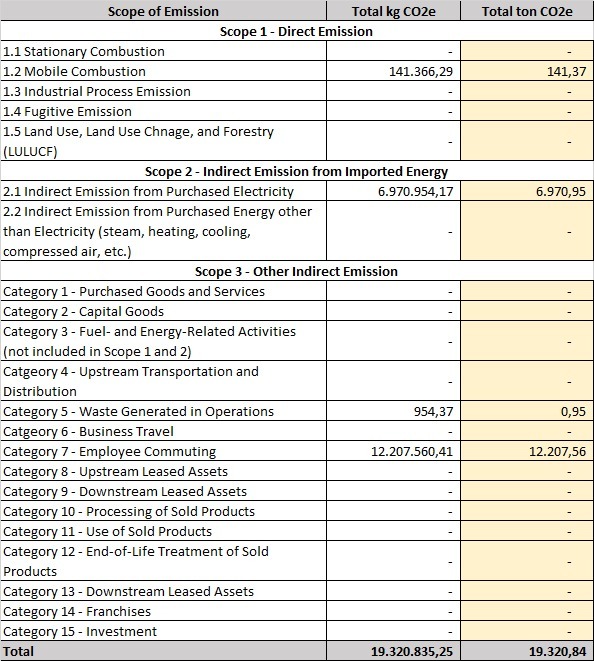
Having a renewable energy pledge is vital for demonstrating commitment to a sustainable and environmentally responsible future. By committing to renewable energy, organizations, governments, and individuals take proactive steps to reduce reliance on fossil fuels, which are major contributors to climate change and environmental degradation. A renewable energy pledge helps accelerate the transition to cleaner energy sources like solar, wind, and hydropower, reducing greenhouse gas emissions and limiting the harmful impacts of global warming. It also promotes energy security and economic resilience by diversifying energy sources and creating new jobs in the green energy sector. ITS is committed to reduce carbon emission by several points explained:
-
- ITS aims to reducing carbon emissions based on National Net Zero Emission target by 2060.
- ITS aims to reducing carbon emissions 31.89% by 2030 based on National target.
- ITS aims to reducing carbon emissions 4.6% every year from 2023 – 2030.
Based on points above, it endeavors to support activities to reduce carbon emissions and transition to renewable energy in campus area. ITS through Rector’s Circular Letter No. 9665/IT2/T/TU.00.08/V/2024 Chapter Energy Efficiency and Conservation explained at points 1 – 10 endeavors to promote a 100% renewable energy pledge. Here are the points in the regulation:
-
- Encourage technology utilization to improve energy efficiency.
- Implement energy efficiency programs by choosing and using energy-efficient and eco-friendly electrical equipment.
- Facilitate the transition to renewable energy for campus use.
- Ensure lights are used only in rooms lacking adequate natural light.
- Strategically place lights without compromising illumination function.
- Limit air conditioning use and maximize ventilation.
- Set air conditioners to a moderate 24-25°C.
- Reserve elevator use for essential needs, prioritize during peak hours and turn off elevators after office hours.
- Apply energy efficiency and conservation principles in all new buildings or renovations.
- Encourage a low-carbon lifestyle among the academic community.
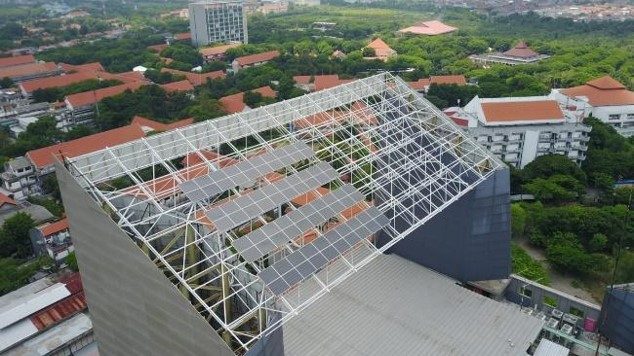
Some of ITS efforts include the use of solar power plants to support renewable energy in multiple buildings, which can produce 2.085.234 kWh of energy annually; vertical building gardens to cool the environment and reduce the need for inverter air conditioners; optimizing rooms to receive full sunlight to reduce the need for lights; LED lighting to promote energy efficiency; and electrical equipment with motion sensor and time control technology to use less electricity.