
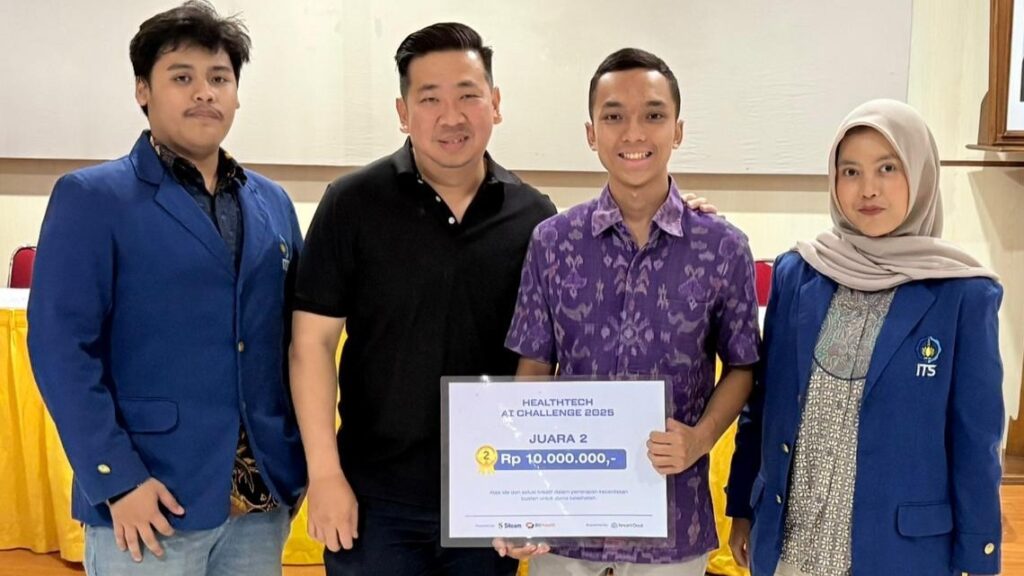
Surabaya, F-ELECTICS ITS – Innovation in the field of healthtech has once again been achieved by a team of students from the Sepuluh Nopember Institute of Technology (ITS). Through the StrokeGuard application, this team won second place at the Healthtech AI Challenge 2025, a competition that brings together artificial intelligence-based health technology solutions from various institutions. This achievement also underscores StrokeGuard’s potential as a real-world solution to address the significant challenges in post-stroke patient care in Indonesia.
StrokeGuard was born from personal experience and real field needs. Muhammad Irsyad Yunus, Project Lead of StrokeGuard from ITS Digital Innovation, revealed that the idea originated from the team’s family experience with stroke. “We felt firsthand how difficult it was to monitor post-stroke patients at home, from forgetting to take medication, scattered medical data, to confusion when doctors asked about the patient’s condition,” explained Irsyad. This concern was further reinforced through interviews with hospitals, including Muhammadiyah Ahmad Dahlan Hospital, which noted that the most common cases today involve post-stroke patients experiencing relapses and readmissions.
Based on these challenges, StrokeGuard was developed as a post-stroke monitoring system via an app that connects patients or caregivers with doctors. Generally, patients or caregivers enter routine data such as blood pressure, symptoms, medication adherence, and daily activities. This data is then processed and summarized into insights that doctors can easily monitor through a dashboard. “Doctors can immediately see trends in patient conditions, and the system will flag patients who need to be prioritized for follow-up,” said Irsyad.
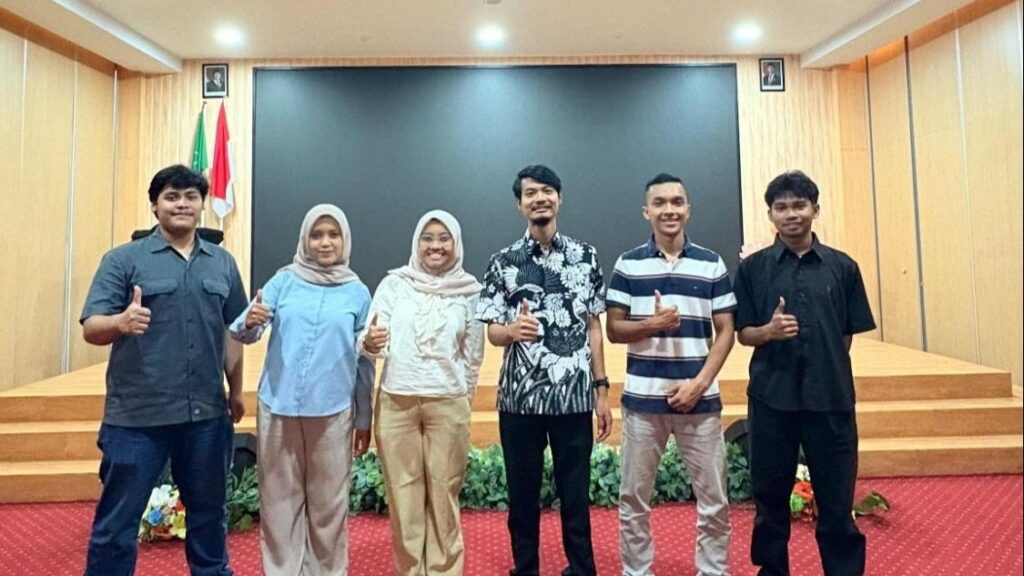
In its development, the StrokeGuard team implemented a clear and interdisciplinary division of roles. At the Healthtech AI Challenge 2025, the team representing the competition consisted of three people, namely Muhammad Irsyad Yunus and Alden Bintang Rafazha from ITS Digital Innovation, and Nasywa Aulia Rabbani from ITS Medicine. Overall, the StrokeGuard development team consists of five people. Irsyad serves as Project Lead and is responsible for product strategy as well as Tech Lead managing the backend and database. Alden Bintang Rafazha, from ITS Digital Innovation, handles business and partnership aspects, including communication with hospitals and implementation strategies. From the clinical side, Delisha Zahra Nabila and Nasywa Aulia Rabbani from ITS Medicine are involved in research, guideline development, red flag identification, and clinical logic validation. Meanwhile, Rayen Yeriel Mangiwa from ITS Informatics Engineering supports technical development as an AI automation and full-stack developer.
The development of StrokeGuard is also supported by experienced advisors and mentors, including Dr. dr. Ardhi SpN(K), Neurovascular Consultant at Dr. Soetomo General Hospital, dr. Riva Sp.N, ITS Faculty of Medicine lecturer active in stroke research, dr. Haykal, M.Biomed, ITS Faculty of Medicine lecturer in biomedical engineering, and Andy Bintoro, S.Kom, BCL, MBA, PhD (Hon), CTO and Co-Founder of Maxy Academy. The involvement of these experts is a crucial foundation to ensure that the developed solutions remain safe, clinically relevant, and ready for implementation.
Interestingly, artificial intelligence in StrokeGuard is not positioned as a replacement for doctors. Rayen explained that AI is used as a summary assistant to help with repetitive work. “AI helps summarize data patterns, such as average blood pressure increases or days when patients forget to take their medication, so doctors don’t have to read long raw data,” he explained. With this approach, clinical decisions remain in the hands of medical personnel.
The advantage of StrokeGuard lies in its focus on the post-stroke phase, which is the phase that most requires continuous monitoring. This system is guideline-based, transparent, and not a black box. In addition to helping document care and risk factor trends, StrokeGuard also allows doctors to perform rapid triage when treating multiple patients. Going forward, the team also plans to develop wearable integration through the StrokeBand concept for data input automation.
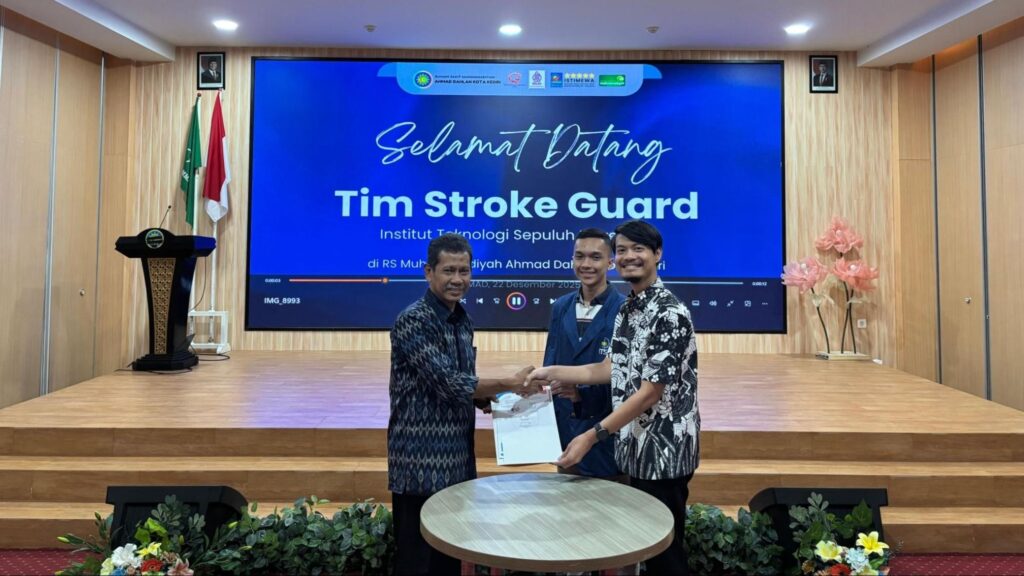
During the development process, the team faced various challenges. From a technical standpoint, the biggest challenges were determining relevant clinical indicators that were still safe in terms of positioning, designing a dashboard that was concise yet informative, and maintaining consistency in data input from patients. From a non-technical perspective, challenges arose in building trust with hospitals and adapting the system to the diverse workflows of medical personnel. Nevertheless, Alden said that StrokeGuard has currently secured three Letters of Intent (LoI) and signed an MoU with RSM Ahmad Dahlan Kediri as the first step towards implementation.
Given the high incidence of stroke in Indonesia, StrokeGuard is considered to have great potential for widespread implementation. The system is designed to be implemented in stages, starting with a stand-alone pilot with manual input to advanced integration with hospital systems or wearable devices.
“We want StrokeGuard to start with a simple solution, then evolve according to the readiness of each hospital,” said Alden.
The StrokeGuard team is committed to bringing this innovation to the next level. Development efforts will focus on clinical and operational validation through pilot projects, strengthening automation features, and developing a sustainable business model based on hospitals and active patients. “Our goal is not to stop at the competition, but to become a real solution in healthcare,” said Irsyad.
The StrokeGuard team also shared a message for young people who want to innovate in the fields of healthtech and AI. Irsyad emphasized that healthtech is not just about advanced technology, but also responsibility and real impact.
“Start with a clear problem, involve stakeholders such as doctors and patients, and don’t be afraid to accept criticism. Know what you want to pursue and use the time now to fight for it,” he concluded.
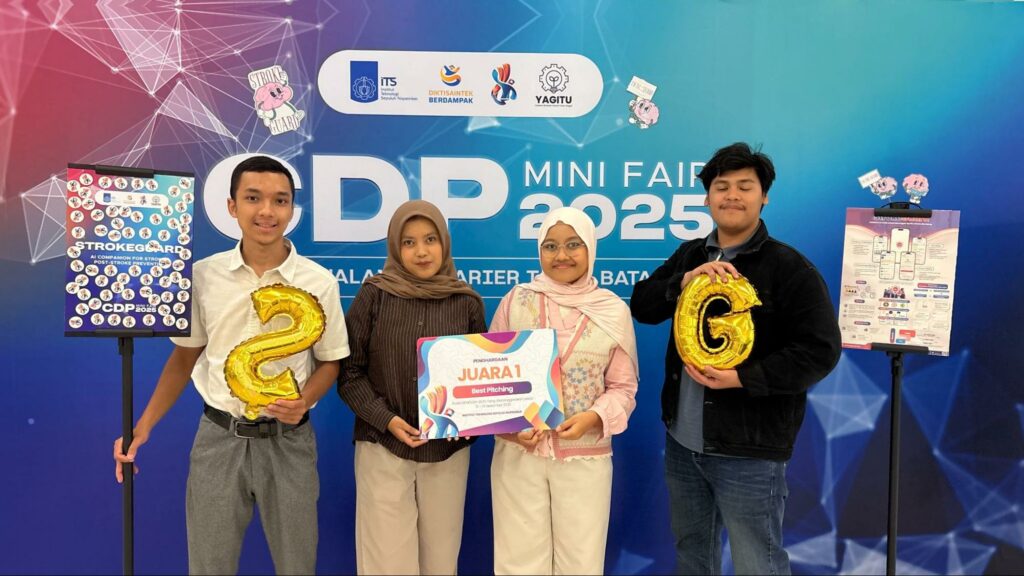
In addition to winning second place in the Healthtech AI Challenge 2025, StrokeGuard has also achieved various other accomplishments, such as first place in Best Pitching at ITS Demoday, ITS Youth Technopreneur 2025 funding, signing an MoU with Muhammadiyah Ahmad Dahlan Hospital in Kediri, and an invitation to Tech in Asia. These accomplishments further solidify StrokeGuard’s position as a noteworthy AI-based healthtech innovation.