Published on
Wednesday, 6 May 2026
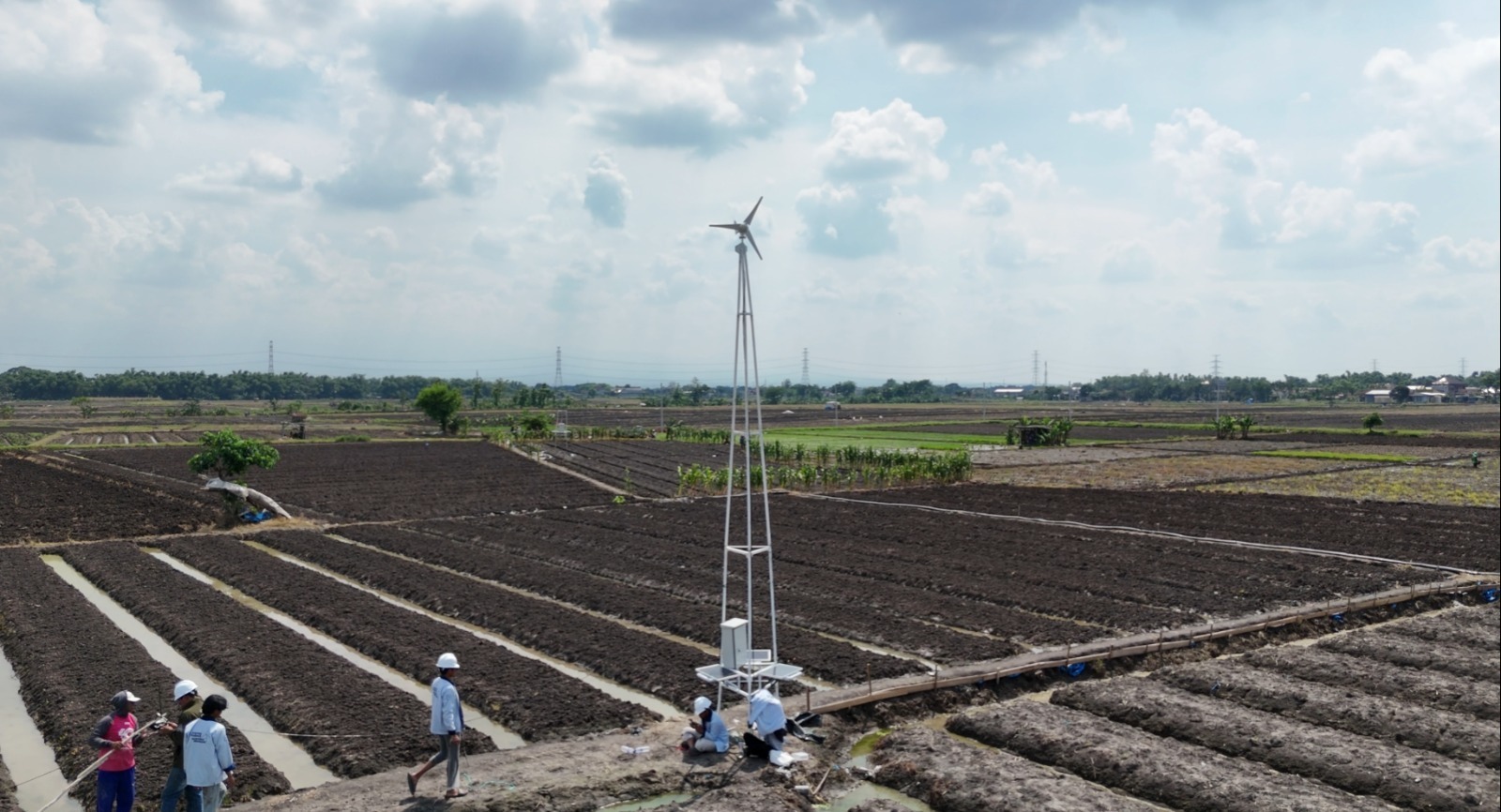
ITS Campus, ITS News — Farmers’ concerns about the threat of pests that often cause crop failure have given rise to a renewable energy innovation from students at the Sepuluh Nopember Institute of Technology (ITS) . This innovation stems from the untapped natural potential of wind and solar energy, now realized in the form of an environmentally friendly wind turbine called Terang dan Angin (Terangin).
Terangin’s Chief Executive Officer (CEO) and Founder , Muhammad Hanif, explained that this innovation initially emerged from research for a competition. It was inspired by the wind potential in Nganjuk Regency, known as the wind city and the center of shallot production in East Java. “Initially, it was research for a competition, but when someone needed it and wanted to buy it, we realized we needed to establish a PT (Company) for legality,” he said.
In its development, the startup, a graduate of Pertamuda Seed & Scale 2025, presents a different approach through a microgrid system that utilizes wind and solar energy to automatically operate pest trap lights. This system is designed to be as simple as possible for farmers to operate, without relying on complex technology that could potentially complicate operations in the field.
Another breakthrough is demonstrated by the use of a non-permanent modular foundation, which can reduce costs up to eight times compared to concrete foundations. This design allows the turbines to be dismantled and reassembled, providing flexibility for use on leased land or when farmers wish to relocate.
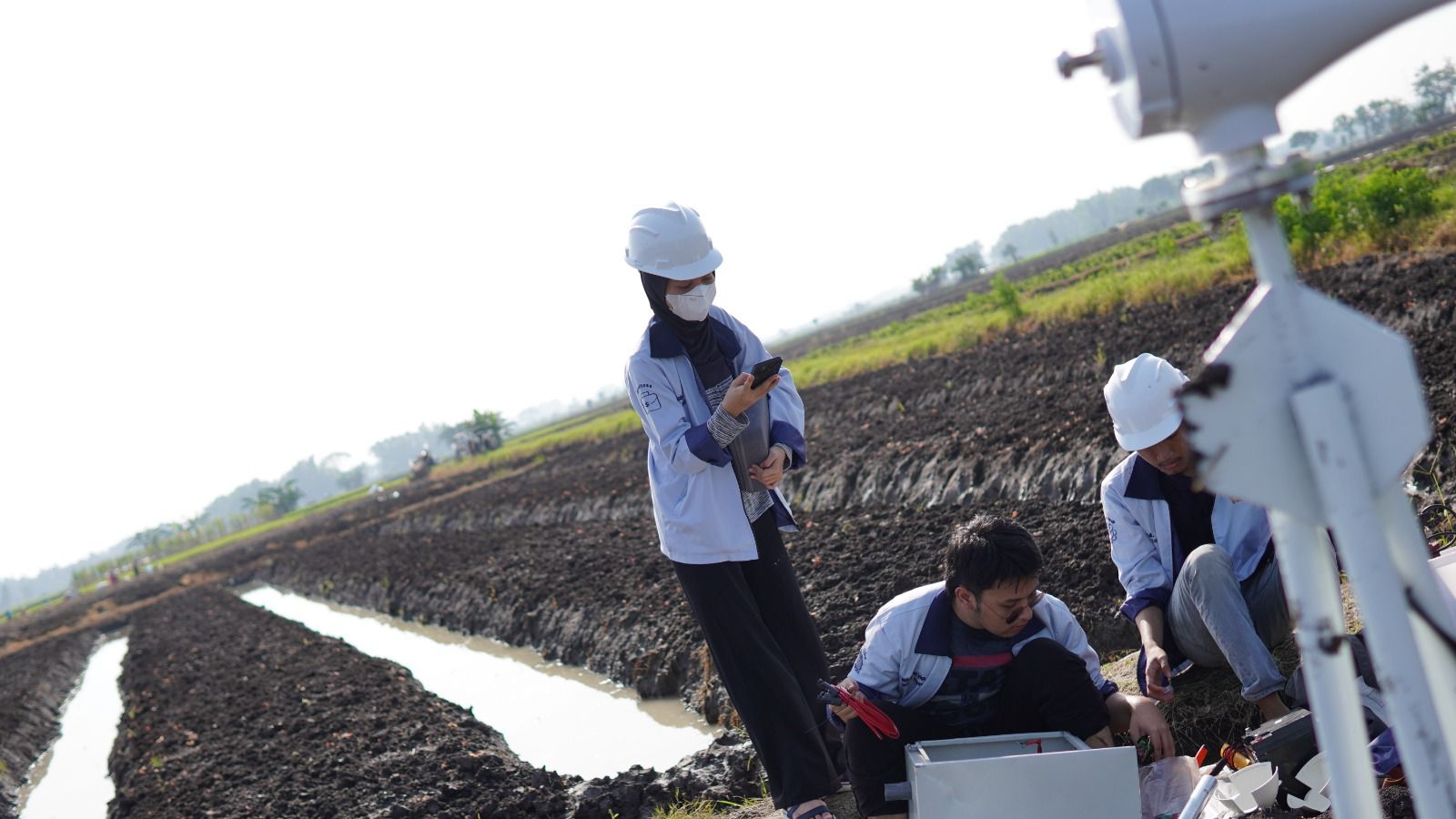
Furthermore, the Terangin team also designed an automatic braking system called the wind brake (remin), which operates without electricity or sensors. This mechanism utilizes wind thrust to independently slow the turbine’s rotation, making it more energy efficient and requiring minimal maintenance. “The brake we designed requires no electricity, is cheaper, and is fully automatic compared to other systems that require regular monitoring,” he explained.
To address the maintenance challenges of large agricultural areas, according to the student, known as Hanif, Terangin utilizes drone technology as a modern maintenance tool . Through remote monitoring, the team can identify potential damage early, allowing for faster, more efficient, and safer maintenance without the need for dismantling the turbine structure.
The 2024 student from the ITS Mechanical Engineering Department added that the system they developed can generate 2.1 kWh of energy per day. This energy is used not only for pest trap lights but also for other needs such as irrigation and sprinklers . “Using this system allows farmers to significantly reduce pesticide use while increasing crop yields,” he explained.
Furthermore, the young man from the City of Heroes explained that using Terangin can help farmers save up to tens of millions of rupiah per hectare each planting season. Furthermore, the risk of crop failure due to pest attacks, which previously reached around 50 percent, can be significantly reduced. “Reducing pesticide use also impacts soil fertility, thereby increasing production,” he said.
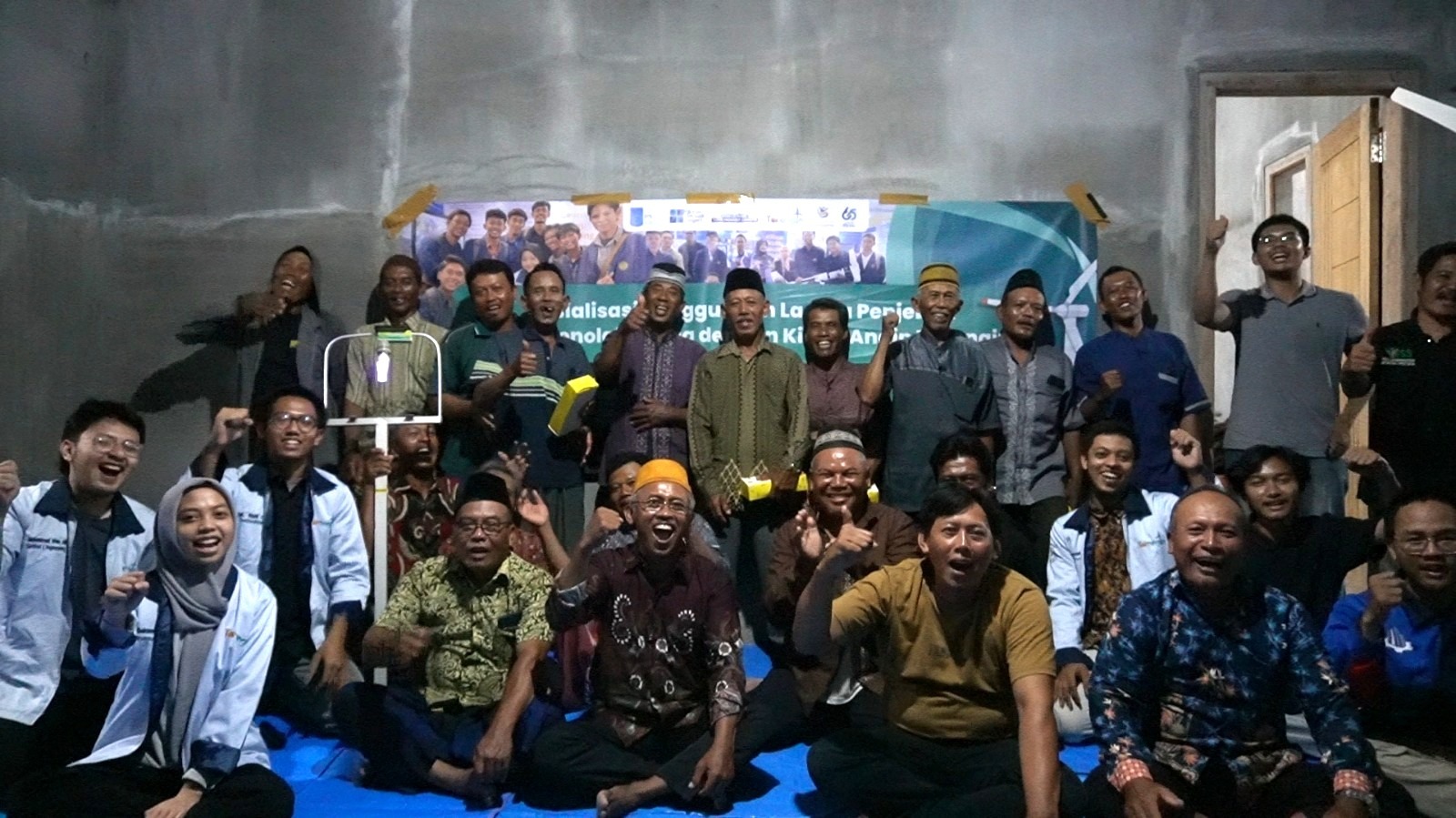
In developing Terangin, Hanif was assisted by four other core team members from various disciplines: Rafi Pradana (Mechanical Engineering), Diah Ayu NurFadillah (Statistics), Rafi S. Lamikan (Mechanical Engineering), and Anindya Khoirunnisya (Business Management). In addition, there were several other supporting members.
Thanks to the team’s hard work, Terangin has achieved success in various national and international competitions. One of its most recent achievements was its placement in the Top 6 of the 2026 Fowler Global Innovation Challenge held at San Diego University in the United States, and a $3,000 prize on Saturday (May 2nd). Looking ahead, Terangin also plans to expand its wind energy utilization to coastal areas. “We hope this innovation can reach a wider audience, even internationally,” he concluded optimistically.
More than just innovation, Terangin has now grown into a startup capable of generating hundreds of millions of rupiah in revenue, both from product sales and the grants the team has received. “This development proves that our innovation doesn’t stop at competitions but also has a real impact,” he added.
Terangin’s journey to the international stage was facilitated by Pertamina through the Pertamuda program, an annual competition designed to encourage the growth of student startups in Indonesia. This funding support from Pertamina also enabled Terangin to compete in the Fowler Global Innovation Challenge 2026 in San Diego, United States. “Without Pertamina’s support, our journey to this international competition would certainly not have been possible,” he said.
Pertamuda Seed & Scale is a flagship program of PT Pertamina (Persero) focused on developing student startups in Indonesia. Since its launch five years ago, the program has involved more than 14,000 students from hundreds of universities and has spawned numerous impactful business innovations.
The Brightest Innovation also demonstrates ITS’s commitment to encouraging the development of research-based technologies that benefit society. This effort aligns with the Sustainable Development Goals (SDGs), including point 7 on Clean and Affordable Energy, point 9 on Industry, Innovation, and Infrastructure, and point 12 on Responsible Consumption and Production. (ITS Public Relations)
Reporter: Iffah Najwa Ulya
Translator: Devinka Mutianeira