Published on
Wednesday, 24 June 2026
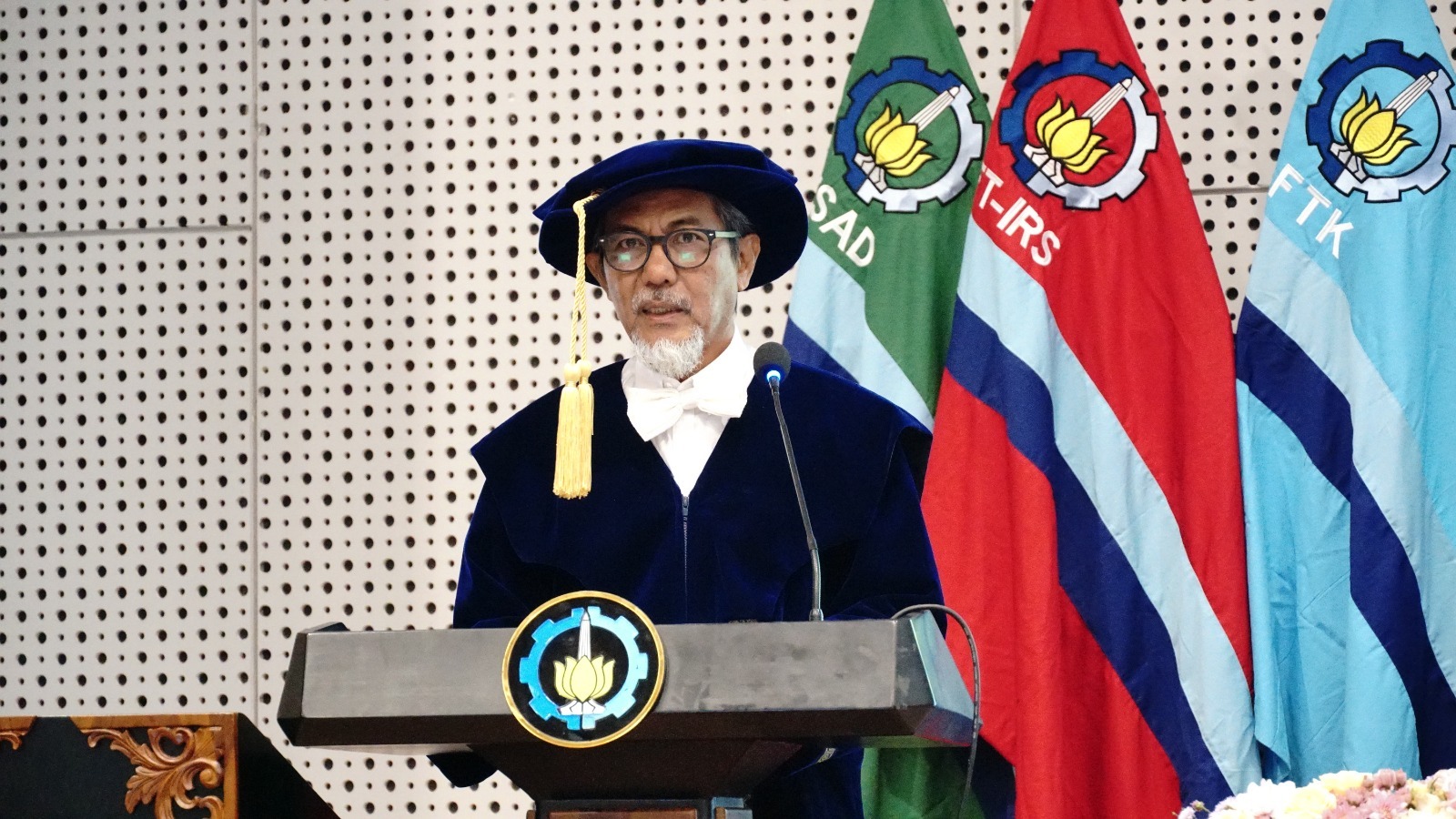
ITS Campus, ITS News — In today’s era of digital transformation, mathematics is the foundation of various digital technologies, from digital signal and image processing, data security, to quantum computing. To that end, Prof. Dr. Mahmud Yunus, MSi., the 240th Professor at the Sepuluh Nopember Institute of Technology (ITS), presented several developments in mathematical theory for today’s innovations.
The professor from the ITS Mathematics Department explained that current information technology strengthens functional analysis’ position as a bridge between mathematical abstraction and modern technology. Abstract concepts in modern mathematics have developed into a crucial foundation for various digital technologies. “Functional analysis can be a bridge connecting mathematics with various digital technology applications,” he explained.
In his research, ” From Operator Abstraction to Digital Transformation: The Contribution of Functional Analysis to Modern Information Processing ,” Yunus highlights several mathematical ideas poised to support technological advancement. These include the development of fixed-point theory and the use of wavelet transforms and tropical algebra for cryptographic systems.
The development of fixed-point theory for multicomponent systems in this study is utilized in the process of recovering distorted images due to missing data or noise . Simply put, fixed-point theory is used to analyze an iterative process to achieve stable results. This theory proves that an image can be recovered in a relatively small number of iterations, thus speeding up the computational process.
Furthermore, for data sovereignty and national cybersecurity, this research contributes to cryptography and information processing. Cryptography based on integer wavelet transforms and min-max-plus algebra contributes to the development of information security methods based on modern mathematical structures.
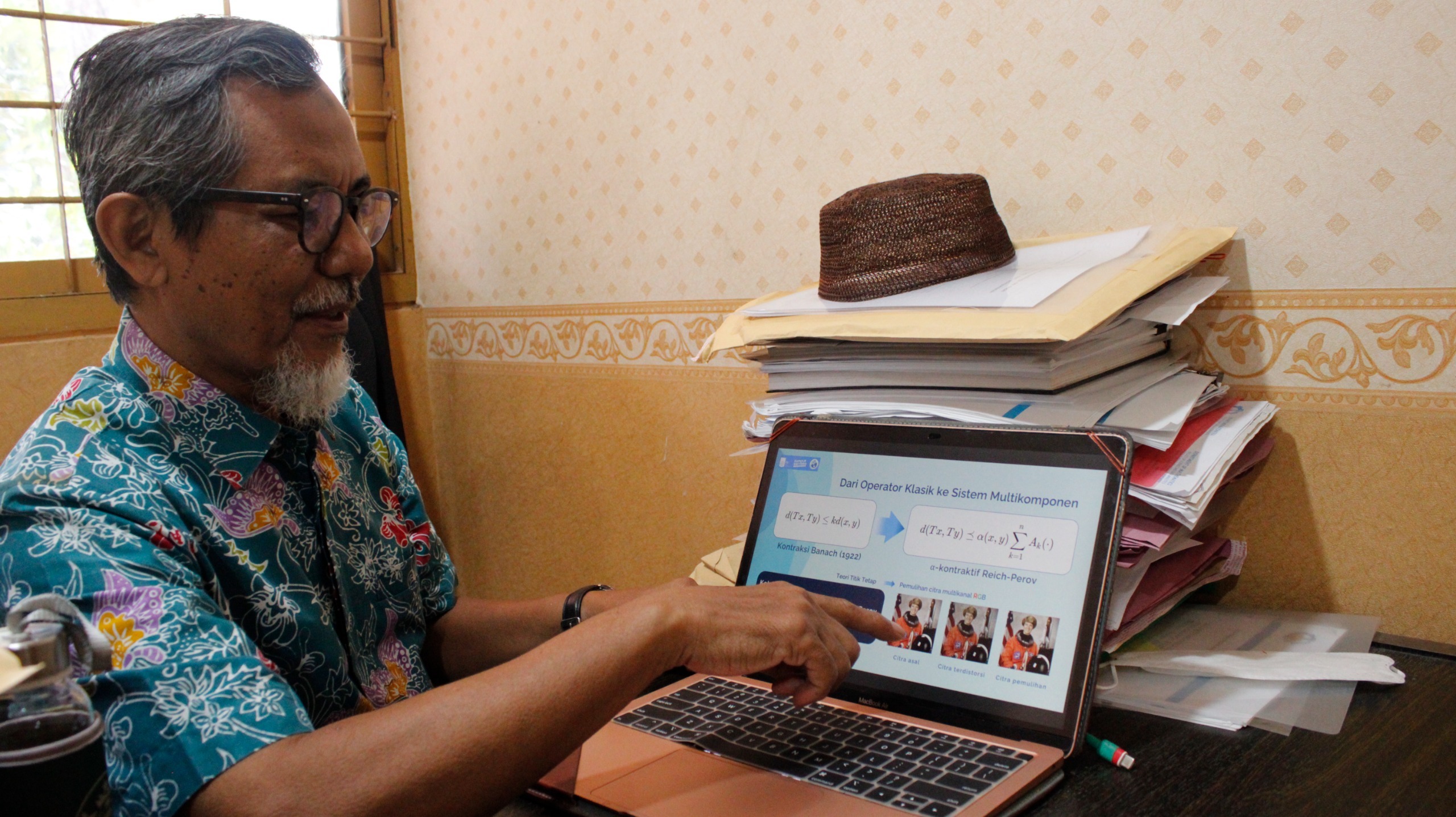
Yunus also explained that this approach utilizes maximum, minimum, and addition operations to produce transformations that are applied in cryptography processes. He explained that the advantage of this method is its ability to handle various character types in large texts. “This means that more possible keys can be created, making the system nearly impossible to crack,” said the Madiun native.
Furthermore, Yunus explained that in Indonesia, despite the development of modern mathematics, research linking functional analysis, wavelets , tropical algebra , and quantum computing is relatively limited. Therefore, another contribution in this research relates to quantum computing, namely the development of a quantum integer wavelet transform based on max-plus algebra .
Therefore, his research focuses on developing mathematical models compatible with how quantum computing works. He stated that quantum computing requires a new mathematical approach that can adapt to these characteristics. As a result, this idea will become the mathematical foundation for next-generation computing technology.
Furthermore, Yunus added in this research that mathematics is an abstraction born from real phenomena to produce solutions. He hopes that his research will give rise to modern innovations resulting from collaboration across disciplines. “This research requires collaboration across disciplines for innovation that benefits society,” he added.
Therefore, Yunus’ research for his scientific oration at the ITS Professorial Inauguration ceremony supports the achievement of the Sustainable Development Goals (SDGs), particularly point 9 on Industry, Innovation, and Infrastructure through modern technology, which can be derived from mathematical theory. (ITS Public Relations)
Reporter: Ahmad Maulana
Translator: Devinka Mutianeira