Published on
Tuesday, 28 April 2026
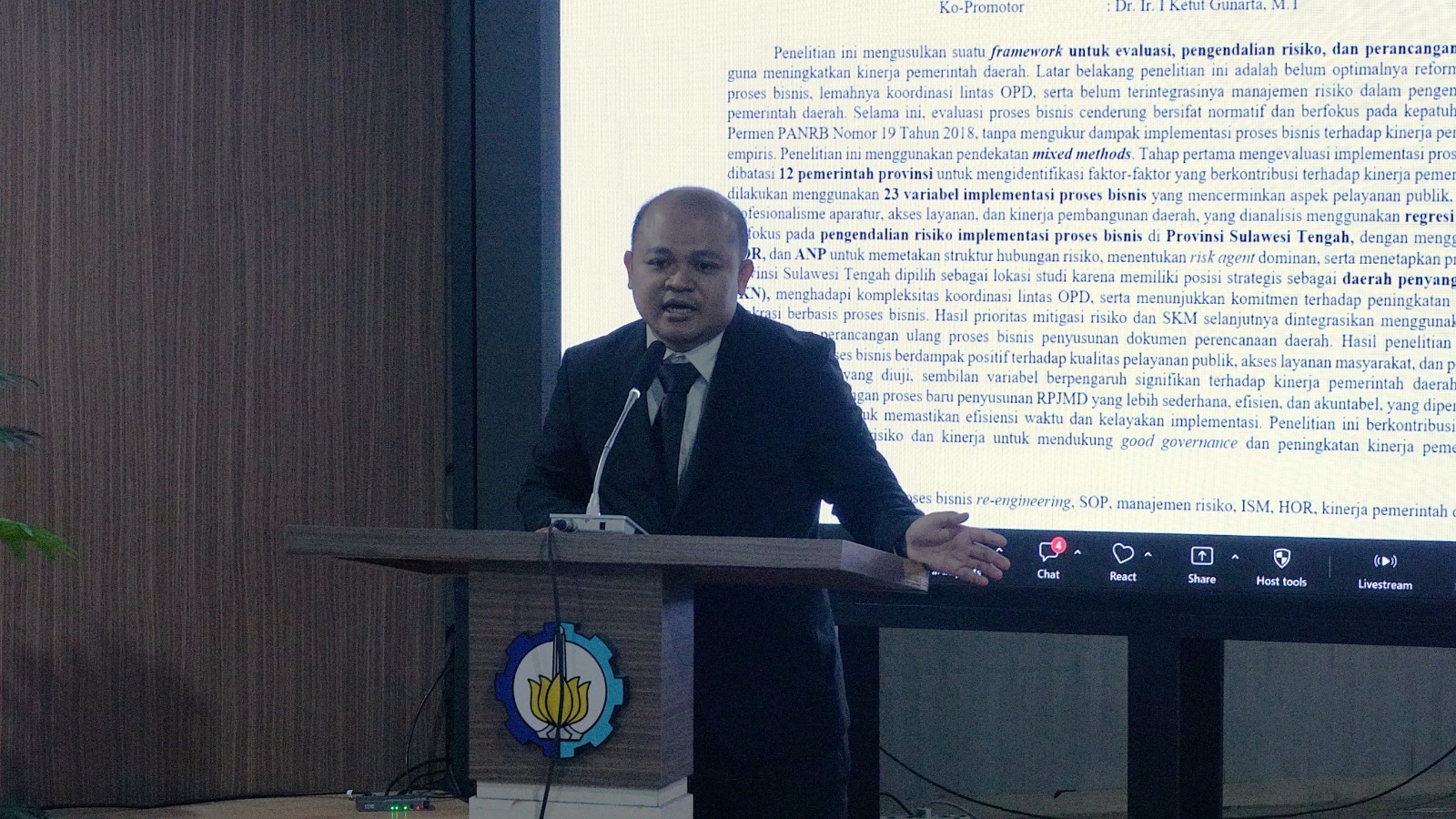
ITS Campus, ITS News — A doctoral graduate from the Sepuluh Nopember Institute of Technology (ITS) has proposed a framework to support the evaluation, development, and control of risks in business processes. This proposal is outlined in Dr. Ir. Muhamad Sayuti, ST, MT’s dissertation for his doctoral degree in the ITS Department of Systems and Industrial Engineering (DTSI) program.
The Indramayu native explained that his research was motivated by weak coordination across regional government agencies (OPDs). Furthermore, the lack of optimal business process-based bureaucratic reform and its integration with risk management in local governments is a key issue. “Business process evaluations tend to be normative without empirically measuring the impact of implementation on local government performance,” he said.
Furthermore, according to the doctor, commonly known as Sayuti, the business process implementation evaluation sampling was conducted in 12 provincial governments using logistic regression analysis. Central Sulawesi was one of the provinces targeted for business process implementation risk control. Interpretive structural modeling (ISM), house of risk (HOR), and analytic network process (ANP) methods were used to determine dominant risk agents , establish relationship structures, and mitigate risks.
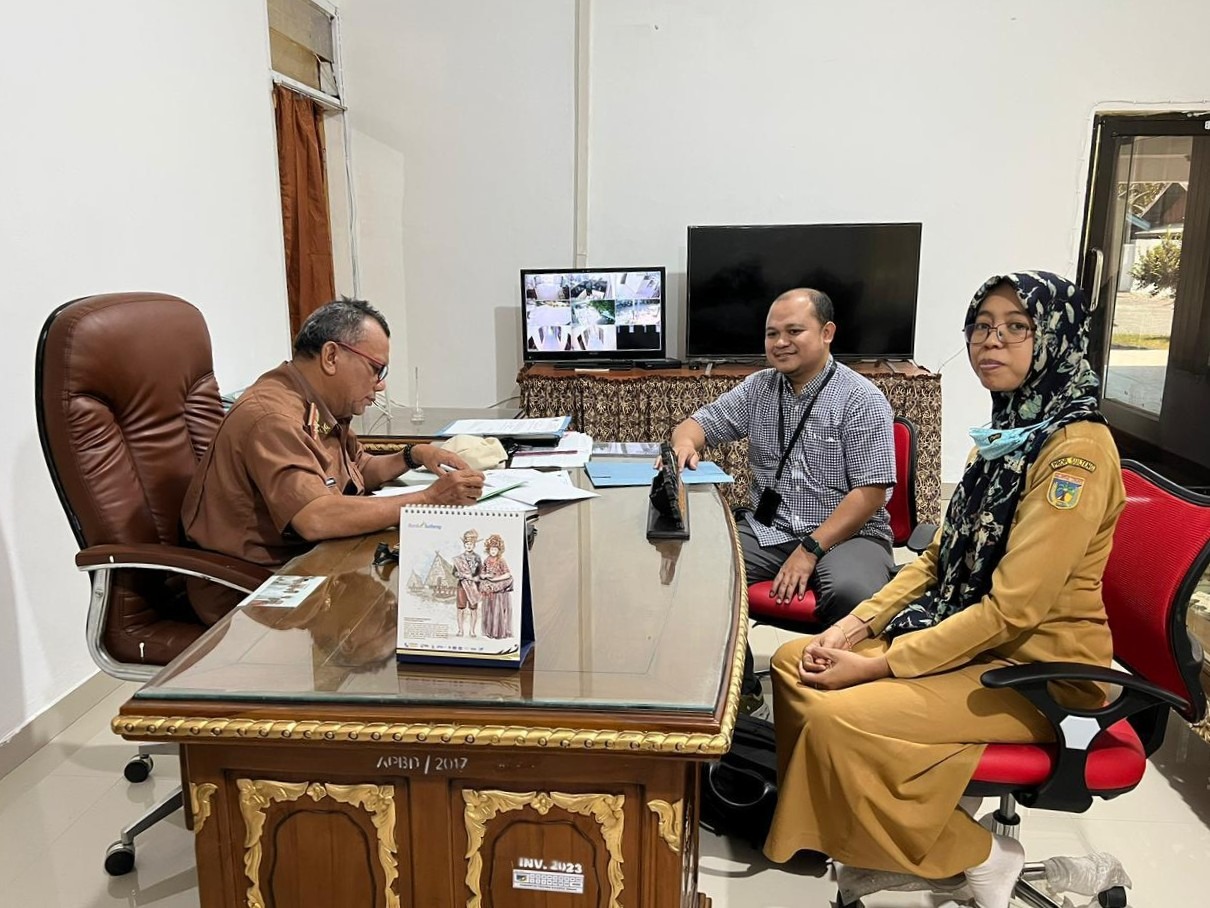
The risk mitigation results were then integrated using fishbone analysis as the basis for redesigning the business process for preparing regional planning documents. The study also showed that the implementation of the business process had a positive impact on the quality of public services, access to public services, and poverty reduction. “Of the 23 variables tested, nine significantly influenced local government performance,” he explained.
The man, who has been involved in business process research since 2018, stated that this research also contributes to the development of a risk- and performance-based business process reengineering (BPR) model. The goal is to support good regional government governance and sustainable performance improvement. The implementation of BPR will result in a new process design for the Medium-Term Development Plan (RPJMD) that is simpler, more efficient, and more accountable.
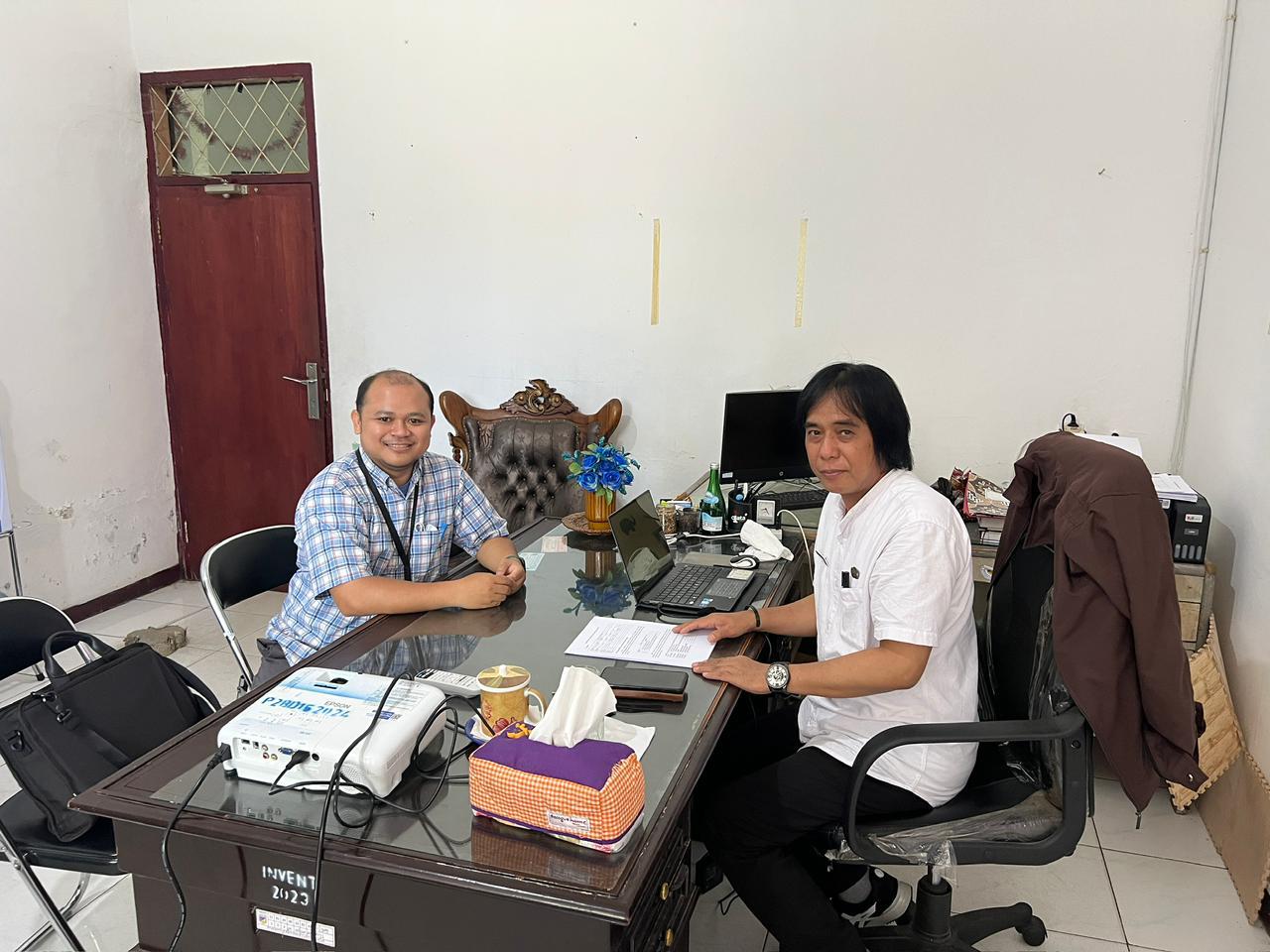
Together with Dr. Ir. Bambang Syairudin, MT. IPU ASEAN Eng., a lecturer at the Industrial Systems Design and Management Laboratory of DTSI ITS, as promoter, and Dr. Ir. I Ketut Gunarta, MT., Director of PT ITS Tekno Sains, as co-promoter, the man born on July 19, 1989, not only demonstrated the benefits of his systematic innovation, but also his extraordinary achievements during his studies.
During her studies, Sayuti published four publications at international seminars and one journal focused on business processes. One of these was published in the Scopus Q2-indexed journal Cogent Social Sciences. Her research findings have enabled local governments to manage and control risks, leading to a higher success rate in business process implementation. “I hope this innovation can serve as a guide for other provinces outside of Central Sulawesi,” she concluded hopefully.
This demonstrates ITS’ commitment to supporting the realization of the Sustainable Development Goals (SDGs), particularly in point 4 on Quality Education and point 9 on Industry, Innovation, and Infrastructure. Furthermore, point 17 on Partnerships to Achieve the Goals is also emphasized. (ITS Public Relations)
Reporter: Ahmad Husein Al Qomary
Translator: Devinka Mutianeira