Published on
Saturday, 3 October 2026

ITS Campus, ITS News — Collaboration between students from the Sepuluh Nopember Institute of Technology (ITS) and Nanyang Technological University (NTU) Singapore through the Eco Unity program has produced several innovative ideas to address environmental issues. For five days, dozens of students from both universities engaged in discussions and field trips to develop solutions based on the problems they identified.
The program, which began on Sunday (September 27), brought together NTU students and students from the ITS Environmental Engineering Department. Participants were divided into five groups and participated in a series of activities, including briefings and visits to urban farming , the Ngagel Regional Water Company (PDAM), a waste processing facility for Refuse-Derived Fuel (RDF) in Gresik, and the Veolia plastic recycling company in Pasuruan and the Purwodadi Botanical Gardens.
The series of visits provided a space for students to observe environmental issues firsthand and exchange perspectives. The observations then served as the basis for each group to brainstorm and design innovations, which were presented at the ITS Environmental Engineering Department on Friday (October 2).
One idea came from Team 3, which proposed producing fuel from waste through a biological drying method in a greenhouse. Team 3 member Ratna Aida Husnul Khotimah explained that inorganic waste and residue that cannot be composted or recycled can still be used as solid fuel. “Later, wet waste will be dried without combustion and without using electricity to produce alternative fuel from waste,” Ratna explained.
Meanwhile, Team 5 addressed the safety and comfort of workers at the Ngipik Waste Processing Site (TPS) in Gresik through the innovation of Safety Comfortable Personal Protective Equipment (PPE). NTU student Harvey presented a design for personal protective equipment consisting of layered clothing to create ventilation, as well as a gas and particle filtering mask that prioritizes user comfort.
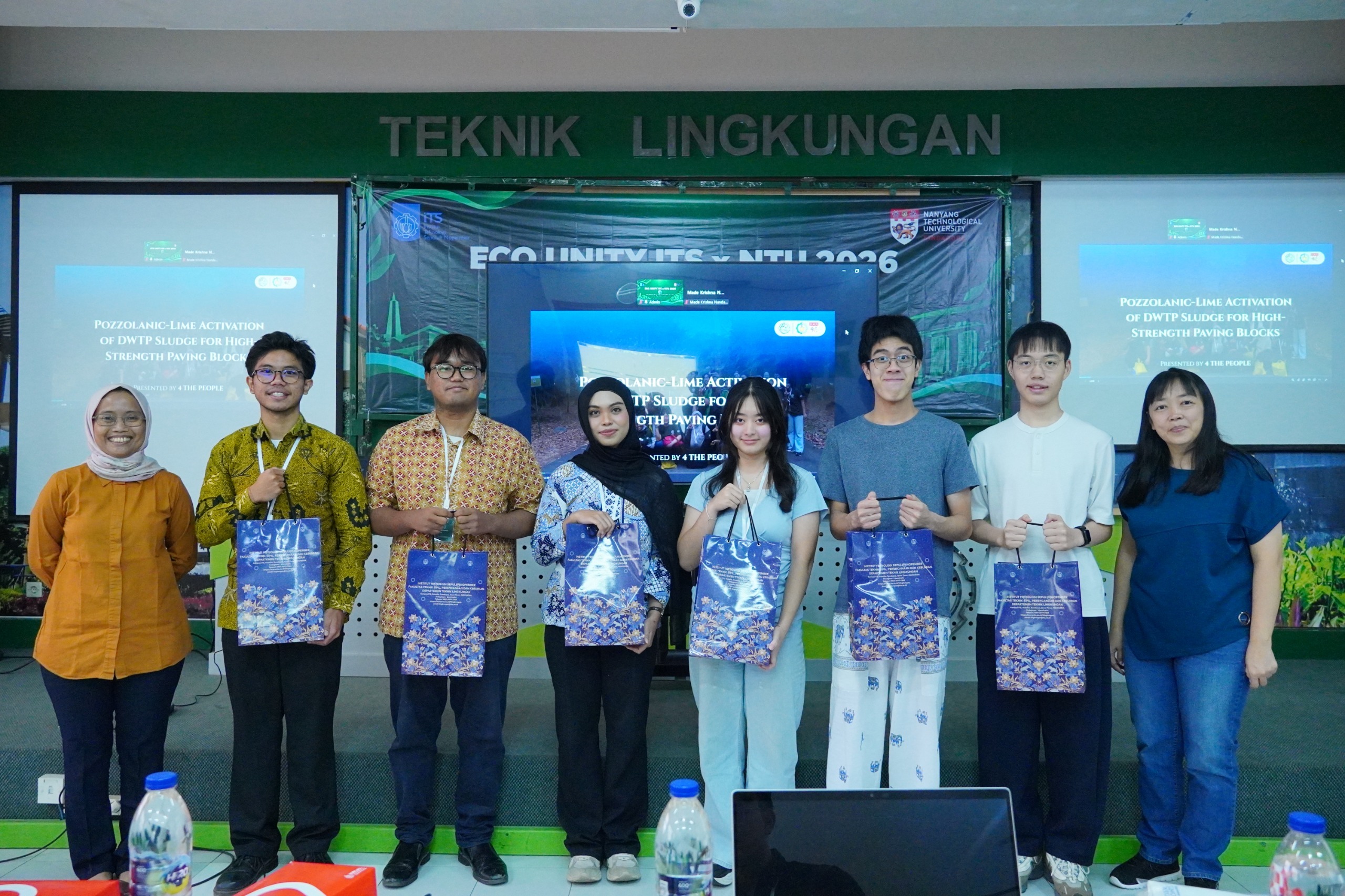
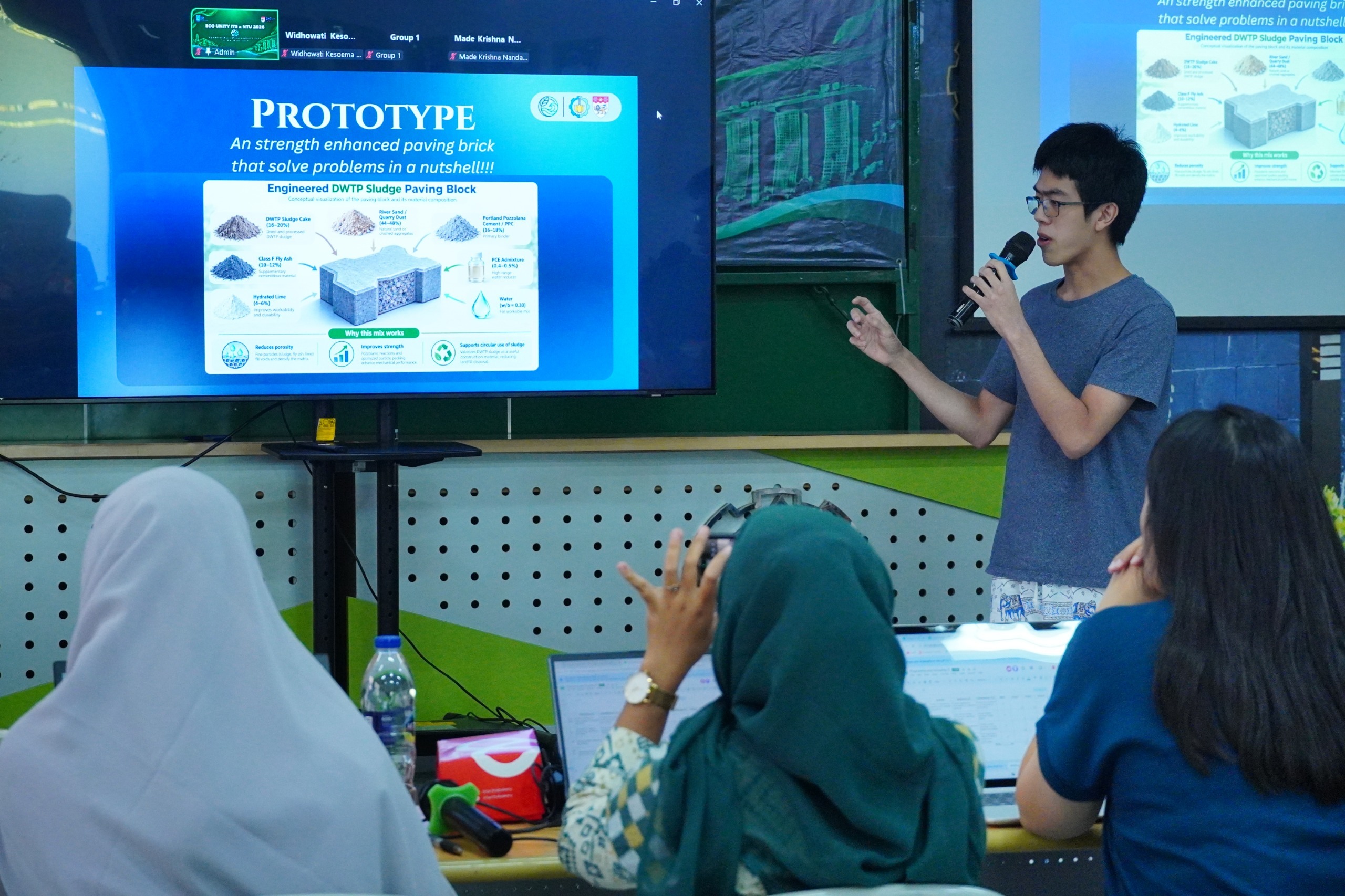
Unlike those two groups, Team 4 utilized wastewater treatment plants as construction materials. This idea emerged after participants visited a PDAM (Water Company) and learned about the large amount of sludge produced by filtering river water to produce clean water.
One of the NTU team members, Benedict, presented his innovation to the panel of judges. “The mud will then be processed into high-strength paving blocks ,” he said. Team 4’s innovation was ultimately named Best Group in the Eco Unity program for its proposed use of water treatment waste into a useful material.
The collaboration between the two institutions also supports the achievement of Sustainable Development Goals (SDGs) 6, 9, 12, and 17, primarily through collaborative research on utilizing wastewater and waste processing into valuable products and developing more sustainable innovations. (*)
Reporter: Restu Aisyah Rizki Permatasari