Learning Materials in the Physics Department
The learning materials provided in the Physics Department are well-aligned with the course objectives, as each course is equipped with a syllabus and lesson plan (RPS). The course syllabus includes a course description, course objectives, reference list, materials, and evaluations, ensuring that the materials provided are always aligned with the objectives of each course.
Structure and Range of Teaching Activities
Teaching and learning activities for one semester are conducted over 16 weeks, including assignments, quizzes, presentations, lab work, mid-semester evaluations, and end-of-semester evaluations.
Academic Services
The Physics Department offers a variety of academic services to students, including:
- Providing course guidance/assistance supported by multimedia and online resources, which are widely accessible (Courses: Crystal Diffraction, Instrumentation Physics, Intelligent Instruments, Statistical Physics, and Introduction to Materials Physics).
- Facilitating Student Organizations with divisions focused on providing tutoring for courses with low pass rates.
- Providing a library/reading room with a comprehensive collection of books and journals. The Institute and the Physics Department assign academic advisors who actively provide academic guidance and services.
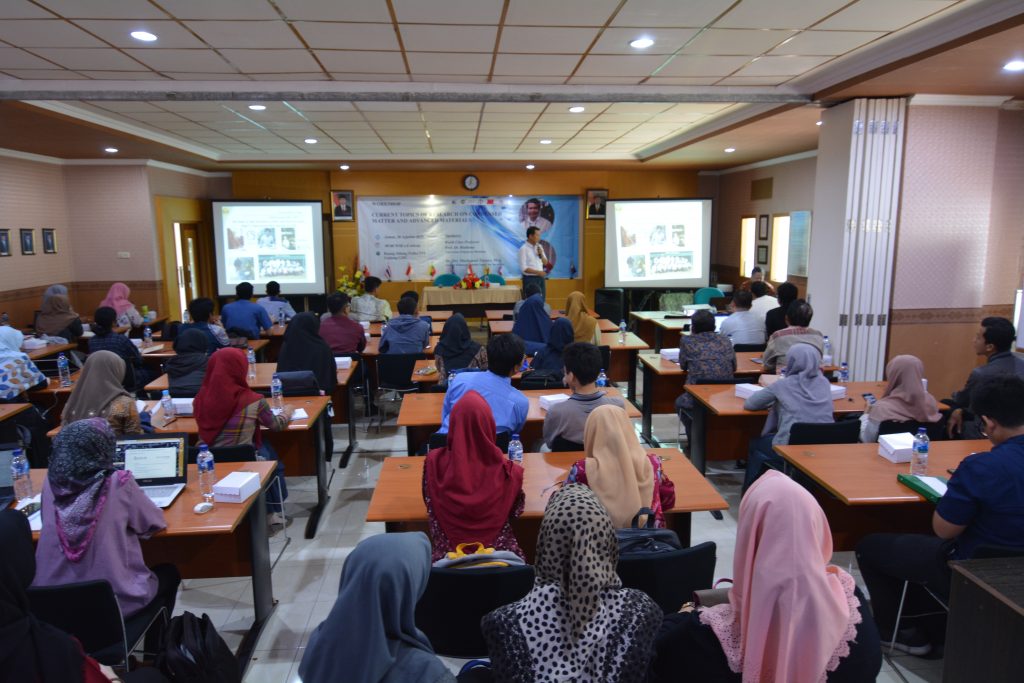
- Organizing guest lectures and seminars featuring professionals, routinely held every Monday.
- Encouraging students and faculty to actively participate in communication forums among professional institutions in the field of Physics and student communication forums in Physics.
- Maintaining active communication with alumni through the alumni communication forum, www.alumniits.com.
- Utilizing the Academic Management Information System managed by BAAK to support student academic services.
- Establishing a Student Consultation Team that actively provides academic guidance for student academic competition activities.
Career Information and Guidance (COOP)
To provide career guidance, job market information, and the latest industry needs to students, the Physics Department carries out several activities, including:
- Facilitating Student Organizations with divisions focused on providing job opportunities, internships, and scholarship information.
- Actively inviting alumni and/or facilitating direct communication between professionals/industry representatives and students through guest lecture programs.
- Actively participating in communication forums among professional institutions in the field of Physics.
- Maintaining career information and guidance from Physics Department alumni.
- Establishing a Student Consultation Team that actively provides career information and guidance.
- Academic Advisors, in addition to providing academic guidance, also offer career guidance to students to help them achieve suitable careers.
- The Institute also has a career counseling body (SAC: Student Advisory Center) that organizes various training programs and career fairs.
Thesis/Final Project Guidance
Thesis (or Final Project) guidance is provided while students are undertaking their /Thesis. Each student is supervised by a faculty advisor and/or a co-advisor. Students benefit from this guidance, making their research and writing process more directed, effective, and efficient. Challenges faced during the thesis/process are quickly identified and resolved. Student research becomes more focused, aligning with the research track record of the faculty and the research tree of the Physics Department.