Academics

You can go to https://www.its.ac.id/fisika/about-us/certificate-and-accreditation/ to access the certificate
To become a center for education, research and development of Physics and its applications in technology, both at national and international levels
The MissionsTo organize Bachelor of Physics education, oriented to the development of science and technology with national and international quality standards.
To strengthen Research and Dissemination of Physics at national and international levels.
To increase the capacity and to improve the competence of Human Resources and Education Ecosystem.
| PEO | Description |
| PEO-1 |
Producing graduates who are God-fearing, ethical, and responsible, and capable of demonstrating leadership and teamwork in the global world. |
| PEO-2 |
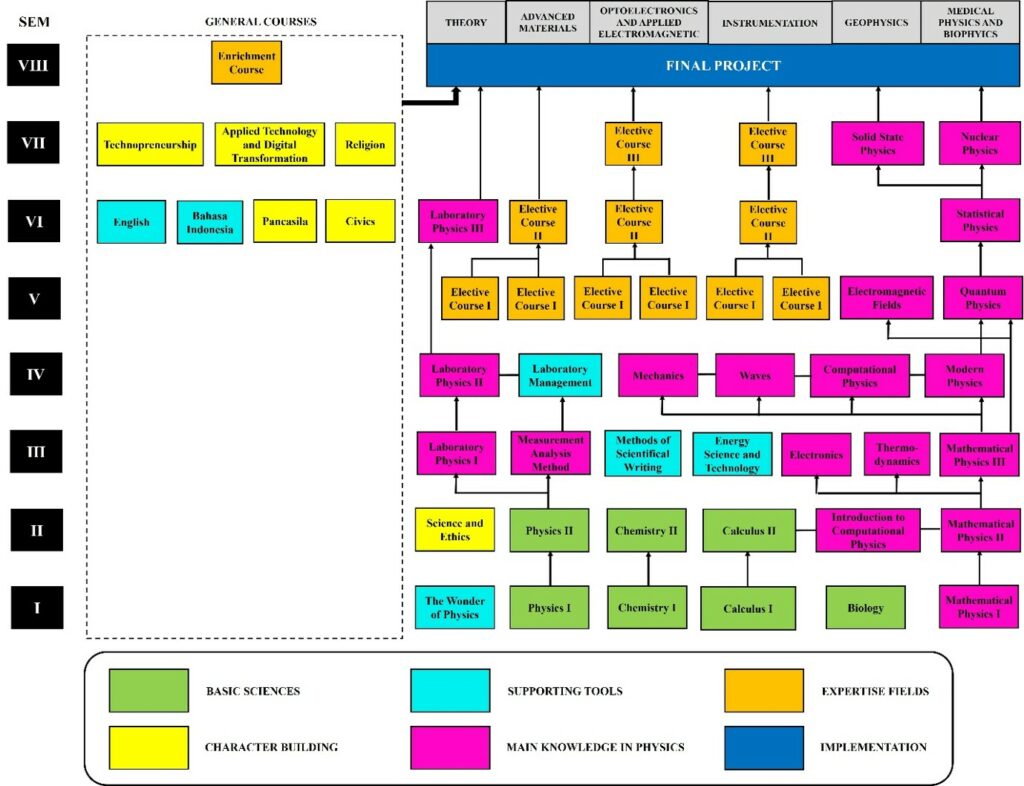
Producing graduates who at the beginning of their careers become professionals as educators, researchers, practitioners, and entrepreneurs by using their skills and knowledge in the field of physics which includes theoretical physics, advanced materials, instrumentation, optoelectronics, geophysics, and medical and biophysics to be applied in the real world of work. |
| PEO-3 |
Producing professionals as scientists who are able to communicate in writing and orally in teams or as global citizens using international languages. |
| PEO-4 |
Producing individuals who are able to develop themselves to continuously learn throughout life through further study, research, and other activities both at home country and abroad. |
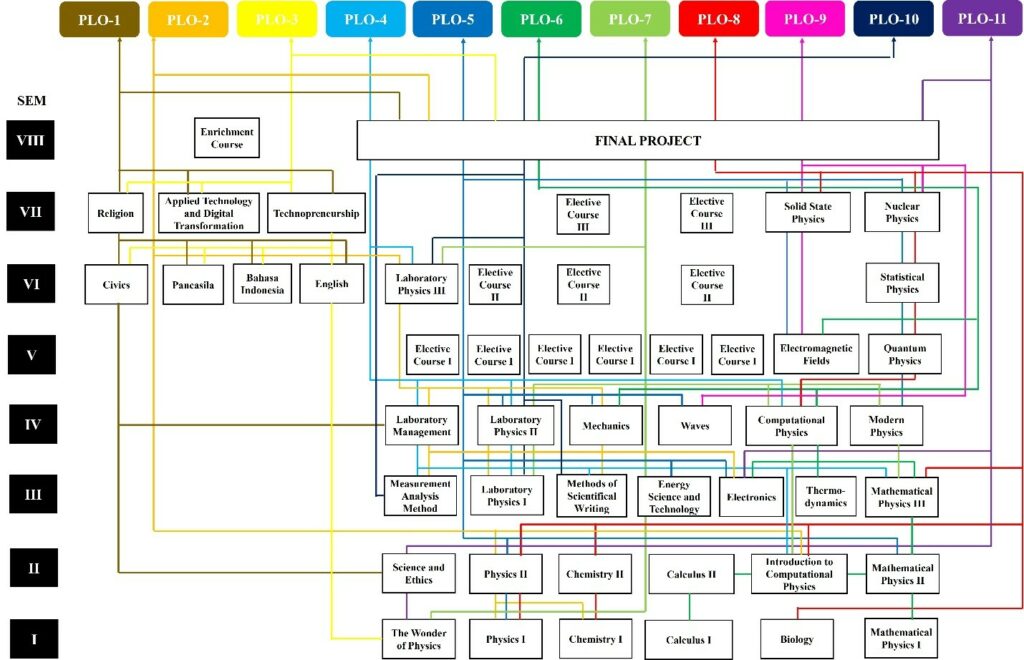
| PLO | Description |
| PLO-1 | Able to demonstrate attitudes and characters that reflect: devotion to God Almighty, ethics and integrity, virtuous character, sensitive and concerned about social and environmental issues, respecting cultural differences and diversity, upholding law enforcement, prioritizing the interests of the nation and the wider community, through creativity and innovation, excellence, strong leadership, synergy, and other potential to achieve maximum results. [S] |
| PLO-2 | Able to study and utilize science and technology in order to apply it to the field of expertise in Physics and be able to make appropriate decisions from the results of their own work or group work in the form of final project reports or other forms of learning activities whose output is equivalent to the final project through logical, critical, systematic, and innovative thinking. [KU] |
| PLO-3 | Able to manage self-learning and develop oneself as a personal lifelong learner to compete at national and international levels, in order to make a real contribution to solving problems by implementing information and communication technology and paying attention to the principles of sustainability and understanding technology-based entrepreneurship. [KU] |
| PLO-4 | Able to communicate and be responsible for applying information technology to document, store, and secure data compiled for solving problems in the field of physics expertise. [KU] |
| PLO-5 | Able to understand and apply the theoretical concepts of classical physics and modern physics in depth through identification of the physical properties of a physical system. [P] |
| PLO-6 | Able to apply the principles and applications of mathematical physics, computational physics, and instrumentation in both how to operate physical instruments in general and analyse data and information from these instruments. [P] |
| PLO-7 | Able to apply the principles, characteristics, functions, and relevant and updated technological applications in the field of physics and software applications. [P] |
| PLO-8 | Able to formulate physical phenomena and problems and be able to make mathematical or physical modeling / simulations that fit the hypothesis based on the results of observations and experiments carried out. [KK] |
| PLO-9 | Able to comprehensively solve physical problems with various alternative solutions and analyze existing physical systems and predict the potential application of physical behavior in information technology in the context of scientific development and further implementation in the field of physics expertise. [KK] |
| PLO-10 | Able to disseminate the results of problem (case studies) and physical behaviors based on standard scientific principles in oral and written communication in the form of reports or scientific works according to correct writing rules by understanding the plagiarism mechanism and publishing them at the national or international level. [KK] |
| PLO-11 | Able to adapt, collaborate, create, contribute and innovate in applying science in social life and has a global insight in his role as a citizen of the world, as well as being able to use the international language. [KK] |
| PEO-1 | PEO-2 | PEO-3 | PEO-4 | |
| PLO-1 | V | |||
| PLO-2 | V | |||
| PLO-3 | V | V | V | V |
| PLO-4 | V | V | ||
| PLO-5 | V | |||
| PLO-5 | V | |||
| PLO-6 | V | |||
| PLO-7 | V | |||
| PLO-8 | V | |||
| PLO-9 | V | |||
| PLO-10 | V | V | V | |
| PLO-11 | V | V | ||
Matrix correlation between the elective courses that support the PLO
|
No |
Elective Course |
PLO |
||||||||||
|
1 |
2 |
3 |
4 |
5 |
6 |
7 |
8 |
9 |
10 |
11 |
||
|
Elective Course I |
||||||||||||
|
1 |
Group Theory |
|
✓ |
|
|
|
✓ |
|
✓ |
|
|
|
|
2 |
Advanced Mathematical Physics |
|
✓ |
|
|
|
✓ |
|
✓ |
|
|
|
|
3 |
Relativistic Quantum Theory |
|
✓ |
|
|
✓ |
✓ |
|
✓ |
|
|
|
|
4 |
Material Structure |
|
|
|
|
✓ |
|
✓ |
✓ |
✓ |
|
|
|
5 |
Ceramic Physics |
|
|
|
|
|
|
✓ |
✓ |
✓ |
|
|
|
6 |
Metal Physics |
|
|
|
|
✓ |
|
✓ |
|
✓ |
✓ |
|
|
7 |
Polymer Physics |
|
|
✓ |
|
|
|
✓ |
|
✓ |
|
|
|
8 |
Optoelectronics |
|
|
|
|
✓ |
|
✓ |
|
|
|
|
|
9 |
Fiber Optic Sensors |
|
|
|
|
✓ |
|
|
✓ |
|
|
|
|
10 |
Fotonics |
|
|
|
|
✓ |
|
✓ |
|
|
|
|
|
11 |
Instrumentation Physics |
|
✓ |
|
✓ |
|
|
|
|
|
|
✓ |
|
12 |
Building Physics |
|
✓ |
|
|
|
|
✓ |
|
|
|
✓ |
|
13 |
Acoustic Physics |
|
✓ |
|
✓ |
|
|
|
|
|
✓ |
|
|
14 |
Geoelectric Exploration |
|
|
|
|
|
✓ |
✓ |
✓ |
|
✓ |
|
|
15 |
Geology |
|
✓ |
|
✓ |
|
|
|
|
|
✓ |
|
|
16 |
Seismology |
|
|
|
|
|
✓ |
✓ |
✓ |
✓ |
|
|
|
17 |
Gravity and Magnetic Exploration |
|
|
|
|
|
✓ |
|
✓ |
✓ |
✓ |
|
|
18 |
Anatomi dan Fisiologi |
|
✓ |
|
✓ |
|||||||
|
19 |
Radiobiologi |
|
✓ |
|
✓ |
|
|
|
✓ |
✓ |
||
|
20 |
Fisika Radiologi dan Dosimetri |
|
✓ |
|
✓ |
|
|
|
✓ |
✓ |
||
|
21 |
Fisika Kedokteran Nuklir |
|
✓ |
|
✓ |
|
|
|
✓ |
✓ |
|
|
|
Elective Course II |
||||||||||||
|
22 |
Introduction to Particle Physics |
|
✓ |
|
|
✓ |
✓ |
|
✓ |
|
|
|
|
23 |
Synthesis and Processing |
|
✓ |
|
|
|
|
|
✓ |
✓ |
|
|
|
24 |
Special Topics: Fluid Dynamics and Heat Transfer |
|
✓ |
✓ |
|
✓ |
|
|
✓ |
|
|
|
|
25 |
Antenna and Propagation |
|
|
|
|
|
✓ |
✓ |
✓ |
|
|
|
|
26 |
Sensors and tranducers |
|
✓ |
|
|
|
✓ |
✓ |
|
|
|
|
|
27 |
Inversion Method |
|
|
|
|
|
|
✓ |
✓ |
✓ |
|
|
|
28 |
Diagnostic and Intervesional Radiology Physics |
|
✓ |
|
✓ |
|
|
|
✓ |
✓ |
||
|
29 |
Medical Physics Laboratory |
|
✓ |
|
|
|
✓ |
✓ |
✓ |
✓ |
|
|
|
30 |
Energi terbarukan |
|
✓ |
|
|
|
✓ |
|
|
|
|
✓ |
|
Elective Course III |
||||||||||||
|
31 |
Co-op |
✓ |
✓ |
✓ |
✓ |
✓ |
✓ |
✓ |
✓ |
✓ |
✓ |
✓ |
|
32 |
Capita Selecta |
|
|
|
|
✓ |
✓ |
✓ |
✓ |
|
|
|
|
33 |
Introduction to Relativity Theory |
|
✓ |
|
|
✓ |
✓ |
|
✓ |
|||
|
34 |
Special Topics on Quantum Physics |
|
✓ |
|
|
✓ |
✓ |
|
✓ |
|||
|
35 |
Materials Characterization |
|
|
|
✓ |
|
|
✓ |
✓ |
✓ |
|
|
|
36 |
Advanced Materials |
|
|
|
✓ |
|
|
|
|
✓ |
✓ |
|
|
37 |
Optical and Antenna Modeling |
|
|
|
|
|
✓ |
|
|
✓ |
|
|
|
38 |
Image processing |
|
|
|
|
|
✓ |
|
|
✓ |
|
|
|
39 |
Control System and Data Analysis |
|
✓ |
|
✓ |
|
✓ |
✓ |
|
|
|
|
|
40 |
Electro Acoustic |
|
✓ |
|
|
|
|
✓ |
|
|
|
✓ |
|
41 |
Seismic Exploration |
|
|
|
|
|
✓ |
✓ |
✓ |
|
|
|
|
42 |
Electromagnetic Exploration |
✓ |
✓ |
✓ |
|
✓ |
||||||
|
43 |
Radiotherapy Physics |
✓ |
|
✓ |
|
|
|
✓ |
✓ |
|||
|
44 |
Health Physics and Radiation Protection |
|
✓ |
|
✓ |
|
|
|
✓ |
✓ |
||
|
45 |
Capita Selecta (Optics) |
|
✓ |
|
|
|
|
✓ |
|
|
✓ |
|
|
46 |
Fluid Mechanics |
|
✓ |
|
✓ |
|
|
|
|
|
|
✓ |
Note: Course classification based on specialized fields and laboratory:
1. Advanced Materials;
2. Instrumentation Physics;
3. Optoelectronics and Applied Electromagnetics;
4. Geophysics;
5. Theoretical Physics; and
6. Medical Physics and Biophysics
Correlation between PLO and the subject-specific criteria of Physics Bachelor Study Programme at DoP-ITS.| No | Subject-Specific Criteria | PLO |
| 1 | Students have sound knowledge of classical physics (mechanics, electrodynamics, thermodynamics, oscillations, waves and optics) and are familiar with the fundamentals of quantum, atomic and molecular, nuclear, elementary particle and solid-state physics. | PLO-5 |
| 2 | Students are familiar with important mathematical methods used in physics and can use these to solve physics problems. | PLO-6 |
| 3 | Students have an extensive understanding of the fundamental principles of physics, their inherent relation and mathematical formulation and, based on this, have acquired methods suitable for theoretical analysis, modelling and simulation of relevant processes. | PLO-8 |
| 4 | Students have applied their knowledge to physics problems in an exemplary manner and studied some areas in greater depth, thereby acquiring a first basis for problem solving competence. | PLO-4, PLO-9 |
| 5 | Students have a basic capacity to comprehend physics problems. This will in general however not yet facilitate a deeper understanding of current research areas. | PLO-7, PLO-10 |
| 6 | Students are therefore in a position to independently classify physics-based and to some extent also interdisciplinary problems that require a target-oriented and logic-based approach, and to analyse and/or solve them by using natural scientific and mathematical methods. | PLO-7, PLO-8 |
| 7 | Students are familiar with basic principles of experimentation, are able to use modern physics measurement methods, and are in a position to assess the significance of results correctly. | PLO-6, PLO-8 |
| 8 | Students have generally also acquired an overview knowledge in selected other natural science subjects or technical disciplines. | PLO-2, PLO-4 |
| 9 | Students are able to apply their knowledge to different fields and act responsibly in their professional activity. They are moreover able to recognise new trends in their subject area and integrate the relevant methodology – if necessary after appropriate qualification – into their further work. | PLO-1, PLO-3 |
| 10 | Students are able to continuously and independently extend and deepen the knowledge ac-quired in the Bachelor's degree programme. They are familiar with suitable learning strat-egies (lifelong learning) for this; they are in particular qualified for a consecutive Master's degree programme in principle. | PLO-3 |
| 11 | Students have gained initial experience with regard to generic qualifications (e.g. time management, study and work techniques, willingness to cooperate, capacity for teamwork, communication and presentation skills, communication and presentation techniques, programming skills) in their degree programme, and are able to develop these skills further. | PLO-3, PLO-11 |
| 12 | Students are familiar with the basic elements of the relevant specialised English. | PLO-2, PLO-11 |
| 13 | Students are able to solve a simple scientific problem and to present their results orally (talk/presentation) and in writing (demonstrated in a Bachelor’s thesis). | PLO-10, PLO-11 |
| 14 | Students know the rules of good scientific practice. | PLO-1, PLO-2 PLO-3, PLO-10, PLO-11 |