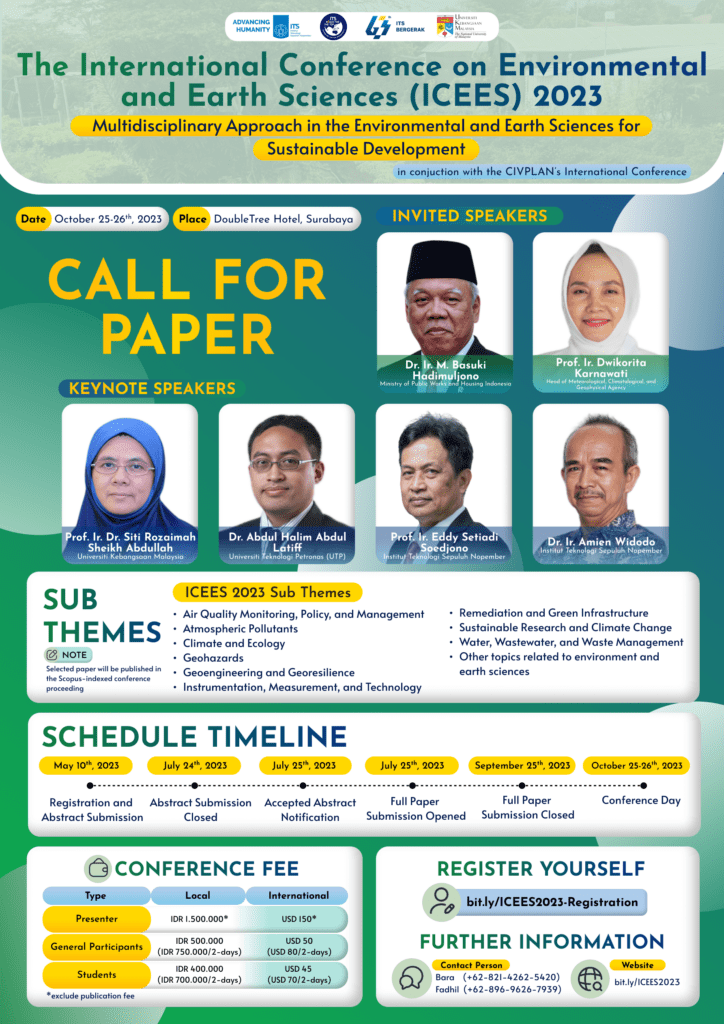
Theme: “MULTIDISCIPLINARY APPROACH IN THE ENVIRONMENTAL AND EARTH SCIENCES FOR SUSTAINABLE DEVELOPMENT”
Sub theme 1: Air Quality Monitoring, Policy and Management
Air quality management is a significant issue to discuss, considering more emissions into the atmosphere due to massive economic growth. A decent monitoring system should be put in place to identify emission issues. There has been a recent development in the monitoring of air pollutants. This conference aims to capture recent research and technology that are under development.
Sub theme 2: Atmospheric Pollutants
All studies related to aerosol, particulates, and other atmospheric pollutants, including the transport of pollutants, are expected. Air pollutants possess health impacts, both acute and chronic. However, due to its characteristics, many people are still skeptical about it. This theme is expected to tackle this issue and discuss ways to promote society's awareness to decrease emissions.
Sub theme 3: Climate and Ecology
Ecology is the connected ecosystem that supports life, including reciprocal relations between organisms (man, animals, and plants) and their environment. The change in the climate has influenced the world’s ecology in many ways, for example, the rise in temperature and the decline in freshwater quality.
Sub theme 4: Geohazards A geologic hazard or geohazard is the risk of damage or loss of property or life caused by a geological process. Example of geohazards includes volcanic eruptions, earthquakes, landslides, avalanches, floods, and tsunamis. With cities rapidly growing, geohazards become the greatest threat to communities and infrastructures in cities.
Sub theme 5: Geoengineering and Georesilience
Geoengineers also work on geohazard resilience. Georesilience means building resiliency to geohazard risks, for example, earthquakes and landslides, through several measures, such as understanding disaster risk, strengthening disaster risk governance to manage disaster risk, investing in disaster risk reduction for resilience, and enhancing disaster preparedness.
Sub theme 6: Instrumentation, Measurement and Technology
This subtheme discusses measures, technology, and instrumentation related but not limited to environmental (water, waste, and air pollution) and earth sciences for sustainable development.
Sub theme 7: Remediation and Green Infrastructure
This subtheme discusses the trend and current research in using plants as green infrastructure for remediation and waste treatment. Green infrastructures try to incorporate ecological processes and social conditions with an emphasis on connectivity. Example of green infrastructure includes encouraging stormwater infiltration to be treated by vegetation or soil to allow reuse.
Sub theme 8: Sustainable Research and Climate Change
Climate change affects every aspect of the world, especially people who live in remote or fragile environments, such as small islands and coastal areas. Communities with a lack of infrastructure and education access suffer the most and could face health impacts. We hope that recent fact and research reveals updates and report adaptation and mitigation strategies that can be implemented efficiently and effectively.
Sub theme 9: Water, Wastewater, and Waste Management
All studies related to water (quality and quantity) and wastewater engineering (design and treatment) as well as waste (solid and hazardous waste) management are welcomed. We expect to receive research findings and solutions within the framework of sustainable development.
Sub theme 10: Other topics related to environment and earth sciences
All other discussions and findings about multidisciplinary research on environment and earth sciences are highly expected. Ensuring equitable access to clean water and sanitation for all (SDG 6), addressing climate change issues (SDG 13), as well as protecting life on land and below water (SDGs 14 and 15) are fundamental actions to achieve other social and economic goals within the SDGs.