Smart Eco Campus


“After water and food, energy is one of the key enablers of human life. Energy is central to nearly every major challenge and opportunity the world faces today and access to energy for all is essential. But energy needs to be available and affordable to all to allow future development, and it needs to be clean in order to ensure that the development can be sustainable.” (THE Impact Rankings)
Guided by its “Advancing Humanity” motto, Institut Teknologi Sepuluh Nopember (ITS) enforces binding institutional standards to ensure that all new campus construction and building renovations adhere to green building and energy efficiency principles. Formalized through Rector’s Circular Letter No. 9665/IT2/T/TU.00.08/V/2024 on Achieving the Sustainable Development Goals, this regulatory framework aligns campus physical development with sustainable architectural standards and long-term resource conservation.
Within the Infrastructure Chapter of the Rector’s Circular Letter, ITS mandates that all physical structures be constructed, managed, and renovated in accordance with certified green building standards—specifically utilizing energy-efficient and environmentally friendly materials as stipulated in Point 2. The six core provisions governing sustainable campus infrastructure are:
Reinforcing the infrastructure mandate, the Energy Efficiency and Conservation Chapter obligates the integration of strict energy efficiency measures across all new builds and structural retrofits—explicitly regulated under Point 9 and supported by sustainable electrical equipment procurement under Point 2. The ten operational directives under this chapter comprise:
Through the binding enforcement of Point 9 alongside Point 2 of the Energy Efficiency and Conservation Chapter and Point 2 of the Infrastructure Chapter, ITS guarantees that every new construction project and building renovation complies with measurable energy efficiency standards across the campus environment.
Upgrading existing buildings to higher energy efficiency is a core pillar of Institut Teknologi Sepuluh Nopember (ITS) in mitigating climate change and advancing sustainable resource management. Enhancing building thermal and electrical efficiency significantly lowers energy consumption, abates greenhouse gas emissions, and yields substantial operational cost savings. Through Rector’s Circular Letter No. 9665/IT2/T/TU.00.08/V/2024 (Chapter on Energy Efficiency and Conservation), ITS enforces continuous building retrofits and operational upgrades across its campus infrastructure.
As stipulated in Points 1 through 10 of the Energy Efficiency and Conservation Chapter in the Rector’s Circular Letter, all academic units and facility managers are mandated to upgrade existing building systems and daily energy operations through the following ten directives:
ITS has deployed Smart Building configurations integrated with a centralized Building Management System (BMS) across 40 campus buildings to automate and optimize indoor lighting and cooling loads. These retrofitted facilities encompass 246,333.20 m²—representing 67.94% of total campus building floor area—with an institutional target to achieve 100% BMS coverage. Key upgraded facilities include the Rectorate Building, Research Center Building, Central Library, Graha Sepuluh Nopember, Tower 2, Manarul Ilmi Mosque, and the Campus Canteen. Across departmental offices, conventional appliances have been replaced with high-efficiency inverter air conditioners, refrigerators, water dispensers, and energy-saving workstations, complemented by standalone solar-powered CCTV networks along campus roadways.
 Figure 1: Energy-efficient architectural upgrades, optimized daylighting, and automated ventilation systems implemented at the ITS Campus Canteen.
To further lower grid electricity demand, ITS operates rooftop and building-integrated solar power plants generating a combined 332,472.9 kWh per year. Building envelopes are retrofitted with vertical gardens to reduce ambient surface temperatures and ease inverter air conditioning loads, while interior spaces are redesigned to maximize natural daylighting alongside high-efficiency LED luminaires. Furthermore, classrooms and smart rooms are equipped with motion-sensor switches, programmable time-control circuits, and hybrid natural-mechanical ventilation systems to maintain thermal comfort with minimal electricity wastage.
 Figure 2: Passive cooling, open-air natural ventilation, and daylight harvesting design applied at the Manarul Ilmi Mosque complex.
Advancing next-generation building energy integration, ITS partnered with Nanyang Technological University (NTU) Singapore under the Institute of Research for Sustainability and Innovation (INSPIRASI) to establish the Renewable Energy Integration Demonstrator of Indonesia (REIDI). Operating as a five-year living laboratory—the first university-based demonstrator of its kind in Indonesia—REIDI integrates a 500 kWp solar photovoltaic system, a 50 kW biomass generator, and a 10 kW green hydrogen unit. The generated clean electricity is dynamically dispatched to support campus building grids or stored in industrial battery banks for peak-load shaving.
Institut Teknologi Sepuluh Nopember (ITS) executes a structured, institution-wide carbon management and greenhouse gas (GHG) abatement process to mitigate climate change impacts. Governed by Rector’s Circular Letter No. 9665/IT2/T/TU.00.08/V/2024 and reinforced by Rector’s Decree No. 439/IT2/T/HK.00.01/XII/2024 on Carbon Neutrality Commitment by 2030, ITS systematically tracks and reduces emissions across Scopes 1, 2, and 3 through clean energy transitions, smart automation, green procurement, and campus-wide behavioral transformation.
To institutionalize low-carbon campus operations, the Energy Efficiency and Conservation Chapter of Rector’s Circular Letter No. 9665/IT2/T/TU.00.08/V/2024 establishes ten mandatory operational directives across all faculties, laboratories, and administrative units:
Aligned with this mandate, the ITS Greenhouse Gas (GHG) Reduction Program categorizes and manages campus emissions across three comprehensive operational scopes.
ITS minimizes direct on-campus emissions across four operational categories:
To reduce indirect carbon emissions from grid electricity consumption, ITS deploys automated control systems and decentralized solar infrastructure:
ITS addresses indirect value-chain and behavioral emissions through circular waste management and campus traffic regulation:
Institut Teknologi Sepuluh Nopember (ITS) has formalized a comprehensive Energy Efficiency and Conservation Plan to reduce overall campus energy consumption and accelerate the transition toward a low-carbon institution. This institutional mandate is anchored in ITS Declaration Letter No. T/38539/IT2/TU.00.08/2021 on Sustainable and Environmentally Conscious Campus Operations and reinforced by Rector’s Decree No. 439/IT2/T/HK.00.01/XII/2024 on Carbon Neutrality Commitment by 2030.
Under these governing policies, ITS embeds energy efficiency principles across daily campus operations, facility management, and academic community behavior. Chapter 9 of the declaration establishes targeted strategies to curb electricity demand through technology adoption, renewable energy utilization, and behavioral conservation. Key operational rules mandate the procurement of energy-efficient electrical equipment, restrict artificial lighting to spaces lacking sufficient daylight, promote natural ventilation, and standardize indoor air-conditioning temperatures at 24–25°C. Additionally, elevator operations are restricted to essential needs and prioritized during peak hours to prevent standby energy wastage.
Campus-wide energy reduction is further reinforced through integrated Water Conservation (Chapter 7) and Waste Management (Chapter 8) programs that lower indirect resource and energy loads. By implementing rainwater harvesting, wastewater recycling, and strict 3R (Reduce, Reuse, Recycle) protocols across academic units, ITS minimizes the electricity and fuel required for municipal water pumping, resource processing, and waste treatment.
In alignment with certified green building benchmarks, ITS requires all new construction, structural renovations, and infrastructure upgrades to comply with energy-conscious architectural design. This commitment is operationalized through the strategic Memorandum of Understanding (MoU) between ITS and PT Wika Gedung Tbk on green construction and modular building methodologies. Initiated with the development plan for the 20-story ITS Student Dormitory—the first high-rise student residence in Indonesia designed with modular, energy-efficient engineering—the partnership minimizes embodied construction energy and optimizes long-term thermal performance.
 Figure 1: Strategic MoU signing between ITS and PT Wika Gedung Tbk to implement green construction standards and energy-efficient modular building designs.
Beyond operational conservation, ITS’s long-term energy reduction plan is anchored in its Net Zero Emission 2030 Roadmap under the 2024 Rector’s Decree. The university allocates dedicated human, financial, and technical resources to expand non-fossil campus mobility—operating electric campus shuttle buses, electric motorbikes, and shared bicycles alongside designated motor-free zones—while conducting periodic carbon inventory and balance assessments to track consumption reductions.
Complementing demand-side conservation, ITS accelerates clean power generation through the Renewable Energy Integrated Development and Innovation (REIDI) Project in collaboration with Nanyang Technological University (NTU) Singapore. Operating as Indonesia’s largest university-based clean energy living laboratory, REIDI integrates a 500 kWp solar photovoltaic and agrivoltaic array, a 50 kW biomass plant, and a 10 kW green hydrogen generator. Clean electricity produced is dispatched to campus building grids or stored in battery banks, demonstrating a holistic institutional model for reducing grid energy demand and advancing sustainable campus operations.
Institut Teknologi Sepuluh Nopember (ITS) conducts systematic energy reviews, cluster-based electricity consumption audits, and carbon footprint tracking to pinpoint operational inefficiencies and eliminate energy wastage across campus. Governed by Rector’s Circular Letter No. 9665/IT2/T/TU.00.08/V/2024 (Chapter on Energy Efficiency and Conservation), these diagnostic assessments guide targeted equipment retrofits, lower utility expenditures, and minimize greenhouse gas emissions.
To prevent unnecessary power drain across academic buildings, laboratories, and administrative offices, Points 1 through 10 of the Energy Efficiency and Conservation Chapter in Rector’s Circular Letter No. 9665/IT2/T/TU.00.08/V/2024 establish ten binding operational controls:
Operationalizing these directives, ITS conducts periodic electricity consumption assessments organized by campus building clusters to identify high-load zones and detect abnormal energy wastage.
To complement sub-metered electricity audits, ITS monitors its total institutional carbon footprint across utility power and campus transportation to isolate major emission drivers and energy inefficiencies. Across measured operational sources, gross campus emissions reach 13,630.32 metric tons of CO₂, distributed as follows:
To reduce dependence on fossil-dominated grid electricity from the State Electricity Company (PT PLN), ITS generates 333,905 kWh per year of on-site renewable energy and continuously monitors its distribution to optimize load balancing and prevent generation wastage:
Institut Teknologi Sepuluh Nopember (ITS) enforces a formal divestment and sustainable investment policy to shift institutional financial commitments away from carbon-intensive fossil fuel industries—particularly coal and oil—toward renewable energy and environmentally responsible enterprises. Formalized through Rector’s Circular Letter No. 9699/IT2/B/TU.00.02/V/2024 on Divestment Commitment and Green Procurement Policy, this framework protects institutional assets against climate-related transition risks while aligning university partnerships with global decarbonization targets.
Under the Economy Chapter (Section 1, Points 1–4) of Rector’s Circular Letter No. 9699/IT2/B/TU.00.02/V/2024, ITS establishes four binding governance directives requiring periodic portfolio screening and prioritizing partnerships with clean-energy and sustainability-oriented companies:
Operationalizing this policy across institutional supply chains, the ITS Procurement of Goods and Services Work Unit (UKPBJ) mandates eco-certified electronic equipment across all campus tenders. As a concrete implementation, ITS partnered with PT Panasonic Gobel Life Solutions Manufacturing to deploy intelligent light-emitting diode (LED) lighting systems equipped with ambient light sensors, automatically regulating illumination output to cut campus electricity consumption and operational costs.
Institut Teknologi Sepuluh Nopember (ITS) actively champions the clean energy transition by extending appropriate technology, decentralized renewable infrastructure, and capacity-building programs to local communities, farmers, coastal fishermen, and regional schools. By translating cutting-edge laboratory research into accessible grassroots solutions, ITS empowers civic society to replace fossil fuels, maximize energy efficiency, and foster long-term environmental and economic self-reliance.
To alleviate operational expenses and eliminate rural dependence on diesel-powered combustion generators, ITS deployed a series of renewable energy engineering interventions for agricultural cooperatives across East Java. In Bojonegoro and Nganjuk, community service teams introduced the solar-powered automated shallot irrigation system, pairing photovoltaic arrays with moisture sensors to automate water dispensation while cutting irrigation fuel overheads. This technological intervention is further strengthened by the deployment of an IoT-based water pump monitoring system for energy conservation, allowing farming groups to track kilowatt-hour electricity consumption and prevent systemic water and energy wastage in real time.
Addressing post-harvest processing bottlenecks, researchers engineered the smart solar drying chamber for chili farmers, combining solar thermal collectors with auxiliary electric blowers to accelerate dehydration cycles regardless of erratic climate conditions. In highland agrarian clusters, agricultural communities were trained to operate an energy-efficient coffee bean roaster designed to replace wood-fueled open combustion. These localized field clinics ensure that rural producers not only utilize clean equipment but also acquire practical capabilities in thermal regulation and system maintenance.
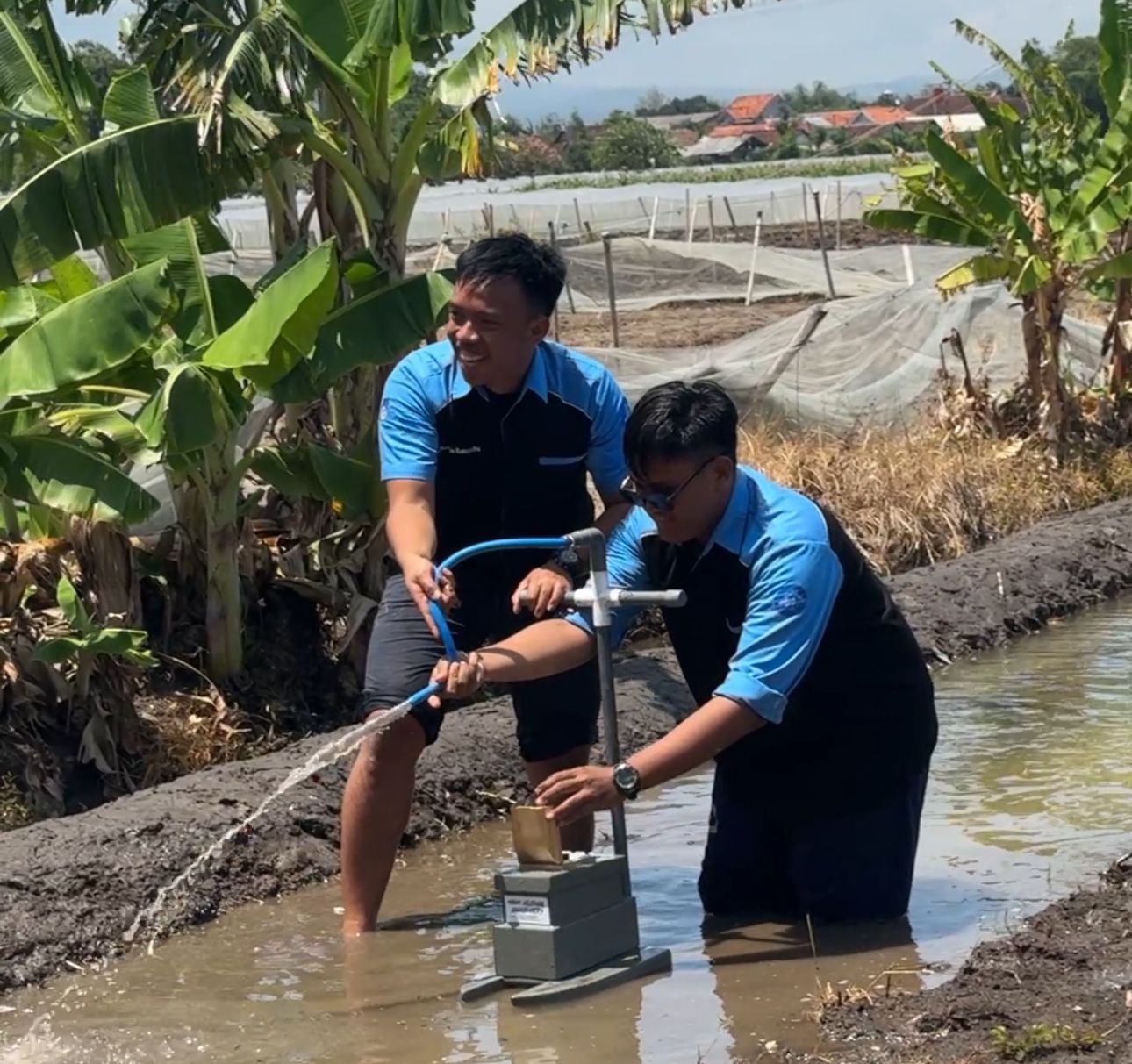 Figure 1: Field trial of the IoT-integrated solar irrigation pump with rural shallot farmers conducted by the High Voltage Laboratory team.
Extending clean technology to remote archipelagic communities, ITS engineers partnered with artisanal fishermen to deploy the solar-powered smart fish trap system. Equipped with low-wattage submerged LED light attractors energized by onboard photovoltaic cells, the device eliminates the hazards of kerosene lanterns and diesel generators previously utilized during nighttime harvesting, improving daily catch yields while substantially abating operational carbon emissions along coastal fishing grounds.
Simultaneously, in the mangrove conservation reserves of coastal East Java, ITS spearheaded the development and deployment of solar-powered electric catamaran boats for ecotourism and conservation patrol. By substituting loud, oil-leaking outboard two-stroke petrol motors with quiet brushless electric propulsion and rooftop solar panels, local eco-tour managers and conservationists were educated on renewable battery storage, sustainable boat navigation, and the ecological advantages of zero-emission water transportation in sensitive coastal biomes.
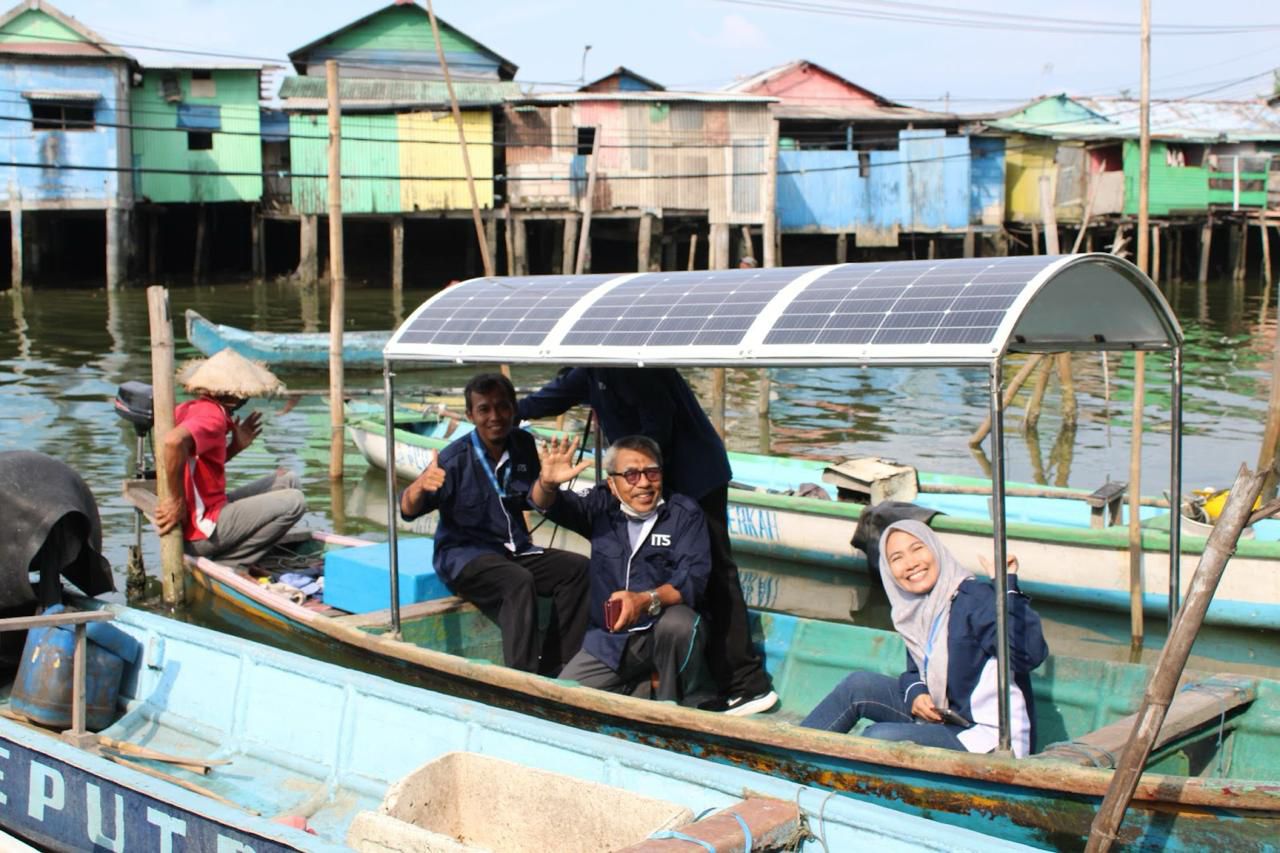 Figure 2: Operational trial of the rooftop solar-electric boat utilized for quiet, emission-free mangrove ecotourism tours in Sontoh Laut, Surabaya.
To accelerate community-scale self-sufficiency, student and faculty researchers realized the Desa Energi Berdikari (Energy Independent Village) framework, establishing an integrated circular economy ecosystem powered by off-grid micro-renewables. In tandem, the Department of Physics spearheaded the installation of centralized solar cell power stations to advance rural ecotourism, ensuring that peripheral community enterprises receive stable, non-intermittent green electricity to illuminate public walking tracks and power local micro-enterprises without inflating municipal grid expenditures.
Further reinforcing public infrastructure safety, student engineers under the Electrical Engineering Student Association (Himatektro) implemented the EASY automated solar floodlight initiative across village public facilities. In parallel, the Society of Renewable Energy (SRE) ITS conducted civic outreach by donating and installing standalone solar streetlights for rural settlements. Village residents were actively trained in basic panel cleaning, battery management, and wiring diagnostics to ensure complete community stewardship over their decentralized energy assets.
 Figure 3: Standalone solar streetlight installed at the Public Open Space Facility in Medokan Semampir RW 2, Surabaya.
Cultivating an early awareness of climate action, ITS organized participatory educational clinics across secondary and primary schools. In Lamongan Regency, academic outreach teams carried out solar PV educational roadshows for secondary students, introducing basic photovoltaic physics and rooftop solar potential through portable demonstration kits. A similar outreach was executed across regional schools, as documented in ITS' energy transition youth campaigns in Jombang, challenging students to conduct energy audits within their own classrooms and adopt conscious conservation routines.
To elucidate complex subsurface renewable resources, student teams engineered an interactive 3D geothermal plant educational mock-up to teach youth about steam extraction and zero-emission turbine baseloads. Broadening civic participation across urban centers, the student-led Society of Renewable Energy hosted public mass awareness campaigns, including the RE-Run 2025 sustainable public marathon and the Re-Spark renewable energy innovation expo, transforming technical transition dialogues into accessible community celebrations.
 Figure 4: Demonstration and handover of solar photovoltaic educational kits to secondary school students at SMPN 1 Turi, Lamongan.
Advancing the decarbonization of everyday transportation, the Science Techno Park (STP) Automotive Center at ITS expanded its civic conversion clinics after achieving official recognition as a certified testing hub, marked by ITS securing the Type A Electric Vehicle Conversion Certification from the Ministry of Transportation. This credential established ITS as a premier public testing authority capable of validating converted electric motorcycles for small garage owners and regional mechanical SMEs.
Capitalizing on this authority, university automotive engineers held community workshops educating local mechanics, trade school instructors, and vehicle enthusiasts on lithium-ion battery management, electric motor controllers, and safety wiring standards. To further widen consumer acceptance of zero-emission mobility, the university showcased high-efficiency prototypes at major automotive platforms, featuring the Nogogeni renewable vehicle team exhibition at the Indonesia International Motor Show (IIMS) 2025 to illustrate practical energy-efficient vehicle performance to thousands of automotive visitors.
 Figure 5: Prof. Dr. Ir. Bambang Sudarmanta, ST, MT, IPM, AEng, with a converted electric vehicle at the ITS STP Otomotif Custom Conversion and Production Workshop.
Institut Teknologi Sepuluh Nopember (ITS) reinforces its institutional pledge to catalyze a 100% renewable energy transition extending far beyond campus boundaries. Through bilateral governmental collaborations, national policy advocacy with energy regulators, large-scale living laboratory demonstrators, and civic public mobilization, ITS bridges academic technological foresight with public action to accelerate Indonesia’s pathway toward Net Zero Emissions and an equitable clean energy future.
Strengthening international diplomacy for clean energy adoption, ITS formalized strategic cooperation with the British Embassy through the UK-Indonesia Bilateral MENTARI Program (Towards Indonesia's Low Carbon Energy Transition). Hosted at the ITS Research Center, the bilateral dialogue centered on accelerating offshore renewable infrastructure, supported by funding from Innovate UK under UK Research and Innovation (UKRI) for the university's flagship Solar2Wave initiative.
Engineered by marine technology researchers, Solar2Wave represents a breakthrough offshore floating solar photovoltaic system designed to withstand open-ocean hydrodynamics. The project serves as an off-grid clean energy deployment model designed for replication across remote archipelagic regions in Indonesia. By aligning academic R&D with international climate finance frameworks, ITS actively champions scalable maritime decarbonization and clean electricity access for off-grid coastal settlements.
 Figure 1: Joint delegation meeting between the British Embassy and the ITS Solar2Wave research consortium under the UK-Indonesia MENTARI low-carbon transition initiative.
Advancing policy discourse at the national level, the Department of Systems and Industrial Engineering hosted the Logistic and Supply Chain Camp (LSCAMP) 2025 Public Energy Transition Seminar. Convening representatives from the Ministry of Energy and Mineral Resources (DJEBTKE ESDM), state electricity utility PT PLN (Persero), and energy conglomerates like Mitsui Indonesia, the forum evaluated technological bottlenecks, investment mechanisms under the Just Energy Transition Partnership (JETP), and the logistics of phasing out coal-fired power plants.
ITS energy experts, led by former rector Prof. Dr. Ir. Mochamad Ashari, emphasized the imperative of modernizing domestic grid architectures through utility-scale smart grids and ultra-fast electric vehicle charging networks capable of absorbing intermittent renewable loads. By synthesizing input from policymakers, logistics specialists, and utility providers, ITS reinforces its role as an impartial national advisory platform promoting market-ready clean energy policies.
 Figure 2: Representative of the Directorate General of New, Renewable Energy and Energy Conservation (ESDM) outlining coal power phase-out policies during LSCAMP 2025 at ITS.
At the institutional forefront, ITS established the Renewable Energy Integration Demonstrator of Indonesia (REIDI), developed in partnership with Nanyang Technological University (NTU) Singapore under the Institute of Research for Sustainability and Innovation (INSPIRASI) and financed by the Indonesia Endowment Fund for Education (LPDP). Spanning 1.5 hectares, REIDI functions as Indonesia's largest university-based multi-source renewable microgrid and testing ground.
The demonstrator integrates 500 kWp rooftop and agrivoltaic solar installations, 400 kWh industrial battery storage, a 50 kW biomass facility, and a 10 kW green hydrogen production unit. Beyond providing clean baseload power for campus operations, REIDI operates as an open national knowledge-transfer hub, hosting international researchers, utility engineers, and industrial stakeholders to test real-time grid stability and demonstrate the commercial viability of 100% renewable microgrids.
Figure 3: Overview of the Renewable Energy Integration Demonstrator of Indonesia (REIDI) living laboratory, showcasing multi-source solar, biomass, and hydrogen infrastructure.
Mobilizing broader civic consciousness, the Society of Renewable Energy (SRE) ITS, in partnership with the Smart Eco Campus unit, organized the Renewable Energy Run (RE-Run) 2025. Attracting nearly 300 public participants, students, and clean technology advocates across a 5-kilometer circuit, the community campaign connected daily low-carbon active mobility with broad public advocacy for the national energy transition.
Complementing the run, the event hosted interactive public talkshows featuring prominent green enterprise founders and national leadership from SRE Indonesia. Topics focused on behavioral emission reduction, household clean energy choices, and circular waste-to-energy models. By engaging youth and civic communities directly, ITS ensures that its institutional pledge toward 100% renewable energy is grounded in grassroots societal momentum.
 Figure 4: Public participants and youth advocates mobilizing during the RE-Run 2025 campaign organized by SRE ITS to promote clean energy awareness and active low-carbon mobility.
Institut Teknologi Sepuluh Nopember (ITS) serves as a strategic technical partner for regional and national industries, delivering comprehensive energy efficiency assessments, engineering design consultations, technology transfer workshops, and renewable energy research. Spanning commercial research contracts (paid services) and public-good advisory frameworks (free services), ITS collaborates directly with manufacturing conglomerates, state utilities, renewable trade associations, and municipal operators to accelerate industrial energy transition and operational decarbonization.
Under multi-year commercial agreements, ITS delivers direct engineering services to transform industrial operational mobility. Through a strategic contract with mining multinational PT Vale Indonesia covering the 2024–2027 operational cycle, university automotive engineers established Sulawesi’s first certified industrial vehicle conversion workshop in Soroako. This commercial partnership conducts fleet performance evaluations, retrofits conventional combustion utility trucks into heavy-duty electric vehicles, and delivers certified technical training for industrial maintenance engineers at the Soroako Technical Academy.
In the chemical and manufacturing sector, ITS through its commercial arm PT ITS Tekno Sains implemented corporate fleet decarbonization by deploying 160 custom-engineered EVITS electric motorcycles for PT Petrokimia Gresik. Equipped with cloud-integrated battery telemetry, the deployment replaced fossil-fuel utility transit across extensive plant facilities. ITS provides continuous technical audits, battery health monitoring, and mechanical maintenance regimes, proving the commercial viability and operational cost-efficiency of industrial electric fleets.
 Figure 1: Joint engineering and site assessment between ITS experts and PT Vale Indonesia for establishing mining fleet electric vehicle retrofitting facilities in Soroako.
Bridging academic logistics modeling and national energy mega-projects, ITS researchers completed critical operational assessments for the energy sector, highlighted by ITS formulating offshore supply chain and maritime logistics strategies for the Abadi Masela LNG Project. Working with upstream regulatory and contractor entities, marine transport engineers evaluated offshore supply vessel routing, transshipment hubs, and bunkering efficiency, establishing optimal logistics configurations that minimize fuel burn and marine vessel carbon intensity in remote eastern Indonesian deep-sea fields.
Simultaneously, ITS partnered with state power generation entities to advance circular bioenergy through joint research with PT PLN Nusantara Power and PT PLN Energi Primer Indonesia on waste-to-energy conversion. This collaboration develops industrial-grade refuse-derived fuel (RDF) and solid recovered fuel processing methodologies, providing engineering assessments for biomass co-firing in major thermal power plants to displace coal combustion with municipal and industrial organic residues.
 Figure 2: Ardi Nugroho, ST, MT, IPM, Deputy Chair of Technology Development at PT PLN Nusantara Power (center), during a Q&A session with participants at the Energy Policy seminar at the GRIT Building, ITS Research Center.
Providing direct capacity building and technology assessment services for domestic clean tech fabricators, ITS formalized an institutional partnership with the Indonesian Solar Energy Association (AESI). The alliance delivers independent photovoltaic module testing, system sizing verification, and technology benchmarking workshops for private solar developers and commercial installers, ensuring that local installations satisfy rigorous national electrical and durability standards.
Expanding technical standardization into offshore domains, ITS engineering teams officially published three technical national guidelines for ocean renewable energy development in collaboration with PT PLN (Persero) and the Ministry of Energy and Mineral Resources (ESDM). Comprising comprehensive engineering, pre-feasibility, and structural criteria for tidal current (PLTAL), ocean wave (PLTGL), and ocean thermal energy (PLTPL) power generation, these open-access guidelines serve as foundational benchmarks for commercial utility developers designing marine power plants across Indonesian waters.
 Figure 3: (from left) AESI Supervisory Board Chair Ir. Wiluyo Kusdwiharto, ST, MBA, IPU, ASEAN Eng; AESI President Mada Ayu Habsari; ITS Vice Rector IV Prof. Ir. Agus Muhamad Hatta, ST, M.Si., Ph.D.; and ITS Director of Cooperation and Business Management Tri Joko Wahyu Adi, ST, MT, Ph.D., following the signing of the MoU.
At the municipal level, the Science Techno Park (STP) Automotive Center delivered direct maintenance and energy audits for public service fleets by organizing free mechanical servicing, emission testing, and tune-ups for PDAM Surya Sembada Surabaya technicians. The university-run service optimized the combustion efficiency of field operational motorcycles used daily by municipal pipeline maintenance teams, directly lowering municipal fuel expenses and operational exhaust emissions across the metropolitan area.
To assist regional agricultural and aquaculture enterprises, ITS engineering units developed targeted hardware retrofit solutions. Researchers introduced Diesel Dual Fuel (DDF) conversion kits for commercial agricultural machinery, enabling stationary diesel engines to substitute up to 40% of liquid diesel with cleaner gas fuel. Simultaneously, for intensive coastal aquaculture facilities, ITS deployed smart IoT-driven pond aeration systems featuring automated dissolved-oxygen monitoring and dynamic motor throttling, allowing aquaculture business operators to cut continuous electrical consumption by up to 35%.
 Figure 4: Implementation of aerator technology by the ABMAS team at the ITS Laboratory for Instrumentation, Measurement, and Identification of Power Systems (LIPIST).
Institut Teknologi Sepuluh Nopember (ITS) actively informs, formulates, and supports government policymaking in clean energy technology and energy efficiency across municipal, regional, national, and international jurisdictions. By translating scientific discoveries, marine engineering models, and empirical feasibility studies into actionable regulatory guidelines, ITS serves as a premier technical advisory body to state ministries, international development agencies, energy councils, and municipal administrators advancing the global Net Zero Emissions mandate.
At the international governance level, ITS serves as a key scientific partner under the UK-Indonesia Bilateral MENTARI Program (Towards Indonesia's Low Carbon Energy Transition), collaborating directly with the British Embassy, the Foreign, Commonwealth & Development Office, and Innovate UK. Through high-level policy consultations hosted at the ITS Research Center, university energy researchers delivered technical briefings on offshore floating photovoltaic systems developed under the Solar2Wave initiative.
The technical briefings evaluated regulatory barriers, maritime zoning policies, and scalability frameworks for off-grid coastal power generation. By contributing engineering data to UK-Indonesia bilateral clean energy dialogues, ITS supports policymakers in drafting bilateral energy transition roadmaps and climate financing mechanisms that accelerate low-carbon technology transfer throughout Southeast Asia.
Figure 1: Bilateral energy policy dialogue between the British Embassy delegation and ITS leadership under the UK-Indonesia MENTARI clean energy transition partnership.
Deepening intergovernmental energy cooperation in the ASEAN region, ITS formalized high-level clean energy collaborations with Singaporean governmental and academic institutions. Working through joint research councils and funded by the Indonesia Endowment Fund for Education (LPDP), this cross-border alliance focuses on establishing synchronized clean energy standards, green hydrogen safety regulations, and cross-border electricity interconnectivity.
A cornerstone of this multilateral initiative is the operationalization of the Renewable Energy Integration Demonstrator of Indonesia (REIDI) with Nanyang Technological University (NTU). Functioning as a transnational living laboratory, the initiative provides empirical data that directly informs regional policy frameworks on microgrid integration, battery storage protocols, and clean energy trade across Southeast Asian regional power grids.
 Figure 2: Strategic bilateral conference between ITS academic leadership and international partners advancing cross-border sustainable clean energy policy frameworks.
At the national ministerial level, ITS directly supports the Ministry of Energy and Mineral Resources (ESDM), the National Energy Council (DEN), and state utility PT PLN (Persero) by formally authoring and publishing three comprehensive national technical guidelines for ocean renewable energy development. These documents serve as the foundational regulatory standards enabling the effective implementation of Presidential Regulation (Perpres) No. 112/2022 on the Acceleration of Renewable Energy Development for Power Generation.
Developed by multidisciplinary ocean and electrical engineering faculty, the guidelines establish rigorous national protocols across three key domains: Pre-Feasibility and Feasibility Study Standards, Engineering Design Criteria, and Grid Interconnection Requirements for Tidal Current (PLTAL), Ocean Wave (PLTGL), and Ocean Thermal Energy Conversion (PLTPL) power plants. By establishing standardized baseline criteria for state regulators, ITS bridges academic modeling with statutory energy regulation.
 Figure 3: Prof. Ir. Mukhtasor, M.Eng., Ph.D. (fourth from right, front) alongside leadership from PLN Group, the National Energy Council (DEN), and ITS academic delegates during the Dissemination of Ocean Energy Guidelines.
Addressing regional environmental mandates, ITS actively advises municipal and provincial governance bodies on sustainable resource recovery. Through collaborative policy initiatives, ITS partnered with PT PLN Nusantara Power and PT PLN Energi Primer Indonesia to formulate Waste-to-Energy (WTE) and biomass co-firing regulatory recommendations. The initiative addresses municipal solid waste bottlenecks across East Java urban centers by formulating standard operating procedures for processing municipal waste into Refuse-Derived Fuel (RDF).
Presented during dedicated Energy Policy forums at the Research and Technology Innovation Gallery (GRIT) ITS, the policy recommendations assist municipal governments in structuring waste-to-energy off-take agreements with state power plants. This provides municipal leaders with actionable regulatory pathways to decrease open landfill dumping, reduce methane emissions, and fulfill regional renewable portfolio standards.
Figure 4: Technology and policy leaders convening during the Energy Policy seminar at the GRIT Building ITS, evaluating municipal waste-to-energy regulatory frameworks.
Institut Teknologi Sepuluh Nopember (ITS) actively drives the transition to a low-carbon economy by providing business incubation, prototyping facilities, and entrepreneurial mentoring for clean-technology startups, alongside direct technological assistance for community-based innovators. In strategic partnership with national energy corporations and regional enterprises, ITS assists emerging innovators in transforming sustainable engineering concepts into commercially viable business models while transferring low-carbon technologies to empower grassroots industries.
Fostering entrepreneurship in the clean energy ecosystem, ITS collaborated with state electric utility PT PLN (Persero) through the PLN Puslitbang to host the final round of the PLN Innovation & Competition in Electricity (PLN ICE) 2025 at the ITS Circuit. Organized under the corporate social responsibility (PLN Peduli/TJSL) scheme, the 2025 edition integrated a dedicated Startup Competition category alongside tracks in Electricity Innovation and Electric Vehicle Technology.
The startup track was designed to ensure early-stage clean-tech innovations advance beyond laboratory prototypes into scalable commercial business models. Out of more than 147 collegiate startup applicants nationwide, 47 finalist teams were selected to participate in intensive business model evaluations and technical performance trials. The finalists utilized ITS' specialized automotive testing infrastructure, including the university's 1,300-meter electric go-kart circuit, receiving expert mentorship from corporate utility leaders and engineering faculty.
 Figure 1: General Manager of PLN Puslitbang delivering the keynote address during the final stage of the PLN ICE 2025 Startup Competition at the ITS Circuit.
Providing direct engineering assistance to smallholder marine enterprises, researchers from the Department of Ocean Engineering engineered and deployed solar-powered smart fish traps for artisanal fishermen operating in Madura waters. Traditional night-fishing methods rely on kerosene lanterns or small gasoline generators, which pose fire hazards, emit greenhouse gases, and impose recurring fuel expenditures.
The innovation features submersible LED light attractors energized by an onboard photovoltaic panel and battery storage unit. ITS engineers conducted direct field workshops with local fishermen's cooperatives, training operators on battery diagnostics, waterproof casing maintenance, and solar recharging protocols. By eliminating fuel costs and raising daily catch efficiency, the assistance directly supports a low-carbon rural marine economy.
 Figure 2: Prototype demonstration of the photovoltaic-assisted fish attractor trap developed by ITS Ocean Engineering researchers for coastal fishing communities.
In support of grassroots tourism micro-enterprises, ITS community service teams delivered sustainable mobility assistance by commissioning solar-powered electric catamaran boats for mangrove conservation and ecotourism in Sontoh Laut, Surabaya. Local tour operators had previously relied on conventional two-stroke outboard marine engines that produce high carbon emissions, noise pollution, and oil spills in delicate intertidal wetlands.
ITS faculty assisted the community by integrating rooftop solar photovoltaic arrays with brushless electric outboard motors, delivering quiet, zero-emission watercraft. The program provided operational training for local ecotourism guides on solar energy management, preventative electrical maintenance, and safe navigation, establishing a sustainable, low-emission business model for coastal conservation tourism.
Figure 3: Sea trials and operational handover of the solar-powered electric boat to local mangrove ecotourism managers in Sontoh Laut, Surabaya.
Supporting local public infrastructure and village tourism initiatives, student engineers from the Electrical Engineering Student Association (Himatektro ITS) introduced the EASY automated solar floodlight innovation. Designed for community gathering hubs and ecotourism spots lacking stable electrical access, the system uses independent solar panels paired with automatic sensors and timing controllers.
The initiative provided hands-on assistance to village managers, teaching youth groups and local committees how to assemble, position, and maintain solar-powered lighting. By replacing grid electricity and fossil-fuel generators with decentralized renewable lighting, the project lowers municipal operating expenditures while fostering local capability in managing low-carbon community assets.
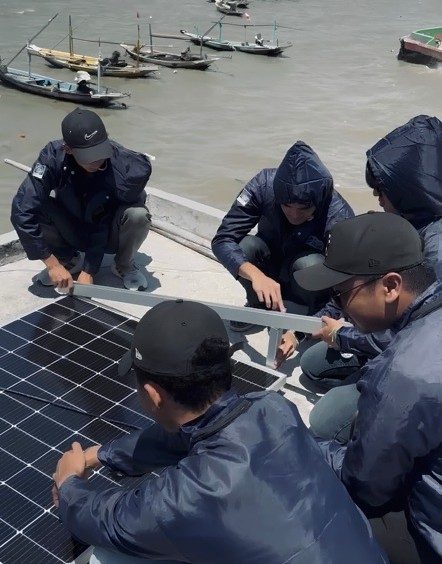 Figure 4: Implementation and community assistance of the EASY automated solar-powered lighting system conducted by Himatektro ITS for village tourism facilities.