Smart Eco Campus



"Women and girls continue to suffer discrimination and violence in every part of the world. Gender equality is a fundamental human right, and a foundation for a peaceful, prosperous and sustainable world. Providing women and girls with equal access to education is a key part of delivering gender equality, but universities also have a wider role to drive forward gender equality in their communities."
(THE Impact Rankings)
Access to higher education can transform not only an individual's future but also that of her family and community. For women who are the first in their families to pursue a university degree, entering higher education represents an important milestone in expanding educational opportunities, promoting social mobility, and breaking intergenerational barriers.
ITS recognizes the importance of understanding and monitoring women's access to higher education, particularly by identifying female students entering undergraduate and other degree programs, including those who are the first in their families to attend university. This approach enables ITS to gain a better understanding of the educational backgrounds of its incoming students and to strengthen its efforts to create an inclusive academic environment that responds to students' diverse circumstances and needs.
Through this commitment, ITS seeks to ensure that women from different socioeconomic and educational backgrounds have opportunities to pursue higher education, participate in academic life, and achieve their full potential. Understanding the representation of first-generation female students also provides an important foundation for developing more inclusive educational support and widening access to academic advancement.
In 2025, ITS welcomed more than 3,000 female students beginning their degree programs, including more than 450 first-generation female students. These figures reflect the participation of women from diverse educational and family backgrounds in pursuing higher education at ITS. By recognizing and monitoring their representation, ITS continues to reinforce its commitment to widening educational access, supporting social mobility, and creating opportunities for women to contribute to society through higher education. 
Institut Teknologi Sepuluh Nopember (ITS) is committed to ensuring equal access to higher education for women through non-discriminatory admission policies and initiatives supporting their academic and professional participation. This commitment is reflected in the university's institutional regulations, which establish equal opportunities for prospective students regardless of gender.
Student admissions at ITS are conducted in accordance with the Government Regulation on ITS Status, Paragraph 2, “Student Admission”, Article 18 (2), which stipulates that:
“ITS implements an admission system for all types of education objectively, transparently, accountably, non-discriminatorily, and with consideration of educational equity.”
This principle is reinforced by the Rector's Circular Letter No. 9665/IT2/T/TU.00.08/V/2024 on ITS Commitment to Achieving a Green and Sustainable Campus. Chapter II on Welfare, Point (b), explicitly guarantees:
“The absence of discrimination or violence based on religion, ethnicity, race, or gender, both in student admissions and in human resource management.”
In line with these provisions, ITS provides women with equal opportunities to apply for and enter all academic programmes, including fields in which female representation remains limited. The university also monitors the admission of female students through its new-student data, providing a basis for assessing women's representation and participation in higher education. Academic Regulation No. 33 of 2025 further provides an institutional framework for academic processes, including admission and student participation.
Beyond admission, ITS supports women's continued participation and development through initiatives that strengthen their capabilities, professional networks, and opportunities for advancement. The Womenpreneur Training programme highlights the importance of mentorship, collaboration, and peer support in addressing entrepreneurial challenges. In October 2025, the Womenpreneur Forum explored how women can balance business responsibilities, family life, and personal well-being. Participants exchanged experiences and gained insights into delegation, business planning, and digital financial management.
ITS also promotes women's participation in science, technology, and innovation through its Women in Technopreneurship initiative. As part of the Higher Education for Technology and Innovation (HETI) project, ITS established a target of 32% women's participation in capacity-development programmes. The initiative aims to broaden women's opportunities to contribute to technological innovation and engage in strategic decision-making with industry partners.
To support further academic development, ITS disseminates information on scholarship opportunities, including FAST-D, Beasiswa Unggulan, and the Global Excellence Scholarship. These programmes provide pathways to postgraduate education and research development, including opportunities for international students.
Gender equality is also incorporated into institutional leadership development. The ITS Leadership School 2025 featured a Gender Action Plan workshop and training for university leaders, addressing gender equality, social inclusion, and disability rights. The programme concluded with university leaders signing a Gender Sensitivity Commitment and Action Plan Declaration, reinforcing institutional commitment to translating gender equality principles into leadership awareness and action.
Together, these policies and initiatives demonstrate ITS's commitment to women's equal opportunities at the stages of application, admission, and participation in university life. By combining non-discriminatory admission provisions with initiatives for capacity-building, entrepreneurship, academic advancement, and gender-responsive leadership, ITS seeks to create an inclusive higher education environment in which women can access educational opportunities and develop their potential.
ITS promotes women's access to professional development, innovation, and leadership opportunities through initiatives that raise gender awareness, strengthen women's capabilities, and encourage greater female participation across different fields. These efforts aim to create an institutional environment in which women can access opportunities, develop their expertise, and contribute to areas where their representation remains limited, particularly science, technology, and innovation.
An important foundation for these efforts is the Gender Action Plan workshop at the ITS Leadership School 2025, which engaged university leaders in discussions on gender equality, social inclusion, and disability rights. The workshop highlighted the importance of women's participation in various aspects of development, including decision-making and representation in science, technology, engineering, and mathematics (STEM). The signing of the Gender Sensitivity Commitment and Action Plan Declaration further reinforced this commitment among university leaders. By raising awareness at the leadership level, the initiative seeks to encourage institutional leaders to develop more inclusive schemes, expand opportunities for women, and provide supportive spaces for their participation and advancement, particularly in technology-related fields.
A more targeted opportunity is provided through Women in Technopreneurship, an initiative under the Higher Education for Technology and Innovation (HETI) project, implemented in collaboration with the Asian Development Bank (ADB). The initiative creates a dedicated platform for women to participate in innovation competitions and develop technology-based entrepreneurial ideas. It aims to expand women's opportunities to demonstrate their capabilities, engage with innovation ecosystems, and strengthen their participation in technology and industry. As part of the HETI project, ITS also set a target of 32% women's participation in capacity-development programmes, reflecting its commitment to increasing women's involvement in technological innovation.
ITS also supports women's participation in scientific and policy development through its collaboration with OWSD Indonesia (Organization for Women in Science for the Developing World). As highlighted in ITS's initiative to empower women in science for policymaking, this collaborative initiative provides a dedicated space for women in science to strengthen their voices, exchange perspectives, and contribute to policy discussions. By supporting and empowering women to take a more active role in shaping science-related policies and development priorities, the initiative recognizes the importance of women's expertise and representation in decisions influencing scientific advancement and wider societal development.

Deputy Minister of Higher Education, Science, and Technology of the Republic of Indonesia, Prof. Stella Christie, PhD (right), accompanied by ITS Vice Rector I, Prof. Nurul Widiastuti, PhD, inspects a number of innovative research projects at the ITS GRIT Hall.

President of the OWSD Indonesia National Chapter, Sri Fatmawati SSi MSc PhD, delivering a presentation on the role of women in science and the development of OWSD in Indonesia.
ITS also promotes women's professional development through initiatives such as Womenpreneur Training and Womenpreneur Forum, which strengthen women's entrepreneurial capabilities and professional networks.
These institutional efforts form part of ITS's broader commitment to fostering an academic environment in which women can develop their expertise, pursue professional advancement, and take on leadership responsibilities. In 2025, ITS had 276 senior academic staff members, of whom 111 were women, representing 40,22% of the total senior academic workforce. This representation highlights women's contributions to academic excellence and institutional development at ITS, while reinforcing the importance of creating opportunities for women's continued advancement into senior academic leadership positions.Graduation represents a significant achievement in women's educational journeys and an important indicator of their access to opportunities for academic advancement. Monitoring women's degree completion across disciplines enables ITS to understand not only their participation in higher education but also their academic achievements and contributions across different fields of study.
ITS recognizes the importance of gender-disaggregated graduation data as a foundation for understanding women's academic outcomes. By examining the number of graduates according to gender and subject area, the university can gain insights into women's representation across Science, Technology, Engineering and Mathematics (STEM), medicine, and arts, humanities, and social sciences. This approach supports a more comprehensive understanding of women's educational achievements and participation across academic disciplines.
Particular attention to women's graduation in STEM fields is important, given the social expectations, educational pathways, and structural barriers that may influence women's participation in these disciplines. Through the systematic monitoring of academic outcomes, ITS can strengthen its efforts to foster an inclusive learning environment and support women's opportunities to pursue their interests and achieve academic success.
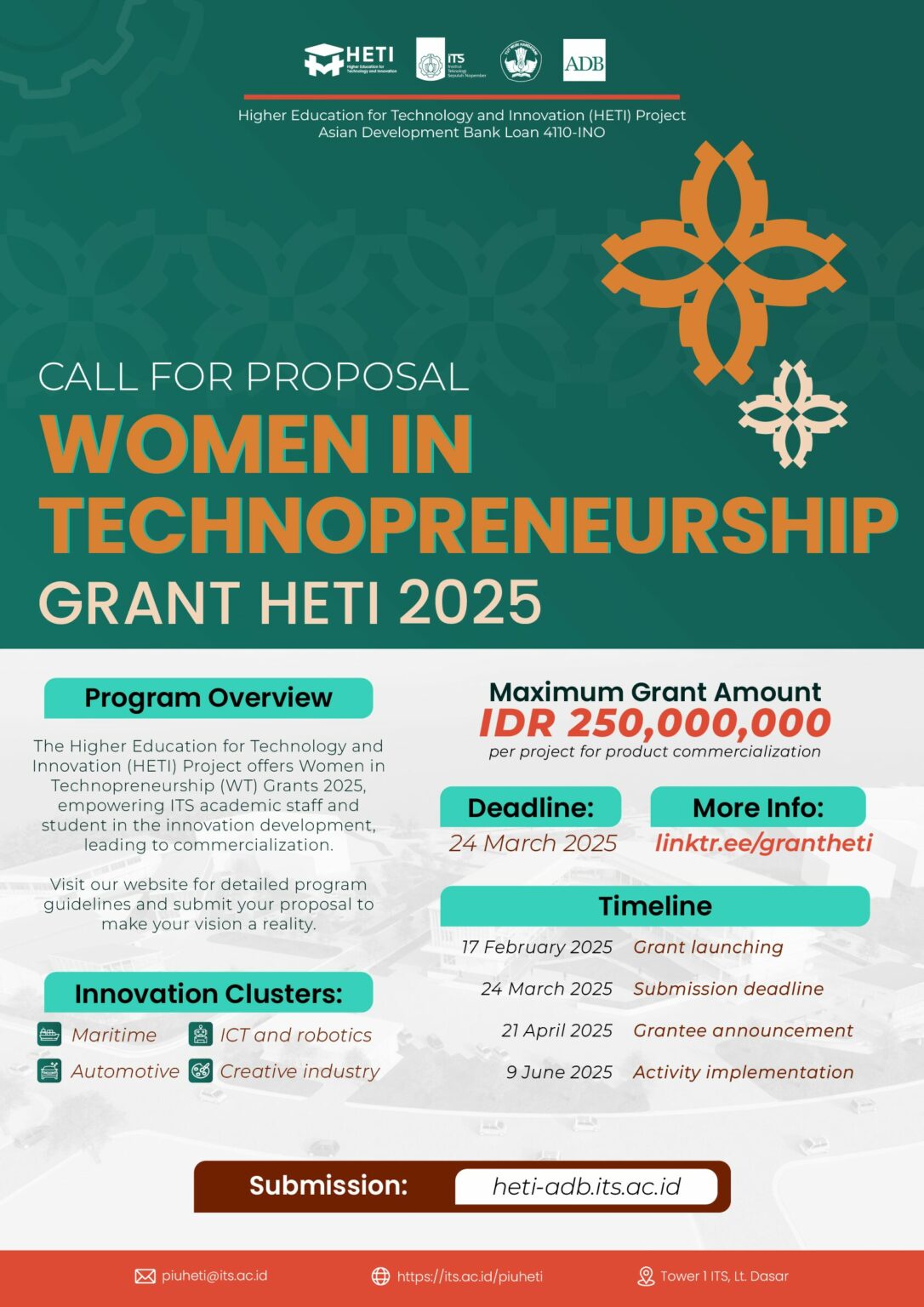
These efforts are reinforced by ITS's broader gender equality initiatives, including Women in Technopreneurship, to increase innovation in underrepresented clusters such as ICT and robotics and automotive. Also gender mainstreaming in institutional leadership to build gender awareness and literacy within the campus environment serves as a pillar for inclusive social change and encourages greater participation of women in underrepresented fields. Together, these initiatives reflect the university's commitment to creating an academic environment where women can develop their potential, contribute to innovation, and succeed across diverse fields of study.
In 2025, ITS recorded 2652 female graduates across its academic disciplines, comprising 2502 graduates in STEM, 42 in medicine, and 405 in arts, humanities, and social sciences. These achievements reflect women's contributions to the university's academic community and highlight the importance of ensuring equitable opportunities for women to complete their education and excel in their chosen fields. By systematically monitoring women's graduation outcomes, ITS continues to strengthen evidence-based educational planning and advance gender equality throughout its academic environment.
ITS upholds a strong institutional commitment to gender equality and inclusivity through its welfare policy stated in Chapter II Welfare of the university’s internal guidelines, which is reinforced by the Rector’s Circular Letter No. 9665/IT2/T/TU.00.08/V/2024 on ITS Commitment to Achieving a Green and Sustainable Campus. This policy ensures a fair, safe, and non-discriminatory environment for all members of the academic community.
Chapter II point (b) affirms “the absence of discrimination or violence based on religion, ethnicity, race, or gender, both in student admissions and in human resource management.” This clause explicitly protects women from any form of gender-based discrimination in both academic and employment contexts.
Chapter II point (c) states that “academic activities and community life shall be conducted based on the principles of equality, humanity, and justice,” ensuring equal opportunities for all genders in participation and leadership.
Chapter II point (d) further guarantees “the absence of physical, psychological, bullying, sexual, or gender-based violence, discrimination, intolerance, and any policy containing elements of violence.”
ITS is strengthening its commitment to gender equality by integrating gender perspectives into institutional leadership, campus policies, and violence prevention initiatives. The university recognizes that meaningful participation by women requires an environment where they are treated fairly, respected, and protected from discrimination.
Beyond formal regulations, In July 2025, ITS held the Gender Action Plan (GAP) Workshop and Training as part of the ITS Leadership School 2025. The event brought together university leaders, including vice rectors, deans, department heads, and other institutional officials, to strengthen their understanding of gender equality, social inclusion, and disability rights. The workshop was designed to build leadership capacity to develop policies and programs that respond to these issues. The event also included the signing of the Gender Sensitivity Commitment and Action Plan Declaration by university leaders, marking an important step toward integrating gender considerations into institutional decision-making.

Joint signing of the ITS Gender Sensitivity Commitment Declaration and Follow-Up Action Plan by the Secretary of the Institute, Prof. Dr. Ir. Umi Laili Yuhana, S.Kom., M.Sc., C.R.P.
ITS also addresses discrimination through education and violence prevention. In June 2025, the university’s Prevention and Handling of Violence Task Force (Satgas PPK) conducted an awareness session for participants in the Thematic Literacy Community Service Program. The session explained that violence includes not only physical and sexual violence but also psychological violence, bullying, discrimination, intolerance, and harmful institutional policies. Participants learned how to respond as victims or witnesses and how to report incidents through the task force’s hotline and reporting form.
These initiatives complement the institutional framework provided by the 2025 Student Code of Ethics. Together, they demonstrate ITS’s efforts to foster a culture of fairness, respect, and accountability across the academic community. These efforts illustrate how ITS approaches gender equality not merely as a regulatory obligation but as an integral part of institutional culture, leadership, and the university's responsibility to provide a fair, safe, and inclusive environment for its entire academic community.
ITS further reinforces this commitment through its broader institutional policy on non-discrimination, which emphasizes equal treatment and protection for students and employees regardless of their backgrounds. The university’s commitment also extends to preventing physical, psychological, sexual, and gender-based violence, as well as bullying and other forms of discriminatory conduct.
The implementation of these principles is supported by the Gender Action Plan initiative, which includes awareness-raising activities and training on Gender Violence, Exploitation, Abuse, and Sexual Harassment (VEA-SEAH), as well as the university’s prevention and response mechanisms for violence and harassment. Through these efforts, ITS seeks to foster a campus culture where diversity is respected, individuals feel safe to participate, and everyone has the opportunity to access education, employment, and institutional activities without discrimination. This approach reflects ITS’s broader commitment to human rights, social inclusion, and equality within higher education.
ITS recognizes the importance of maternal wellbeing and family responsibilities as essential elements of an inclusive and supportive working environment. The university provides maternity leave arrangements through its institutional employment regulations, particularly Rector’s Regulation No. 25 of 2021 concerning Employment Management at ITS,
Chapter IX – Leave, Article 42 paragraphs (1) and (2) state that:
(1) Employees are entitled to take leave.
(2) The types of leave referred to in paragraph (1) include: c. maternity leave.
Chapter IX – Leave, Article 46 paragraphs (1)–(7) further stipulate that:
(1) Civil Servants (PNS) are entitled to maternity leave in accordance with the prevailing laws and regulations.
(2) For the birth of the first to the third child, permanent and prospective Non-Civil Servant employees (Non-PNS) are entitled to maternity leave.
(3) For the birth of the fourth child and beyond, permanent and prospective Non-PNS employees are granted extended leave.
(4) The duration of maternity leave as referred to in paragraphs (1) and (2) is three (3) months.
(5) Each permanent or prospective Non-PNS employee intending to take maternity leave must submit a written request to their immediate supervisor accompanied by a medical certificate.
(6) During the maternity leave period, permanent and prospective Non-PNS employees are entitled to receive full remuneration.
(7) The provisions for maternity leave for non-permanent Non-PNS employees shall be regulated in a separate Rector’s Regulation.
During the maternity leave period, employees are entitled to receive their full remuneration. The regulation also provides maternity leave arrangements for civil-servant employees in accordance with Indonesia’s Law No. 13 of 2003 on Manpower, which guarantees maternity leave for working parents. Under this law, female employees are entitled to three months of fully paid maternity leave.
These provisions demonstrate ITS’s recognition that pregnancy, childbirth, and early motherhood require appropriate institutional support. By providing maternity leave and maintaining employment-related protections, ITS seeks to ensure that women can fulfil their family responsibilities while maintaining their professional careers. The policy forms part of the university’s broader commitment to gender-responsive employment practices and a family-friendly working environment.
Through these aligned national and institutional policies, ITS promotes a gender-inclusive and family-friendly work environment that recognizes the shared responsibilities of both parents and ensures equal opportunities for all employees.
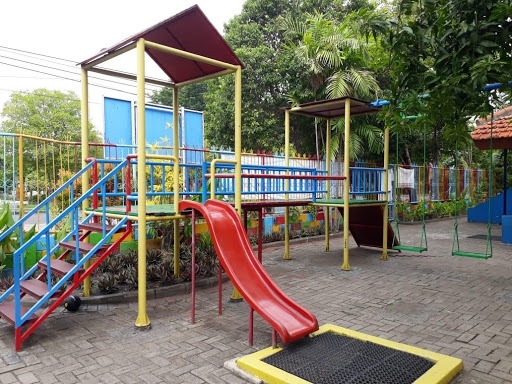
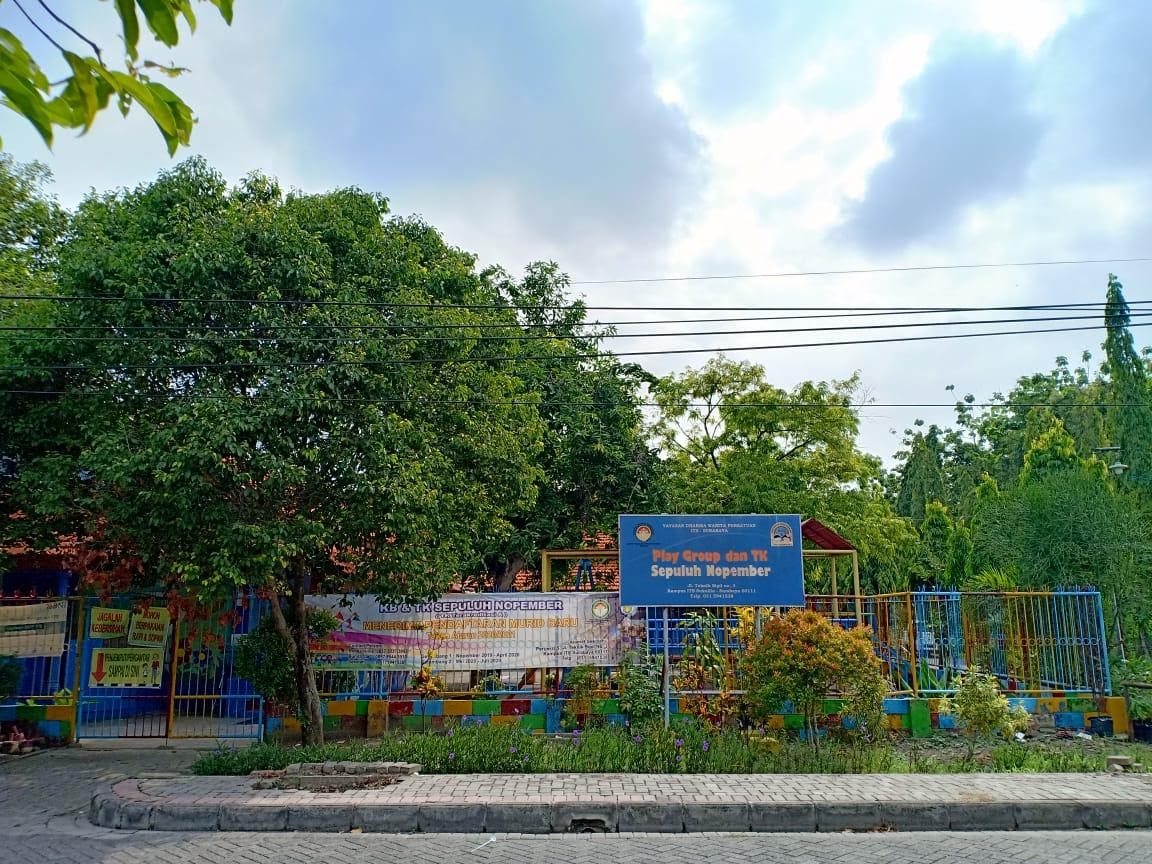
ITS supports students with parenting responsibilities through the provision of paid early childhood education facilities within the university campus. One of these facilities is KB & TK Sepuluh Nopember, located at Jalan Teknik Sipil No. 3, ITS Sukolilo Campus, Surabaya. Established in 2000, the institution has achieved an A accreditation and accommodates more than 70 children. Its services are accessible to children of ITS students, employees, and members of the surrounding community.
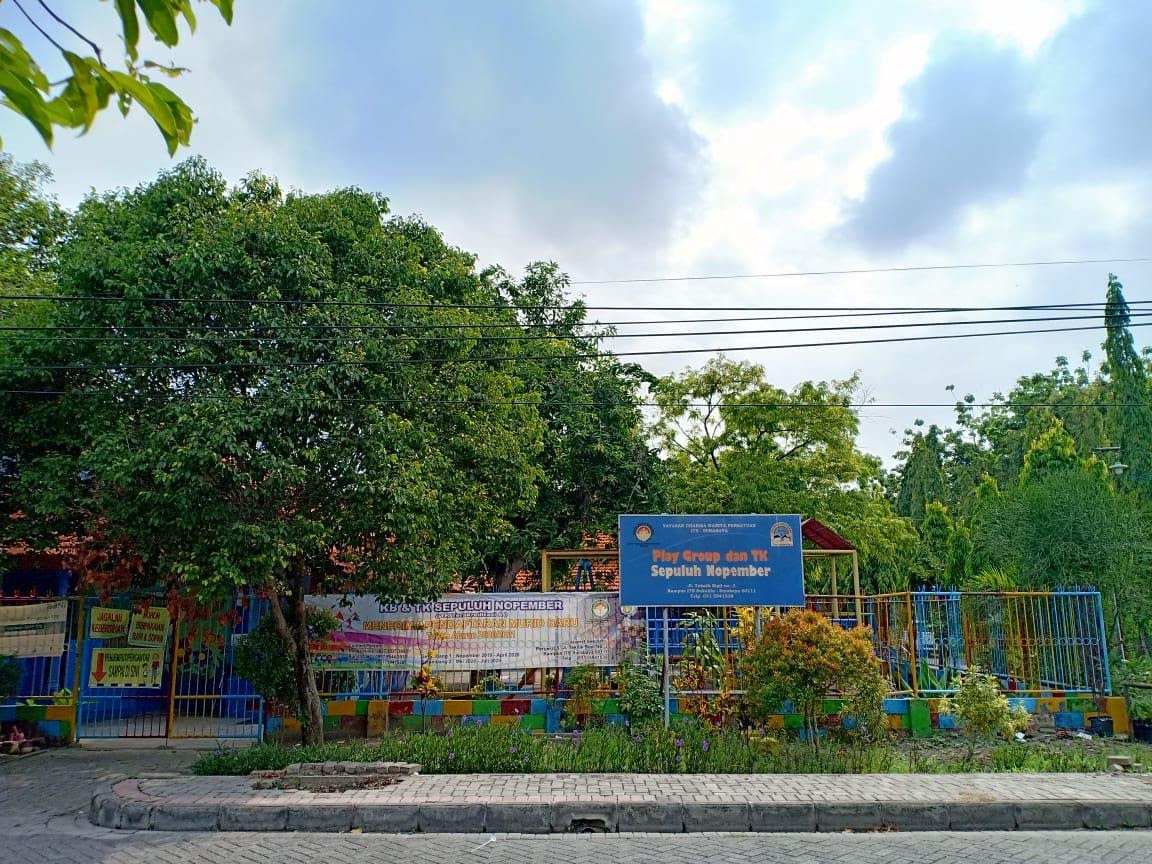
The facility provides a supportive environment for early childhood development through classrooms, a library, a multipurpose hall, and a playground. In addition to educational activities, it also organizes parenting seminars, religious activities, music classes, and other programs involving children and parents. Its location within the campus provides practical support for student parents who need to balance academic activities with childcare responsibilities.
ITS also provides academic protection and support for students experiencing pregnancy and related circumstances through Rector’s Regulation No. 103/IT2/T/HK.00.01/VI/2025. This regulation provides arrangements that support students in managing their academic responsibilities, including opportunities for study deferral and maternity-related academic accommodations. Through the combination of childcare facilities and academic support policies, ITS demonstrates its commitment to ensuring that family responsibilities do not become a barrier to accessing and completing higher education.
ITS recognizes that access to childcare services is an important part of supporting the wellbeing of its employees and creating a family-friendly working environment. Through KB & TK Sepuluh Nopember, the university provides paid early childhood education services that can also be accessed by children of ITS lecturers and staff. Established in 2000 and accredited A, the institution offers a supportive learning environment with classrooms, a library, a multipurpose hall, and a playground, alongside educational and parenting activities.

In addition to the existing early childhood education facility, ITS has taken further steps to explore the development of daycare services for its academic and professional community. On 17 July 2025, the Dharma Wanita Persatuan (DWP) ITS conducted a comparative study visit to Sunshine Daycare at Universitas Negeri Surabaya (UNESA). The visit included observations of childcare facilities, such as sleeping rooms, play areas, toilets, and therapy rooms, followed by discussions on daycare management and service delivery.

Sunshine Daycare at Universitas Negeri Surabaya (UNESA) welcomed guests from the Dharma Wanita Persatuan (DWP) of Institut Teknologi Sepuluh Nopember (ITS). This benchmarking visit took place in Building O7, specifically within UNESA’s Special Needs Service Unit (Unit Layanan Berkebutuhan Khusus/ULABK).
The initiative was intended to provide practical insights for ITS in developing its own daycare services. The collaboration also opened opportunities for continued knowledge exchange and mentoring from UNESA in the establishment and management of childcare facilities.
These initiatives reflect ITS’s ongoing efforts to strengthen family-friendly campus services and support employees in balancing professional responsibilities with family life.
Institut Teknologi Sepuluh Nopember (ITS) supports women's development through student mentorship, entrepreneurial empowerment, and initiatives that promote women's participation in academic and campus life. These efforts provide female students with opportunities to develop leadership and professional skills, contribute to community development, and access a more inclusive university environment.

Head of the ITS Center for Regional Potential Studies and Community Empowerment (PDPM), Dr. Sutikno, M.Si. (fifth from the right), pictured with 50 student business mentors during the Community Service (Abmas) Priority Student Field Study Program (KKN) training for business mentors—an initiative titled the "1,000 Digital Marketing Movement" for ultra-micro (UMi) enterprises as well as micro, small, and medium-sized enterprises (MSMEs).
A key initiative is the Gerakan 1,000 Digital Marketing for Ultra-Micro and Micro, Small, and Medium Enterprises (UMi and MSMEs), delivered under ITS's Priority Community Service Programme (KKN Pengabdian Masyarakat Prioritas). The programme prepares students to become mentors for local business owners, including women entrepreneurs. On 15–16 July, ITS organised a two-day training programme for 50 students, nearly half of whom were women, supported by 25 lecturers. Participants received practical training in digital marketing, entrepreneurial mindset, financial literacy and inclusion, marketing strategies, and product photography and graphic design. Following the training, students provided one month of direct business mentoring in August, identifying challenges and offering initial solutions to strengthen business operations and market reach. With a target of 1,000 business units, the programme creates opportunities for female students to gain mentoring experience and leadership skills while extending entrepreneurial knowledge to women-led and other local businesses.
 Women entrepreneurs at the Womanpreneur Forum during a photo session.
ITS also supports women's entrepreneurial development through the Womenpreneur Forum, organised by the Department of Business Management in October 2025. The initiative provides women business owners with opportunities to strengthen their entrepreneurial capabilities, exchange experiences, and discuss work-life balance. It complements ITS's student mentorship efforts by extending support for women's economic participation beyond the university community.
Beyond structured programmes, ITS provides facilities and opportunities that support women's participation in campus life. The ITS Sport Center Fitness Centre reserves dedicated gym sessions exclusively for female members every Friday, from 06.00–09.00 and 09.00–12.00, offering a private and comfortable environment for women to exercise.

ITS student Komang Tris Astra Putri Adnyani receiving the titles of "Miss Campus Friendship" (Putri Kampus Persahabatan) and "Miss Campus Engineering" (Putri Kampus Teknik) at the Miss Campus Indonesia 2025 pageant.
ITS also provides opportunities for female students to develop their academic, leadership, and professional potential. One example is Komang Tris Astra Putri Adnyani, a student of the Department of Chemical Engineering, who received two awards at Putri Kampus Indonesia 2025: Putri Kampus Persahabatan and Putri Kampus Teknik. A recipient of an LPDP scholarship, Komang previously served as an ITS Internationalisation Ambassador in 2024 and held the position of Vice President of the Society of Renewable Energy (SRE) ITS. Her achievements in academic competitions and twice receiving funding under the Student Creativity Programme (PKM) illustrate the opportunities available for female students to pursue academic excellence and leadership roles.
Through student mentorship, women's entrepreneurship initiatives, dedicated campus facilities, and opportunities for academic and leadership development, ITS seeks to strengthen women's participation and empowerment both within the university and in the wider community. These initiatives contribute to an inclusive campus environment in which women can develop their capabilities and take active roles in academic, professional, and economic activities.
ITS demonstrates its commitment to educational equality by monitoring student academic progress and graduation outcomes, including the participation and achievement of female students. Through the Directorate of Education, the university conducts institutional-level monitoring to assess students’ academic trajectories and evaluate progress towards graduation.
This monitoring is also supported at faculty and department levels, allowing academic units to follow student progress within their respective educational environments. ITS has documented women's graduation rates for the 2018–2025 period, providing an institutional basis for understanding female students’ academic outcomes and their progression towards completing higher education.
The availability of graduation monitoring contributes to ITS’s broader efforts to promote gender-responsive educational management. By examining women's academic progress alongside overall student outcomes, ITS can strengthen its understanding of student needs and support the development of appropriate academic policies and student support initiatives.
Through this approach, ITS emphasizes that gender equality in higher education involves not only ensuring women's access to university admission but also supporting their continued participation, academic achievement, and successful completion of their studies. 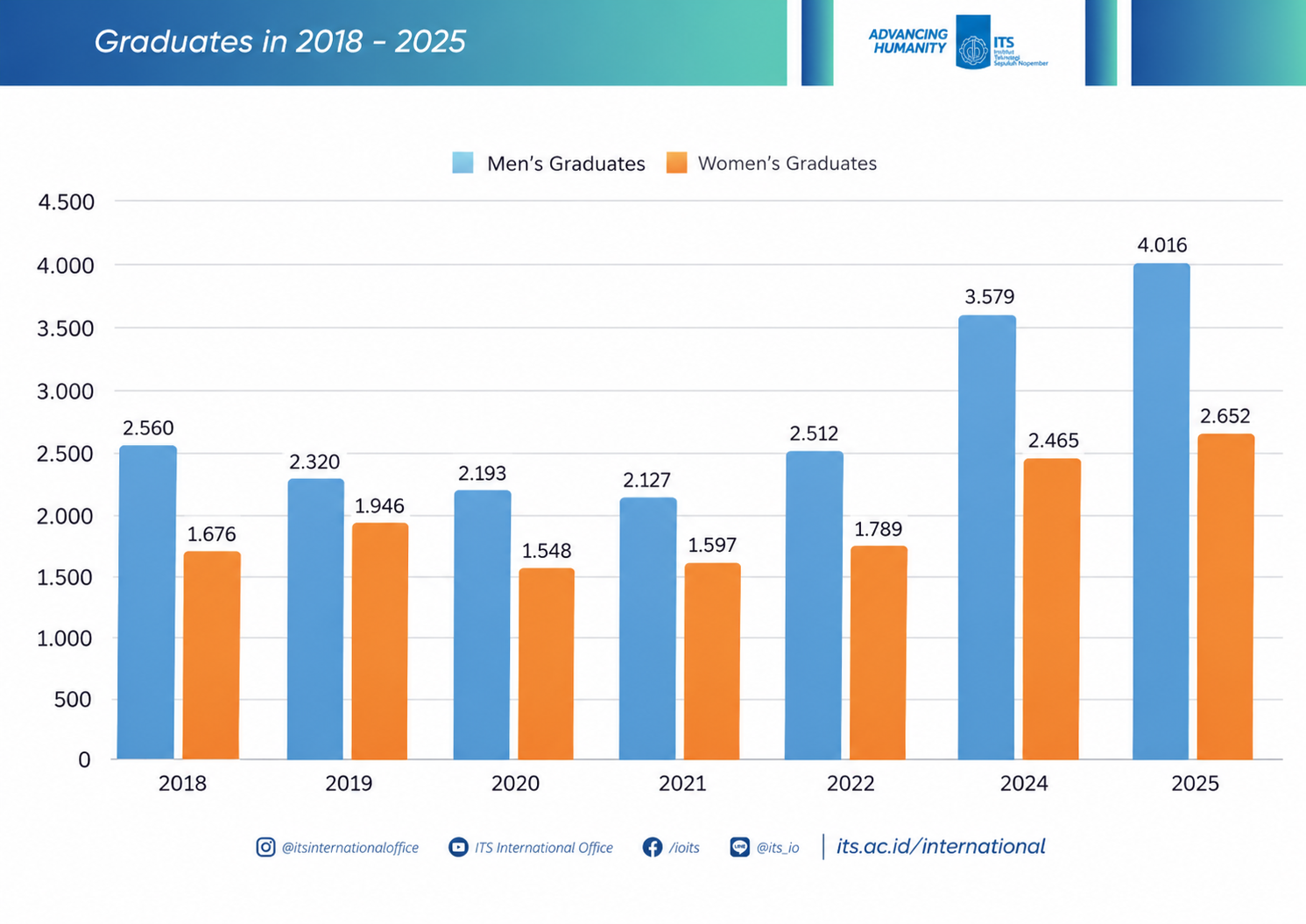
Institut Teknologi Sepuluh Nopember (ITS) is committed to providing a safe and inclusive institutional environment in which members of its academic community can report discrimination, violence, and other forms of misconduct without compromising their privacy and security. This commitment is supported by formal reporting mechanisms, confidentiality provisions, and dedicated task forces responsible for preventing and addressing violence within higher education.
A key component of this framework is the ITS Whistleblowing System, supported by the university's Information and Documentation Management Officer (PPID).
In particular, the section “Reporter Confidentiality Guarantee” ensures that the identity of whistleblowers remains strictly confidential, as ITS focuses only on the information reported. To maintain confidentiality, whistleblowers are advised to:
Its institutional basis is established under Rector’s Decree No. 585/IT2/T/HK.00.01/2022, subsequently updated through Rector’s Decree No.103/IT2/T/HK.00.01/VI/2025 concerning the PPID Team at ITS.
Public information and complaint reports can be submitted through the following official channels:
Written letter addressed to Institut Teknologi Sepuluh Nopember
These options provide different ways for members of the university community to raise concerns.
In addition, ITS operates dedicated mechanisms for addressing violence and misconduct through the Task Force for the Prevention and Handling of Sexual Violence (Satgas PPKS ITS) and the Task Force for the Prevention and Handling of Violence in Higher Education (Satgas PPKPT ITS). These task forces support prevention, reporting, and institutional responses to sexual violence, harassment, bullying, and other forms of violence and discrimination.
ITS reinforces these mechanisms through awareness-raising and educational activities. On 5 July, Satgas PPKS ITS organised a socialisation session on sexual violence prevention as part of the seminar “Sexual Abuse: An Educational Talk.” Other initiatives include violence-prevention socialisation programmes by the task force and educational initiatives by HMDM ITS to encourage awareness and promote a safer campus environment.
An outreach session focused on the prevention of sexual violence, held on Saturday (July 5) as part of the seminar "Sexual Abuse: An Educational Talk."
ITS's broader commitment to gender protection is also reflected in its 2024 Project Implementation Award for Gender Commitment which consistently ensures the involvement of women in capacity-building programs within the Higher Education for Technology and Innovation (HETI) project, targeting a 32 percent participation rate, recognising its Gender Action Plan, including awareness programmes and training on Gender Violence, Exploitation, Abuse, and Sexual Harassment (VEA-SEAH).
Together, these policies, reporting channels, institutional task forces, and educational initiatives strengthen the mechanisms available to individuals reporting discrimination and misconduct. By emphasising reporter confidentiality and providing dedicated channels for institutional responses, ITS seeks to foster an environment of accountability, trust, and safety across its academic and professional community.
ITS recognizes that supporting family wellbeing and gender equality requires the involvement of both mothers and fathers. In this regard, the university supports paternity leave arrangements that enable male employees to accompany and assist their partners during childbirth.
The policy framework is aligned with Indonesia’s employment regulations, particularly Law No. 13 of 2003 on Manpower, which provides two days of leave for male employees whose partners give birth. The provision also allows an extension of up to three additional days, subject to the applicable arrangements. At the institutional level, ITS’s employment framework under Rector’s Regulation No. 25 of 2021 recognizes leave entitlements for employees, with provisions for civil-servant employees following the applicable national regulations. The university's leave arrangements are further outlined in its official employee leave regulations, which governs employment provisions and leave entitlements for ITS employees.
By recognizing the role of fathers during childbirth, ITS promotes a more balanced understanding of parenting responsibilities and family support. Paternity leave allows employees to be present during an important family event and provides practical support to their partners during the childbirth and early postnatal period.
This policy reflects ITS’s broader commitment to building a gender-inclusive and family-friendly workplace, where supporting women’s wellbeing is also understood as a shared responsibility within the family and the institution.
