Smart Eco Campus



"Equality needs to underpin every aspect of sustainability if the objectives of the SDGs are to be met. Although SDG 5 Explores this through the prism of gender, SDG 10 takes a broader look at intersectionality of disadvantages. This disadvantages can be felt through all of the other key issues raised by the SDGs - disadvantaged groups are both more likely to be unable to take advantage of progress and to suffer from the effects of climate change." (THE Impact Rankings)
Institut Teknologi Sepuluh Nopember (ITS) enforces comprehensive statutory policies to guarantee non-discriminatory admissions, equitable academic access, and fair employment practices. Grounded in Academic Senate resolutions and Rector decrees, these institutional frameworks prohibit discrimination across all entry pathways and ensure equal opportunity regardless of socioeconomic status, gender, ethnicity, religion, or disability.
Student admission governance at ITS is formally regulated by Academic Senate Regulation No. 2 of 2016 on Academic Policy and Development Direction. Under Article 4.1.3.A.1(a) concerning Operational Policies in Education, the university guarantees that every Indonesian citizen who meets academic requirements holds equal rights to admission without discrimination based on ethnicity, religion, belief, gender, economic condition, or disability.
This statutory mandate forms the legal foundation for ITS’s inclusive admissions architecture, justifying targeted affirmative pathways—such as financial aid schemes for low-income applicants and special access tracks for frontier regions—to ensure meritocratic and socially equitable student recruitment.
Extending equal-opportunity protections to faculty and administrative recruitment, ITS Rector Regulation No. 2 of 2017 on Employment Management (Chapter Two, Article 8(1)) stipulates that employee recruitment must be conducted openly and transparently without discrimination based on ethnicity, religion, race, or social group.
These binding regulations are reinforced by the Rector Circular Letter on ITS’s Commitment as a Green and Sustainable Campus (2024), which mandates fairness, humanity, and disability-friendly accessibility across all educational, research, and lifelong learning programs.
Institut Teknologi Sepuluh Nopember (ITS) operates a centralized, data-driven admissions tracking ecosystem to measure and expand higher education access for historically underrepresented and disadvantaged groups. Grounded in Academic Senate and Rector regulations, the university systematically monitors applicant demographics, admission conversion rates, and longitudinal academic progression across low-income households, frontier regions, women in STEM, students with disabilities, and non-traditional talent pathways.
Through the integrated MyITS Admission digital portal, the Directorate of Education records and audits application and enrollment metrics disaggregated by gender, household socioeconomic status, disability accommodation needs, and geographic origin. This longitudinal tracking architecture enables university administrators to evaluate participation trends from initial registration through graduation, ensuring targeted retention interventions and tuition waivers for economically vulnerable cohorts.
The admissions database actively tracks national affirmative schemes, including the Kartu Indonesia Pintar Kuliah (KIP-K) financial aid track for low-income families and the Afirmasi Pendidikan Tinggi (ADik) pathway dedicated to students from Papua, West Papua, and remote archipelagic provinces. Simultaneously, annual cohort analytics monitor female enrollment ratios across engineering and computing departments, guiding targeted outreach to close gender representation gaps in STEM disciplines.
Reinforcing its commitment to geographic and socioeconomic equity, ITS partnered with the Ministry of Transmigration to launch the Golden Ticket undergraduate admission pathway targeting underdeveloped, frontier, and outermost (3T) regions. Integrated into the National Achievement-Based Selection (SNBP) framework, the initiative mapped and tracked applicants across 117 secondary schools in designated 3T and transmigration zones, linking educational access with the deployment of 228 ITS Ekspedisi Patriot researchers across 17 provinces.
Complementing regional and socioeconomic affirmative tracks, the Golden Ticket framework also establishes structured admission pathways for non-traditional student profiles—tracking applicants with verified achievements in student union leadership, youth entrepreneurship, social impact content creation, and national athletics. By pairing early disability self-identification tracking with dedicated preparatory mentoring, ITS ensures equitable transition and academic success for every admitted cohort.
 Figure 1: ITS Rector Prof. Dr. (HC) Ir. Bambang Pramujati and Minister of Transmigration Dr. Muhammad Iftitah Sulaiman Suryanagara inaugurating the Golden Ticket admission scheme for students across 117 schools in 3T and transmigration regions.
Institut Teknologi Sepuluh Nopember (ITS) executes deliberate recruitment strategies to broaden higher education and employment representation for disadvantaged and marginalized communities. Operating through the MyITS Admission ecosystem and open civil-service selection standards, the university actively recruits students, faculty, and staff from low-income households, frontier archipelagic regions, disability communities, and developing nations.
Through national affirmative admission schemes—specifically the Kartu Indonesia Pintar Kuliah (KIP-K) tuition-and-living-stipend program and the Afirmasi Pendidikan Tinggi (ADik) initiative—ITS proactively recruits talented students from underdeveloped, frontier, and outermost (3T) regions, including Papua and West Papua. Each academic year, thousands of students from economically disadvantaged and remote backgrounds enter ITS through these dedicated pathways, supported by pre-matriculation bridging courses and sustained financial aid.
ITS extends inclusive recruitment and career access across students, academic faculty, and administrative personnel with disabilities. Guided by non-discriminatory recruitment mandates and coordinated with the Disability Services Unit, the university provides accessible application accommodations, mobility and counseling services, and campus-wide awareness campaigns that foster an equitable, barrier-free working and learning environment.
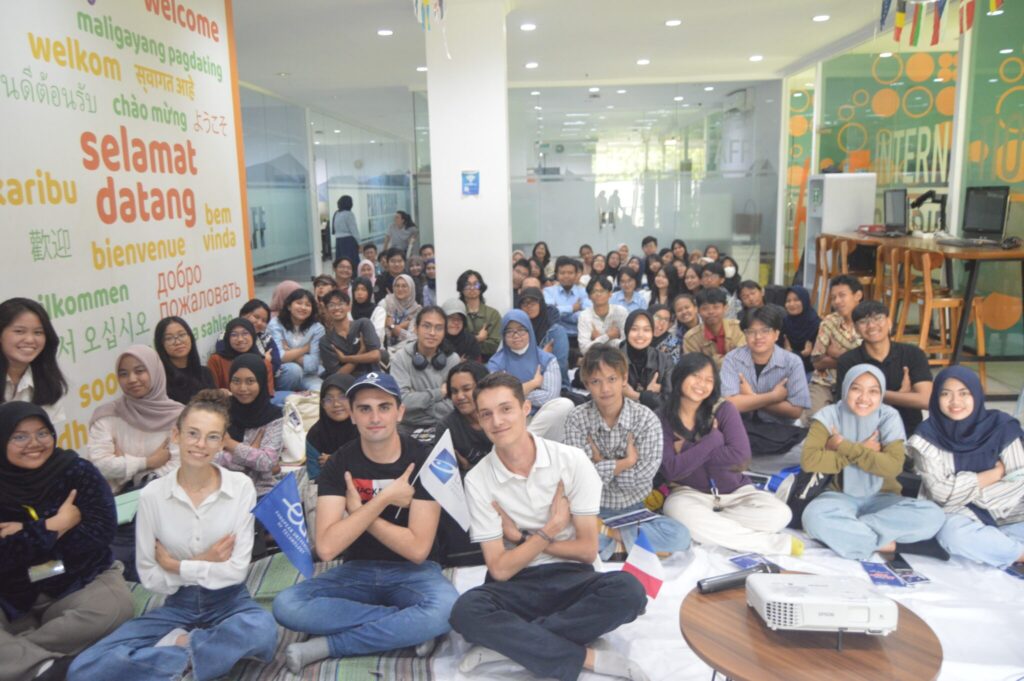
Advancing equitable global representation, ITS recruits degree-seeking and exchange participants from developing and low-income nations through merit scholarships, tuition waivers, and flagship intercultural initiatives such as the Community and Technological Camp (CommTECH) and its international cultural immersion cohorts. By applying transparent, nationality-blind admission criteria, ITS cultivates a diverse academic community enriched by cross-cultural collaboration.
Institut Teknologi Sepuluh Nopember (ITS) enforces binding institutional regulations that prohibit discrimination across all academic instruction, research operations, administrative services, and workplace environments. Backed by Academic Senate decrees and Rector mandates, these policies safeguard human dignity and equal treatment for every student, faculty member, administrative employee, and campus visitor regardless of ethnicity, religion, belief, gender, socioeconomic status, or disability.
Within educational and research activities, institutional protection is governed by Academic Senate Regulation No. 2 of 2016 on Academic Policy and Development Direction. Under Article 4.1.3.A.1(a), ITS guarantees that every qualified citizen holds equal educational rights without discrimination based on ethnicity, religion, belief, gender, economic condition, or disability—ensuring impartial classroom instruction, academic evaluation, and access to campus learning facilities.
Across human resource operations, ITS Rector Regulation No. 2 of 2017 on Employment Management (Chapter Two, Article 8(1)) mandates transparent, merit-based employee recruitment and career administration free from discrimination based on ethnicity, religion, race, or social group.
Reinforcing both academic and workplace protections, the Rector Circular Letter on ITS’s Commitment as a Green and Sustainable Campus (2024) explicitly prohibits discrimination or violence based on religion, ethnicity, race, or gender across all campus activities, while mandating disability-friendly infrastructure and inclusive community engagement.
Institut Teknologi Sepuluh Nopember (ITS) mandates dedicated institutional task forces and student representative councils to advise university leadership, safeguard human rights, and foster equity across the academic community. Established under formal Rector decrees, these governance bodies oversee anti-discrimination policies, deliver campus-wide inclusion training, and manage confidential reporting mechanisms.
Since 2022, backed by Rector’s Decree No. 1806/IT2/T/HK.00.01/2022, ITS has operated two specialized institutional task forces to uphold safety, gender equity, and non-discrimination: the Task Force for the Prevention and Handling of Violence in Higher Education (Satgas PPKPT ITS) and the Task Force for the Prevention and Handling of Sexual Violence (Satgas PPKS ITS). While Satgas PPKS leads sexual violence prevention, victim advocacy, and campus awareness campaigns, Satgas PPKPT addresses broader misconduct including bullying, harassment, and identity-based discrimination.
Both committees routinely advise university executives on regulatory enforcement and administer accessible, confidential reporting channels for victims and witnesses through the Ruang Aman (Safe Space) reporting portal as well as official outreach desks via Satgas PPKPT ITS and Satgas PPKS ITS, ensuring impartial investigation and statutory protection.
Complementing administrative task forces, ITS officially recognizes and funds five student-led religious councils under the ITS Student Spiritual Activities framework—encompassing Jamaah Masjid Manarul Ilmi, Keluarga Mahasiswa Katolik St. Ignatius Loyola, Persekutuan Mahasiswa Kristen ITS, Tim Pembina Kerohanian Buddha ITS, and Tim Pembina Kerohanian Hindu ITS. These councils provide protected spaces for spiritual practice, interfaith dialogue, and mutual respect across diverse cultural and religious backgrounds.
Institut Teknologi Sepuluh Nopember (ITS) safeguards the emotional well-being, academic retention, and career advancement of underrepresented students, faculty, and staff through structured counseling, clinical psychiatric care, and peer-mentoring ecosystems. By combining preventive mental health services with student-led empowerment communities and faculty inclusion training, ITS fosters a supportive environment where marginalized cohorts thrive.
To expand accessible mental health support across the academic community, ITS inaugurated the Student Health Care Center (SHCC) in collaboration with the ITS Parent Association (Ikoma ITS) and DearAstrid. Operating as a dedicated preventive counseling hub for students, lecturers, and administrative personnel, SHCC provides early psychological screening, confidential consultations with licensed psychologists, and campus-wide mental health literacy campaigns.
Complementing SHCC’s preventive outreach, the ITS Medical Center (Medcen) operates specialized psychiatric and clinical psychology units delivering professional diagnostic assessments, therapeutic counseling, and longitudinal care. Together, SHCC and Medcen form an integrated campus healthcare continuum ensuring timely clinical support for students and employees facing academic stress, socioeconomic pressures, or personal adversity.
ITS reinforces institutional healthcare with grassroots peer-support and leadership mentoring networks designed to uplift women and underrepresented cohorts in science and engineering. Student-led chapters—including Girl Up ITS, Womenpreneur ITS, and departmental student associations—organize regular leadership bootcamps, career mentorship circles, and well-being workshops, paired with institutional capacity-building programs that train lecturers and staff in inclusive pedagogy and empathetic student support.
Institut Teknologi Sepuluh Nopember (ITS) embeds universal design and physical accessibility across its academic buildings, laboratories, libraries, and public service complexes. By maintaining barrier-free pedestrian networks, tactile navigation blocks, accessible restrooms, priority elevators, and specialized assistive learning technologies, ITS ensures that students, faculty, staff, and visitors with disabilities navigate and participate fully in campus life.
Across its Sukolilo campus, ITS retrofits and constructs public corridors to eliminate architectural barriers for individuals with physical and visual impairments. Academic complexes—including the Department of Civil Engineering, the ITS Central Library, and the ITS Central Canteen—feature continuous step-free access ramps with sturdy dual-level handrails replacing steep stairways.
To support independent navigation for blind and visually impaired community members, primary campus sidewalks and building entrances are paved with standardized tactile guiding blocks. Complementing pedestrian connectivity, clearly marked accessible parking bays are positioned directly beside academic and administrative entrances to minimize transit distances.
Multi-story administrative and lecture buildings across ITS are equipped with vertical mobility and sanitation infrastructure tailored for persons with special needs. The ITS Rectorate Building operates accessible priority elevators designed for wheelchair users, seniors, and pregnant women, while newly developed academic high-rises—such as the Department of Computer Engineering in Tower 2—provide dedicated, spacious disability-accessible restrooms on multiple floors.
Operationalizing its inclusive campus mandate, ITS also established the Integrated Service Center (Pusat Layanan Terpadu / PLT) and Disability Services Unit (Unit Layanan Disabilitas / ULD) with ground-level accessibility to streamline academic, administrative, and mobility assistance for students with special needs.
Beyond physical building retrofits, ITS laboratories develop accessible therapeutic and educational hardware to support learners with motor and developmental disabilities. Supported by an IEEE Engineering Projects in Community Service (EPICS) grant, researchers from the Department of Electrical Engineering engineered the Smart Mobile Inclusive Learning (SMILE) AI-driven physical therapy workstation.
Utilizing camera-based motion detection and adaptive gamified interfaces tailored for individuals with joint stiffness and limited grip mobility, the facility integrates motor rehabilitation with cognitive learning modules and digital medical tracking, reinforcing ITS’s commitment to accessible physical and technological environments.
Institut Teknologi Sepuluh Nopember (ITS) delivers structured institutional support, adaptive learning accommodations, and assistive engineering innovations for students, faculty, and staff with disabilities. Operationalized through a dedicated Disability Services Unit (Unit Layanan Disabilitas / ULD) and backed by non-discriminatory statutory employment protections, ITS guarantees dignified, equitable participation across academic curricula, campus life, and community rehabilitation programs.
To centralize academic, psychological, and mobility accommodations, ITS established the Disability Services Unit (Unit Layanan Disabilitas / ULD) alongside a comprehensive five-year Disability Services Roadmap aligned with National Law No. 8 of 2016. Monitored through five key performance indicators—covering accessible infrastructure upgrades, faculty inclusion training percentages, user satisfaction, integrated service desk connectivity, and external community partnerships—the unit coordinates campus-wide accessibility audits and personalized student support.
Operational programs include peer academic buddy networks, Indonesian Sign Language (Bisindo) training conducted in partnership with the Surabaya Sign Language and Accessibility Community (TIBA), and psychological well-being counseling. For faculty and administrative personnel, equitable workplace accommodations and non-discriminatory career protections are formally safeguarded under ITS Rector Regulation No. 2 of 2017 on Employment Management.
 Figure 1: ITS leadership presenting the Inclusive Education Policy Brief outlining operational protocols and five-year milestones for the Disability Services Unit (ULD).
Advancing inclusive higher education in science and engineering, an interdisciplinary ITS research team collaborated with the University of the West of England (UWE Bristol), Institut Teknologi Bandung, and Universitas Trisakti under a British Council Disability Inclusion Partnership Grant to formulate the Multiscale Support System for Digital Education policy framework.
Structuring institutional support across three lifecycle phases—inclusive admissions (student input), adaptive instruction (student process), and career readiness (student output)—the initiative audits program learning outcomes (CPL) for disability accessibility and deploys tactile Braille architectural models and digital learning aids for blind and visually impaired students.
 Figure 2: Tactile teaching model embedded with Braille annotations developed to support blind and visually impaired students in spatial and engineering courses.
Leveraging engineering research to enhance daily independence, ITS develops specialized assistive devices and therapeutic services for individuals with sensory and motor disabilities. Student innovators created the Ainetra mobile application—utilizing voice user interfaces and real-time computer vision to translate visual surroundings into spoken guidance for blind users—alongside deep-learning camera-based physical therapy stations for upper-limb motor rehabilitation.
Extending biomedical rehabilitation to special-needs educators, researchers from the Department of Biomedical Engineering conducted clinical training on motor therapy protocols for students with cerebral palsy at the Mutiara Hati Special Education Foundation in Sidoarjo. Educators were trained to administer Transcutaneous Electrical Nerve Stimulation (TENS) and Neuromuscular Electrical Stimulation (NMES) using combo electrotherapy devices with daily progress logs, informing the ongoing development of precision Functional Electrical Stimulation (FES) devices.
 Figure 3: Biomedical engineering lead Dr. Achmad Arifin demonstrating TENS and NMES electrotherapy stimulation techniques to support motor mobility for students with cerebral palsy.
Institut Teknologi Sepuluh Nopember (ITS) administers structured access schemes—combining peer and workplace mentoring with targeted assistive training, accessible digital platforms, and psychological well-being programs—to ensure equitable academic and career progression for students and staff with disabilities.
To ensure seamless campus integration and sustained professional advancement, ITS operates targeted mentoring mechanisms across both student and employee cohorts. Coordinated through the Disability Services Unit (ULD ITS), peer academic buddy schemes pair students with disabilities with trained student mentors for note-taking assistance, mobility orientation, and coursework navigation. For faculty and administrative staff, equitable career mentoring, workplace placement, and professional development are formally guaranteed under ITS Rector Regulation No. 2 of 2017 on Employment Management.
Extending targeted technical empowerment, ITS conducts specialized digital literacy training for blind and visually impaired learners—covering Braille embosser operation and accessible text-editing software—and partnered with the Mata Hati Disability Community to co-design accessible web interfaces that broaden public information access. These programs are reinforced by the Multiscale Support System for Digital Education developed by the Department of Urban and Regional Planning to adapt digital curricula across admission, learning, and career stages.
Complementing academic and barrier-free physical access, the ITS Medical Center Psychology Clinic provides dedicated psychological assessments, counseling, and recurring mental health workshops—such as MenFest mindfulness and stress-management sessions—ensuring holistic emotional support for community members with special needs.
 Figure 1: Mindfulness and stress-management session hosted by the ITS Medical Center to support psychological well-being and holistic inclusion across campus.

Institut Teknologi Sepuluh Nopember (ITS) enforces a binding accommodation strategy backed by dedicated institutional budget allocations to guarantee equitable education, employment, and digital accessibility for persons with disabilities. Anchored in statutory Academic Senate and Rector regulations, this strategy mandates barrier-free campus retrofits, adaptive curriculum modifications, and specialized support services across the entire academic lifecycle.
Institutional accommodations for students and employees with disabilities are mandated across three foundational regulations: Academic Senate Regulation No. 2 of 2016 (Article 4.1.3.A.1(a)), which guarantees equal educational rights without discrimination based on disability; ITS Rector Regulation No. 2 of 2017, which enforces non-discriminatory recruitment and workplace accommodations for staff and faculty; and the Rector Circular Letter on ITS’s Commitment as a Green and Sustainable Campus (2024), which requires disability-friendly infrastructure and accessible academic delivery across all units.
To translate policy mandates into funded operational practice, ITS established the Disability Services Unit (Unit Layanan Disabilitas / ULD) alongside a five-year institutional inclusion roadmap, allocating annual university funds for accessible facility upgrades, assistive learning equipment, sign language interpretation, and myITS digital platform accessibility enhancements.
Strengthening academic accommodations through international collaboration, ITS implemented the Inclusive Digital Education for Disabilities Program in partnership with the University of the West of England (UWE Bristol) under the British Council Going Global Partnerships scheme. The program standardizes adaptive curriculum design, accessible examination protocols, and inclusive Merdeka Belajar Kampus Merdeka (MBKM) internship pathways, ensuring sustained institutional funding and structural support for learners with special needs.
Institut Teknologi Sepuluh Nopember (ITS) enforces a zero-tolerance Anti-Harassment Policy across all academic, research, administrative, and operational environments. Formalized through Rector Circular Letter No. 9665/IT2/T/TU.00.08/V/2024 issued on 2 May 2024, this binding framework explicitly prohibits bullying, harassment, identity-based discrimination, and sexual misconduct while guaranteeing confidential reporting and impartial protection for every member of the campus community.
Embedded within the Rector Circular Letter on ITS’s Commitment as a Green and Sustainable Campus (2024), the institutional Anti-Harassment Policy applies universally to students, academic faculty, administrative staff, visiting researchers, outsourced personnel, and campus guests. Clear behavioral standards and periodic compliance reminders are actively disseminated by the Directorate of Human Resources and Organization alongside the Quality Assurance Office (KPM).
Aligning campus governance with national labor protection standards, ITS incorporates the provisions of Ministry of Manpower Decree No. 88 of 2023 on Guidelines for Preventing and Handling Sexual Violence in the Workplace, establishing enforceable institutional accountability across laboratories, offices, classrooms, and external university-affiliated activities.
To ensure victims and witnesses can report misconduct safely without fear of retaliation, ITS maintains accessible, confidential reporting mechanisms managed by designated institutional units (Satgas PPKPT and Satgas PPKS) via the Ruang Aman (Safe Space) reporting portal. Every submitted report undergoes confidential intake, impartial investigation, and strict disciplinary follow-up in accordance with statutory regulations.
Complementing formal enforcement, the ITS Medical Center and institutional task forces conduct recurring workplace empathy, stress-management, and anti-harassment awareness workshops—equipping faculty, staff, and students to recognize, prevent, and address inappropriate conduct across all campus operations.