Published on
Thursday, 8 October 2026
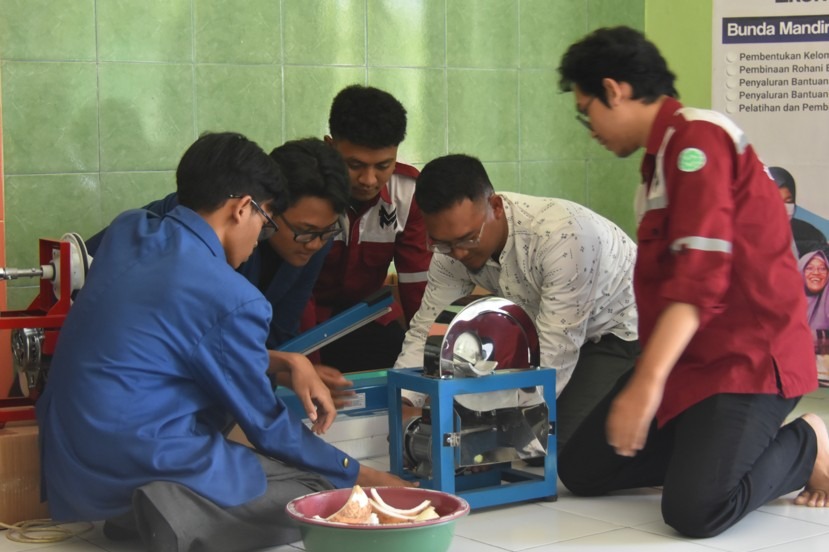
Surabaya, ITS News – The Sepuluh Nopember Institute of Technology (ITS) continues to expand the application of technology that provides direct benefits to the community. Through the Product-Based Community Service (Abmas) Program, the Instrumentation Engineering Department Team, Faculty of Vocational Studies, ITS, is implementing several appropriate technologies to support productivity and strengthen the business of the Bunda Bisa Medokan Semampir Timur Group, supported by LAZNAS Yatim Mandiri.
The activity, held on Sunday (September 13th), was designed based on the real needs of the partners. The Bunda Bisa group runs a food business together, with several production stages that previously required considerable effort and time. Therefore, the ITS team chose technology that was simple, easy to operate, and readily applicable to routine production activities.
The head of the Abmas team, Ir. Putri Yeni Aisyah, ST, MT, explained that the program’s approach goes beyond simply providing equipment. She explained that technology selection is based on consideration of its suitability for production activities and user capabilities. “We want the technology provided to be truly usable in daily activities, easy to understand, and to help make group work easier and more efficient,” she said.
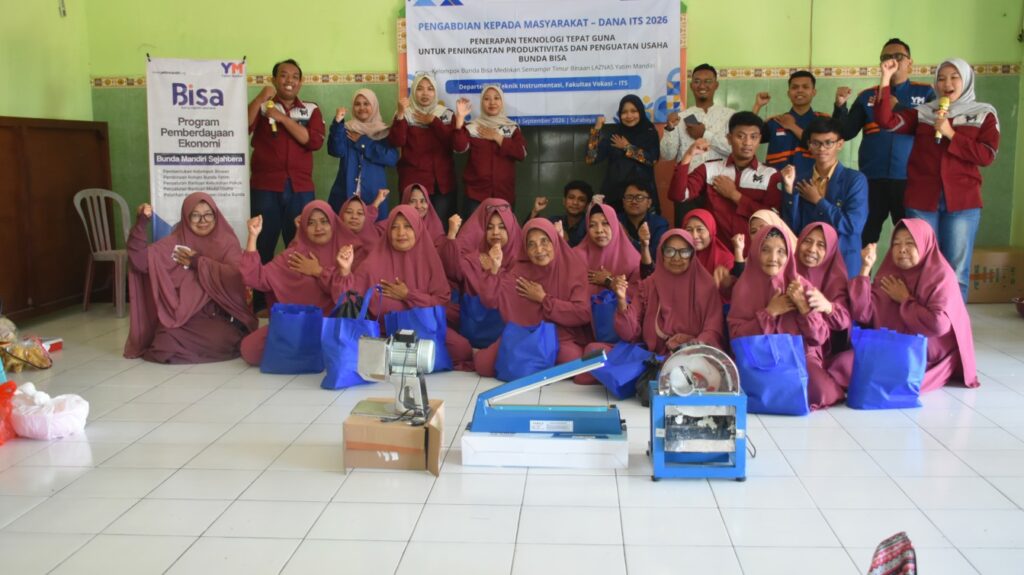
The four appropriate technologies provided include a cassava grinding or pounding machine, a chip slicing machine, a multi-purpose grater, and an impulse sealer . Each tool is designed to assist with different stages of the production process, from ingredient processing and slicing to seasoning preparation and product packaging.
In addition to introducing the tools’ functions, the Abmas team provided education on how to use, safety, and maintain the equipment through hands-on explanations and videos. The materials were simplified so that group members could refer back to them when they needed guidance. The education also emphasized proper use of the tools, electrical safety, caution around moving parts or heaters, and proper cleaning of the equipment after use.
This activity also involved 15 ITS students and 15 Bunda Bisa members in an interactive session. The students acted as supporting facilitators in group discussions, while Bunda Bisa members shared their experiences, production challenges, and business development needs. This interaction is expected to make the mentoring process more participatory and not limited to one-way presentations.
The collaboration is also strengthened by LAZNAS Yatim Mandiri through materials on strengthening economic capacity and developing Micro, Small, and Medium Enterprises (MSMEs). With this division of roles, ITS technology is expected to work hand-in-hand with the business mentoring process Yatim Mandiri has provided to the Bunda Bisa Group.
The Coordinator of the Yatim Mandiri Surabaya Program, Hangger Susilo, welcomed the collaboration. He stated that the collaboration with ITS adds value to the empowerment programs Yatim Mandiri has been running, particularly through the technology support that can be directly utilized by the assisted groups. “Going forward, we hope that the collaboration will not stop at the Bunda Bisa program, but can also be expanded to other Yatim Mandiri empowerment programs that require technological and scientific support from universities,” he said.
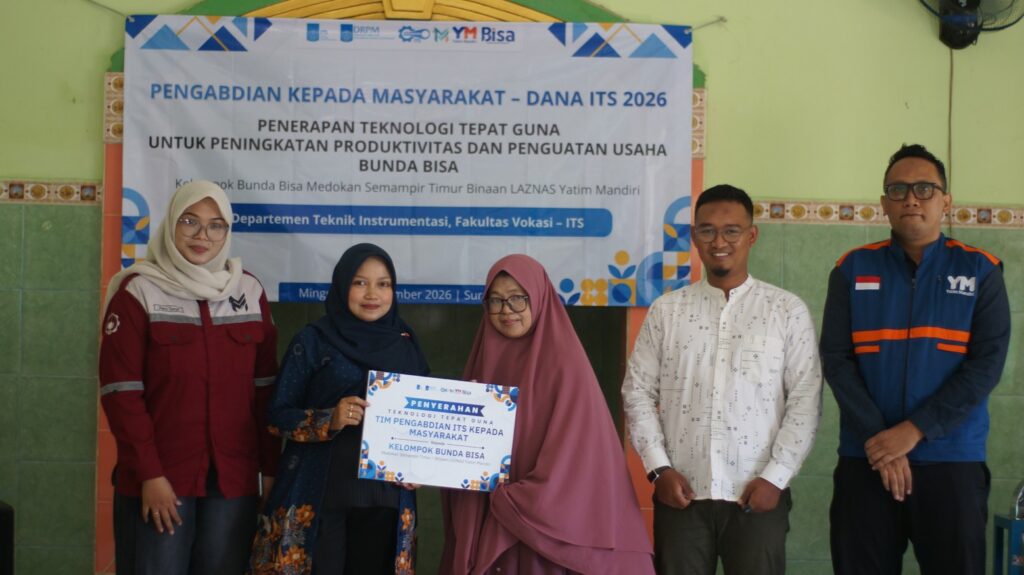
At the conclusion of the activity, a package of appropriate technology was symbolically handed over to the Bunda Bisa Group. This handover marked the beginning of the equipment’s use in the group’s production activities and emphasized the importance of collaborative use and maintenance to ensure the long-term benefits of the technology.
Bunda Syaiful, the coordinator of Bunda Bisa in East Semampir, Medokan, expressed her enthusiasm for the technological support. Previously, several production steps were still carried out manually, requiring significant time and effort. “With this machine, the workload is easier, the production process is faster, and Bunda Bisa’s business will continue to grow,” she said.
Two weeks after the activity began, the team conducted initial monitoring through communication with the Bunda Bisa coordinator. The monitoring results showed a positive response. The slondok chip production process reportedly accelerated after the equipment was introduced, while the use of the impulse sealer helped produce neater and more professional packaging.
The Bunda Bisa coordinator also reported a 10 percent increase in sales after the program’s implementation. According to partners, this increase was also driven by the more professional appearance of the packaging. Furthermore, the use of equipment has expanded beyond its original function. The grinding machine used to process cassava is also being used to make pecel sauce, opening up opportunities for product diversification for the group.
Putri views these findings as an early indication that simple technology can provide broader benefits when easily adapted by users. She hopes the tools provided will be used beyond a single purpose. “When partners begin to discover other uses relevant to their businesses, it means the technology is truly becoming a part of their production activities,” she said.
Through this activity, ITS hopes to continuously improve the synergy between universities, social institutions, students, and the community. This program aligns with efforts to strengthen community business productivity, empower women, and implement adaptive and sustainable appropriate technology. This aligns with the Sustainable Development Goals (SDGs), particularly point 8 on Decent Work and Economic Growth. (*)