Published on
Monday, 17 August 2026
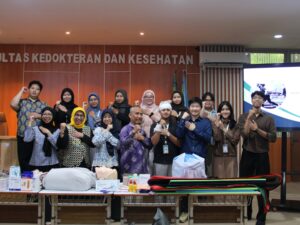
ITS Campus, ITS News — Providing health education to the public requires the ability to convey information accurately and easily. In response, the Faculty of Medicine and Health (FKK) of the Sepuluh Nopember Institute of Technology (ITS) held a Training of Trainers (ToT) to improve students’ readiness to become competent educators.
Dr. Ivor Wiguno Hartanto Wilopo, SpB, FINACS, who is responsible for the program, stated that the training aims to equip students with the cognitive knowledge and psychomotor skills needed to provide health education. He believes this knowledge will help students convey information more effectively to the general public.
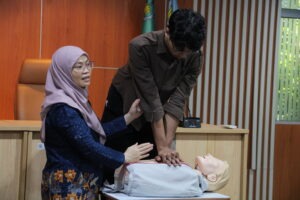
The lecturer from the ITS Medical Professional Education Program explained that two topics were presented to the ten students involved: cardiopulmonary resuscitation and emergency surgical management in disaster situations. In the first topic, students were equipped with skills in performing cardiac massage, treating choking victims, and administering artificial respiration. “These actions are forms of first aid in emergency situations,” he explained.
Meanwhile, in the second lesson, students learned how to manage bleeding, stab wounds, apply splints, and suture wounds. This material was presented through hands-on practice to enhance students’ understanding of emergency response procedures. “It is hoped that they will be able to provide appropriate education and demonstrations to the public,” explained Ivor.
According to the general surgeon, the provision of this material is closely related to the geographic location where the community service is being conducted. Padusan Village, located on the slopes of Mount Welirang, is known for its natural tourism and sulfur hot springs. The environmental characteristics and activities of the local community make first aid knowledge crucial for the local community.
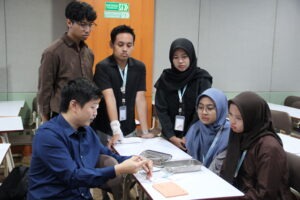
Ivor also revealed that the material provided is relevant to various situations residents may encounter in their daily lives. Therefore, he hopes local residents will have basic first aid skills. “For example, in the event of a flood or a fall, people will know how to handle or administer first aid for the health problem,” he explained.
Concluding his explanation, Ivor hoped this activity would contribute knowledge to the community in addressing everyday health issues and disasters. This activity aligns with ITS’s commitment to achieving the Sustainable Development Goals (SDGs), particularly point 3, which concerns a healthy and prosperous life. “This is also expected to help prepare students to become good doctors in the future,” he concluded. (*)
Reporter: Bella Ramadhani
Redaktur: Andra Eka Wijayanti