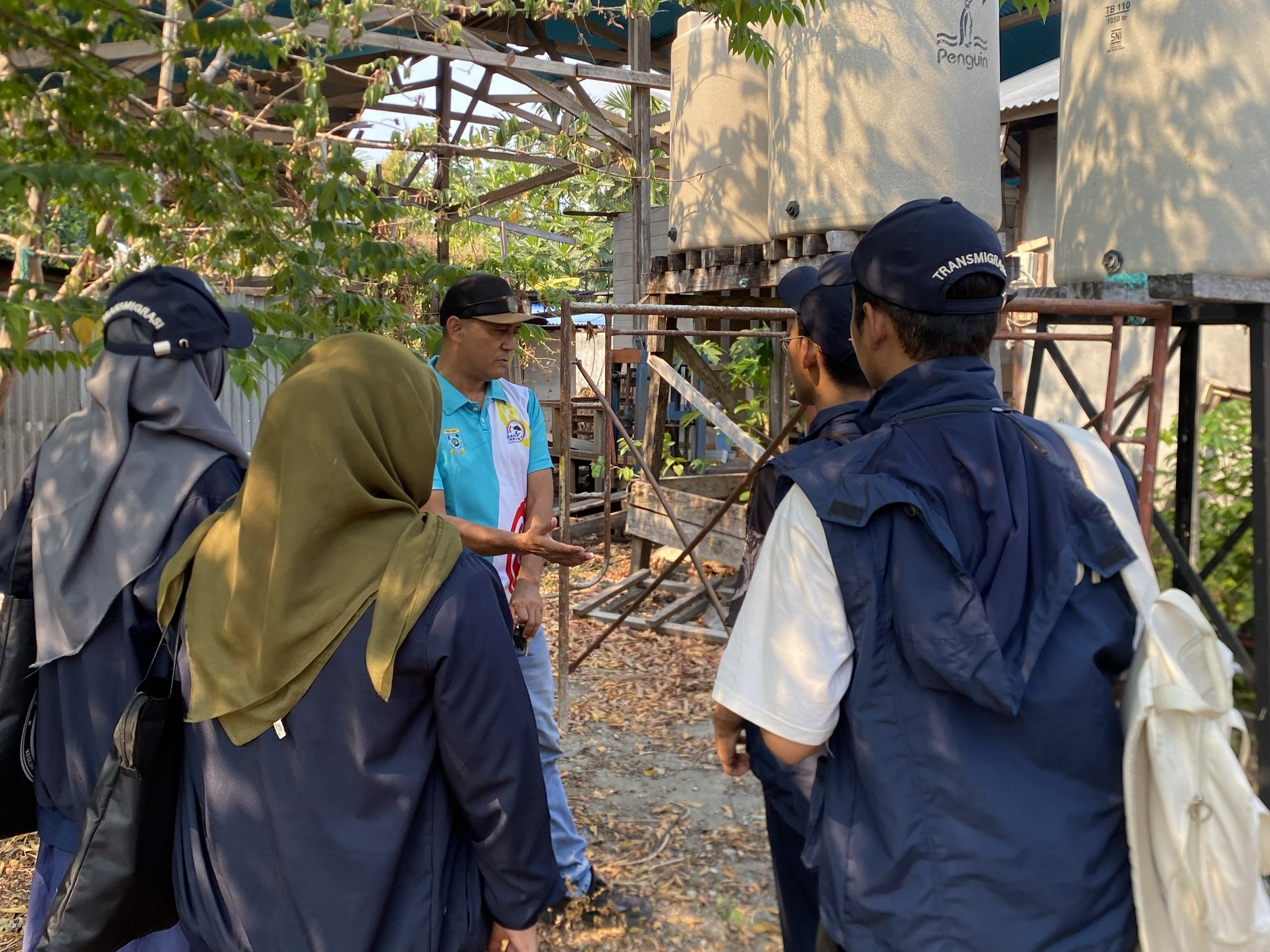
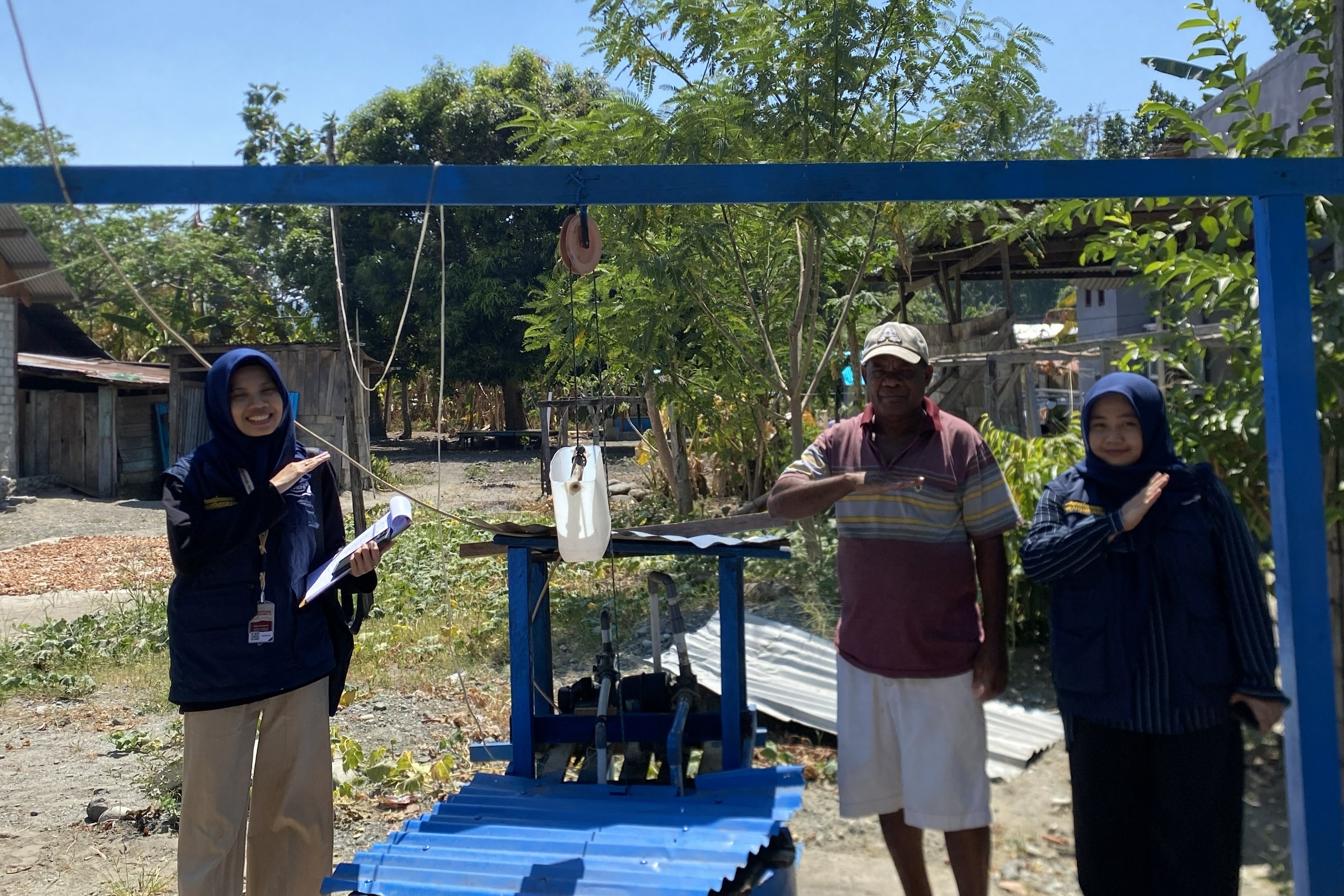
Two members of TEP 1 ITS review potential locations for water filter installation in Ransiki
Ransiki, ITS News — Water is a vital basic need for survival and public health. However, in some areas, access to clean water suitable for daily consumption remains difficult. This situation prompted the Patriot Expedition Team (TEP) of the Sepuluh Nopember Institute of Technology (ITS) to prepare alternative clean water infrastructure in Ransiki District, South Manokwari, West Papua.
The 2026 ITS TEP aims to provide access to clean water by collaborating with the Public Works and Spatial Planning Agency (PUPR) through the West Papua Drinking Water Technical Implementation Unit (UPTD). Led by Prof. Adi Setyo Purnomo, SSi, MSc, PhD, the team projects the development of clean water installations based on appropriate technology. “We strive to improve water access and quality, which can also support the health and productivity of the local community,” explained Adi.
Adi mentioned that several areas still face water access challenges and require further attention, such as the villages of Hamor, Wamcei, and Sabri. The team immediately collected data on community needs, identified potential water sources, and documented the condition of existing infrastructure, which has been gradually implemented.
TEP 1 ITS conducts site inspections for installation of appropriate water filter technology
The team moves in stages, starting with collecting data on community needs, identifying potential water sources, and documenting the condition of existing infrastructure. These steps are further strengthened by an analysis of the potential benefits and sustainability of the water sources. Once mapped, the team will quickly determine the filter technology most appropriate for the local water challenges.
It doesn’t stop there. Water quality retesting will be conducted once the filtration system is installed. This is to ensure the system’s effectiveness in improving local water quality. “For sustainability, we will provide guidance to the community so they can operate and maintain the existing technology independently,” explained the Chemistry Department lecturer.
However, the team also found other issues: regional infrastructure remains inadequate and uneven. This problem is exacerbated by Papua’s poor geography and poor road access.
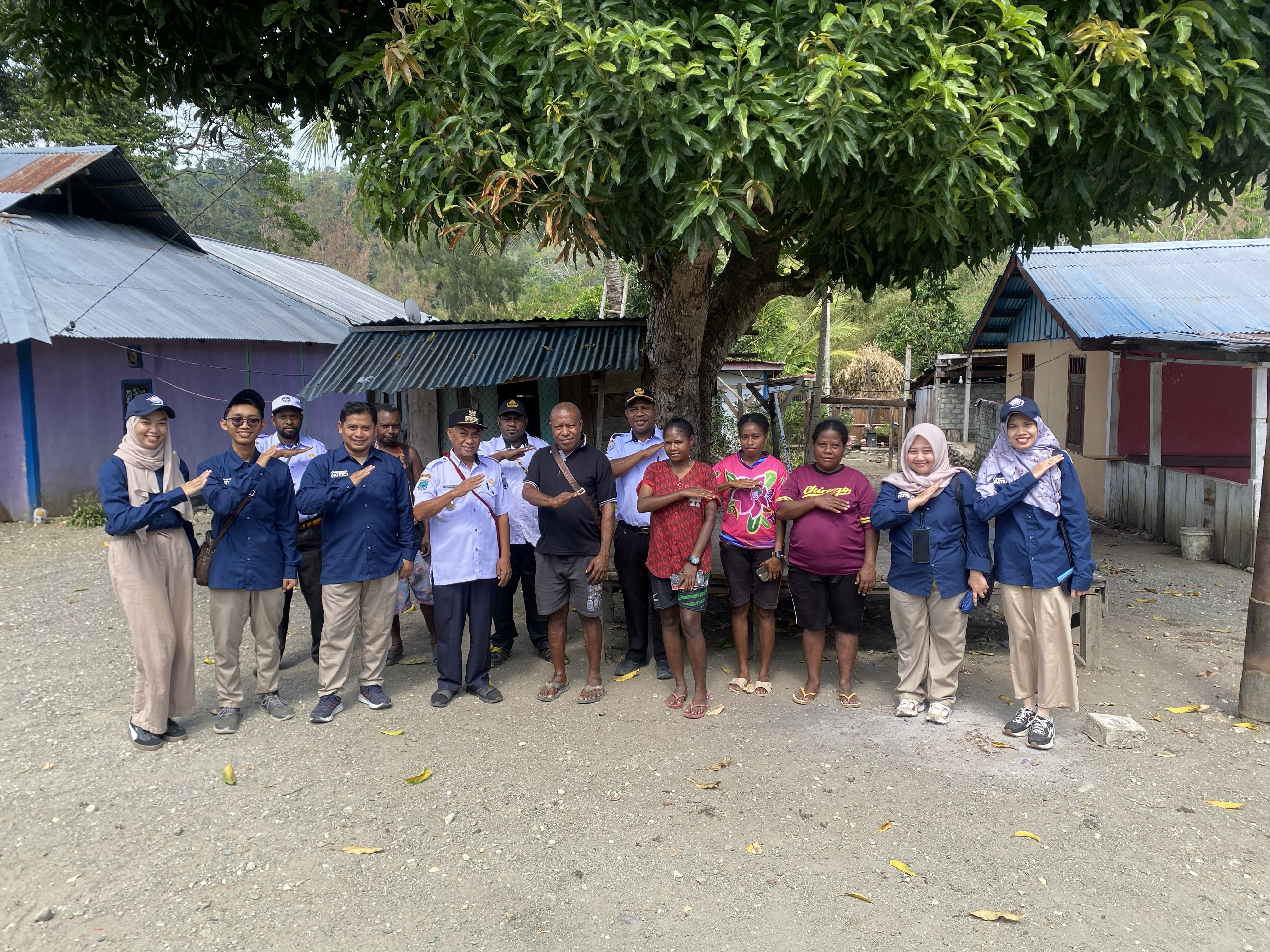
FGD TEP 1 ITS 2026 with local communities regarding clean water provision in Ransiki District
Synergy with Local Government
Seeing this situation, the local PUPR (Ministry of Public Works and Housing) expressed its readiness to support the equipment needed for the water installation. Furthermore, the Drinking Water Technical Implementation Unit (UPTD) also expressed its willingness to utilize the office area as a potential location for clean water installations and reservoirs. “Socially, we are ensuring that the implementation location is safe from customary land conflicts by selecting educational institutions with clear ownership,” Adi said.
As a next step, team members are preparing a technical training plan to ensure its implementation. Furthermore, the team plans to form a local community to monitor the existing ecosystem through training and Standard Operating Procedures (SOPs).
According to Adi, local government involvement is crucial in ensuring that the designed solutions can be implemented realistically and sustainably. Clean water solutions must be developed in collaboration with communities and local governments, as they best understand the conditions on the ground and ultimately ensure the system’s sustainability. “ITS strives to ensure that clean water system designs remain as technological concepts,” Adi emphasized.
This initiative by the ITS 2026 TEP reflects ITS’s commitment to supporting the Sustainable Development Goals (SDGs), particularly point 6 on Clean Water and Adequate Sanitation, which focuses on improving water quality in the region. Furthermore, it also contributes to the realization of SDG point 17 on Partnerships to Achieve Goals through collaboration with the Ministry of Public Works and Housing (PUPR) and the local Drinking Water Technical Implementation Unit (UPTD). (*)