
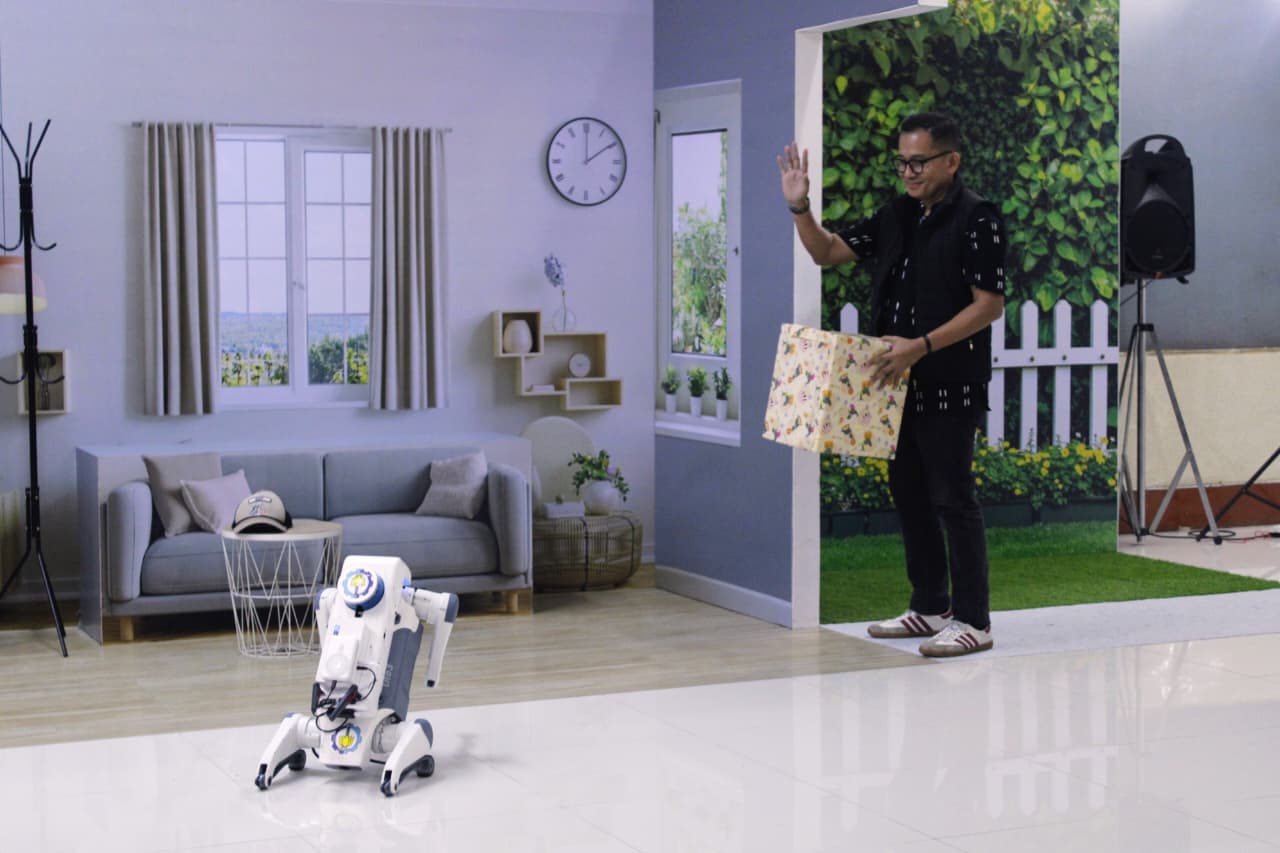
Surabaya, ITS News — The Sepuluh Nopember Institute of Technology (ITS) has once again reaffirmed its capabilities in robotics and artificial intelligence (AI) development. This time, ITS, along with Indosat Ooredoo Hutchison (IOH), Nokia, and NVIDIA, introduced the RoboDog innovation, an autonomous robot dog with a range of thousands of kilometers, at the AI-Ran Research Center in Surabaya on Saturday (February 28).
The synergy of four institutions is key to realizing this innovation. IOH is leading the development of the Artificial Intelligence Radio Access Network (AI-RAN), while Nokia is providing 5G network infrastructure as the backbone of connectivity. Meanwhile, NVIDIA is supporting Graphics Processing Unit -based computing , and ITS is integrating it into the ready-to-operate robotics.
ITS RoboDog Developer Representative Yuke Brilliant Hestiavin explained that RoboDog is designed to receive human voice commands and understand the context of instructions. Furthermore, RoboDog’s camera and LiDAR sensors enable the robot to read its surroundings in real time . “This capability can be controlled from a distance of thousands of kilometers,” Yuke said.
In a demonstration scenario, a RoboDog in Surabaya, Indonesia, received voice commands from a user in Barcelona, Spain, to inspect a location, detect potential hazards, and ensure there was no suspicious activity. The ITS Computer Engineering student believes the robot’s ability to understand situations makes it applicable to industries that pose a high risk to humans.
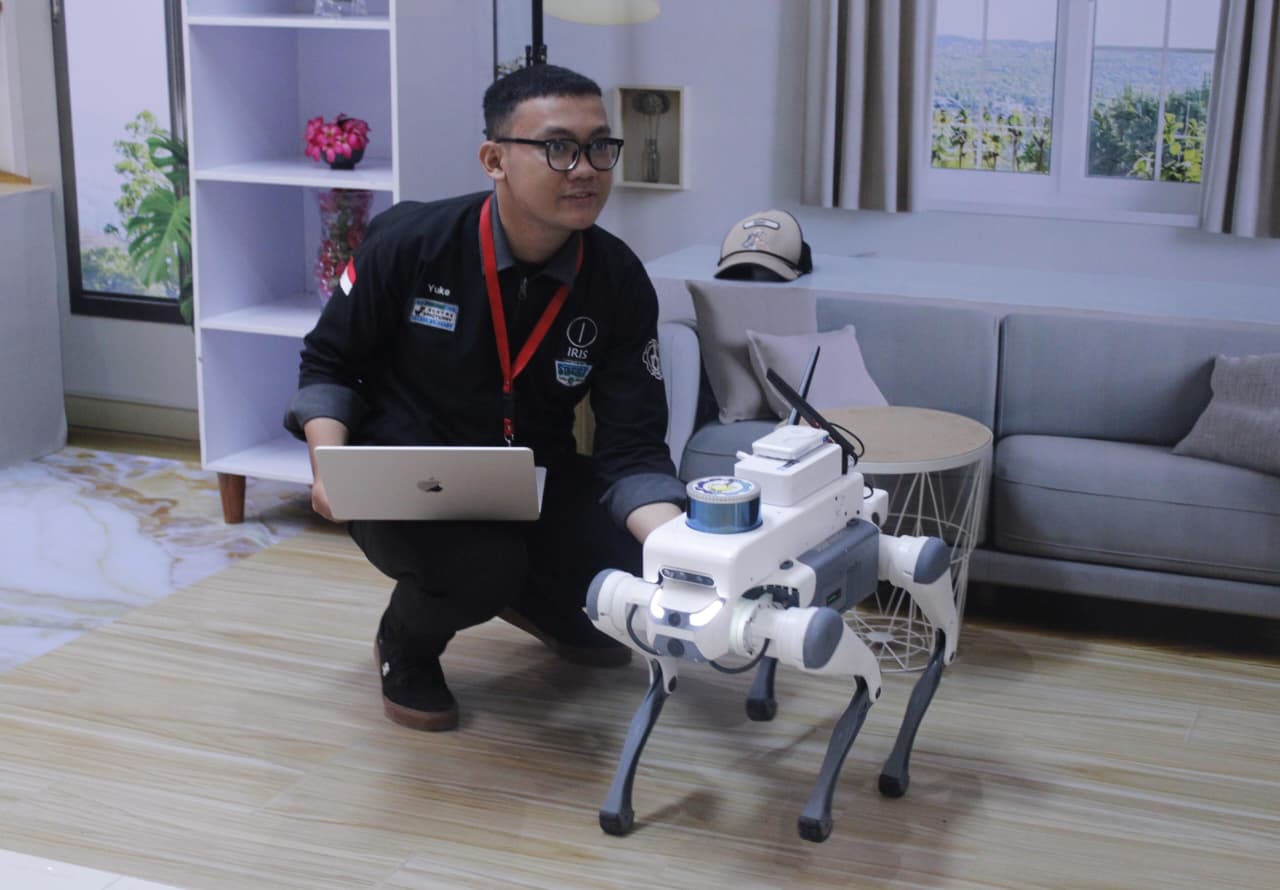
Behind this sophistication, Irwan Radius, VP Head of Technology Strategy & Partnership Management at IOH, described AI-RAN as the system’s foundation. AI-RAN connects remote commands with robot actions via a 5G network. “This technology enables synchronization between the monitoring center in Spain and the robot in Surabaya with very little latency,” Irwan claimed.
Through this approach, Irwan continued, artificial intelligence is no longer processed on remote centralized servers, but rather integrated into the 5G network infrastructure. The network, which previously served only as a data transmitter, can now become a central processing hub for AI-based computing. “This architecture enables the ultra-low latency required for the development of physical AI applications such as robotics and autonomous drones,” he explained.
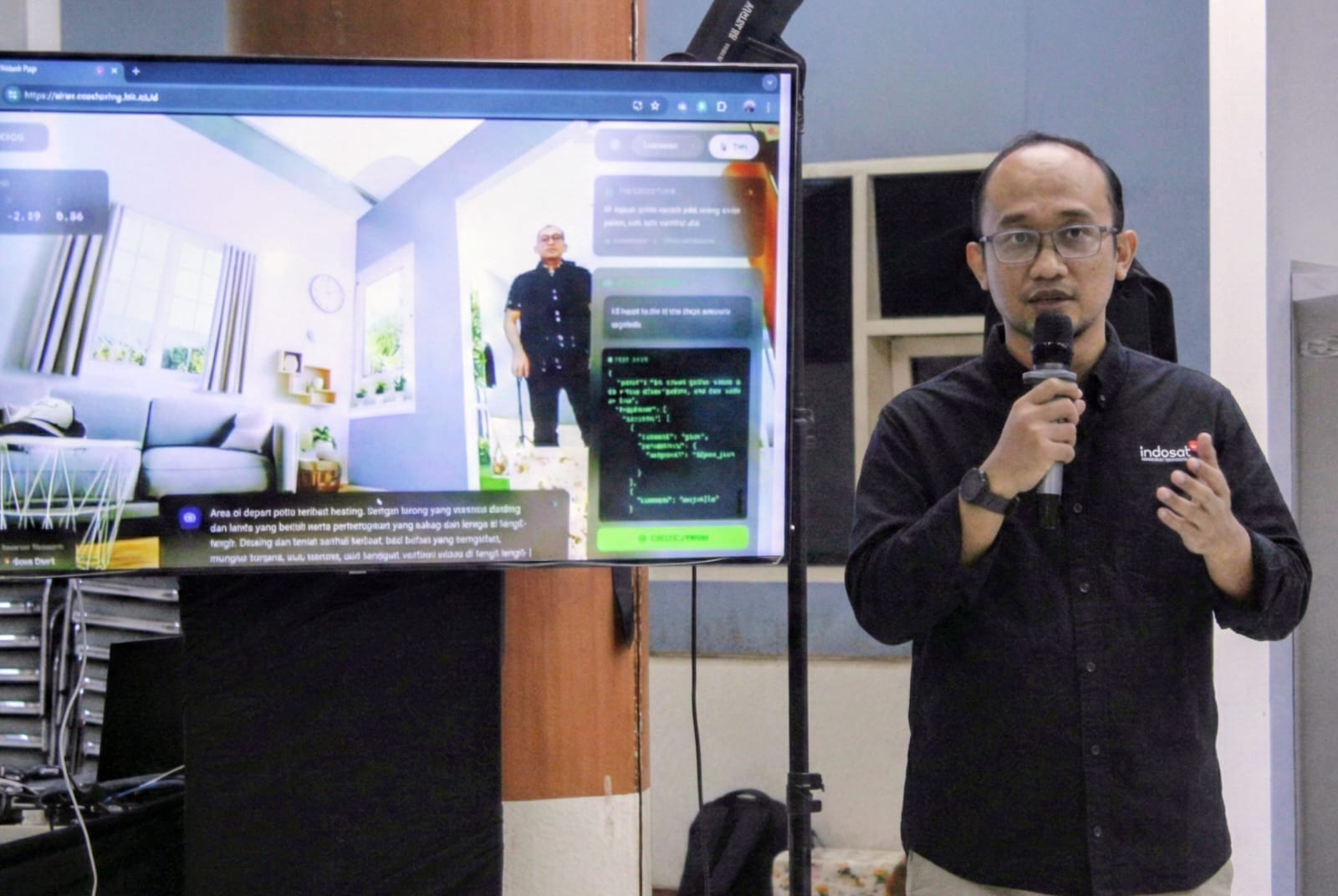
The implementation of this technology will be showcased at the Mobile World Congress 2026, to be held in Barcelona, Spain, in March 2026. Irwan believes this participation confirms that Indonesia is not just a market for AI technology, but also capable of creating it. “Hopefully, through this international forum, Indonesian innovation will gain more space and opportunities for collaboration on the global stage,” he concluded hopefully.
ITS’s participation reflects its human resource capacity in designing robotics and artificial intelligence innovations relevant to future industries. This step aligns with the Sustainable Development Goals (SDGs), specifically point 4 on Quality Education and point 9 on Industry, Innovation, and Infrastructure. It also supports point 17 on Partnerships to Achieve the Goals. (ITS Public Relations)
Reporter: Naurah Fitri
Translator: Devinka Mutianeira