
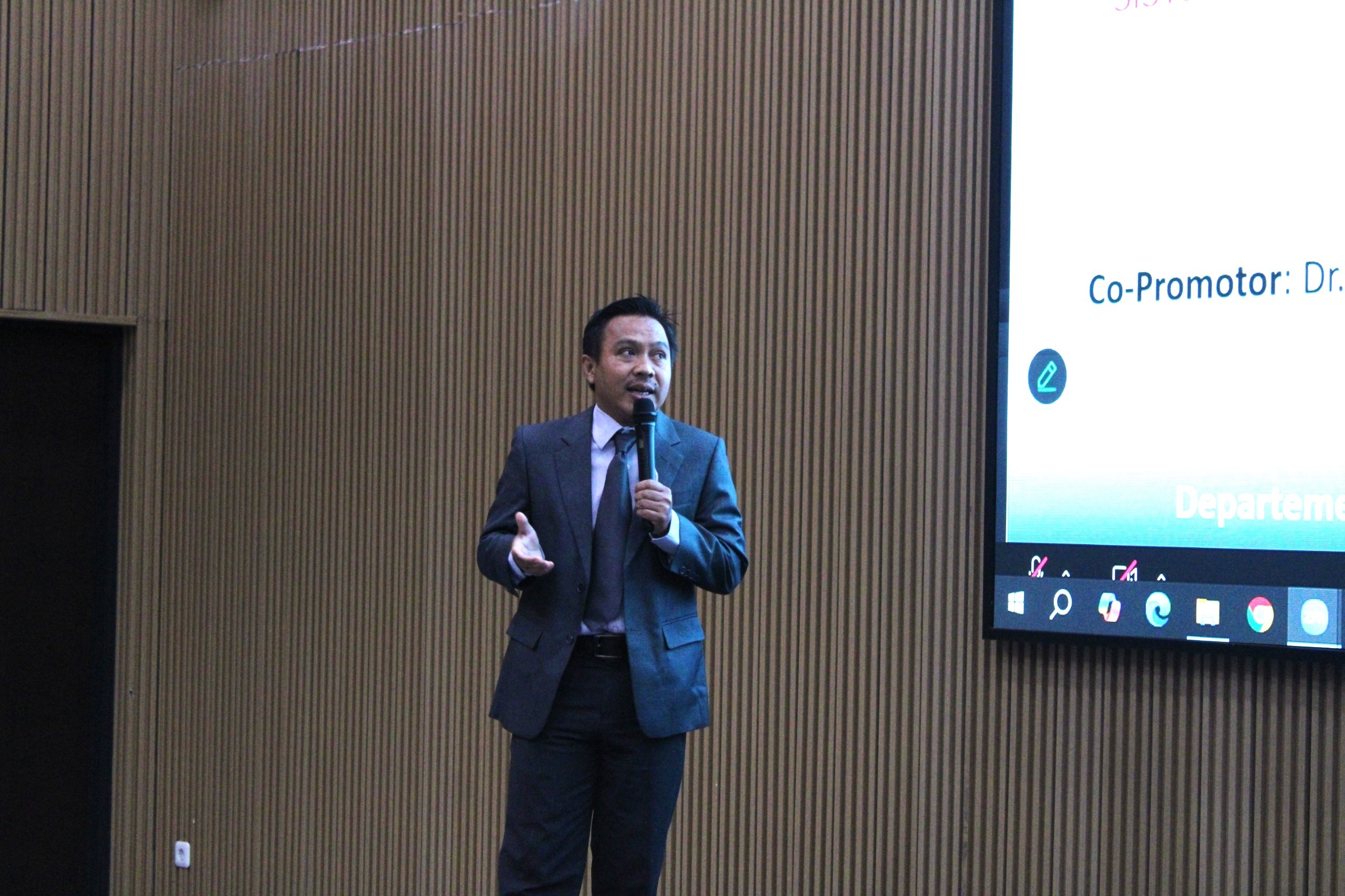
ITS Campus, ITS News – Technological innovation has once again been produced by a doctoral program graduate of Institut Teknologi Sepuluh Nopember (ITS) who developed a Solar Tracker-Rainfall Collector (STRC) model to maximize solar energy capture. Through his research, Dr Akhmad Musafa ST MT integrated STRC into a Photovoltaic-Pumped Hydro Storage-Rainfall Storage (PV-PHS-RS) system.
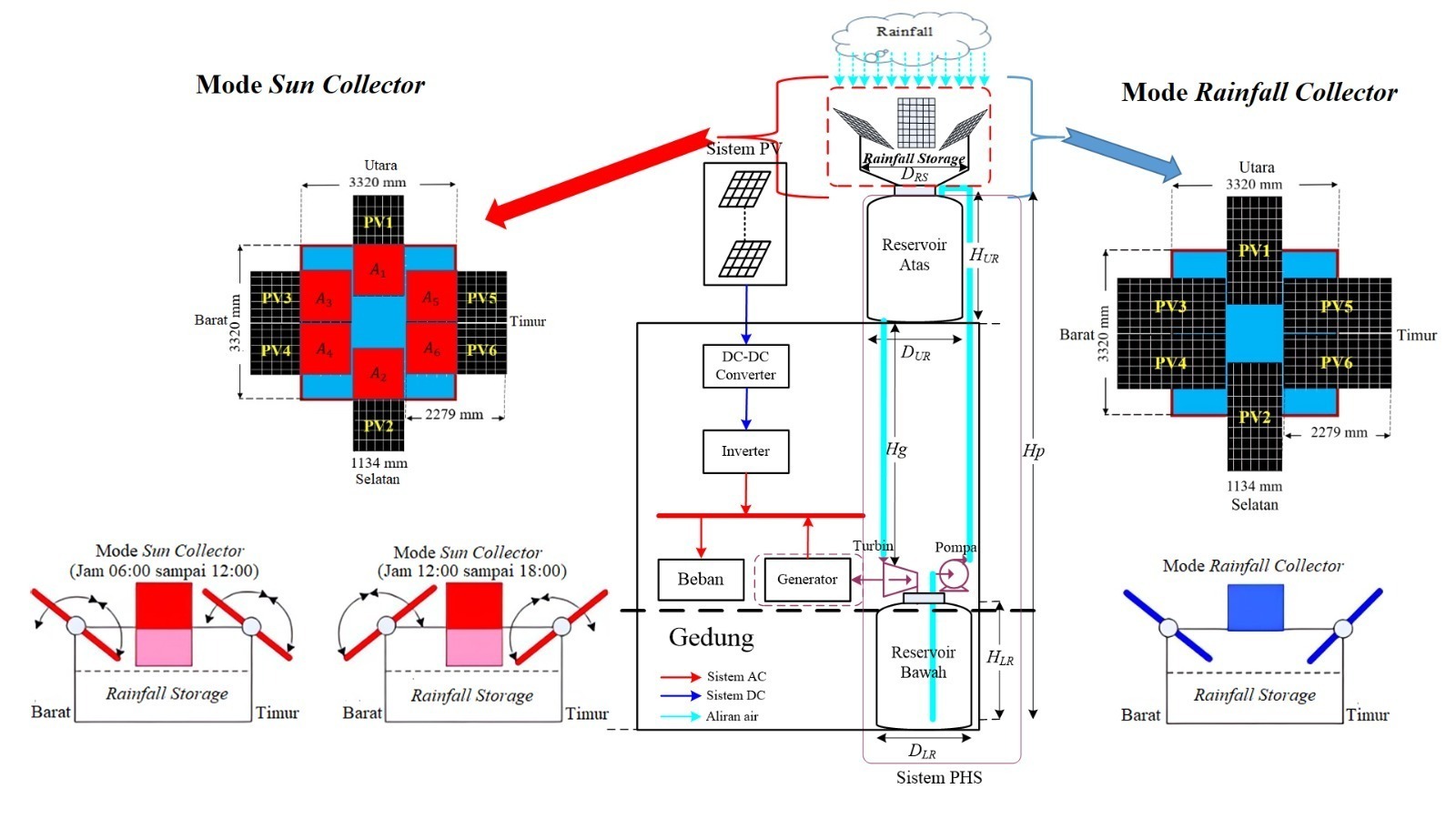
The man from Brebes explained that the system used can overcome the problems of conventional batteries, which have a limited lifespan and the potential to become waste. The proposed system replaces batteries with pumped hydro storage (PHS) for energy storage. “Broadly speaking, PHS operates in two modes: pumping and generating mode, which can be analogized to charging and discharging in a battery,” he revealed.
Furthermore, he explained, during the day, the Photovoltaic (PV) will capture solar energy, which is then converted into electrical energy. This electrical energy is used to pump water from the lower reservoir to the upper reservoir. This condition is analogized as energy charging. Conversely, when the PV does not receive a solar light supply, the water in the upper reservoir will be flowed to the lower reservoir through a different path to rotate a turbine coupled with a generator to produce electricity.
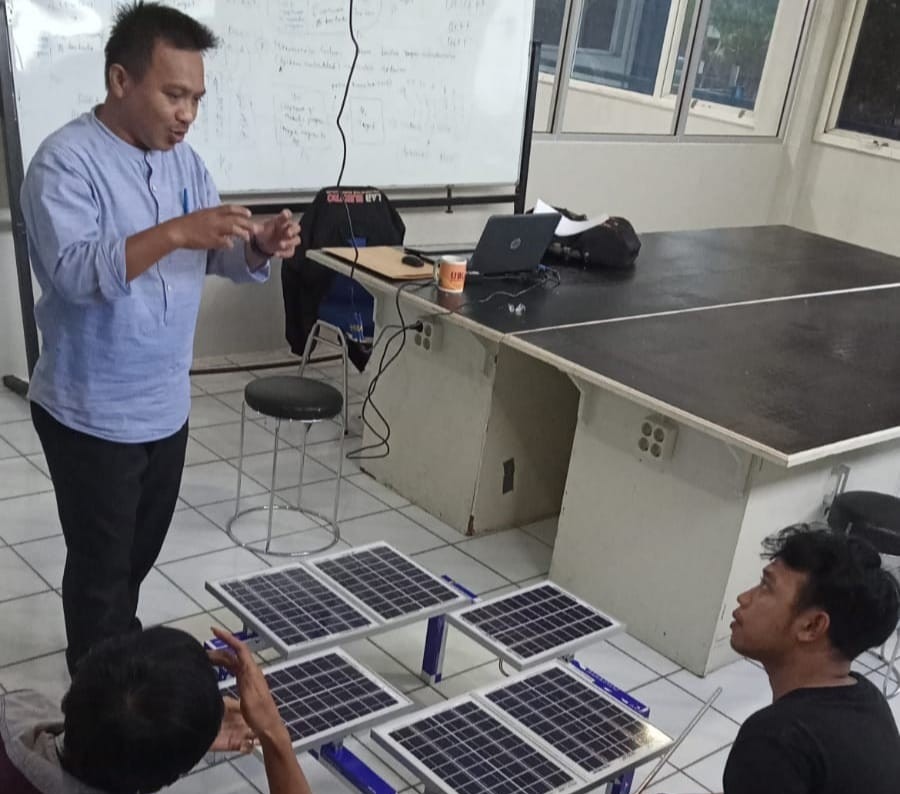
Not only that, to solve the problem of insufficient solar energy during the rainy season, the doctor usually called Musafa provides a solution through the STRC model. A Solar Tracker is installed to maximize solar light capture. Meanwhile, a Rainfall Collector is used to capture rainwater to fill the upper reservoir. “The rainwater collected in the upper reservoir can still be utilized to rotate the turbine,” he explained.
The research for his dissertation was guided by the Professor of the ITS Department of Electrical Engineering, Prof Dr Ir Mauridhi Hery Purnomo MEng, as the promoter. In addition, there were also lecturers from the ITS Instrumentation, Measurement, and Power System Identification and Work System Design Laboratory, Dr Eng Ardyono Priyadi ST MEng and Vita Lystianingrum BP ST MSc PhD, as co-promoters. This 46-year-old man not only demonstrated his environmentally friendly innovation, but also his previous in-depth research.
Starting his involvement with PV in 2016, Musafa has had many opportunities to develop. One of them was when he submitted his research grant into a collaboration program between ITS and Budi Luhur University, where he serves as a lecturer. In fact, the PV research topic was also used by his students to participate in the Student Creativity Program (PKM). “Since then, I started to become interested in renewable energy research topics,” said the man born on February 7, 1980.
Through this research, Musafa desires that his innovation can be realized in society. Especially for areas that are still constrained by state electricity access to create environmentally friendly energy independence. Going forward, the electrical energy generated from the PV-PHS-RS system is expected to be utilized for agricultural irrigation, integrated health posts (posyandu), or clinics in remote areas.
The innovation of the academic community serves as proof of ITS’s commitment to facilitating its students in the realm of clean energy novelty. This is in accordance with the Sustainable Development Goals (SDGs) point 7 on Affordable and Clean Energy, and point 9 on Industry, Innovation, and Infrastructure. (ITS PR)
Reporter: Ahmad Husein Al Qomary