Published on
Monday, 20 April 2026
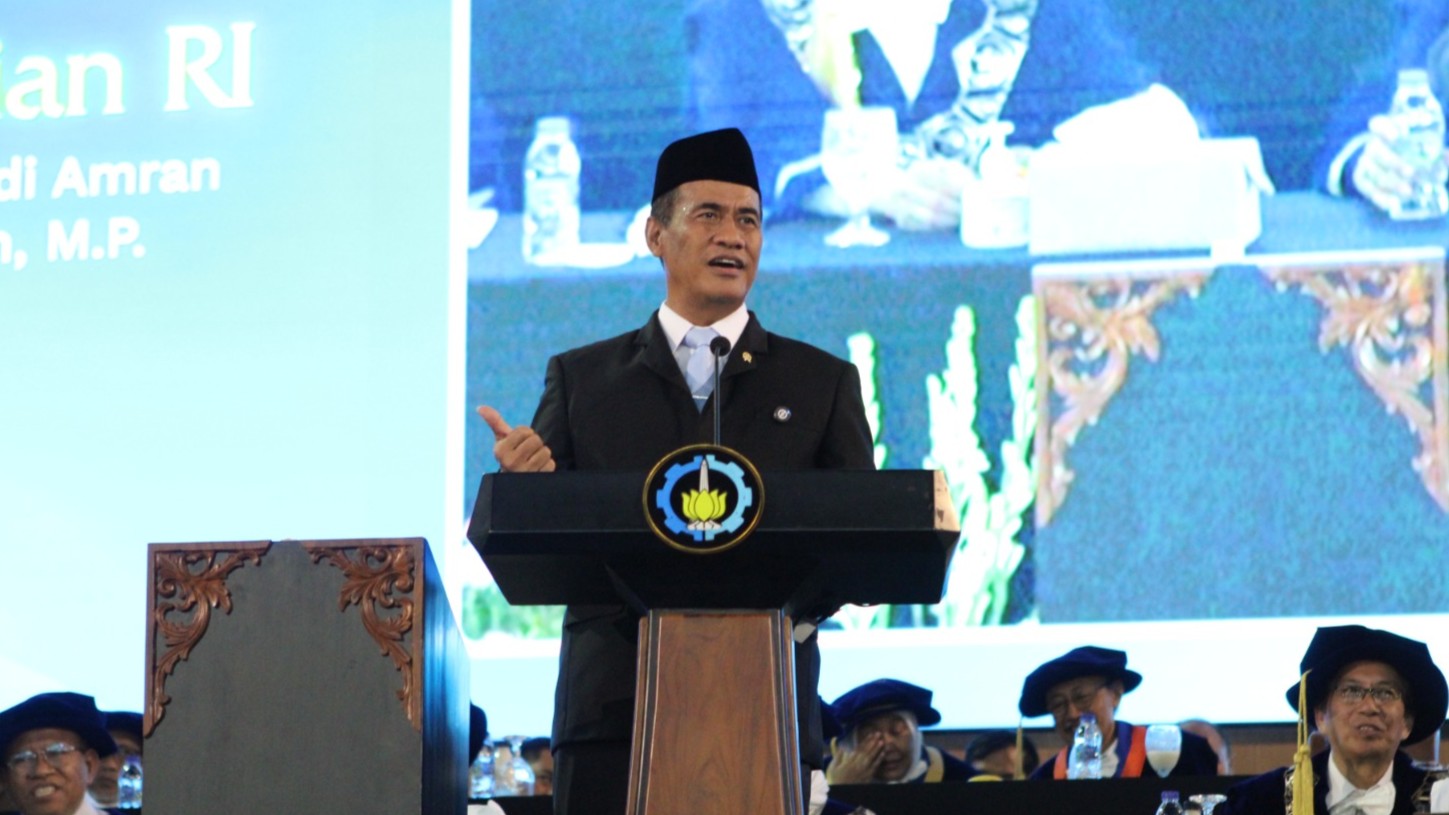
ITS Campus, ITS News — Indonesian Minister of Agriculture Dr. Ir. Andi Amran Sulaiman, MP, attended the 133rd Graduation Ceremony of the Sepuluh Nopember Institute of Technology (ITS) on the second day, Sunday (19/4). On this occasion, the Minister of Agriculture invited ITS to continue its strategic role in developing the agricultural sector by developing agricultural equipment and machinery (alsintan) technology and modern agricultural machinery that relies on innovations created by the nation’s children.
Based on his extensive experience in agriculture, the Bone, South Sulawesi native aspires to make Indonesia self-sufficient in developing modern agricultural technologies, eliminating its reliance on global imports. Collaboration and synergy with state universities (PTN) demonstrate the Indonesian Ministry of Agriculture’s (Kementan) commitment to realizing national food sovereignty and security.
Amran is optimistic that strong collaboration will accelerate the transformation of agriculture from traditional to modern systems. This is especially true given the current food, energy, and water crises that must be addressed quickly and effectively.
He stated that this ambition could be achieved through close collaboration between the Ministry of Agriculture and ITS. “Because in the sectors currently the government’s primary focus, ITS has all the solutions the government needs,” he emphasized.
His team, along with the rector and researchers at ITS, agreed to initiate independent downstreaming of agricultural equipment and energy sources for agriculture. These include the development of innovative products such as Palm Oil Gasoline (Benwit) , electric tractor boats, and a coconut-climbing device called the Moto Climber ITS (MOCITS). These innovations, created by ITS researchers, not only support food self-sufficiency but also contribute to national technological development.
According to Amran, this is because the technology and innovation ITS offers can provide solutions to current global challenges. “We see real innovation, from coconut climbing equipment, electric tractor boats for swampy areas, to the most recent development of biogasoline,” Amran explained.
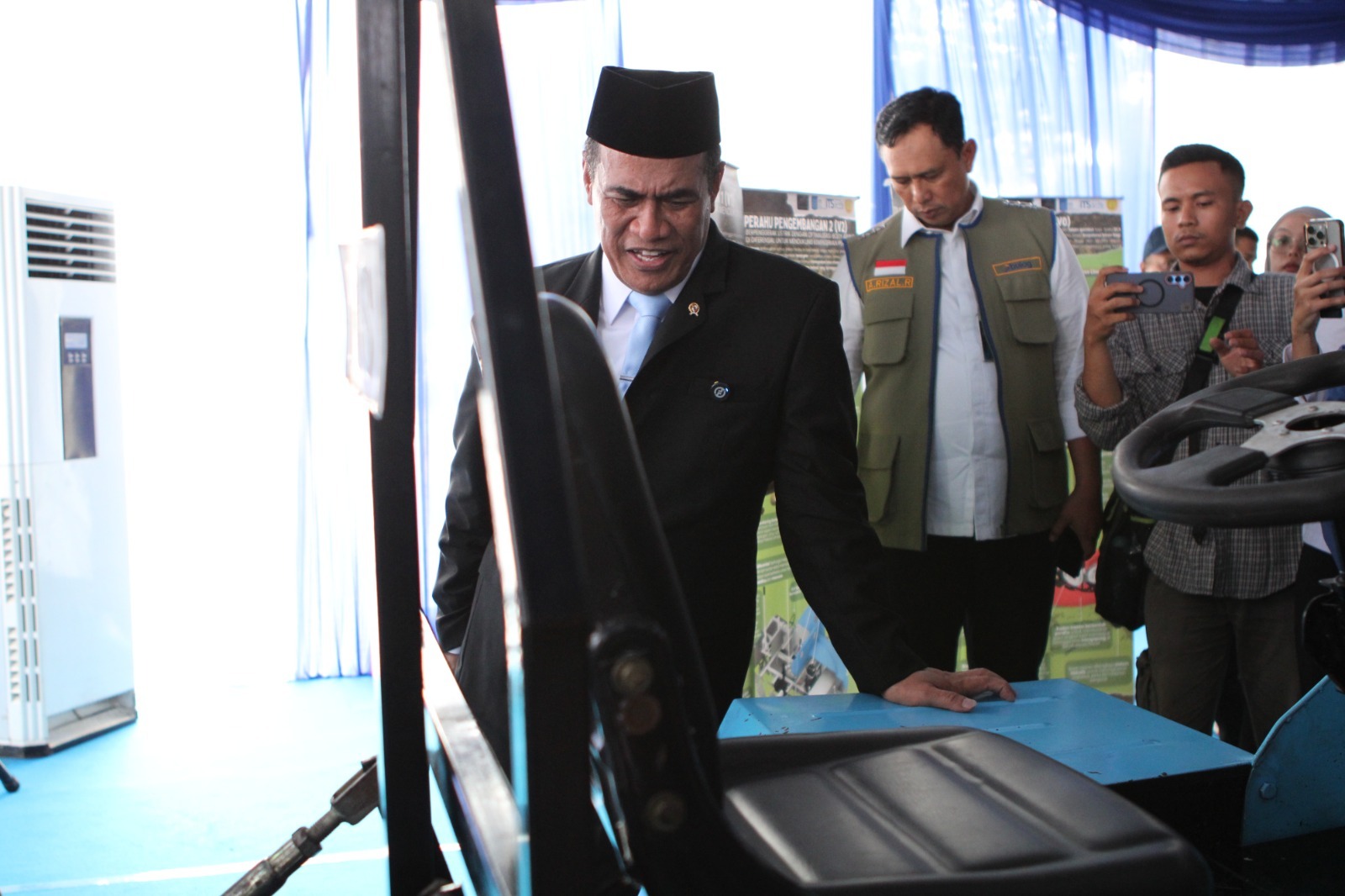
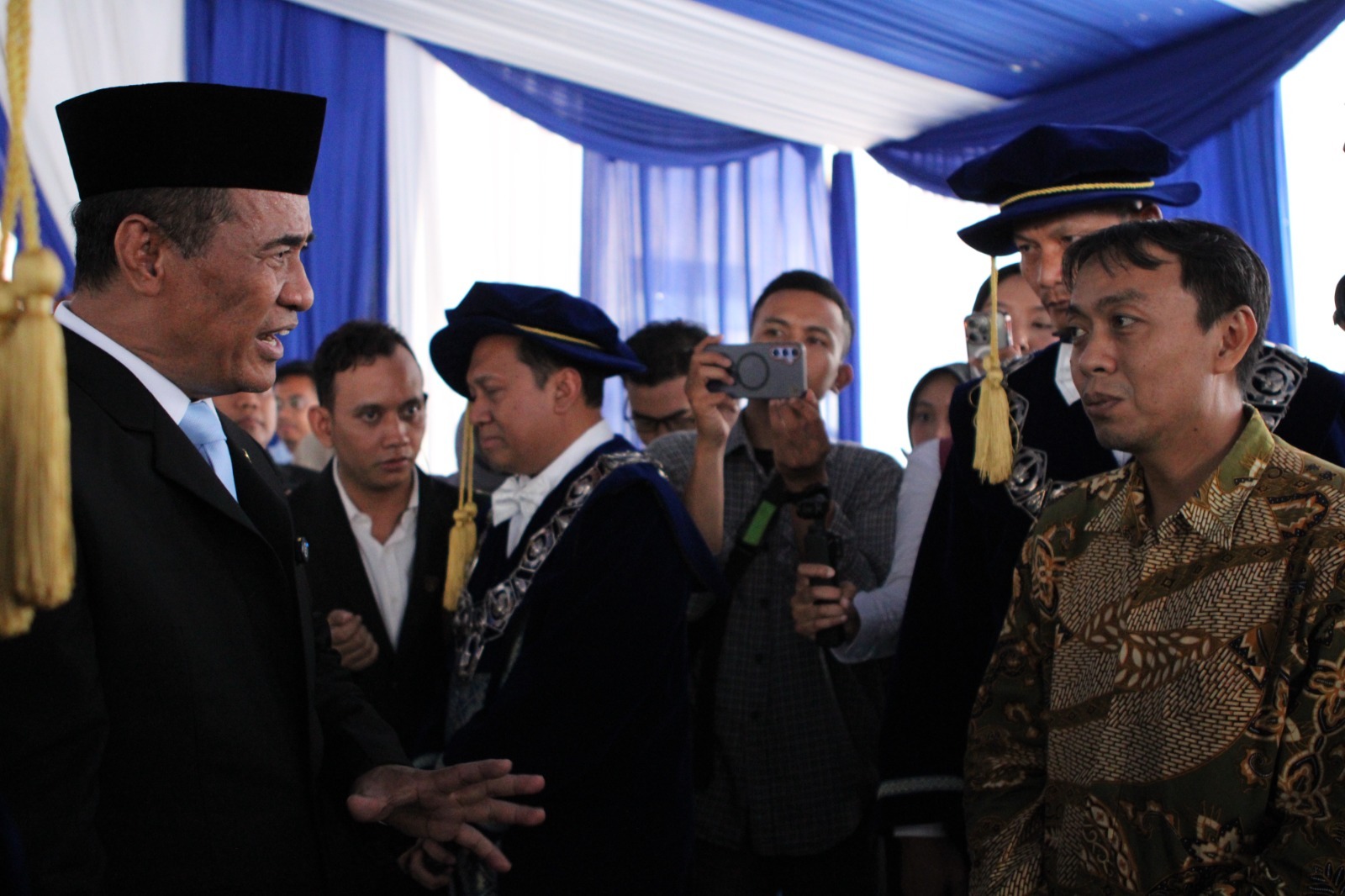
After delivering a keynote speech at the ITS graduation ceremony, the Minister of Agriculture also inspected various ITS innovative products on display. He also highlighted the Benwit bio-gasoline trial, a research project led by ITS Materials and Metallurgical Engineering lecturer Prof. Dr. Eng. Hosta Ardhyananta, ST., MSc.
This innovation, using palm oil as the primary fuel, can achieve a 70 percent blend, or E70, without significant changes to vehicle engines. This technology is projected to support the government’s goal of completely eliminating dependence on imported diesel fuel and shifting to palm oil-based biofuels, or crude palm oil (CPO).
With these results, according to Amran, this product can be said to be positioned between Pertalite and Pertamax. “If this continues, our dream of energy independence will no longer be just a dream,” Amran said, proudly looking at the Benwit ITS innovation.
The Minister of Agriculture, who is also the Head of the National Food Agency (Bapanas), expressed his interest in Benwit, which yielded satisfactory results. He therefore urged ITS researchers to immediately patent the research findings.
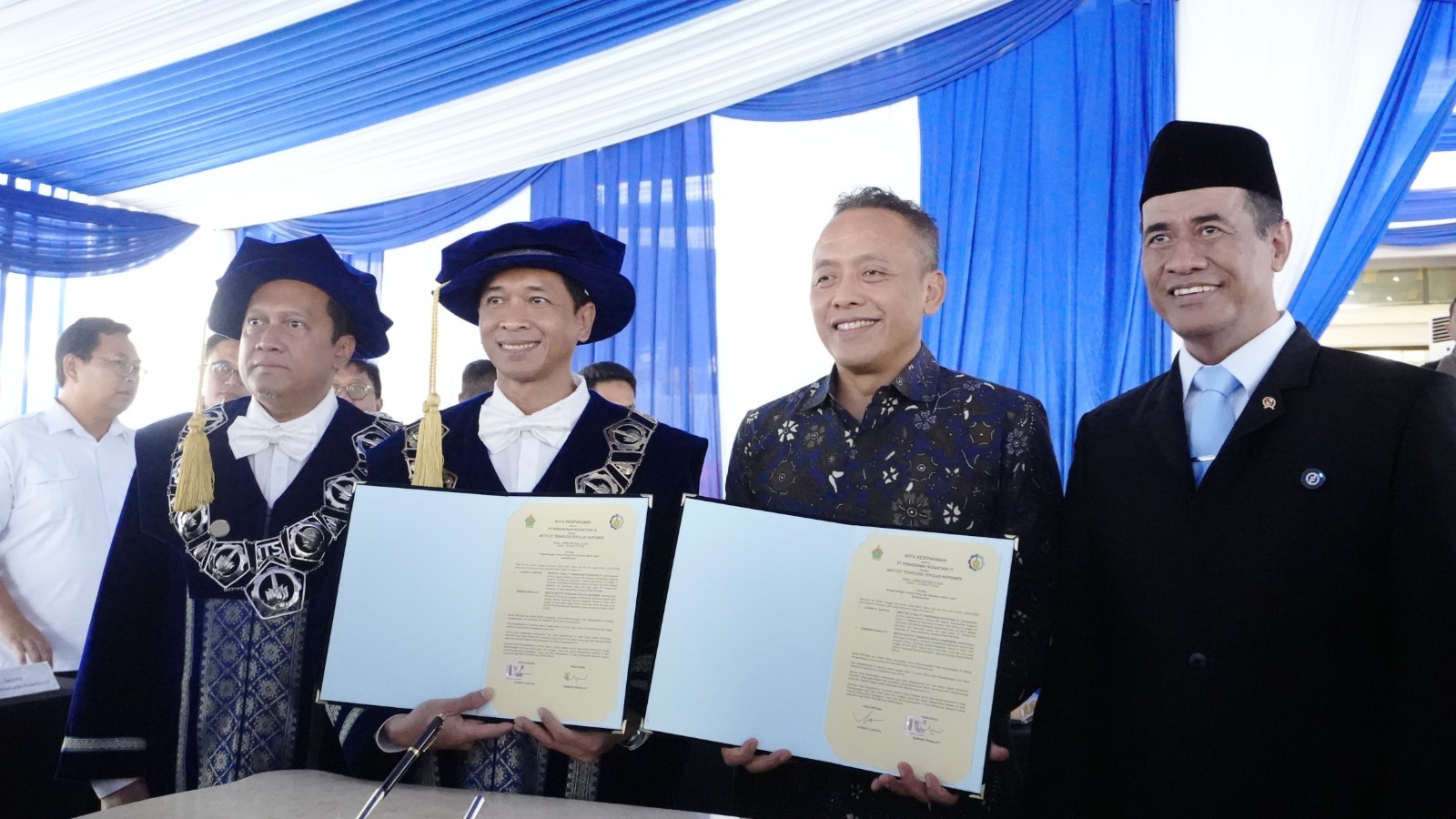
On the same occasion, a memorandum of understanding was also signed between ITS and PT Perkebunan Nusantara (PTPN) IV. This serves as encouragement for researchers to continue developing their research and distribute it to the wider community.
Through this collaboration, it is hoped that PTPN, as a State-Owned Enterprise (BUMN) operating in the plantation agribusiness sector, can provide researchers with the space to maximize their innovations. “If this product proves 100 percent successful after development trials, we will forward it to the President so it can be distributed immediately,” Amran stated optimistically.
In addition to fuel, the Minister of Agriculture is also considering coconut climbing equipment, which the Indonesian Ministry of Agriculture has previously ordered 10 units of. This equipment is designed to replace the manual climbing required by coconut farmers, which can be quite risky.
Amran described the downstreaming of Indonesia’s coconut and palm oil industries as fantastic. The revenue could reach Rp 10,000 trillion if managed optimally from upstream to downstream. “We have coconut water, virgin coconut oil, and even coconut milk, all of which are currently in high demand for export. So, we’re entrusting the technology to ITS through this coconut climbing device,” Amran said.
Meanwhile, ITS Rector Prof. Dr. (HC) Ir. Bambang Pramujati, ST, MScEng, PhD, welcomed the challenge. The ITS Professor of Mechanical Engineering ensured that every innovation by ITS researchers was tailored to the needs of industry and the country.
Therefore, according to Bambang, for the resulting innovative products to be utilized, collaboration with industry and the government, including the Indonesian Ministry of Agriculture, is essential from the outset. “Therefore, we will strive to produce innovative products that are truly needed by the public,” he emphasized.
Through collaboration and support from both parties, ITS and the Indonesian Ministry of Agriculture, we are strengthening our contribution to achieving the Sustainable Development Goals (SDGs), specifically regarding point 4 on Quality Education, point 7 on Clean and Affordable Energy, and point 17 on Partnerships to Achieve the Goals. (ITS Public Relations)
Reporter: Syifa Rahmadina
Translator: Devinka Mutianeira