Published on
Wednesday, 27 May 2026
ITS Campus, ITS News — The certainty of halal-haram content in food is a special concern for Muslims. When traveling abroad with a majority non-Muslim population, doubts often arise about the safety of the raw material content in every consumed food.
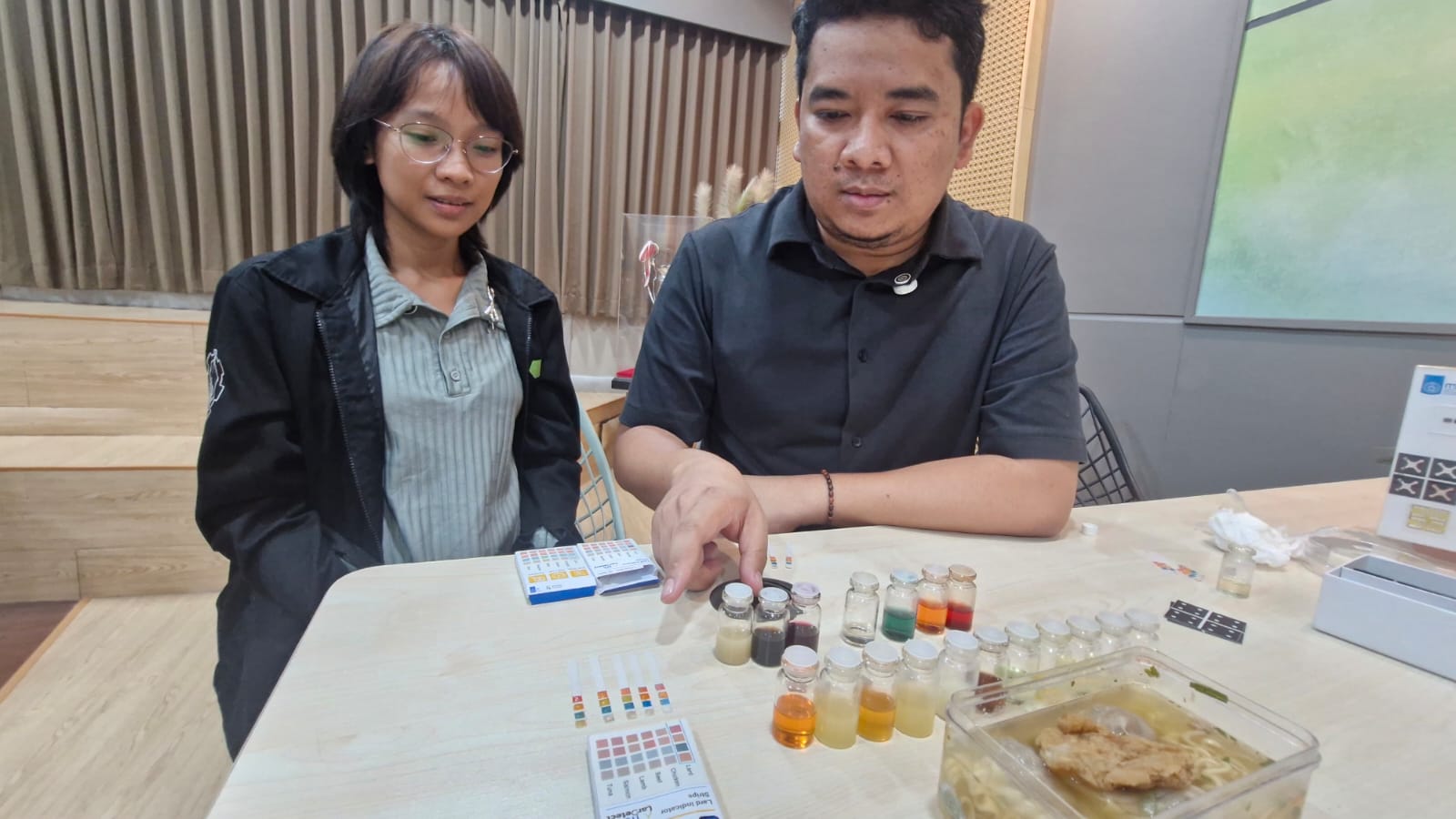
Answering these concerns, a research team from Institut Teknologi Sepuluh Nopember (ITS) developed an innovation in the form of a practical and economical pork oil detection strip test kit. This research was led by Dr rer nat Ruri Agung Wahyuono ST MT together with several researchers from the ITS Halal Study Center, one of whom is Prof Agus Muhamad Hatta ST MSi PhD.
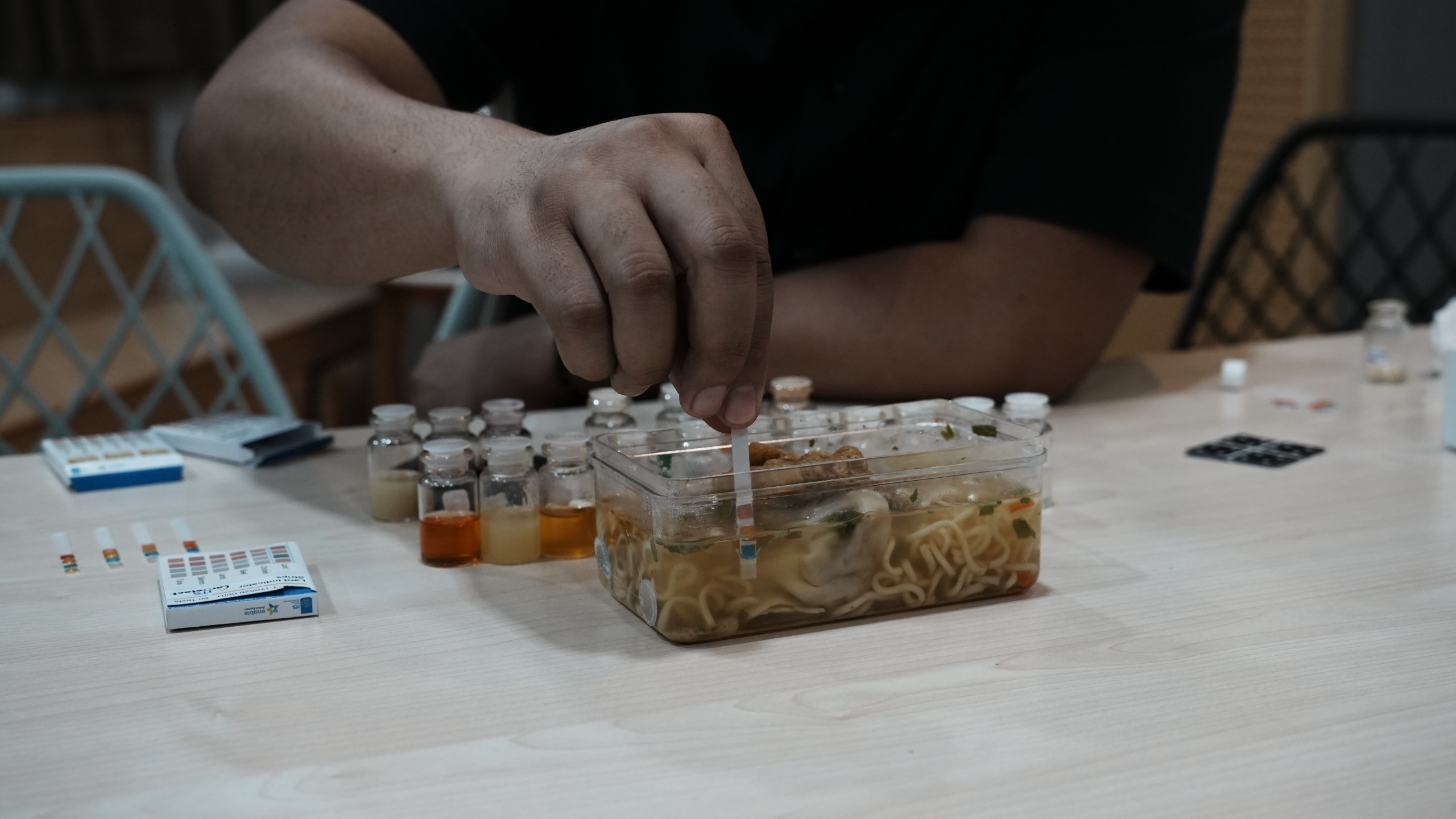
Thanks to this innovation, checking pork oil content can be done without having to use Polymerase Chain Reaction (PCR)-based detection methods or electrochemical technology. Ruri explained that his innovative tool is designed similar to a practical water pH checker strip. Without having to go through complex laboratory checks, this tool uses a nano-material-based color change principle.
Together with his team, Ruri explained that experiments were conducted to obtain a reagent formula sensitive to pork oil content in food. This innovative product was developed with an optical-based detection technique, namely optical signals of color change. “So there will be a color change from the reagent due to reacting chemically with the targeted oil content,” Ruri explained.
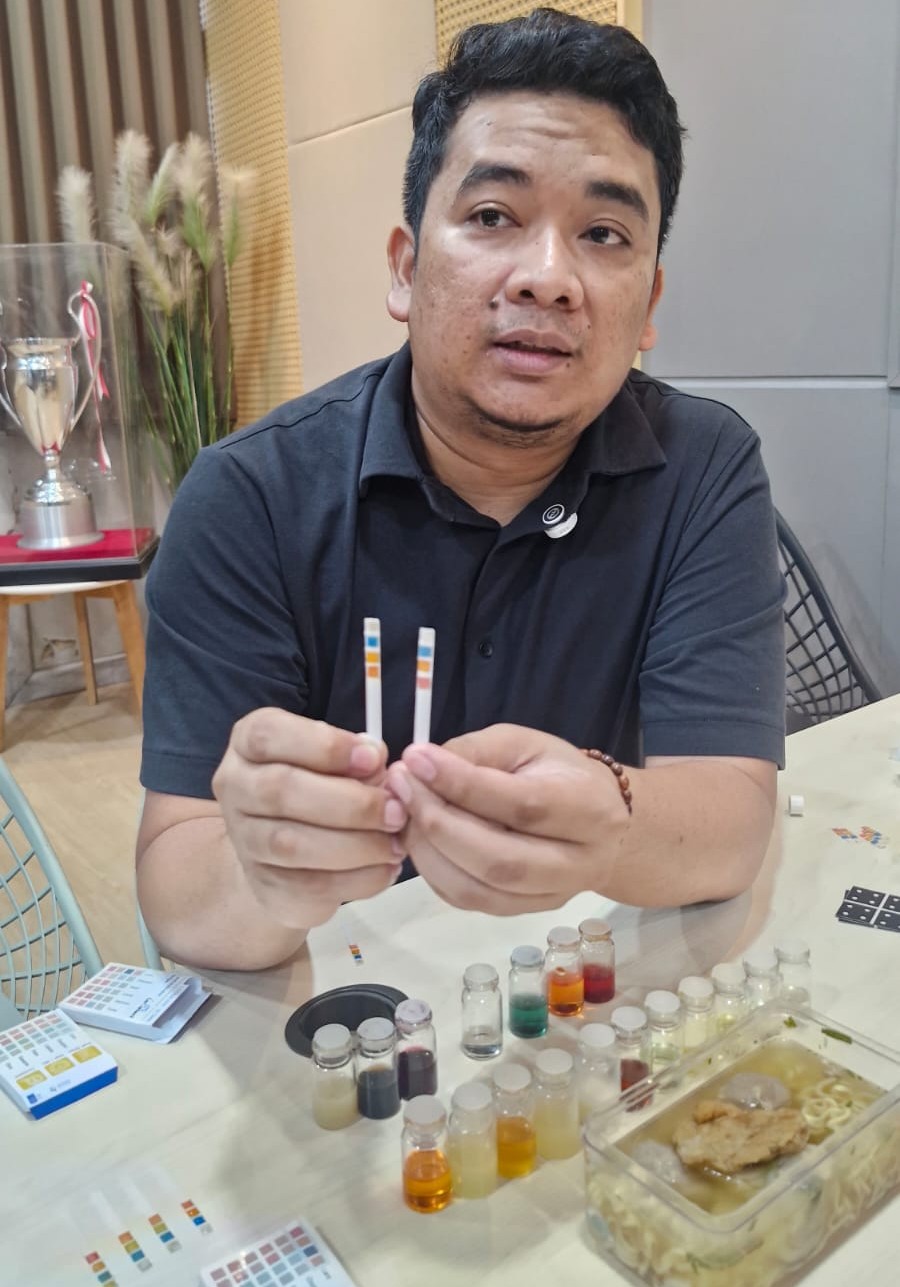
In the future, Ruri and his team plan to continue developing this tool. Not only limited to detecting pork oil content, he wants this tool to also be able to detect various allergy-triggering contents. “Not only limited to halal and haram, we will also develop other allergy-triggering materials with the same colorimetry method, it’s just that the reagent and catalyst formulations are different,” stated the ITS Engineering Physics Department lecturer.
With the convenience offered by this tool, Ruri hopes that Muslim travelers and people with allergies will have control in ensuring the safety of their food consumption anywhere. This can also be one way so that the general public can enjoy culinary dishes of Micro, Small, and Medium Enterprises (MSMEs) safely.
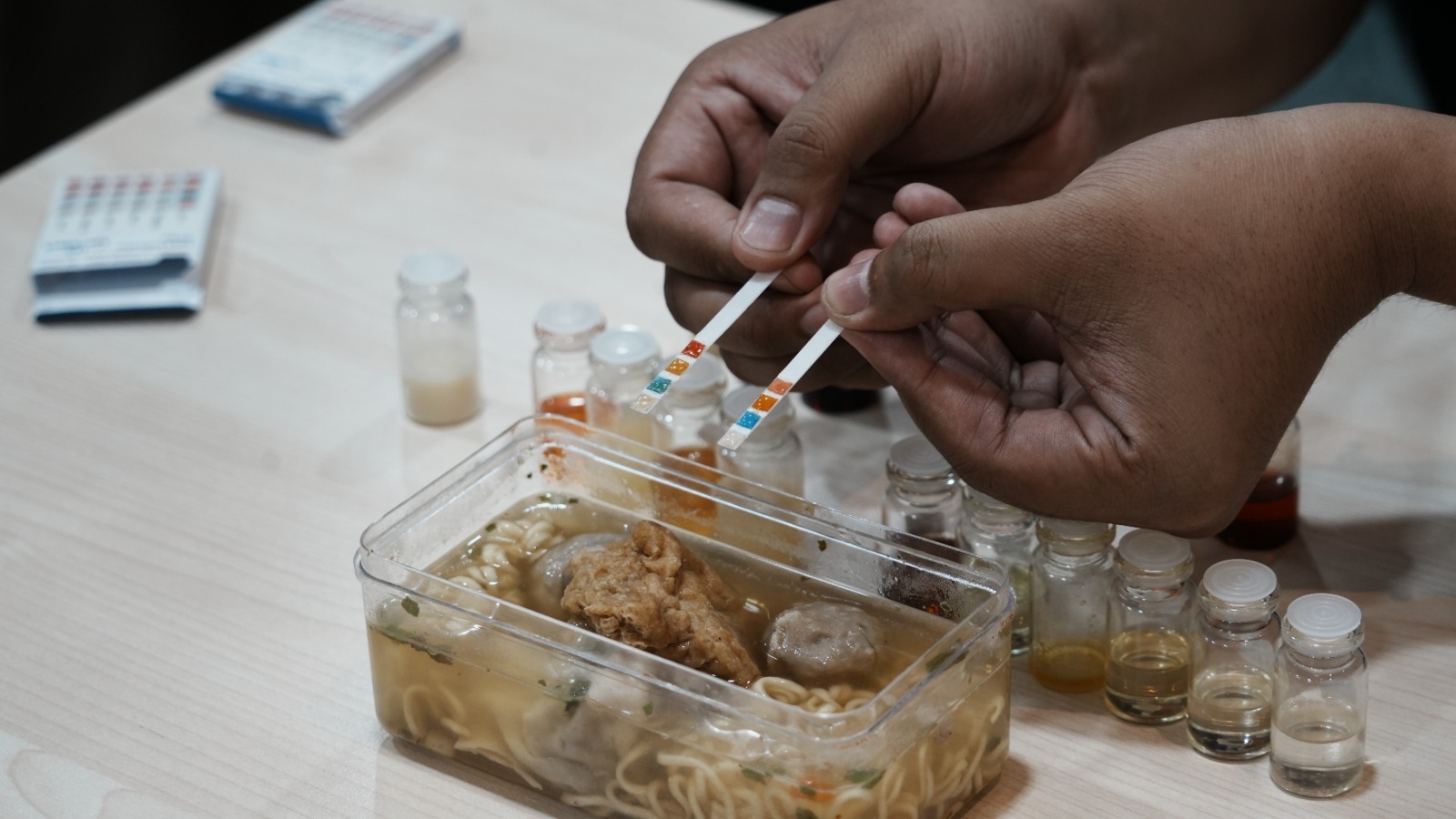
Furthermore, Ruri is committed to being able to independently produce materials for this detection tool. This aims to support the entrepreneurial university ecosystem and reduce dependence on external sources. Because, later when it is ready to be distributed in the market, the price of this pork oil detection strip is estimated at IDR 10,000 per strip which can be used for a single test. “The selling price will be even lower if this tool is successfully produced on a larger scale,” he said.
The innovation results developed by Ruri and his team also support the achievements in the Sustainable Development Goals (SDGs). Especially SDGs point 3 regarding Good Health and Well-being, point 4 regarding Quality Education, and point 9 regarding Industry, Innovation, and Infrastructure. (HUMAS ITS)
Reporter: Syifa Rahmadina</strong